
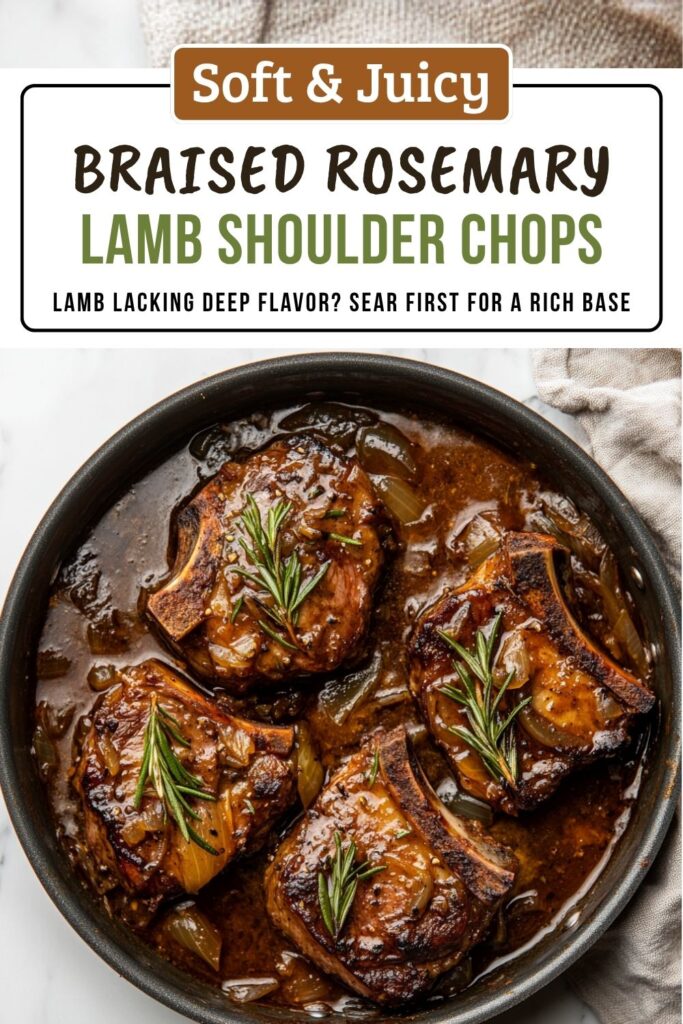
Braised rosemary lamb shoulder chops made tender with garlic, herbs, and slow cooking. A reliable, flavorful method for perfectly juicy lamb every time.
This is a recipe built for reliability. Lamb shoulder chops are not the most obvious cut for quick cooking, but when handled correctly, they become deeply tender and full of flavor.
I approach this method with the same mindset I bring to baking. Every step has a purpose, and each choice affects texture, moisture, and structure.
The result is consistent. Soft, juicy lamb that pulls apart easily, layered with rosemary, garlic, and a rich braising liquid that turns into a natural sauce.
Ingredients Needed for the Recipe
- Lamb shoulder chops – This cut contains connective tissue that breaks down during slow cooking, creating tenderness and body in the sauce.
- Onion – Adds sweetness and depth as it softens and dissolves into the braising liquid.
- Garlic cloves – Provide sharp, aromatic flavor that mellows and blends during long cooking.
- Butter – Acts as the initial fat for sautéing and builds a richer base flavor than oil alone.
- Dried thyme – Adds an earthy note that balances the richness of the lamb.
- Dried rosemary – The key herb that defines the dish, offering a strong, pine-like aroma that holds up during long cooking.
- Whole allspice – Introduces subtle warmth and complexity without overpowering the dish.
- Salt and pepper – Essential for seasoning and drawing out the natural flavor of the meat.
- Vegetable broth – Provides moisture for braising and forms the base of the final sauce.
- Fresh rosemary – Used at the end to reinforce aroma and add a fresh herbal finish.
How to make Braised Rosemary Lamb Shoulder Chops?
Step 1 – Preheat and Prepare
Set the oven to 300°F (150°C) and allow it to fully preheat. Low, steady heat is critical for breaking down the connective tissue in the lamb.
Pat the lamb chops dry with paper towels. Removing surface moisture ensures proper browning later.
Step 2 – Build the Aromatic Base
In a frying pan over medium heat, melt the butter until it begins to foam slightly. Add chopped onion and garlic, cooking for about 5 minutes until softened.
Stir in thyme, dried rosemary, and allspice. Let the spices cook for 2 minutes so they release their oils and deepen in flavor.
Step 3 – Set Aside the Flavor Base
Remove the onion and spice mixture from the pan and set it aside. This prevents overcooking while you focus on searing the meat.
The goal here is to preserve the structure of the aromatics while developing a separate layer of flavor on the lamb.
Step 4 – Sear the Lamb
Increase the heat to high and place the lamb chops in the hot pan. Let them sear without moving for a few minutes on each side.
You are looking for a deep brown crust, not just light color. This step builds the foundation of the final flavor.
Step 5 – Combine Components
Turn off the heat and return the onion and spice mixture to the pan. Coat the lamb evenly so the flavors begin to integrate.
This layering ensures the herbs and aromatics stay in contact with the meat during braising.
Step 6 – Prepare for Braising
Transfer everything to a baking dish and pour the vegetable broth over the lamb. The liquid should partially surround the meat, not fully submerge it.
This balance allows both moist cooking and surface caramelization to occur.
Step 7 – Slow Braise
Place the dish in the oven and cook for 3 to 4 hours. Check occasionally to ensure there is still enough liquid in the dish.
The lamb is ready when it becomes fork-tender and begins to pull away from the bone with minimal resistance.
Step 8 – Finish and Serve
Remove the lamb from the oven and let it rest briefly. Spoon the pan juices over the meat as a natural sauce.
Finish with fresh rosemary for a brighter aroma and serve immediately while warm.
Why This Recipe Works
The method relies on controlled heat and time rather than complex technique. Lamb shoulder contains collagen that converts to gelatin when cooked slowly, creating tenderness and richness.
Searing first develops flavor through browning, while the braising liquid captures those flavors and redistributes them evenly. This dual approach ensures depth without dryness.
The herb balance is intentional. Dried herbs withstand long cooking, while fresh rosemary at the end restores brightness that would otherwise be lost.
How I Tested and Refined This Recipe
I tested this recipe across multiple batches, adjusting both temperature and cooking time. Early versions at higher heat resulted in tougher meat and uneven texture.
Reducing the temperature to 300°F created a noticeable improvement. The lamb softened gradually, and the fibers broke down without drying out.
I also experimented with skipping the searing step. The result lacked depth and tasted flat, which confirmed how essential that initial browning is.
The final adjustment involved liquid quantity. Too much broth diluted the flavor, while too little caused scorching. The current ratio keeps the meat moist while concentrating the sauce.
Common Mistakes and How to Avoid Them
- Skipping the sear – This leads to a lack of depth and a weaker final flavor.
- Cooking at too high a temperature – Causes the meat to tighten instead of becoming tender.
- Not checking liquid levels – The dish can dry out and burn if unattended for too long.
- Using too much rosemary – Overpowers the dish and creates a bitter edge.
- Rushing the cooking time – The lamb will remain tough if the collagen has not fully broken down.
- Overcrowding the pan while searing – Prevents proper browning and causes steaming.
Make-Ahead, Storage, and Freezing Guidance
This dish stores well and often improves after resting. Refrigerate leftovers in an airtight container for up to 3 days.
The texture becomes slightly firmer when chilled, but reheating gently with some of the sauce restores moisture and softness.
For freezing, portion the lamb with its braising liquid and store for up to 2 months. Thaw overnight in the refrigerator before reheating.
Reheat on the stovetop over low heat or in the oven, covered, to prevent drying out. Avoid high heat, which can toughen the meat again.
Tips
- Pat the lamb completely dry before searing to ensure proper browning.
- Crush dried rosemary slightly to release more flavor.
- Use a heavy baking dish to maintain even heat distribution.
- Turn the lamb once halfway through cooking for even braising.
- Taste the sauce before serving and adjust salt if needed.
- Let the dish rest briefly before serving to stabilize juices.
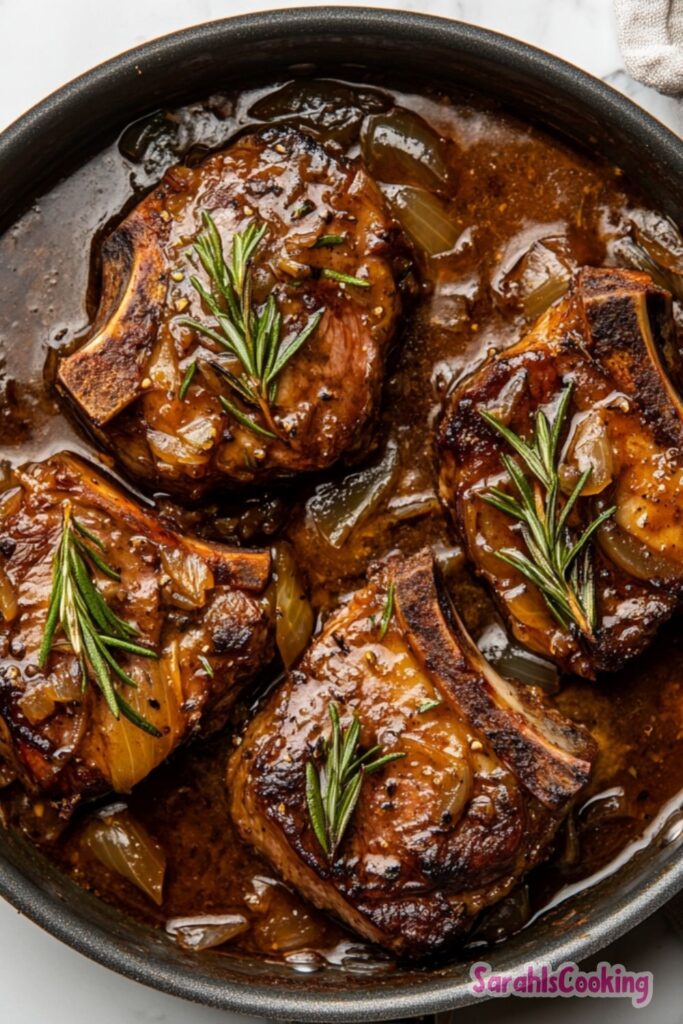

Braised Rosemary Lamb Shoulder Chops Recipe
Description
Discover the secret to transforming tougher cuts of meat into melt-in-your-mouth delicacies with this Braised Rosemary Lamb Shoulder Chops recipe. Lamb shoulder, often overlooked due to its chewiness, becomes incredibly tender and juicy when slow-braised with aromatic rosemary, garlic, and thyme. This method ensures that every bite is packed with flavor, making it a perfect comfort food for any occasion. Whether you are new to cooking with lamb or a seasoned chef, this recipe guarantees succulent results that fall off the bone.
Ingredients
Main Ingredients
Spices & Liquids
Instructions
Preheat Oven
Preheat your oven to 300°F (150°C).Sauté Aromatics
In a large frying pan over medium heat, melt the butter. Add the diced onion and minced garlic, sautéing for about 5 minutes until softened. Stir in the dried thyme, dried rosemary, allspice, salt, and pepper. Cook for another 2 minutes to release the aromas. Remove the mixture from the pan and set aside.Sear the Lamb
Increase the heat to high. Pat the lamb shoulder chops dry with paper towels to ensure a good sear. Place them in the hot pan and brown on both sides, about 2-3 minutes per side. Turn off the heat.Searing locks in juices and adds flavor.Combine and Braise
Return the onion and spice mixture to the pan with the lamb. Transfer everything to a baking dish. Pour the vegetable broth over the lamb chops.Slow Cook
Place the baking dish in the preheated oven. Cook for 3–4 hours, or until the meat is very tender and easily pulls away from the bone. Check occasionally and add a splash more water or broth if the dish looks dry.Serve
Remove from oven and let rest for 10 minutes. Reserve the pan juices to serve as a rich sauce over the meat. Garnish with fresh rosemary sprigs and serve hot.
Nutrition Facts
Servings 2
Serving Size 275g
- Amount Per Serving
- Calories 500kcal
- % Daily Value *
- Total Fat 35g54%
- Saturated Fat 15g75%
- Cholesterol 150mg50%
- Sodium 400mg17%
- Potassium 600mg18%
- Total Carbohydrate 20g7%
- Dietary Fiber 5g20%
- Sugars 5g
- Protein 40g80%
* Percent Daily Values are based on a 2,000 calorie diet. Your daily value may be higher or lower depending on your calorie needs.
Note
For deeper flavor, marinate the lamb chops in the rosemary, garlic, and thyme for at least 30 minutes before braising. If lamb shoulder chops are unavailable, bone-in lamb shanks can be substituted, increasing braising time to 4-5 hours. Leftover braised lamb can be shredded and used in tacos, salads, or sandwiches.