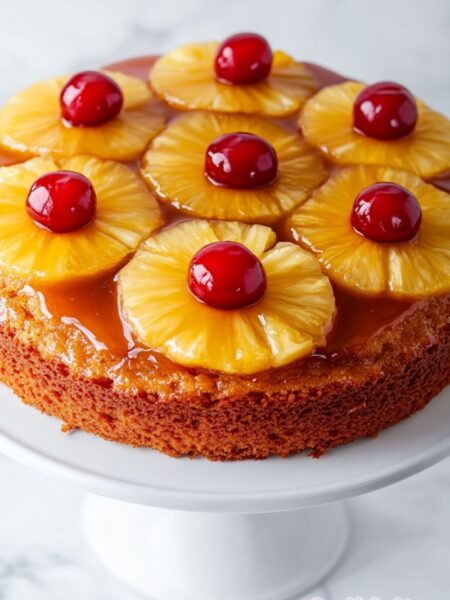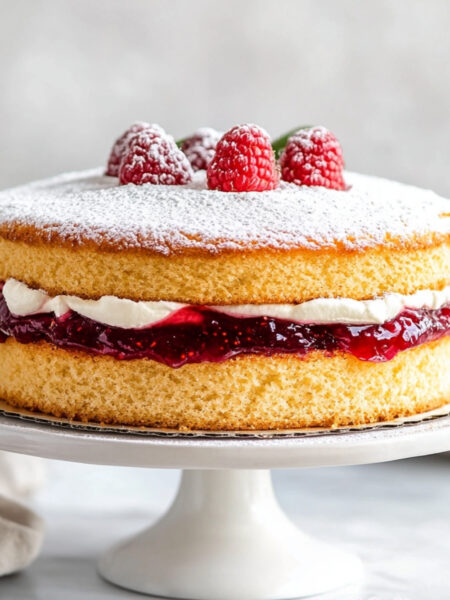

Light, airy sponge cake made with just 3 ingredients. A precise method ensures reliable rise, soft crumb, and a perfect base for layered desserts.
This sponge cake is proof that simple formulas can produce exceptional results when technique is precise. With only eggs, sugar, and flour, the structure relies entirely on controlled aeration and careful mixing.
I have tested this method repeatedly to ensure consistency across different ovens and mixing tools. The result is a reliable, level sponge that slices cleanly and absorbs fillings without becoming soggy.
Its texture is light yet stable, making it ideal for layered desserts or celebration cakes. Once you understand the logic behind the structure, the process becomes straightforward and repeatable.
Who This Recipe Is For
This recipe is for bakers who value accuracy and dependable outcomes. Whether you are new to baking or experienced, the clarity of the method removes guesswork.
It works well for those preparing layered cakes, filled desserts, or make-ahead treats. The neutral flavor profile pairs easily with fruit, cream, or chocolate components.
If you appreciate simple ingredient lists but still expect professional-level structure, this sponge delivers. Careful technique replaces chemical leaveners.
Why This Recipe Works
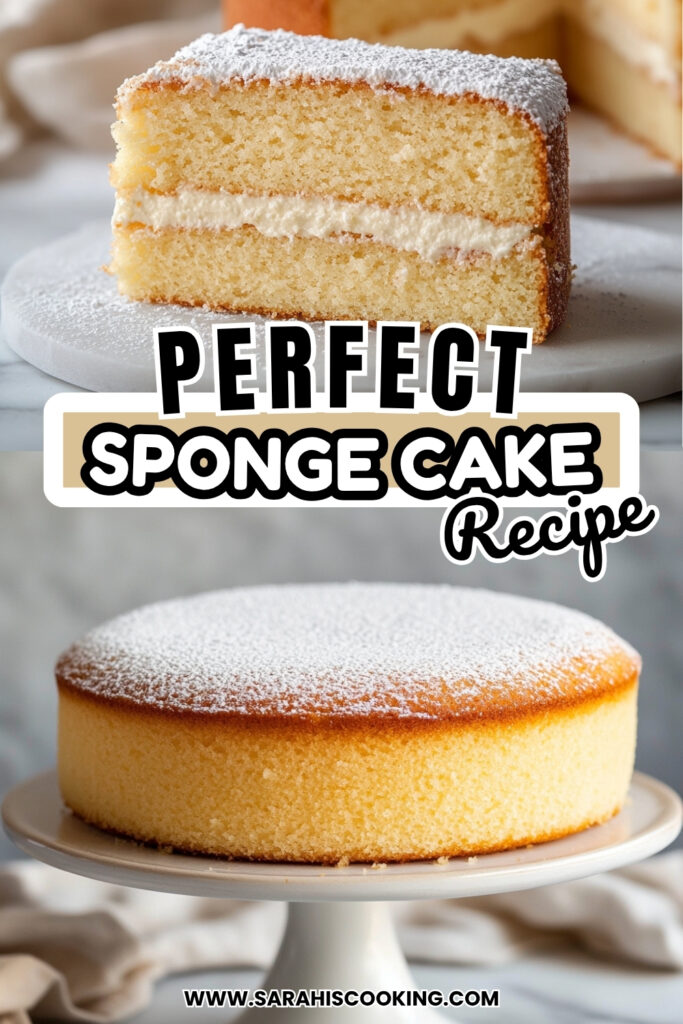
The structure of sponge cake relies on whipped eggs to create volume. When eggs and sugar are beaten long enough, they trap microscopic air bubbles that expand during baking.
Flour provides stability by reinforcing those air pockets. Because the flour quantity is modest, the final crumb remains tender rather than dense.
The ratio between eggs, sugar, and flour is intentional. Too much flour creates heaviness, while too little prevents the cake from holding its shape.
Baking at a moderate temperature allows the internal structure to set gradually. Rapid heat can cause collapse before the proteins fully stabilize.
Ingredients Needed for the Recipe
- Eggs – the primary structural component that provides lift when whipped properly and helps set the sponge’s internal framework.
- Sugar – stabilizes whipped eggs, supports structure formation, and contributes moisture retention for a soft crumb.
- All-purpose flour – reinforces the foam structure created by the eggs and provides the strength needed for slicing and layering.
Ingredient Insights and Function
Eggs perform multiple roles simultaneously. The proteins unfold during whipping, trapping air and creating a stable foam that expands during baking.
Room temperature eggs whip faster and create more consistent volume. Cold eggs resist aeration and may lead to uneven texture.
Sugar interacts with egg proteins to maintain stability during mixing. Without sufficient sugar, the foam collapses more easily under the weight of flour.
Granulated sugar is ideal because it dissolves gradually during whipping. Powdered sugar can disrupt the structure due to added starch.
All-purpose flour provides enough protein to support the sponge without making it tough. Cake flour can be used, but the crumb becomes slightly more delicate.
Gluten-free flour blends may produce inconsistent structure because they lack the protein strength needed to support the whipped foam.
A small amount of vanilla extract can be added for flavor, though it is not required. Additional liquid should remain minimal to preserve the ratio.
How to make Sponge Cake?
Step 1 – Prepare the Oven and Pan
Preheat the oven to 350 F. Consistent oven temperature ensures even expansion of the whipped eggs.
Lightly grease a 9-inch or larger pan to prevent sticking. Avoid smaller pans because the batter expands significantly during baking.
Step 2 – Combine Eggs and Sugar
Place eggs and sugar in a mixing bowl. Begin mixing on low speed to combine evenly before increasing speed.
Gradually increase to medium-high speed and continue beating for about 10 minutes. The mixture should triple in volume.
Step 3 – Identify the Ribbon Stage
The mixture is ready when it forms thick ribbons that sit briefly on the surface before dissolving. Texture should feel airy but stable.
Underbeating leads to dense texture, while overbeating weakens structure. Stop once the mixture looks pale and expanded.
Step 4 – Sift the Flour
Sift flour to remove lumps and distribute particles evenly. This step prevents pockets of dense flour inside the sponge.
Fine flour particles incorporate more easily without deflating the egg mixture.
Step 5 – Fold in the Flour
Add flour in three portions, folding gently with a spatula. Use slow movements to preserve trapped air.
Avoid stirring aggressively because this compresses the foam and reduces volume. Rotate the bowl as you fold.
Step 6 – Transfer Batter to Pan
Pour batter immediately into the prepared pan. Allowing the batter to sit too long reduces air retention.
Smooth the surface lightly without tapping the pan aggressively. Excess tapping removes valuable air bubbles.
Step 7 – Bake the Sponge
Bake for approximately 30 minutes. The sponge should rise evenly and develop a light golden surface.
A toothpick inserted near the center should come out clean when fully baked. Avoid opening the oven door early.
Step 8 – Cool the Cake Completely
Allow the sponge to cool fully before slicing. Cooling allows the internal structure to stabilize and prevents tearing.
Once cooled, the cake should feel light yet resilient when pressed gently.
How I Tested and Refined This Recipe
I tested multiple mixing durations to determine the ideal balance between volume and stability. Short mixing times produced dense layers that lacked flexibility.
Extending the mixing time beyond the optimal range caused the foam to lose elasticity. The baked sponge then deflated during cooling.
I compared folding methods using both whisk and spatula techniques. The spatula preserved structure more consistently.
Pan size also influenced results significantly. Smaller pans created taller batter depth, increasing risk of collapse.
I tested both conventional ovens and convection settings. Conventional baking produced more predictable structure across repeated trials.
Each adjustment was evaluated for crumb uniformity, slice stability, and moisture retention. The final method consistently produced balanced results.
Common Mistakes and How to Avoid Them
- Underbeating eggs results in minimal volume and dense texture.
- Overbeating weakens protein structure and causes collapse.
- Adding flour too quickly compresses air bubbles.
- Using cold eggs reduces foam stability.
- Opening the oven door early causes rapid deflation.
- Using a pan that is too small leads to overflow or uneven baking.
- Overmixing after adding flour creates toughness.
- Removing the cake before fully baked results in sinking.
- Skipping flour sifting creates dense pockets.
- Cutting the cake before cooling leads to tearing.
Make-Ahead, Storage, and Freezing Guidance
This sponge cake can be prepared several days in advance without compromising structure. Store at room temperature in an airtight container for up to three days.
Refrigeration extends shelf life up to one week. The texture becomes slightly firmer when chilled but softens once brought back to room temperature.
For long-term storage, freeze the cake tightly wrapped for up to three months. Maintain a flat surface during freezing to preserve shape.
Allow frozen sponge to thaw slowly at room temperature. Avoid microwaving because rapid heat can create uneven texture.
Tips
- Use a stand mixer when possible for consistent aeration.
- Keep folding movements slow and deliberate.
- Measure flour accurately to maintain structure balance.
- Line the bottom of the pan if easy removal is needed.
- Slice with a serrated knife for clean layers.
- Allow cake to rest before adding fillings.
- Use room temperature ingredients for predictable results.
- Avoid humid environments when whipping eggs.
- Test doneness near the center for accuracy.
- Store layers flat to maintain even shape.
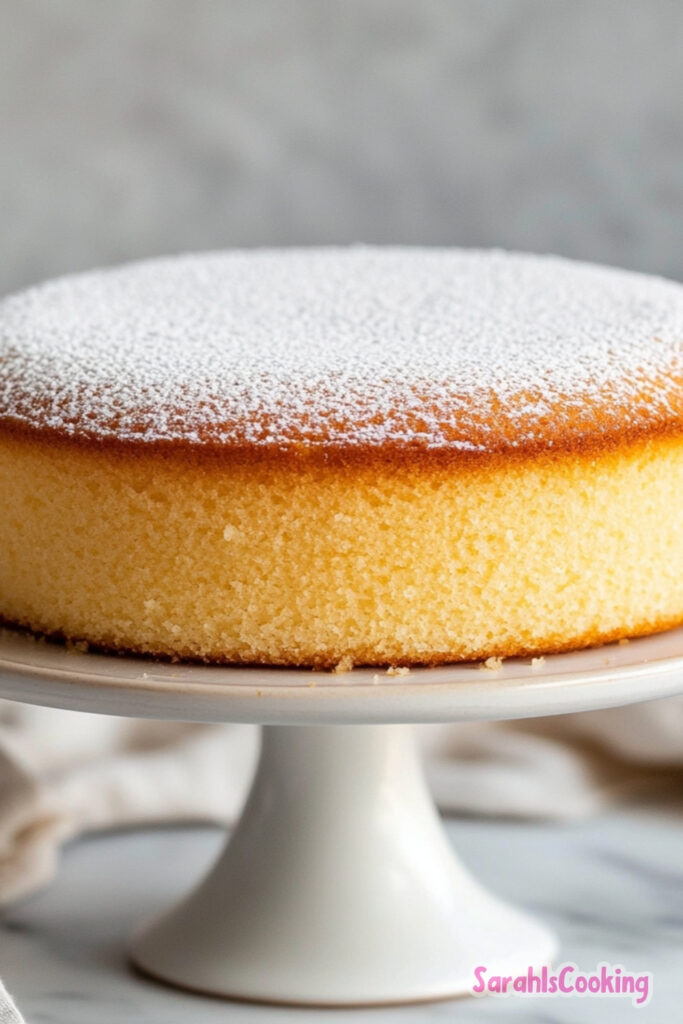

The Perfect Sponge Cake Recipe
Description
This Perfect Sponge Cake is made in the classic European way using only three simple ingredients. Light, airy, and perfectly leveled, it’s ideal for layering with creams, fruits, or your favorite frostings. Moist and versatile, this sponge cake serves as the foundation for countless desserts from Tiramisu to chocolate cake pops.
Ingredients
Instructions
- Preheat oven to 175°C (350°F).
- In a stand mixer, beat 5 eggs and sugar on low speed first, then medium-high for about 10 minutes until the volume triples and a thick ribbon forms.Do not overbeat; eggs should form a thick ribbon when beaters are lifted.
- Sift flour and fold it into the egg mixture in thirds using a spatula, mixing gently to maintain fluffiness.Avoid overmixing to preserve airiness of the batter.
- Pour batter into a greased 9–12 inch cake pan or springform pan.
- Bake for 30–35 minutes, checking with a toothpick towards the end; it should come out clean.
- Let cake cool in the pan for 10 minutes, then remove and cool completely on a wire rack before slicing or layering.
Nutrition Facts
Servings 8
Serving Size 1 slice
- Amount Per Serving
- Calories 220kcal
- % Daily Value *
- Total Fat 7gg11%
- Saturated Fat 2gg10%
- Trans Fat 0gg
- Cholesterol 125mgmg42%
- Sodium 55mgmg3%
- Potassium 130mgmg4%
- Total Carbohydrate 33gg11%
- Dietary Fiber 1gg4%
- Sugars 20gg
- Protein 7gg15%
- Calcium 4% mg
- Iron 8% mg
* Percent Daily Values are based on a 2,000 calorie diet. Your daily value may be higher or lower depending on your calorie needs.
Note
- Use room temperature eggs for better volume.
- Fold flour gently to avoid deflating the batter.
- This sponge cake can be used as a base for layered cakes, tiramisu, or cake pops.
- Optional: add 3 tbsp cocoa powder to make a chocolate sponge.