
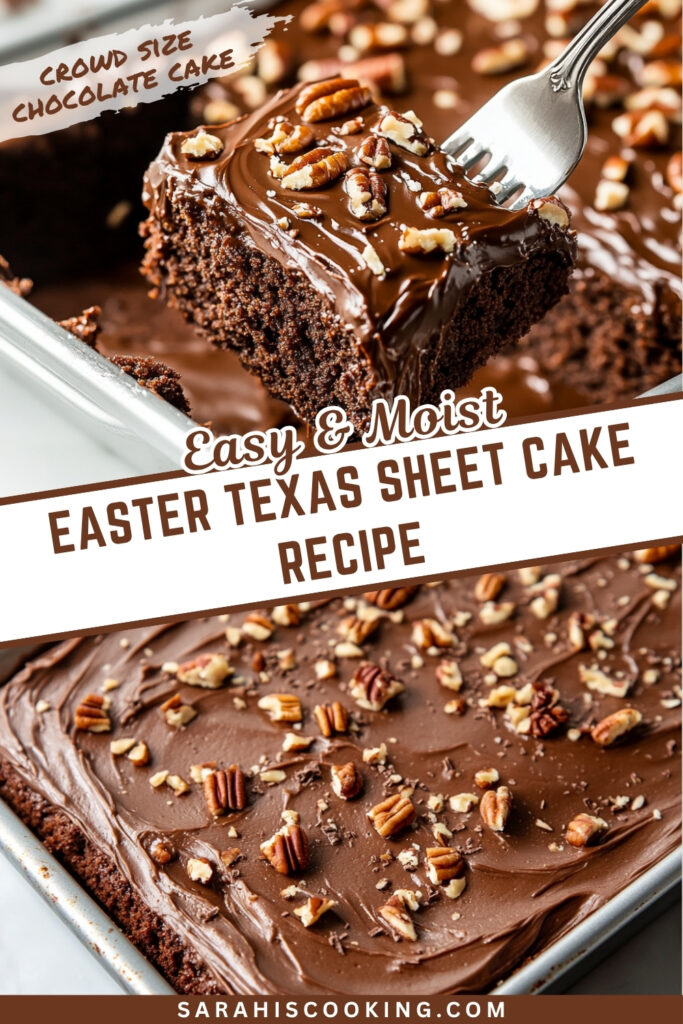
This Texas Sheet Cake is built for consistency, not guesswork. It delivers a thin, ultra-moist chocolate cake with a smooth, pour-over frosting that sets just enough to slice cleanly.
I’ve tested this method to ensure it works the same way every time, whether you’re baking for a family dinner or a full tray for a gathering. The steps are simple, but each one has a purpose.
The result is a cake that feels effortless to make but tastes rich, balanced, and dependable. It’s the kind of recipe you come back to because it never lets you down.
Who This Recipe Is For
This recipe is for home bakers who want reliable results without complicated techniques. If you prefer clear instructions and predictable outcomes, this method will feel natural to follow.
It’s also ideal for busy schedules. The batter comes together quickly, bakes fast, and doesn’t require layering or intricate decorating.
If you’ve struggled with dry cakes or inconsistent texture before, this recipe removes those variables and gives you a solid, repeatable process.
Why This Recipe Works
The structure of this cake depends on a careful balance between fat, liquid, and dry ingredients. The butter and cocoa mixture is heated first, which helps bloom the cocoa and deepen the chocolate flavor.
The use of buttermilk adds acidity, which reacts with the baking soda to create a light but stable crumb. This prevents the cake from feeling dense while still holding moisture.
The thin sheet pan format also plays a role. It allows the cake to bake quickly and evenly, reducing the risk of overbaking and keeping the texture soft throughout.
The frosting is poured while both the cake and icing are warm. This creates a smooth, slightly set layer that bonds with the surface instead of sitting on top.
Ingredients Needed for the Recipe
- All-purpose flour – provides the structural base and supports the cake’s shape during baking.
- Sugar – adds sweetness while also helping retain moisture for a soft texture.
- Baking soda – reacts with acidity to create lift and prevent a dense crumb.
- Salt – balances sweetness and enhances the chocolate flavor.
- Buttermilk – adds acidity and richness, improving tenderness and structure.
- Eggs – bind the batter and contribute to moisture and stability.
- Vanilla extract – rounds out the chocolate flavor and adds depth.
- Unsalted butter – provides fat for richness and helps create a smooth batter.
- Cocoa powder – delivers the chocolate base and defines the flavor profile.
- Water – helps dissolve cocoa and creates the right batter consistency.
- Confectioners sugar – forms a smooth, lump-free frosting texture.
- Milk or buttermilk (for frosting) – adjusts frosting consistency and adds richness.
Ingredient Insights and Function
Flour must be measured carefully. Too much will lead to a dry, firm cake, while too little weakens the structure and causes collapse.
Buttermilk is not optional if you want the intended texture. Its acidity activates the baking soda and contributes to the cake’s soft crumb.
If you substitute regular milk, you lose both flavor depth and the chemical reaction that helps the cake rise properly.
Cocoa powder should be unsweetened and of good quality. Lower-quality cocoa can result in a flat or slightly bitter finish.
Butter is used in both the cake and frosting for consistency. Using salted butter can throw off the flavor balance unless adjusted carefully.
Confectioners sugar is critical for the frosting. Granulated sugar will not dissolve properly and will create a gritty texture.
How to make Texas Sheet Cake?
Step 1 – Prepare the Pan and Oven
Preheat your oven to 350°F and grease a jelly roll pan thoroughly. Make sure the corners are coated to prevent sticking.
A properly prepared pan ensures the thin cake releases cleanly without tearing or leaving edges behind.
Step 2 – Mix the Dry Ingredients
In a large bowl, combine flour, sugar, baking soda, and salt. Stir until evenly distributed and set aside.
This step ensures the leavening agent is evenly dispersed, which prevents uneven rising later.
Step 3 – Combine the Wet Ingredients
In a separate bowl, whisk together buttermilk, eggs, and vanilla. Mix until smooth and uniform.
Keep this mixture ready, as it will be added quickly once the chocolate base is prepared.
Step 4 – Heat the Chocolate Base
In a saucepan over medium heat, combine butter, cocoa powder, and water. Bring to a gentle boil while stirring frequently.
The mixture should be smooth and fully combined. Avoid overheating, as this can affect the final texture.
Step 5 – Combine Batter Components
Pour the hot chocolate mixture into the dry ingredients and stir until combined. The heat helps dissolve the sugar and hydrate the flour.
Immediately add the buttermilk mixture and stir just until incorporated. Do not overmix.
Step 6 – Bake the Cake
Pour the batter into the prepared pan and spread evenly. Bake for 15 to 20 minutes.
The cake is done when a toothpick inserted in the center comes out clean. Avoid opening the oven early.
Step 7 – Begin Cooling
Place the pan on a wire rack and allow it to cool slightly. The cake should still be warm when frosting is added.
This timing is important for proper frosting absorption and texture.
Step 8 – Prepare the Frosting
In a saucepan, melt butter with cocoa and buttermilk. Bring to a gentle boil while stirring.
Remove from heat and stir in confectioners sugar and vanilla until smooth and pourable.
Step 9 – Frost the Cake
Pour the warm frosting over the warm cake and spread evenly with a spatula.
Work quickly so the frosting sets into a smooth layer before it begins to firm up.
Step 10 – Set and Serve
Allow the frosting to cool completely before cutting. This ensures clean slices and a stable finish.
The final texture should be soft, moist, and evenly coated with a thin chocolate layer.
How I Tested and Refined This Recipe
I tested multiple variations of this cake to find the most consistent method. Early versions used softened butter instead of a heated mixture, but the flavor was noticeably less developed.
I also adjusted the liquid ratios. Too much water created a loose structure, while too little resulted in a dense crumb that didn’t match the classic texture.
Mixing time was another key variable. Overmixing produced a tougher cake, while undermixing left pockets of dry ingredients.
I tested different pan sizes as well. The jelly roll pan consistently gave the best texture, while thicker pans required longer baking and changed the moisture balance.
The frosting method was refined to ensure it spreads easily without becoming grainy. Pouring it warm over a warm cake proved to be the most reliable approach.
Common Mistakes and How to Avoid Them
- Overmixing the batter – leads to a dense and slightly tough texture.
- Overbaking the cake – dries out the thin layer quickly, so monitor closely.
- Using incorrect pan size – affects baking time and texture consistency.
- Skipping the boiling step for cocoa mixture – reduces chocolate flavor depth.
- Adding frosting to a cold cake – prevents proper spreading and bonding.
- Incorrect flour measurement – too much flour results in dryness.
- Opening the oven too early – can cause the cake to sink in the center.
Make-Ahead, Storage, and Freezing Guidance
This cake holds moisture well and can be made one to two days in advance without losing quality. Store it covered at room temperature if the environment is dry.
In more humid conditions, refrigeration is a better option to maintain freshness. Bring it to room temperature before serving for best texture.
The cake can be frozen, though the frosting may slightly change in texture. Wrap tightly and freeze for up to two months.
To serve after freezing, thaw overnight in the refrigerator and allow it to come to room temperature naturally. Avoid microwaving, as it can affect the frosting consistency.
Tips
- Use a light-colored metal pan for even baking.
- Stir the cocoa mixture constantly to prevent scorching.
- Pour frosting immediately after preparing it for smooth coverage.
- Rotate the pan halfway through baking if your oven has hot spots.
- Use a flat spatula to spread frosting quickly before it sets.
- Let the cake cool fully before slicing to maintain clean edges.
- Double the cocoa for a deeper chocolate flavor if preferred.
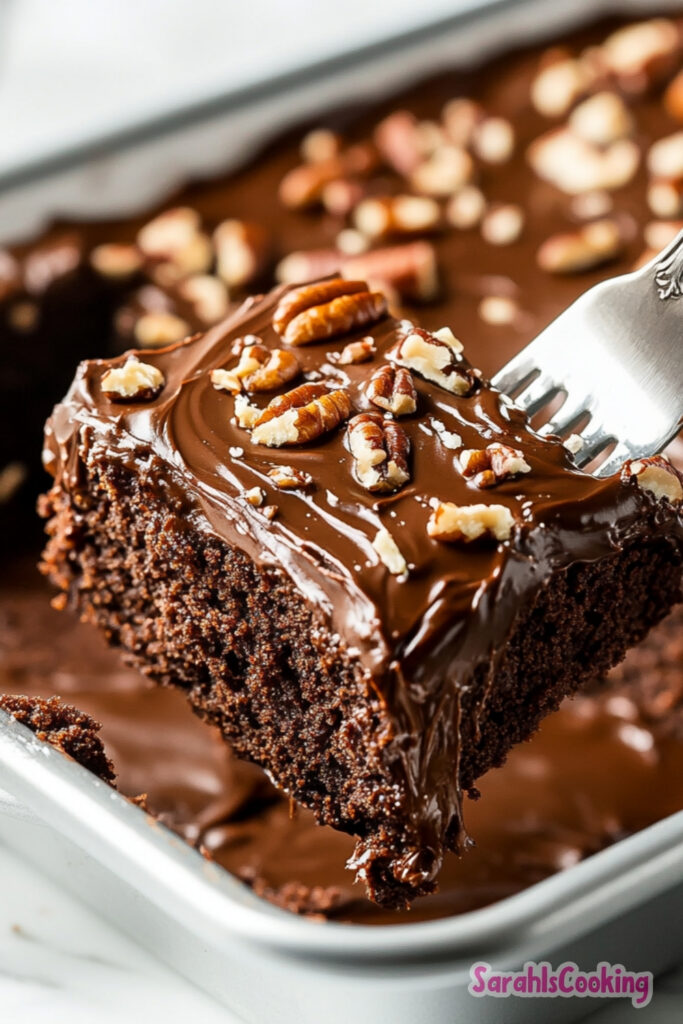

Texas Sheet Cake Recipe
Description
This legendary Texas Sheet Cake is the ultimate crowd-pleaser, boasting over 250 five-star reviews! It features a rich, moist chocolate cake baked in a sheet pan and topped with a warm, gooey chocolate frosting that sets perfectly. Originating from a friend's office potluck, this fool-proof recipe is known for being the first dessert to disappear at any gathering. With its simple ingredients and no-fuss preparation, it's the perfect treat for birthdays, holidays, or whenever a chocolate craving strikes.
ingredients
For the Cake
For the Frosting
Instructions
Making the Cake
Preheat and Prep
Preheat your oven to 350°F (175°C). Spray a jelly roll pan (approx. 10x15 inches) with non-stick cooking spray.If using a 9x13 inch pan, increase baking time to about 25 minutes.Mix Dry Ingredients
In a large mixing bowl, combine the flour, sugar, baking soda, and salt. Set aside.Mix Wet Ingredients
In a small mixing bowl, whisk together the buttermilk, eggs, and vanilla. Set aside.Heat Butter Mixture
In a medium saucepan over medium heat, combine the 2 sticks of butter, 4 tablespoons cocoa powder, and water. Bring the mixture to a rolling boil, stirring frequently to prevent burning.Ensure the butter is fully melted and incorporated.Combine Mixtures
Immediately pour the hot butter/cocoa mixture into the large bowl with the dry ingredients. Stir gently to combine. Quickly add the wet ingredient mixture (buttermilk, eggs, vanilla) and mix until just combined.Do not overmix.Bake
Pour the batter evenly into the prepared jelly roll pan. Bake for 15 to 20 minutes, or until a toothpick inserted into the center comes out clean.Watch closely near the 15-minute mark to avoid drying out.Cool Slightly
Remove the pan from the oven and place it on a wire rack. Allow it to cool slightly while you prepare the frosting. The cake should still be warm when you frost it.
Making the Frosting
Heat Frosting Base
In a clean saucepan, melt the 1/2 cup butter with 6 tablespoons buttermilk and 4 tablespoons cocoa powder. Bring to a boil, stirring frequently.Finish Frosting
Remove from heat. Immediately add the confectioners sugar and vanilla extract. Stir vigorously until smooth and glossy.Work quickly so the frosting doesn't set before pouring.Frost the Cake
Pour the warm frosting evenly over the warm cake. Use a spatula to gently spread it to the edges if needed.The warmth of the cake helps the frosting set with a perfect shine.Serve
Allow the frosting to cool and set completely before cutting into squares and serving.
Nutrition Facts
Servings 24
Serving Size 1 square
- Amount Per Serving
- Calories 385kcal
- % Daily Value *
- Total Fat 18gg28%
- Saturated Fat 11gg56%
- Trans Fat 0gg
- Cholesterol 65mgmg22%
- Sodium 195mgmg9%
- Potassium 95mgmg3%
- Total Carbohydrate 56gg19%
- Dietary Fiber 1gg4%
- Sugars 42gg
- Protein 3gg6%
- Calcium 4% mg
- Iron 6% mg
* Percent Daily Values are based on a 2,000 calorie diet. Your daily value may be higher or lower depending on your calorie needs.
Note
- Pan Size Matters: For the traditional thin cake with the perfect frosting ratio, use a jelly roll pan (10x15). If using a 9x13 pan, the cake will be thicker; increase bake time to ~25 mins.
- Make Ahead: This cake stays moist for 1-2 days. Store covered on the counter unless your kitchen is very humid, then refrigerate.
- Add Crunch: Stir in 1/2 cup of finely chopped pecans or walnuts into the frosting before pouring for a classic Texas twist.
- Extra Chocolate: Double the cocoa powder in both the cake and frosting for intense chocolate lovers.