
A good sweet potato casserole should earn its place on the table more than once a year. This version does that by staying grounded in balance and structure rather than nostalgia alone. It is creamy without being loose, sweet without crossing into dessert territory, and sturdy enough to reheat or make ahead without falling apart.
This recipe has been tested both for holiday service and for quieter family dinners, including full make-ahead assembly and reheating. The goal was not novelty. The goal was repeatability. What follows is a sweet potato casserole built with intention, from ingredient ratios to bake timing, so it performs reliably every time you pull it from the oven.
Who This Sweet Potato Casserole Is For
This recipe is for cooks who want a dependable classic they can trust on a crowded table. It works well for hosts planning ahead for Thanksgiving or Christmas, for families feeding mixed preferences, and for bakers who value structure as much as flavor.
It is especially well suited for readers who appreciate clear logic behind each step and want to understand why the recipe works before committing to it.
This may not be the right recipe if you are looking for a strictly savory sweet potato dish or a very low-sugar option. While the sweetness is controlled, it is still present and intentional.
Why This Recipe Works (Food Logic, Not Hype)
The reliability of this casserole comes down to moisture management, binding, and balance. Sweet potatoes vary widely in water content and sweetness, so the recipe was developed to account for that variability rather than ignore it.
Baked or Boiled Sweet Potatoes and Why Both Can Work
Baking sweet potatoes concentrates their flavor and allows excess moisture to evaporate naturally. This produces a deeper sweetness and a drier mash, which is ideal when time allows. Boiling, on the other hand, is faster and more predictable for weeknight cooking, but it introduces more water into the flesh.
Both methods work here because the recipe compensates. When boiling is used, the potatoes are drained thoroughly and allowed to steam dry before mashing. Skipping that rest period is the most common cause of a watery casserole.
From testing, baking is worth the extra time for holidays or when the casserole is the centerpiece side. Boiling is acceptable for speed, as long as drainage is handled carefully.
Eggs, Fat, and Sugar Ratios
Eggs provide structure, but too many turn the filling into a custard. Too few and the casserole will not slice cleanly. This recipe uses just enough egg to set the filling without making it rigid.
Butter adds richness and carries flavor, but excess fat can cause separation during baking. The amount here was tested to remain creamy after reheating without leaving a greasy layer.
Sugar is present to enhance the natural sweetness of the potatoes, not mask it. Reducing the sugar slightly still yields good results, but removing it entirely affects both flavor and texture.
Ingredient Breakdown and Function
Understanding what each ingredient does makes it easier to adjust the recipe responsibly.
Sweet Potatoes
Orange-fleshed sweet potatoes with a firm texture are preferred. Very large potatoes tend to be watery, while very small ones can be fibrous. Consistent size leads to more even cooking.
When cooked properly, the potatoes should mash easily but still hold shape. The mash should form soft ridges when stirred rather than slumping flat. That texture indicates excess moisture has cooked off.
Sugar Choices
Granulated sugar dissolves cleanly and keeps the filling smooth. Brown sugar adds moisture and a deeper flavor but can push the casserole toward dessert if overused. Maple syrup introduces additional liquid and should be reduced elsewhere if substituted.
During testing, maple syrup produced a softer set and required longer baking time. For first-time success, granulated sugar remains the most reliable choice.
Dairy and Eggs
Whole milk adds moisture without thinning the mixture excessively. Lower-fat milk can be used but results in a slightly looser texture. Butter provides flavor and helps the filling feel rich rather than starchy.
Eggs bind the mixture during baking. An egg-free version using applesauce was tested and works, but the finished casserole is softer and best served with a spoon rather than sliced.
Topping Options (Pecan, Oat, Marshmallow)
A topping is not just decoration. It provides contrast and protects the surface of the filling during baking.
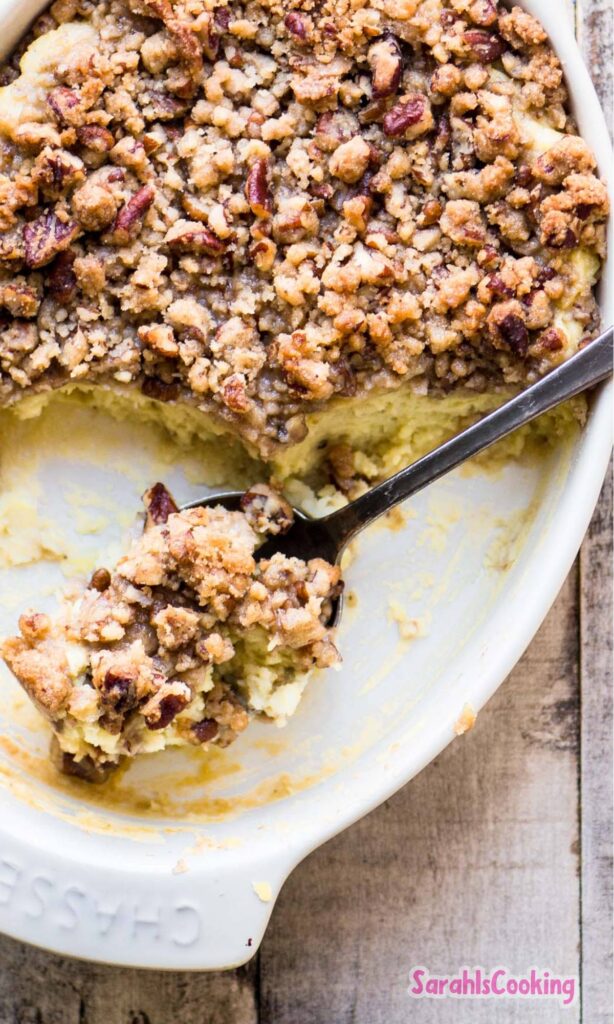
Pecan crumble offers crunch and bitterness that balance sweetness. An oat-based topping works well for nut-free or gluten-free needs, though it bakes slightly softer. Marshmallows should be added late in baking to avoid scorching and are best reserved for those who prefer a dessert-style finish.
Step-by-Step Success (What the Recipe Card Can’t Tell You)
The recipe card provides the framework. These details ensure it performs as intended.
Preparing the Sweet Potatoes Correctly
After cooking, allow the potatoes to cool slightly before peeling. This makes handling easier and allows steam to escape. Mash while warm, but not hot. Overly hot potatoes can melt butter too quickly and create a greasy texture.
If boiling, spread the drained potatoes in the pot and return it to low heat for one to two minutes, shaking gently. This step drives off surface moisture and significantly improves final texture.
Mixing the Filling Without Overworking
A hand mixer creates a lighter texture, but it should be used briefly. Overmixing incorporates too much air, which can cause the casserole to puff and then collapse.
Stop mixing once the filling is smooth and cohesive. Small flecks of potato are preferable to a glossy, whipped consistency.
Assembling for Even Baking
A 9 by 13 inch dish provides the most forgiving depth. Thicker layers require longer baking and risk overbrowning the topping before the center sets.
Spread the filling evenly, then add the topping loosely. Pressing the topping down compresses it and prevents proper browning.
Visual and Texture Cues to Watch For
Bake time is a guideline, not a guarantee. Look for these signs instead.
The center should be set but yield slightly when pressed. The edges will appear gently puffed, and the topping should be golden rather than dark brown. If the topping browns too quickly, tent loosely with foil and continue baking.
Common Mistakes and How to Fix Them
Casserole Turned Out Watery
This almost always traces back to excess moisture in the potatoes or too much liquid sweetener. Drain thoroughly and avoid substituting syrups without adjustment.
Too Sweet or Dessert-Like
Reduce the sugar slightly and choose a pecan or oat topping instead of marshmallows. Balance comes from contrast as much as from reduction.
Topping Burned Before Center Set
Lower the oven rack one position and tent the dish loosely. A darker pan can also accelerate browning.
Substitutions (And What You Give Up)
Dairy-Free
Plant-based milk and coconut oil can be used, but the flavor will shift and the texture will be slightly looser. Oat milk performed best in testing.
Egg-Free
Applesauce binds but does not set as firmly. Expect a softer slice and plan to serve warm.
Gluten-Free
A gluten-free flour blend works in the crumble, but an oat topping produces the most consistent results. Readers planning a fully gluten-free menu may also find the Gluten Free Bread Recipe useful for the same occasion.
Make-Ahead, Storage, and Freezing
Planning ahead is where this casserole truly shines.
Make-Ahead Options
The filling and topping can be prepared separately up to three days in advance. Assemble just before baking for the best texture. Fully assembled, unbaked casseroles were also tested and held well overnight, though the topping softened slightly.
For readers planning multiple dishes, pairing this with make-ahead snacks like Chex Party Mix Recipe can ease day-of workload.
Refrigeration and Reheating
Refrigerate leftovers tightly covered. Reheat in a moderate oven, covered, until warmed through. High heat dries the edges before the center warms.
Freezing Guidelines
Freeze the filling without the topping for best results. Thaw overnight in the refrigerator, add topping, and bake. Freezing with the topping attached led to uneven texture during testing.
Serving Suggestions and Meal Pairings
This casserole works best alongside savory mains that benefit from a touch of sweetness. It pairs naturally with roasted meats and holiday spreads.
For a classic centerpiece, serve it with a Prime Rib Recipe. On Thanksgiving menus, it complements poultry prepared with a reliable Turkey Brine Recipe. For a complete seasonal table, some hosts also include a beverage like Homemade Eggnog Recipe, though that is best kept separate from the savory courses.
Testing Notes and Consistency Promise
This recipe has been prepared across multiple seasons, with baked and boiled potatoes, full and reduced sugar, and both dairy-free and egg-free variations. Versions that underperformed were adjusted or discarded. What remains is the most consistent balance of structure, flavor, and flexibility found through repetition.
If you follow the guidance above, this sweet potato casserole should behave predictably and earn its place as a recipe you return to with confidence.

Sweet Potato Casserole That’s Actually Worth Making Again
Description
This Southern Sweet Potato Casserole is rich, creamy, and topped with your choice of a buttery pecan crumble or gooey marshmallows—making it the ultimate holiday side dish or dessert! Ready in just 30 minutes and perfect for making ahead, this family-favorite recipe has been passed down for generations and pairs beautifully with roast turkey, ham, or Sunday supper classics.
ingredients
Sweet Potato Filling
Pecan Crumble Topping (Classic)
Gluten-Free & Nut-Free Oat Topping (Optional)
Marshmallow Topping (Optional)
Instructions
Sweet Potato Filling
Prep Sweet Potatoes
Preheat oven to 350°F. Bake or boil 5–6 medium sweet potatoes until tender. Cool, peel, and mash until smooth.Baking enhances sweetness; boiling is faster.Mix Filling
In a large bowl, combine mashed sweet potatoes, granulated sugar, softened butter, vanilla extract, milk, and eggs. Mix until smooth and fluffy.Use a hand mixer for extra fluffiness if desired.Transfer to Dish
Pour mixture into a greased 9×13-inch baking dish.
Pecan Crumble Topping
Make Topping
In a small bowl, mix brown sugar, flour, chopped pecans, and softened butter until crumbly.Add & Bake
Sprinkle topping evenly over sweet potato mixture. Bake at 350°F for 30 minutes, or until topping is golden brown and center is set.
Gluten-Free & Nut-Free Oat Topping (Optional)
Make Oat Flour
Process 1 cup of oats in a blender until fine. Combine with remaining 1 cup whole oats, brown sugar, and salt.Finish Topping
Stir in melted butter and vanilla. Sprinkle over casserole and bake as directed.
Marshmallow Topping (Optional)
Add Marshmallows Late
Bake casserole plain for 20 minutes. Remove, top with mini marshmallows, and return to oven for 10 more minutes until golden and puffed.Watch closely to avoid burning.
Nutrition Facts
Servings 12
Serving Size 1 piece
- Amount Per Serving
- Calories 320kcal
- % Daily Value *
- Total Fat 14gg22%
- Saturated Fat 7gg35%
- Trans Fat 0gg
- Cholesterol 55mgmg19%
- Sodium 180mgmg8%
- Potassium 320mgmg10%
- Total Carbohydrate 45gg15%
- Dietary Fiber 3gg12%
- Sugars 28gg
- Protein 5gg10%
- Calcium 6 mg
- Iron 8 mg
* Percent Daily Values are based on a 2,000 calorie diet. Your daily value may be higher or lower depending on your calorie needs.
Note
- Make Ahead: Assemble filling and topping separately; refrigerate up to 3 days. Combine and bake when ready.
- Freeze: Freeze unbaked casserole (without topping) for up to 3 months. Thaw overnight, add topping, and bake.
- Dairy-Free: Use oat or almond milk and coconut oil instead of butter.
- Egg-Free: Replace eggs with ½ cup unsweetened applesauce.
- Avoid Runny Texture: Ensure sweet potatoes are well-drained and bake until center is fully set.