
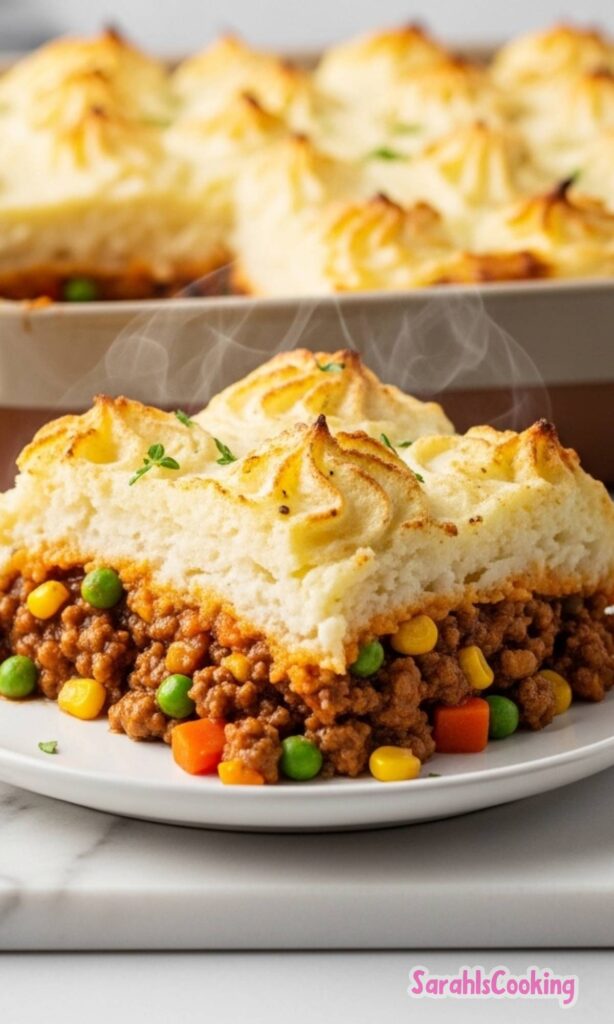
This shepherd’s pie is the version I turn to when I need a meal that feels both substantial and familiar. It layers a rich, deeply savory filling with a topping of light, creamy mashed potatoes that browns beautifully in the oven.
After many tests adjusting the liquid ratio and the balance of aromatics, this recipe produces a filling that holds its structure without becoming dry, and a potato topping that stays fluffy rather than turning dense. It is a reliable dish for a Sunday supper or for feeding a crowd on a cold evening.
Who This Recipe Is For
This recipe is for anyone who wants a straightforward, no-surprises method for making shepherd’s pie at home. It assumes you can brown meat, chop vegetables, and mash potatoes, but it does not assume prior experience with building a stovetop filling or finishing it in the oven.
If you have made casseroles before, you will find the process familiar. If you are newer to cooking, the steps are broken down clearly with attention to the visual cues that signal when to move to the next stage. This is a recipe built for success on the first try.
Why This Recipe Works
The filling starts with bacon, which renders and leaves its fat as the cooking base. That fat carries the flavor of the onions and carrots as they soften, and it helps the flour integrate smoothly later. Using both tomato paste and red wine adds depth without making the filling taste like a standard tomato-based meat sauce.
The mashed potatoes are made with russets because their high starch content creates a light, fluffy texture that holds up to baking. Adding sour cream instead of all butter introduces a slight tang that balances the richness of the meat. The potatoes are spread all the way to the edges of the skillet, which seals the filling underneath and prevents it from bubbling over.
Ingredients Needed for the Recipe
- Ground beef: Provides the hearty base. Using 90 percent lean avoids excess grease while keeping the meat moist.
- Baking soda: A small amount mixed with water tenderizes the beef by raising its pH, which helps it stay juicy during cooking.
- Russet potatoes: Their high starch content yields the fluffiest mash, essential for a light topping that does not turn gluey.
- Sour cream: Adds richness and a subtle tang that cuts through the savory filling.
- Unsalted butter: Contributes flavor and helps create a smooth, creamy texture in the potatoes.
- Half and half: Provides enough fat to enrich the potatoes without making them overly heavy.
- Bacon: Adds smoky depth and leaves flavorful fat in the pan for cooking the vegetables.
- Yellow onions and carrots: Build the aromatic base and add sweetness as they soften and brown.
- Garlic: Adds pungent depth; added late to prevent burning.
- Red wine: Brings acidity and complexity, and helps deglaze the pan to lift the browned bits.
- All-purpose flour: Thickens the filling to a consistency that holds together when served.
- Tomato paste: Concentrates the savory flavor and adds a slight sweetness.
- Worcestershire sauce: Contributes umami and a subtle tang that enhances the meatiness.
- Chicken broth: Provides the liquid base for the gravy; beef broth can be substituted.
- Fresh thyme: Adds an earthy, herbal note that complements the beef.
- Frozen peas: Bring color and sweetness; added at the end to keep them bright.
- Fresh chives: A final garnish that adds a mild onion freshness.
Ingredient Insights and Substitutions
Using ground lamb instead of beef makes this a traditional shepherd’s pie. Lamb has a stronger flavor that stands up well to the wine and thyme. If you substitute lamb, you can skip the baking soda step, as lamb is naturally tender enough.
For a lighter version, ground chicken or turkey works, but the filling will be leaner and less rich. You may need to add a tablespoon of oil when cooking the vegetables if the bacon does not render enough fat.
The red wine can be replaced with additional beef broth plus a tablespoon of balsamic vinegar for acidity. The flavor will be slightly less complex but still good. Do not omit the Worcestershire sauce; it provides a depth that is hard to replicate with other ingredients.
Russet potatoes are important here. Waxy potatoes like red or Yukon gold will produce a denser, creamier mash that does not hold its shape as well on top of the filling. If you prefer a creamier texture, you can use Yukon golds, but expect a slightly different result.
How to make Shepherd’s Pie?

Step 1 – Tenderize the Beef
In a medium bowl, combine the ground beef, baking soda, one teaspoon of salt, and one tablespoon of water. Mix with your hands until the water is absorbed and the baking soda is evenly distributed. Let this sit for twenty minutes while you prepare the other ingredients. This short rest changes the protein structure so the beef stays tender and does not dry out during browning.
Step 2 – Cook and Mash the Potatoes
Place the peeled and chopped potatoes in a saucepan and cover with cold water. Bring to a boil, then reduce to a simmer and cook until fork-tender, about ten minutes. Drain well and return the potatoes to the warm pan. Stir them over medium heat for about three minutes to evaporate excess moisture. This step is important for a fluffy texture. Remove from the heat, add the sour cream, butter, half and half, and the remaining teaspoon of salt. Mash until smooth, then taste and adjust salt if needed. Set aside.
Step 3 – Cook the Bacon
Heat a twelve-inch oven-safe skillet over medium heat. Add the diced bacon and cook, stirring occasionally, until crisp, about six to eight minutes. Use a slotted spoon to transfer the bacon to a paper towel-lined plate, leaving the fat in the skillet. That fat carries the flavor for the rest of the filling.
Step 4 – Soften the Vegetables
Add the diced onions and carrots to the skillet with the bacon fat. Cook over medium heat, stirring frequently, until they are softened and starting to brown, about six to eight minutes. Add the minced garlic and cook for one minute more, just until fragrant. Letting the vegetables brown adds sweetness and depth.
Step 5 – Deglaze with Wine
Pour the red wine into the skillet and turn the heat to high. Bring it to a boil, scraping the bottom of the pan with a wooden spoon to loosen any browned bits. Let the wine boil until it has reduced by about half, which concentrates its flavor and cooks off the raw alcohol.
Step 6 – Add the Flour
Sprinkle the flour over the vegetables and wine, then stir until it is completely dissolved and no white streaks remain. Cooking the flour for a minute removes the raw taste and helps it thicken the liquid evenly.
Step 7 – Brown the Beef
Add the reserved ground beef mixture, the tomato paste, and the Worcestershire sauce to the skillet. Cook over high heat, breaking the meat apart with a spoon, until it is no longer pink, about five minutes. The high heat helps develop browning, which adds flavor.
Step 8 – Simmer the Filling
Pour in the chicken broth and bring to a simmer. Reduce the heat to low and cook, stirring occasionally and scraping the bottom, until the liquid has thickened, about two minutes. The filling should be moist but not soupy.
Step 9 – Finish the Filling
Stir in the fresh thyme, black pepper, frozen peas, and the cooked bacon. Cook just until the peas are warmed through, about one minute. Taste the filling and adjust seasoning if necessary. Remove the skillet from the heat.
Step 10 – Assemble and Bake
Drop spoonfuls of the mashed potatoes over the filling. This makes spreading easier without disturbing the meat layer underneath. Use a rubber spatula to gently spread the potatoes evenly, making sure they reach the edges of the skillet to seal in the filling. Drag a fork across the top to create ridges, which will brown nicely. Place the skillet on a baking sheet to catch any drips and bake at four hundred degrees for about thirty minutes, until the filling is bubbling and the top is lightly browned. If you want more color, turn on the broiler for the last five minutes and watch closely. Sprinkle with fresh chives before serving.
How I Tested and Refined This Recipe
My first attempts at shepherd’s pie produced a filling that was either too loose, pooling on the plate, or too dry and crumbly. The problem was the liquid ratio and the cooking time after adding the broth. Reducing the wine before adding the flour and using only one and a half cups of broth gave the gravy enough body to coat the meat without becoming soupy.
I also struggled with the mashed potatoes turning dense after baking. Drying them in the pan after draining made a noticeable difference, as did using russets instead of Yukon golds. The extra starch gives the topping more structure, so it holds its shape and stays fluffy.
The baking soda treatment for the beef was a late addition. In earlier versions, the ground beef turned tough and crumbly, especially after the full bake time. Letting it rest with baking soda and water kept the meat tender, and it did not affect the flavor.
I tested the recipe with and without bacon. Without it, the filling was still good but lacked the smoky depth that makes this version feel more substantial. The bacon fat also provided enough grease to cook the vegetables, so no additional oil was needed.
Common Mistakes and How to Avoid Them
- Soggy bottom layer: If the filling is too wet, it will make the bottom of the potato topping mushy. Make sure to reduce the wine fully and simmer the broth until thickened before adding the peas.
- Dry, crumbly meat: Overcooking the beef or using meat that is too lean causes dryness. The baking soda treatment helps, and cooking the beef just until no longer pink keeps it moist.
- Grainy mashed potatoes: Overworking the potatoes or using a food processor makes them gluey. Mash by hand and stop when they are smooth. Drying them first also prevents a watery texture.
- Burnt garlic: Garlic burns easily and turns bitter. Add it after the onions and carrots have softened, and cook for only one minute before adding the wine.
- Filling that does not thicken: If the flour is not stirred in thoroughly or the liquid does not come to a simmer, the filling will stay thin. Stir the flour until completely dissolved and let the broth bubble gently to activate the starch.
- Potatoes sinking into the filling: Dropping spoonfuls on top and spreading gently prevents this. Pressing down too firmly or spreading while the filling is very hot can cause the potatoes to mix in.
Make-Ahead, Storage, and Freezing Guidance
The filling can be made up to three days in advance and kept covered in the refrigerator. Before assembling the pie, reheat the filling gently on the stovetop or in a microwave, adding a splash of broth if it seems too thick. Make the mashed potatoes fresh on the day you plan to bake, as they lose their fluffy texture when refrigerated and reheated.
Leftover baked shepherd’s pie keeps well in the refrigerator for up to four days. The texture of the potatoes will be denser after refrigeration, but the flavor remains good. Reheat individual portions in a microwave, or warm the whole dish in a three hundred fifty degree oven until heated through.
To freeze, assemble the pie in a disposable or freezer-safe dish but do not bake. Cover tightly with foil and freeze for up to three months. Thaw overnight in the refrigerator, then bake as directed, adding about ten to fifteen minutes to the baking time since the filling will be cold.
Tips
- Cut the potatoes into uniform one-inch chunks so they cook evenly.
- Do not skip drying the potatoes after draining; this step removes surface moisture and improves the texture.
- Use a fork to create ridges on the potato topping. The ridges catch heat and brown more than a flat surface.
- If you do not have an oven-safe skillet, transfer the cooked filling to a two-and-a-half quart baking dish before adding the potatoes.
- Let the baked pie rest for ten minutes before serving. This allows the filling to set slightly and makes for cleaner servings.
- Fresh thyme is noticeably better than dried here. If you must substitute, use one teaspoon of dried thyme and add it with the broth.
- The peas should stay bright green. Add them at the very end and cook only until warmed through to avoid a mushy texture or faded color.

Shepherd’s Pie Recipe
Description
This shepherd's pie recipe is cozy, crowd-pleasing, and just the thing to make when you're craving something hearty and homemade. Creamy mashed potatoes piled on top of a rich, savory beef stew make this the ultimate comfort food.
ingredients
Instructions
Preheat Oven
Preheat the oven to 375°F (190°C) and set an oven rack in the middle position.Tenderize Beef
Place the beef, baking soda, 1 teaspoon of the salt, and 1 tablespoon of water in a medium bowl. Mash with your hand to combine. Set aside for 20 minutes.This raises the pH of the meat to help it stay juicy and tender.Prepare Mashed Potatoes
While the meat tenderizes, place the potatoes in a medium saucepan and add just enough cold water to cover them. Bring to a boil over high heat, then reduce the heat to medium-low and simmer, uncovered, until the potatoes are soft and fork-tender, 8 to 10 minutes. Drain the potatoes and return to the saucepan. Place the pan over medium heat and stir the potatoes with a wooden spoon or potato masher until they are dry and fluffy, about 3 minutes. Remove the pan from the heat and add the sour cream, butter, half & half, and the remaining teaspoon of salt. Using a potato masher, stir and mash the potatoes with the other ingredients until smooth. Taste and adjust seasoning, if necessary. Set the mashed potatoes aside.Drying the potatoes removes excess moisture for fluffier, creamier mash.Cook Bacon
Heat a 12-inch oven-proof skillet over medium heat. Add the bacon and cook, stirring frequently, until crisp, 6 to 8 minutes. Using a slotted spoon, transfer the bacon to a paper towel-lined plate, leaving the fat in the pan.The bacon drippings add incredible flavor to the filling.Cook Vegetables
Add the onions and carrots to the bacon fat and cook, stirring frequently, until softened and starting to brown, 6 to 8 minutes. Add the garlic and cook 1 minute more.Reduce Wine
Add the wine and increase the heat to high; bring to a boil, scraping any brown bits from the bottom of the pan, until the liquid is reduced by about half.The browned bits (fond) add depth of flavor.Add Flour
Add the flour and stir until dissolved.This thickens the sauce and removes any raw flour taste.Cook Beef Mixture
Add the reserved ground beef mixture, tomato paste, and Worcestershire sauce; continue cooking on high heat, breaking the meat apart with a spoon, until the meat is no longer pink, about 5 minutes. Add the chicken broth; bring to a simmer, reduce the heat to low, and cook, scraping any brown bits from the bottom of the pan, until thickened, about 2 minutes.Finish Filling
Stir in the thyme, pepper, peas, and reserved bacon, and cook until the peas are warmed through. Taste and adjust seasoning, if necessary.Adding peas at the end keeps them bright and tender.Top with Potatoes
Dollop the mashed potatoes evenly over the filling. Use a rubber or offset spatula to spread the potatoes evenly over the stew and all the way to the edges of the skillet. Drag a fork across the top to make ridges.Spreading to the edges helps seal in the filling and prevents bubbling over.Bake
Place the skillet on a baking sheet or large sheet of foil to catch any drips and bake until the filling is hot, the topping is lightly browned, and the edges are bubbly, about 30 minutes. For more color, turn on the broiler and broil for the last 5 minutes, or until the top is golden.Watch closely when broiling to prevent burning.Serve
Sprinkle with chives and serve.
Nutrition Facts
Servings 6
Serving Size 1 serving
- Amount Per Serving
- Calories 650kcal
- % Daily Value *
- Total Fat 33 gg51%
- Saturated Fat 15 gg75%
- Trans Fat 0 gg
- Cholesterol 122 mgmg41%
- Sodium 1243 mgmg52%
- Potassium 890 mgmg26%
- Total Carbohydrate 50 gg17%
- Dietary Fiber 5 gg20%
- Sugars 7 gg
- Protein 33 gg66%
- Calcium 8% mg
- Iron 25% mg
* Percent Daily Values are based on a 2,000 calorie diet. Your daily value may be higher or lower depending on your calorie needs.
Note
- Make-Ahead: The stew portion can be made several days ahead and refrigerated. Reheat before assembling. Make mashed potatoes fresh for best texture.
- No Oven-Safe Skillet? Transfer the meat mixture to a 2.5-qt casserole dish before adding the potatoes.
- Lamb Variation: For traditional shepherd's pie, substitute ground lamb for the beef.