
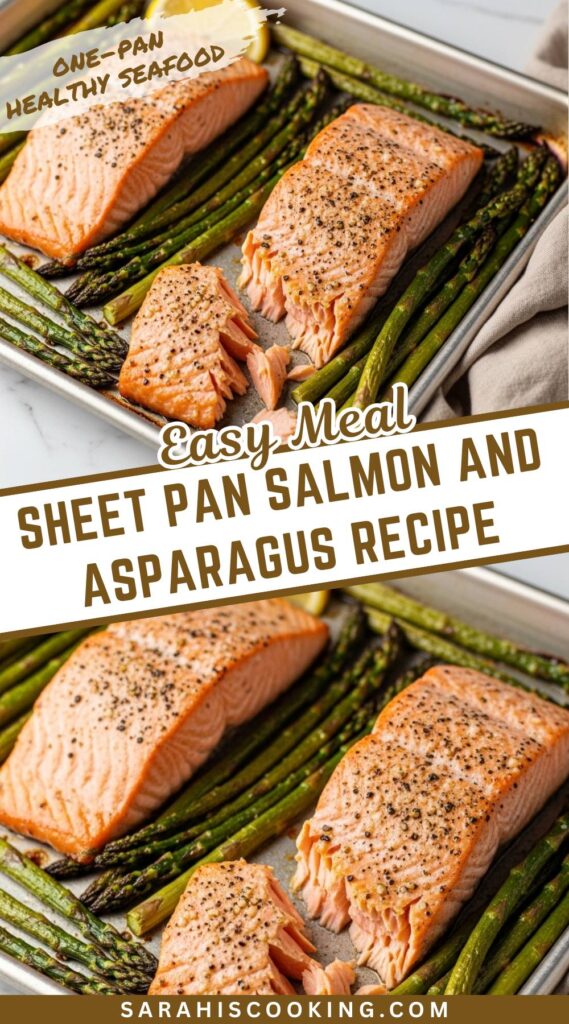
This Sheet Pan Salmon & Asparagus is built for reliability, not guesswork. It is a focused, repeatable dinner that delivers clean flavor and proper texture in under 30 minutes.
I designed this recipe to solve a common weeknight problem: wanting something fresh and nourishing without creating a sink full of dishes. The method is streamlined, but every step has intention.
The result is tender salmon with balanced richness, paired with asparagus that roasts to a sweet, lightly caramelized finish. Nothing is complicated, but nothing is accidental either.
Who This Recipe Is For
This recipe is for home cooks who want dependable results without hovering over the stove. If you appreciate meals that feel thoughtful but are practical to execute, this fits squarely into your routine.
It works well for beginners because the timing is straightforward, yet experienced cooks will value the precision. There is no advanced technique required, only attention to cues and temperature.
If you keep proteins in the freezer and need meals that adapt to real life, this is exactly the kind of structure that makes weeknight cooking sustainable.
Why This Recipe Works
Salmon and asparagus cook at nearly the same rate when roasted at a moderate temperature. That alignment allows both components to finish together without sacrificing moisture or texture.
The mustard and maple combination provides contrast. The acidity cuts through the salmon’s richness while the light sweetness encourages gentle caramelization during roasting.
Everything bagel seasoning adds layered flavor without requiring multiple spices. It introduces salt, texture, and aromatics in one step, which keeps the preparation efficient.
Roasting on a single sheet pan promotes dry heat circulation. This encourages browning instead of steaming, which is essential for both the vegetables and the fish.
Ingredients Needed for the Recipe
- Asparagus – Provides structure to the meal and roasts at the same rate as the salmon, ensuring synchronized doneness.
- Olive oil – Promotes caramelization and prevents the asparagus from drying out during high heat.
- Kosher salt – Seasons evenly and enhances the natural sweetness that develops while roasting.
- Freshly ground black pepper – Adds mild heat and depth without overpowering the fish.
- Fresh lemon juice – Brightens the finished dish and balances the richness after roasting.
- Salmon fillets – The central protein, chosen for its quick cooking time and ability to remain tender with minimal handling.
- Dijon mustard – Acts as a sharp, acidic layer that cuts through fat and helps the glaze adhere.
- Maple syrup – Adds subtle sweetness that rounds out the mustard and encourages browning.
- Everything bagel seasoning – Delivers texture and savory complexity in a single addition.
Ingredient Insights and Function
Asparagus should have the woody ends removed because those fibers never soften in the oven. Snapping off the bottom inch naturally removes the toughest portion.
If you substitute another vegetable, choose one with similar moisture and cook time, such as green beans. Dense vegetables like carrots require pre-roasting and disrupt the timing balance.
Fresh salmon is excellent, but individually wrapped frozen fillets are incredibly practical. Thawing overnight in the refrigerator preserves texture and prevents uneven cooking.
Dijon mustard is not interchangeable with yellow mustard. Dijon brings acidity and structure, while milder mustards lack the sharpness needed to offset the salmon’s richness.
Maple syrup should be pure rather than pancake syrup. Artificial syrups create sweetness without depth and can burn before the fish finishes cooking.
Everything bagel seasoning is more than garnish. Its mix of sesame, onion, and salt forms a light crust that adds both flavor and contrast to the soft fish.
How to make Sheet Pan Salmon & Asparagus?
Step 1 – Preheat and Prepare the Pan
Preheat the oven to 375°F so the heat is stable before the food goes in. Consistent temperature is key to cooking the salmon gently rather than aggressively.
Use a large sheet pan to allow space between ingredients. Crowding leads to steaming, which prevents proper roasting.
Step 2 – Season the Asparagus
Spread the trimmed asparagus across the pan and drizzle with olive oil. Use your hands to coat evenly so every stalk has contact with the oil.
Sprinkle with salt and pepper, then arrange in a single layer. Even spacing ensures the tips roast instead of soften.
Step 3 – Mix the Glaze
In a small bowl, stir together Dijon mustard and maple syrup until smooth. The mixture should be cohesive, not separated.
This glaze is intentionally simple so it enhances rather than masks the salmon’s flavor.
Step 4 – Add the Salmon
Nestle the salmon fillets between the asparagus rather than placing them on top. Direct contact with the pan helps them cook evenly.
Pat the fillets dry before brushing on the glaze to prevent excess moisture from interfering with roasting.
Step 5 – Apply the Glaze and Seasoning
Brush the mustard-maple mixture over each fillet, coating the surface without letting it drip excessively onto the pan.
Sprinkle everything bagel seasoning over the top, pressing lightly so it adheres during cooking.
Step 6 – Roast with Attention to Temperature
Place the sheet pan in the oven and roast for 8 to 12 minutes. The exact timing depends on thickness, so visual cues matter more than the clock.
The salmon should reach 120°F in the center and look just opaque. This prevents overcooking, which is the most common failure with fish.
Step 7 – Rest Before Serving
Remove the pan and allow the salmon to rest for 5 minutes. Carryover heat brings the temperature to about 125°F, producing a tender texture.
Finish by squeezing fresh lemon juice over the asparagus to add brightness right before serving.
How I Tested and Refined This Recipe
I began by testing higher oven temperatures, assuming faster would be better. The salmon cooked too quickly on the outside while remaining uneven inside.
Lowering the oven to 375°F created a gentler heat that allowed the fish and vegetables to finish simultaneously. This small shift dramatically improved consistency.
I also experimented with adding the glaze at the beginning versus midway through cooking. Early application produced better adhesion and light caramelization.
Several seasoning blends were tested, but many required extra measuring and distracted from the salmon itself. Everything bagel seasoning delivered complexity without adding work.
The final adjustment involved resting time. Skipping the rest caused moisture loss, while a short pause allowed the proteins to relax and retain their juices.
Common Mistakes and How to Avoid Them
- Overcooking the salmon – Remove it at 120°F and allow carryover heat to finish the job.
- Crowding the sheet pan – Leave space so the asparagus roasts instead of steaming.
- Skipping the drying step – Wet salmon prevents the glaze from adhering properly.
- Using thick asparagus without adjustment – Very thick stalks may need a few minutes head start.
- Cooking strictly by time – Always check visual and temperature cues rather than relying on minutes alone.
- Adding lemon juice before roasting – This can cause the asparagus to soften rather than caramelize.
Make-Ahead, Storage, and Freezing Guidance
You can trim the asparagus and mix the glaze earlier in the day to shorten evening prep. Store both separately in the refrigerator until ready to cook.
Leftovers keep well for up to two days when refrigerated in an airtight container. The flavor remains strong, though the asparagus will soften slightly.
Freezing cooked salmon is possible but not ideal because the texture becomes firmer when reheated. If freezing is necessary, wrap tightly to prevent moisture loss.
Reheat gently in a low oven around 300°F just until warmed through. High heat will quickly dry out the fish.
Tips
- Choose fillets of similar thickness so they cook at the same rate.
- Line the pan with parchment for easier cleanup without affecting roasting.
- Use a thermometer for precision rather than guessing doneness.
- Let the oven fully preheat before cooking to avoid uneven results.
- Serve immediately for the best texture contrast between salmon and asparagus.
- If doubling the recipe, use two sheet pans instead of overcrowding one.
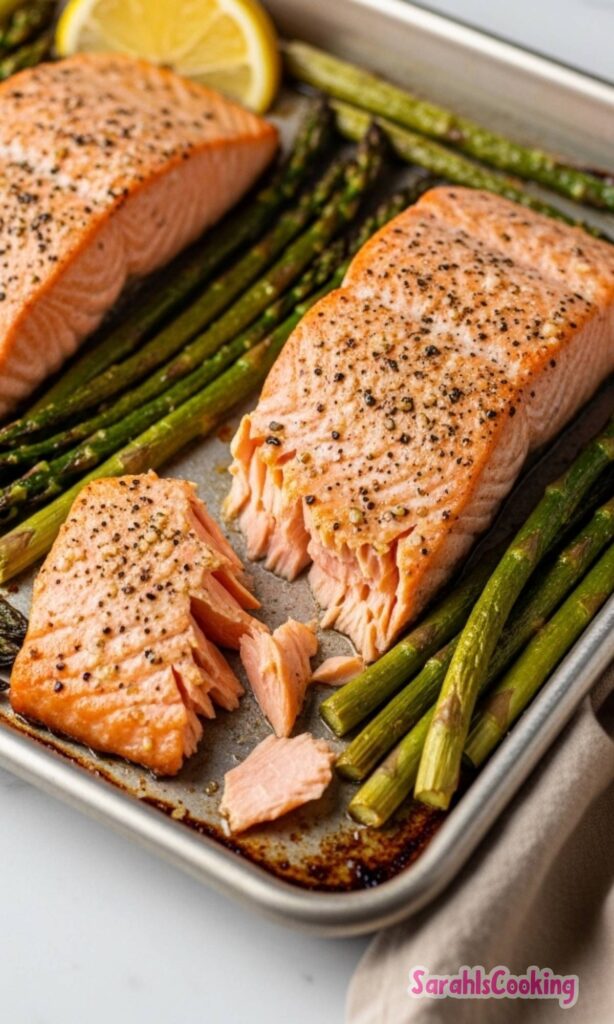

Sheet Pan Salmon & Asparagus Recipe
Description
This Sheet Pan Salmon & Asparagus recipe is a quick, healthy, and flavorful weeknight dinner that comes together in about 30 minutes. Wild-caught salmon fillets are brushed with a tangy-sweet Dijon mustard and maple syrup glaze, sprinkled with everything bagel seasoning, and roasted alongside fresh spring asparagus. Everything cooks on one pan for easy cleanup, and the bright lemon finish brings out the fresh flavors. Perfect for busy evenings when you want a nutritious, satisfying meal without the fuss.
ingredients
Instructions
- Preheat the oven to 375°F (190°C).
- Lay the asparagus on a large baking sheet. Drizzle with olive oil and rub to coat evenly. Sprinkle with kosher salt and black pepper, then spread into an even layer.
- In a small bowl, mix the Dijon mustard and maple syrup until combined. Nestle the salmon fillets in between the asparagus spears. Brush the tops of the salmon with the mustard-maple mixture, then sprinkle evenly with everything bagel seasoning.
- Place the sheet pan in the preheated oven. Roast until the salmon reaches an internal temperature of 120°F (49°C) and the asparagus is tender, about 8-12 minutes depending on thickness.Salmon will continue to cook while resting
- Remove the sheet pan from the oven and allow the salmon to rest for 5 minutes before serving. The internal temperature will rise to 125°F (52°C) during resting. Drizzle the asparagus with fresh lemon juice just before serving.
Nutrition Facts
Servings 4
Serving Size 1 salmon fillet with asparagus
- Amount Per Serving
- Calories 385kcal
- % Daily Value *
- Total Fat 18gg28%
- Saturated Fat 3.5gg18%
- Trans Fat 0gg
- Cholesterol 94mgmg32%
- Sodium 450mgmg19%
- Potassium 720mgmg21%
- Total Carbohydrate 8gg3%
- Dietary Fiber 3gg12%
- Sugars 4gg
- Protein 42gg84%
- Calcium 4% mg
- Iron 8% mg
* Percent Daily Values are based on a 2,000 calorie diet. Your daily value may be higher or lower depending on your calorie needs.
Note
- Salmon temperature tip: Remove salmon from oven at 120°F; it will reach perfect 125°F medium-rare while resting.
- Asparagus prep: Snap off the woody bottom inch of each spear before roasting for tender results.
- Make it gluten-free: Ensure your everything bagel seasoning and Dijon mustard are certified gluten-free.
- Meal prep friendly: This recipe stores well in the fridge for up to 3 days; reheat gently to avoid overcooking salmon.