

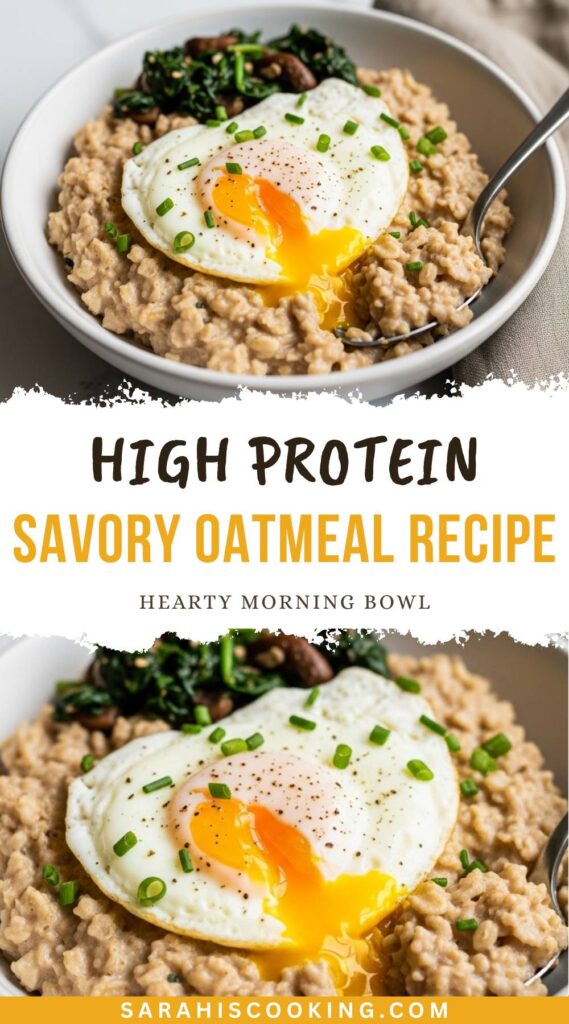
This savory oatmeal is built to be dependable, not trendy. It delivers a creamy, structured base with layered texture from sautéed vegetables and a soft egg that ties everything together.
I approach this recipe the same way I approach baking formulas, with attention to ratio, heat control, and timing. The goal is consistency you can repeat without second guessing.
Instead of treating oatmeal like a sweet breakfast, this version leans into its natural starchiness. It behaves more like a risotto, which makes it satisfying enough for any meal of the day.
Who This Recipe Is For
This recipe is for home cooks who want something fast but still intentional. If you like meals that feel balanced rather than thrown together, you will appreciate how this comes together.
It works well for beginners because the steps are straightforward, but it also rewards attention to detail. If you enjoy learning how small adjustments affect texture, this is a great place to practice.
Why This Recipe Works
The structure depends on a simple ratio of oats to liquid that allows the grains to hydrate fully without becoming loose or soupy. The starch released during cooking creates natural creaminess without needing heavy ingredients.
Adding cheese at the end reinforces that creamy texture while introducing salt and umami. Cooking it earlier would dull the flavor and tighten the oats, so timing matters.
The vegetables are cooked separately to preserve their texture and prevent excess moisture from diluting the base. This layering keeps the bowl cohesive instead of muddled.
The egg provides richness and a built in sauce. When the yolk breaks, it blends with the oats rather than sitting on top, which makes the dish feel finished rather than assembled.
Ingredients Needed for the Recipe
- Rolled oats – Provide the ideal balance of structure and creaminess, holding shape while still releasing enough starch to thicken the base.
- Water or milk – Hydrates the oats and controls richness, with milk producing a fuller body while water keeps the flavor clean.
- Salt – Essential for bringing out the nutty flavor of the oats and preventing the dish from tasting flat.
- Parmesan cheese – Adds umami and emulsifies into the oats, reinforcing the creamy consistency without making it heavy.
- Olive oil – Used to sauté the vegetables and carry flavor through the dish while preventing dryness.
- Shallot – Provides mild sweetness and aromatic depth that builds the savory profile from the start.
- Mushrooms – Contribute texture and concentrated flavor, acting as a hearty component rather than a garnish.
- Baby spinach – Adds freshness and lightness, balancing the richness of the oats and egg.
- Egg – Supplies protein and a silky element that integrates into the oatmeal when served.
- Chives – Offer a sharp finish that lifts the dish and keeps it from feeling too dense.
Ingredient Insights and Function
Rolled oats are the most reliable option because they hydrate evenly within minutes. Steel cut oats require longer cooking and produce a firmer chew, which can disrupt the creamy goal of this recipe.
Quick oats can work in a pinch, but they break down faster and may lose definition. If using them, reduce cooking time and expect a softer final texture.
Milk increases richness, but it also thickens quickly due to its proteins. If you choose milk, monitor heat closely to prevent scorching and avoid over reducing.
Parmesan is preferred for its low moisture content and concentrated flavor. Softer cheeses may clump or disappear, leaving the oatmeal less cohesive.
Mushrooms should be cooked until browned, not just softened. That caramelization step deepens flavor and prevents them from releasing excess water into the bowl.
Spinach is added last because it wilts almost instantly. Overcooking it removes both color and structure, making the dish feel heavier.
If skipping the egg for dietary reasons, consider adding toasted seeds or legumes. Without that added richness, the dish can taste incomplete.
How to make Savory Oatmeal?
Step 1 – Prepare the Cooking Liquid
Bring the water to a boil before adding the oats. Starting with hot liquid ensures the oats cook evenly instead of absorbing water slowly and turning pasty.
This step sets the texture foundation, so do not rush it. A full boil activates the starch immediately and prevents uneven hydration.
Step 2 – Cook the Oats Gently
Stir in the oats and reduce the heat to low. The mixture should maintain a soft simmer, not a rapid boil, which can break down the grains.
Cook for about five minutes, stirring occasionally but not constantly. Too much agitation releases excess starch and creates a gluey consistency.
Step 3 – Rest and Finish with Cheese
Remove the oats from heat and let them sit covered for a few minutes. This resting period allows residual steam to finish cooking without overworking the texture.
Stir in the parmesan after resting so it melts smoothly into the oats. You should see a creamy consistency that still holds shape on a spoon.
Step 4 – Sauté the Aromatics
Heat olive oil in a skillet and cook the shallots until softened and lightly translucent. This builds the first savory layer and prevents sharp onion flavor.
Keep the heat at medium so they sweat rather than burn. Browning too quickly can introduce bitterness.
Step 5 – Brown the Mushrooms
Add the mushrooms and let them cook undisturbed at first. Allowing contact with the pan encourages browning and flavor concentration.
Once they release moisture and begin to caramelize, stir and continue cooking until golden. This step adds depth that balances the creamy oats.
Step 6 – Wilt the Spinach
Add the spinach and toss just until wilted, which should take about a minute. The leaves should soften but remain vibrant.
Remove the vegetables promptly to avoid overcooking. They should feel fresh, not stewed.
Step 7 – Fry the Egg
In the same skillet, cook the egg until the whites are set but the yolk remains soft. Moderate heat is key to prevent crispy edges unless desired.
The egg should slide easily from the pan, signaling that the proteins are set without becoming tough.
Step 8 – Assemble the Bowl
Spoon the vegetables over the oatmeal, then place the egg on top. Finish with chives for brightness and contrast.
Serve immediately so the textures remain distinct. The final dish should feel layered, not blended.
How I Tested and Refined This Recipe
I tested multiple oat varieties to understand how each absorbed liquid. Rolled oats consistently delivered the best balance of creaminess and structure within a practical cooking time.
Early versions included cooking the vegetables together with the oats. That approach diluted flavor and created uneven texture, so separating the steps became essential.
I experimented with adding cheese during cooking rather than at the end. The result was tighter, heavier oatmeal, which confirmed that finishing with cheese preserves silkiness.
Heat level also made a significant difference. A higher simmer caused the oats to break down too quickly, while a low controlled simmer allowed them to hydrate properly.
Testing the egg separately ensured it remained a distinct component. Folding it in directly made the dish feel flat instead of layered.
The final method reflects those adjustments, emphasizing timing and restraint rather than extra ingredients. Each change improved clarity of texture and flavor.
Common Mistakes and How to Avoid Them
- Adding oats before the water boils, which leads to uneven hydration and a mushy result.
- Stirring constantly, causing excess starch release and a glue like texture.
- Cooking vegetables with the oats, which waters down flavor and softens everything.
- Using high heat throughout, leading to breakdown rather than controlled thickening.
- Adding cheese too early, which tightens the mixture instead of enriching it.
- Undercooking mushrooms, leaving them spongy instead of flavorful.
- Letting the oatmeal sit too long before serving, which causes it to stiffen.
Make-Ahead, Storage, and Freezing Guidance
This oatmeal can be made ahead, though it thickens as it cools. Store it in the refrigerator for up to three days in an airtight container.
When reheating, add a small splash of water or milk to loosen the texture. Warm it gently over low heat to restore its creamy consistency.
The vegetables are best cooked fresh, but they can be prepared a day ahead if needed. Reheat them separately to avoid overcooking.
Freezing is possible, though the oats may soften slightly after thawing. Reheat slowly and stir minimally to help regain structure.
Tips
- Use a heavy bottomed saucepan to maintain steady heat and prevent scorching.
- Season lightly at first, then adjust after adding cheese since it contributes saltiness.
- Let mushrooms sit undisturbed to develop proper browning.
- Keep the finished oats slightly loose, as they thicken quickly off heat.
- Warm your serving bowl to help maintain texture during assembly.
- Use fresh chives at the end for contrast rather than cooking them.
- Cook eggs last so they remain tender and freshly set.
- Taste before serving to ensure balance between creamy, savory, and fresh elements.

Savory Oatmeal Recipe
Description
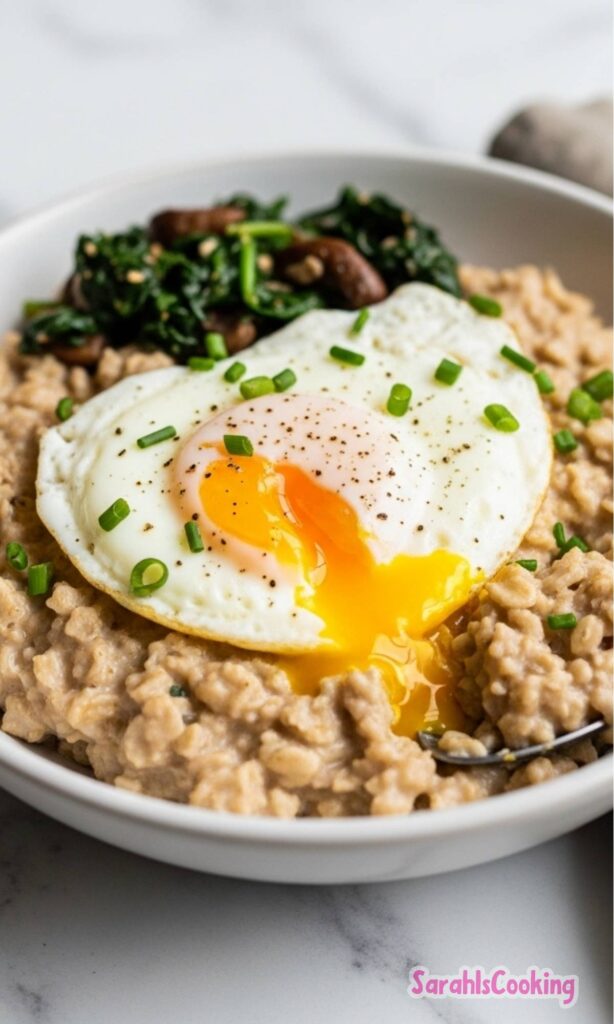
This savory oatmeal recipe features Parmesan oatmeal as its base and is topped with sautéed vegetables and a fried egg. Think risotto-style creamy oats piled with earthy mushrooms, tender spinach, and a runny-yolk egg. It's a hearty, satisfying breakfast or brunch bowl that breaks away from sweet oatmeal traditions—quick, customizable, and packed with flavor.
ingredients
Savory Oatmeal Base
Toppings
Instructions
Cook the Oatmeal
Microwave Method
Place oats, water, and salt in a medium microwave-safe bowl. Stir together. Heat on high until oatmeal is puffed and softened, about 2 minutes. Immediately stir in parmesan cheese.Let stand 1 minute before toppingStovetop Method
Bring water to a boil in a small saucepan. Reduce heat to low, pour in oats, and cook, stirring occasionally, until oats are soft and have absorbed most liquid, about 5 minutes. Remove from heat, cover, and let stand 2–3 minutes. Stir in parmesan cheese.Avoid over-stirring to prevent gluey texture
Cook the Vegetables & Egg
Sauté Vegetables
In a medium skillet, heat ½ tablespoon olive oil over medium heat. Add shallot and cook until softened, about 2 minutes. Add mushrooms and cook until browned, about 5 more minutes. Add spinach and stir until wilted, about 1 minute. Spoon vegetables over cooked oatmeal and keep warm.Cook veggies first so oatmeal doesn't stiffen while waitingFry the Egg
In the same skillet, heat remaining ½ tablespoon olive oil. Fry egg until whites are set but yolk is still runny (or to your preference). Place egg on top of oatmeal and vegetables.Season egg with salt and pepper if desiredServe
Sprinkle with chopped chives and serve immediately.Enjoy while hot for best texture
Nutrition Facts
Servings 1
Serving Size 1 bowl
- Amount Per Serving
- Calories 449kcal
- % Daily Value *
- Total Fat 24gg37%
- Saturated Fat 6gg30%
- Trans Fat 0gg
- Cholesterol 170mgmg57%
- Sodium 335mgmg14%
- Potassium 1284mgmg37%
- Total Carbohydrate 40gg14%
- Dietary Fiber 9gg36%
- Sugars 5gg
- Protein 22gg44%
- Calcium 276mg mg
- Iron 6mg mg
* Percent Daily Values are based on a 2,000 calorie diet. Your daily value may be higher or lower depending on your calorie needs.
Note
- Boil water first: Always bring water to a boil before adding oats to avoid mushy texture.
- Cook veggies ahead: Sauté vegetables before making oatmeal so everything stays warm and ready to assemble.
- Don't over-stir: Stir oats occasionally on stovetop only—over-stirring creates a gluey consistency.
- Make it vegan: Skip the egg and use nutritional yeast instead of parmesan for a dairy-free version.
- Storage: Cool leftovers completely, store in airtight container up to 4–5 days. Reheat with splash of water/milk; cook fresh egg when serving.