
This salad is built for texture, balance, and clarity of flavor. It delivers a crisp bite, a nutty backbone, and a vinaigrette that is bright without being sharp.
I designed it to be dependable, not delicate. When prepared correctly, the asparagus stays fresh and structured while the dressing enhances rather than overwhelms.
It is the kind of dish that feels intentional on the table. Clean flavors, controlled seasoning, and a method that rewards careful preparation.
Who This Recipe Is For
This recipe is for cooks who want precision without complication. If you appreciate understanding why something works, you will feel comfortable here.
No advanced knife skills are required, but attention to slicing and timing matters. The process is straightforward and repeatable once you understand the cues.
It is especially suited to those who want a vegetable dish that feels composed rather than tossed together. Every element has a role.
Why This Recipe Works
Raw asparagus has a naturally sweet, grassy flavor that is often lost in cooking. Shaving it thin allows that flavor to remain while softening the texture just enough to be pleasant.
The almonds add structural contrast. Their fat content rounds out the sharpness of the vinaigrette while reinforcing the salad’s crunch.
The ginger-sesame vinaigrette is calibrated for absorption. A slightly higher acid ratio penetrates the raw vegetable surface without making it limp.
Timing is key. A short resting period allows the dressing to season the asparagus while preserving snap and freshness.
Ingredients Needed for the Recipe
- Fresh asparagus – The foundation of the salad, providing crisp texture and mild sweetness when sliced thin.
- Sliced almonds – Add crunch and richness, balancing the acidity of the vinaigrette.
- Toasted sesame oil – Supplies depth and aroma, anchoring the dressing with warmth.
- Neutral oil – Lightens the sesame oil so the flavor does not dominate.
- Rice vinegar – Brings clean acidity that tenderizes the asparagus without harshness.
- Fresh ginger – Adds brightness and gentle heat, creating contrast to the nutty elements.
- Soy sauce – Contributes umami and seasoning, replacing the need for heavy salting.
- Honey – Softens the edges of the acid and ties the flavors together.
- Green onions – Provide a mild allium note that does not overpower the raw vegetable.
- Salt – Enhances natural flavor and assists with slight tenderization.
- Black pepper – Adds subtle warmth and complexity.
Ingredient Insights and Function
Asparagus selection matters more here than in cooked dishes. Look for firm stalks with tightly closed tips, since raw preparation exposes any fibrousness.
Thick spears are actually preferable because they shave into broader ribbons. Thin spears can become stringy rather than crisp.
Rice vinegar is chosen for its gentle acidity. Stronger vinegars can make the salad taste pickled instead of fresh.
Fresh ginger should be finely grated rather than chopped. This releases its juices and distributes flavor evenly through the vinaigrette.
Sesame oil must be balanced with a neutral oil. Using it alone creates an overpowering finish that masks the asparagus.
Almonds should be lightly toasted to deepen flavor. Raw almonds lack the aromatic quality needed to support the dressing.
Honey is not for sweetness alone. It stabilizes the emulsion and prevents the vinaigrette from separating too quickly.
Green onions offer freshness without the bite of raw garlic or onion. Substituting stronger aromatics can dominate the salad.
If substitutions are necessary, choose mild alternatives. Aggressive flavors disrupt the intentional lightness of the dish.
How to make Raw Asparagus Salad with Almonds & Ginger-Sesame Vinaigrette?
Step 1 – Prepare the Asparagus
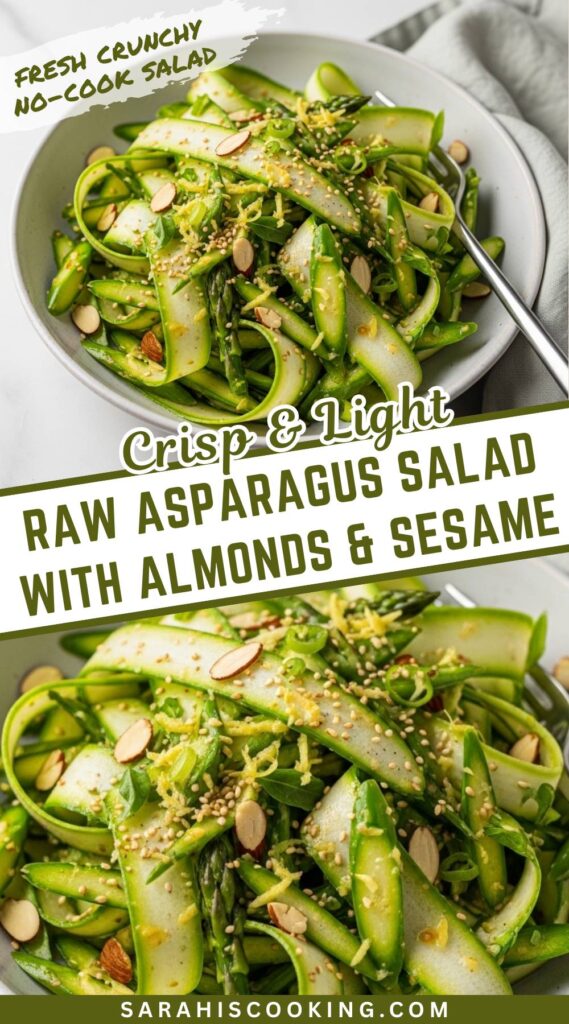
Trim the woody ends, then slice the spears on a sharp diagonal into very thin pieces. A mandoline can help, but a knife works well with care.
The goal is flexibility without limpness. Each slice should bend slightly but still feel crisp when handled.
Step 2 – Lightly Season the Base
Place the sliced asparagus in a large bowl and sprinkle with a small amount of salt. Toss gently and let it sit for five minutes.
This brief rest begins softening the fibers while drawing out moisture, allowing better absorption of the vinaigrette later.
Step 3 – Toast the Almonds
Warm the almonds in a dry skillet over medium heat until fragrant. Stir frequently to prevent uneven browning.
They should smell nutty and turn lightly golden. Remove immediately to avoid residual heat overcooking them.
Step 4 – Build the Vinaigrette
Whisk together rice vinegar, soy sauce, grated ginger, and honey until fully blended. This ensures the honey dissolves before oil is added.
Slowly drizzle in the neutral oil and sesame oil while whisking to form a smooth, cohesive dressing.
Step 5 – Taste and Adjust
Check the balance before adding it to the salad. The dressing should taste slightly stronger than you expect since it will mellow on the vegetables.
Add pepper and adjust acidity if needed, but avoid over-salting at this stage.
Step 6 – Combine and Toss
Pour the vinaigrette over the asparagus and toss thoroughly using clean hands or wide tongs. Ensure every slice is lightly coated.
The salad should glisten without pooling liquid at the bottom of the bowl.
Step 7 – Rest Briefly
Allow the salad to sit for 8 to 10 minutes at room temperature. This is enough time for flavor penetration without losing texture.
Do not refrigerate during this stage, as cold temperatures slow absorption.
Step 8 – Finish with Almonds and Green Onions
Add the toasted almonds and sliced green onions just before serving. Toss once more to distribute evenly.
This timing keeps the almonds crisp and the onions fresh rather than softened.
How I Tested and Refined This Recipe
My early versions used thicker cuts of asparagus, which resulted in a chewy texture. Switching to shaved slices completely changed the eating experience.
I also experimented with higher sesame oil content. While flavorful, it quickly overshadowed the freshness of the vegetables.
Another trial included garlic in the dressing, but it lingered too strongly. Ginger proved to be cleaner and more complementary.
I tested marinating times from five minutes to thirty minutes. Anything beyond fifteen minutes noticeably reduced the crispness.
The final version reflects a balance between seasoning and structure. Each adjustment was made to preserve texture while deepening flavor.
Common Mistakes and How to Avoid Them
- Slicing asparagus too thick, which creates toughness instead of tenderness.
- Skipping the short salting step, resulting in dressing that sits on the surface.
- Using too much sesame oil, causing the salad to taste heavy.
- Letting the salad marinate too long and losing the fresh snap.
- Adding almonds too early, which softens their texture.
- Overdressing the salad and creating excess liquid at the bottom.
- Serving the salad too cold, which dulls flavor and aroma.
Make-Ahead, Storage, and Freezing Guidance
This salad is best prepared shortly before serving, but components can be made ahead. The vinaigrette can be refrigerated for up to three days.
Slice the asparagus a few hours in advance if needed, keeping it tightly covered to prevent drying.
Once dressed, the salad holds well for about one day in the refrigerator. The texture softens slightly but remains pleasant.
Freezing is not recommended. Raw asparagus loses its structure when thawed and becomes watery.
Serve leftovers cold or allow them to sit at room temperature for a few minutes to revive flavor.
Tips
- Use the sharpest knife you have to create clean slices without crushing the stalks.
- Dry the asparagus thoroughly after washing to prevent diluted dressing.
- Whisk the vinaigrette just before using to maintain emulsification.
- Choose a wide mixing bowl so the salad can be tossed without bruising.
- Add a small extra splash of vinegar right before serving if the flavors seem muted.
- Store almonds separately if planning for leftovers to preserve crunch.
- Taste the salad after resting, not immediately after mixing, for accurate seasoning.
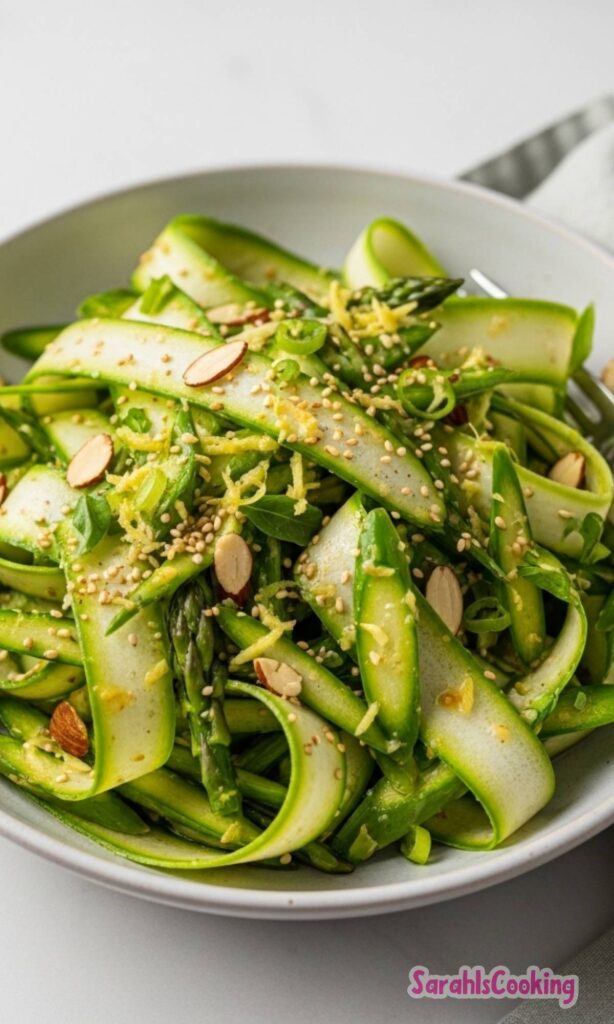

Raw Asparagus Salad Recipe with Almonds & Ginger-Sesame Vinaigrette
Description
This vibrant Raw Asparagus Salad is a celebration of spring's freshest produce. Thinly shaved raw asparagus is tossed with crunchy toasted almonds and a zesty ginger-sesame vinaigrette that balances nutty, tangy, and subtly sweet notes. No cooking required—just slice, toss, and enjoy a light, nutrient-packed side or main that's ready in minutes. Perfect for meal prep, picnics, or elevating any dinner table.
ingredients
For the Salad
For the Ginger-Sesame Vinaigrette
Instructions
Prepare the asparagus
Trim the woody ends off the asparagus. Using a vegetable peeler or sharp knife, shave the spears thinly on a diagonal into a large bowl.For best texture, choose firm, bright green asparagus spears of similar thickness.Toast the almonds
In a small dry skillet over medium heat, toast the sliced almonds for 2–3 minutes, stirring frequently, until golden and fragrant. Set aside to cool.Watch closely—they burn quickly!Make the vinaigrette
In a small jar or bowl, whisk together sesame oil, rice vinegar, soy sauce (or tamari), grated ginger, maple syrup, garlic (if using), and red pepper flakes until well combined.Taste and adjust: add a splash more vinegar for tang or syrup for sweetness.Assemble the salad
Pour the vinaigrette over the shaved asparagus and toss gently to coat evenly. Let rest for 5 minutes to allow flavors to meld.Finish and serve
Top with toasted almonds, sliced scallions (if using), and toasted sesame seeds. Serve immediately as a side or light main course.For meal prep: store dressing separately and toss just before serving to keep asparagus crisp.
Nutrition Facts
Servings 4
Serving Size 1/4 of recipe
- Amount Per Serving
- Calories 150kcal
- % Daily Value *
- Total Fat 12gg19%
- Saturated Fat 1.5gg8%
- Trans Fat 0gg
- Cholesterol 0mgmg0%
- Sodium 300mgmg13%
- Potassium 250mgmg8%
- Total Carbohydrate 8gg3%
- Dietary Fiber 4gg16%
- Sugars 3gg
- Protein 5gg10%
- Calcium 60mg mg
- Iron 1.5mg mg
* Percent Daily Values are based on a 2,000 calorie diet. Your daily value may be higher or lower depending on your calorie needs.
Note
- Keep it crisp: Shave asparagus just before serving for the freshest texture.
- Vegan option: Use maple syrup instead of honey in the vinaigrette.
- Gluten-free: Substitute tamari for soy sauce to keep this salad gluten-free.
- Add protein: Top with grilled chicken, tofu, or edamame for a heartier meal.
- Storage tip: Store leftovers in an airtight container for up to 1 day; asparagus will soften slightly but still taste great.