
Peanut Butter Energy Balls should be simple, but they should not be careless. When the ratios are correct and the ingredients are handled intentionally, they hold together cleanly, chill firmly, and deliver a balanced chew that feels substantial rather than sticky.
This version was tested with controlled adjustments to oat quantity, honey levels, and peanut butter consistency to eliminate two common problems: dry crumbling and greasy softness. The result is a cohesive, lightly sweet, refrigerator-stable snack that performs the same way on day five as it does on day one.
As a longtime home baker and a PharmD student trained to measure carefully and observe outcomes, I approach even no-bake recipes with structure in mind. These are not just stirred together. They are built.
Who This Recipe Is For
This recipe is for home cooks who want a dependable, protein-forward snack without protein powders, specialty binders, or complicated steps.
It works well for:
- Busy mornings when breakfast needs to be portable
- After-school snacks that feel substantial
- Pre- or post-workout fuel
- Weekly meal prep for predictable grab-and-go options
No baking skills are required. However, measuring accuracy matters more than many expect. Because there is no oven to “set” the structure, the texture depends entirely on the balance between dry and wet ingredients.
If you enjoy building a practical breakfast rotation, these pair well with a Simple Smoothie Bowl Recipe for mornings that need variety without extra effort.
Why This Recipe Works
Balanced Binding Ratio
The structure relies on a deliberate ratio of dry oats to wet binders. In this formulation, the oats provide bulk and chew, while peanut butter and honey act as structural glue.
Too many oats, and the mixture becomes sandy and prone to cracking. Too much binder, and the balls remain soft and slightly greasy even after chilling.
The tested balance sits at roughly a 2-to-1 relationship between dry oats and combined wet ingredients. That proportion allows the oats to hydrate fully while still leaving enough fat and sugar to firm as they chill. When compressed, the mixture should hold its shape without visible fissures.
The cause-and-effect is simple. Oats absorb moisture slowly. Peanut butter contains fat that firms under refrigeration. Honey thickens and becomes tacky as it cools. When these are proportioned correctly, the mixture sets into a cohesive bite rather than a loose crumble.
Texture Contrast by Design
Texture is not accidental here.
Rolled oats provide defined chew. Mini chocolate chips add small bursts of firmness. Unsweetened shredded coconut offers subtle structure and prevents the interior from feeling dense.
Without that contrast, energy balls can taste pasty. I tested batches without coconut and found the center heavier and more compact. The small amount of coconut lightens the texture without dominating flavor.
Mini chips are intentional. Full-size chips create structural weak points that cause cracking during rolling.
No-Bake Structural Logic
Because there is no baking step, structure must come from fat solidification and sugar adhesion.
Honey serves two roles. It sweetens and acts as an adhesive, coating oat particles and helping them cling together. Granulated sugar does not dissolve sufficiently in this context and would leave a gritty texture.
Peanut butter contributes fat-based cohesion. When chilled, its natural oils firm and stabilize the shape. That is why refrigeration is not optional for best results. It completes the structural process.
This recipe works because it respects how these ingredients behave physically, not just how they taste.
Ingredient Insights and Function
Rolled Oats, Not Quick Oats
Old-fashioned rolled oats maintain their shape and provide chew. Their larger flakes hydrate gradually, creating texture without becoming mushy.
Quick oats are thinner and more processed. In testing, they absorbed moisture too rapidly and produced a denser, almost dough-like interior. The finished balls lacked contrast and felt heavy.
If quick oats are used, expect a softer and more compact texture. You may also need to slightly reduce the quantity to prevent dryness.
Natural Peanut Butter
Natural peanut butter is ideal, but it must be stirred thoroughly before measuring. Oil separation is common. If the oil is not reincorporated, the first scoop will be dry and stiff, leading to cracking in the finished balls.
Dry peanut butter results in a crumbly mixture because there is not enough fat to coat the oats. Conversely, overly oily peanut butter can make the mixture slippery and difficult to roll.
Stir until fully smooth before measuring. Level the cup without packing.
Honey as Structural Binder
Honey provides sweetness and viscosity. Its thick consistency allows it to coat oats and bind them together. When chilled, it becomes more cohesive.
Reducing the honey by even two tablespoons noticeably weakens structure. In testing, lower honey levels caused the balls to split after refrigeration because the oats did not have sufficient adhesive.
Maple syrup may be substituted, but expect a softer texture. Because it is thinner than honey, you may need an extra tablespoon of oats to compensate.
Chocolate Chips and Coconut
Mini chocolate chips contribute texture and mild sweetness. They also help interrupt density. Their small size ensures even distribution without destabilizing the structure.
Unsweetened shredded coconut absorbs slight excess moisture and prevents gumminess. If omitted, the mixture may feel more compact. A tablespoon or two of additional oats can offset that change.
Substitution Boundaries
Almond butter and sunflower butter work well but vary in thickness. If using a looser nut butter, add oats one tablespoon at a time until the mixture holds when pressed.
Maple syrup can replace honey for a vegan option, but expect slightly softer results. Increase oats modestly and extend chilling time.
Protein powder is not recommended in this base version. It alters absorption dramatically and requires reformulation.
Understanding these boundaries prevents structural disappointment.
Step-by-Step Success Guidance
Mixing for Even Hydration
Combine oats, coconut, and chocolate chips first. This ensures even distribution before wet ingredients are introduced.
Add peanut butter and honey. Fold deliberately, pressing the mixture against the side of the bowl to help coat the oats.
Do not stop mixing too early. In early batches, I under-mixed and found dry oat pockets that later caused cracking during rolling. The mixture should look uniform, with no visible streaks of honey or clumps of dry oats.
Press a small amount between your fingers. If it holds without crumbling, hydration is sufficient.
The Chill Window
Refrigerate the mixture for 20 to 30 minutes before rolling.
This step allows the peanut butter to firm and the honey to thicken. Skipping it results in excessive sticking and misshapen balls.
In testing, unchilled mixture stuck to hands and required additional oats to compensate. That adjustment altered the final texture unnecessarily. Chilling first preserves the intended ratio.
Proper Portioning
Use a one-tablespoon scoop for consistency. Uniform size ensures even chilling and predictable texture.
Scoop, compress firmly in your palm, then roll. Compression is essential. Simply rolling loosely shaped portions leads to small cracks that widen after refrigeration.
If cracks appear while rolling, press again before shaping.
Final Texture Check
Before rolling the full batch, test one portion.
If the mixture crumbles:
- Add 1 to 2 teaspoons peanut butter and mix thoroughly.
If the mixture feels overly sticky:
- Add 1 to 2 tablespoons oats and stir until evenly distributed.
Make small adjustments. Large additions can shift the balance too far.
How I Tested and Refined This Recipe
Several controlled tests shaped this final version.
Quick oats versus rolled oats: Quick oats produced a compact, almost paste-like interior. Rolled oats created defined chew and structural stability.
Honey levels: Reducing honey by one quarter cup resulted in splitting after refrigeration. The oats absorbed moisture but lacked sufficient adhesion. The current level maintains firmness without excess sweetness.
Chilled versus unchilled rolling: Rolling immediately after mixing caused sticking and uneven shaping. Chilling first preserved texture and required no extra dry ingredients.
Natural versus conventional peanut butter: Conventional peanut butter, which contains stabilizers, produced consistent results without stirring. Natural peanut butter required thorough mixing but delivered better flavor. Inconsistent stirring led to structural cracking.
Each variation was observed over five days in refrigeration. The final version maintained chew without drying out.
Measurements were cross-checked by weight to confirm repeatability. Precision matters in no-bake recipes because there is no oven to correct imbalance.
Common Mistakes and How to Avoid Them
Balls Falling Apart
Cause: Dry peanut butter or insufficient honey.
If the mixture looks crumbly and does not hold when pressed, the binder is inadequate.
Fix: Add small amounts of peanut butter, mix thoroughly, and compress firmly during shaping.
Too Sticky to Roll
Cause: Warm kitchen or excessive binder.
Warm temperatures soften peanut butter. This increases sticking and makes shaping frustrating.
Fix: Refrigerate longer. If still sticky, add oats one tablespoon at a time until manageable.
Avoid adding large amounts at once, which can create dryness.
Gritty or Tough Texture
Cause: Using stale oats or packing oats too tightly in the measuring cup.
Old oats lose moisture and create uneven texture. Overpacking increases dryness.
Fix: Use fresh oats and spoon them lightly into the measuring cup before leveling.
Understanding the cause prevents unnecessary frustration.
Make-Ahead, Storage, and Freezing Guidance
Refrigerator Storage
Store in an airtight container for up to seven days.
Texture improves after 12 to 24 hours as the structure fully sets. The exterior becomes slightly firmer while the interior remains chewy.
Separate layers with parchment if stacking to prevent sticking.
For a balanced weekly breakfast plan, pairing these with a Healthy Breakfast Casserole Recipe ensures both portable and sit-down options are covered.
Freezing Performance
Arrange in a single layer on a baking sheet and freeze until solid. Transfer to a freezer-safe container.
They freeze well for up to two months. Thaw at room temperature for 10 to 15 minutes before eating.
Freezing slightly dulls sweetness, so allow full thawing for best flavor.
Room Temperature Stability
These hold safely at room temperature for four to six hours, making them suitable for lunchboxes.
In warmer climates, texture softens more quickly. An insulated container helps maintain firmness.
For variety throughout the week, rotating these with Banana Pancake Recipe mornings keeps breakfast practical without repetition.
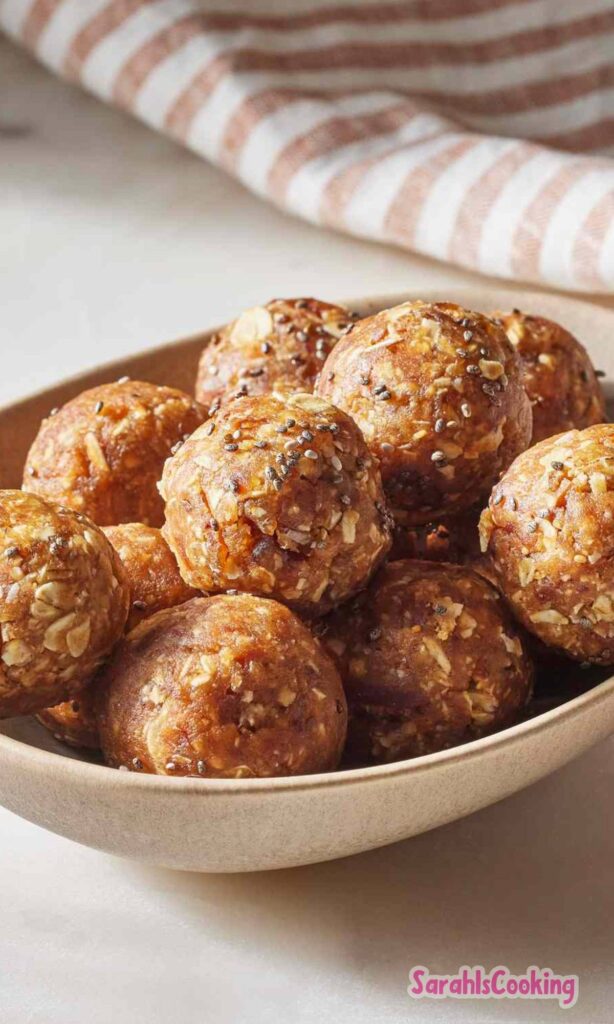

Peanut Butter Energy Balls Recipe
Description
These healthy peanut butter and chocolate energy balls deliver a mixture of simple and complex carbohydrates to help fuel you up whenever you need a little boost. Made with just five wholesome ingredients, they’re quick to prepare, naturally sweetened, and perfect for an on-the-go snack or pre-workout pick-me-up.
ingredients
Instructions
- In a medium bowl, combine rolled oats, natural peanut butter, honey, mini chocolate chips, and shredded coconut.Ensure peanut butter and honey are at room temperature for easier mixing.
- Stir thoroughly with a wooden spoon or spatula until the mixture is well combined and no dry spots remain.Scrape the bottom of the bowl to incorporate all dry ingredients.
- Cover the bowl and refrigerate the mixture for 30 minutes to firm up (optional but helpful for rolling).This step prevents sticking and makes shaping easier.
- Using a 1-tablespoon measure or your hands, roll the mixture into 1-inch balls (about 35 total).Lightly wet or oil your hands to prevent sticking.
- Place the balls on a parchment-lined tray in a single layer and refrigerate until firm (about 30 minutes).
- Transfer to an airtight container and store in the refrigerator for up to 2 weeks or freeze for longer storage.
Nutrition Facts
Servings 17
Serving Size 2 balls
- Amount Per Serving
- Calories 95kcal
- % Daily Value *
- Total Fat 5g8%
- Saturated Fat 1.5g8%
- Sodium 45mg2%
- Potassium 140mg4%
- Total Carbohydrate 11g4%
- Dietary Fiber 2g8%
- Sugars 6g
- Protein 3g6%
- Calcium 15 mg
- Iron 0.7 mg
* Percent Daily Values are based on a 2,000 calorie diet. Your daily value may be higher or lower depending on your calorie needs.
Note
- Make it vegan: Use maple syrup instead of honey.
- Add flavor: Stir in ¼–½ tsp ground cinnamon or a pinch of sea salt.
- Boost fiber: Replace chocolate chips with chopped dried fruit like raisins or unsweetened cherries.
- Storage tip: Keep refrigerated in an airtight container for freshness and firm texture.