
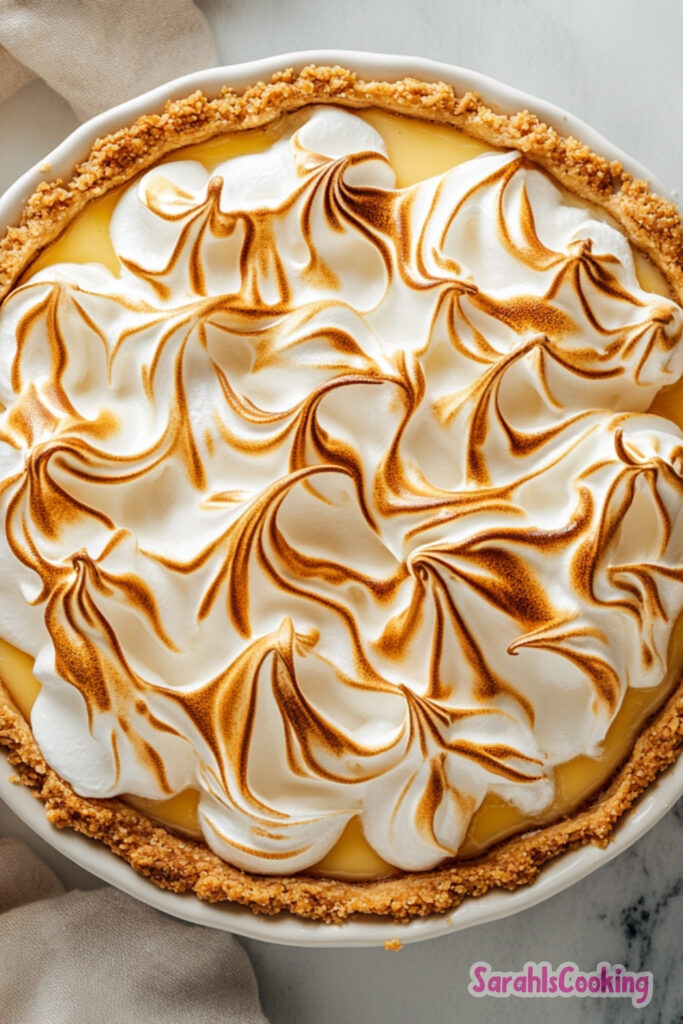
A reliable lemon meringue pie with creamy citrus filling, graham crust, and fluffy toasted meringue – tested for smooth texture and consistent results.
This lemon meringue pie is built for consistency. It delivers a smooth, balanced lemon filling, a stable crust, and a meringue that holds its shape without guesswork.
I developed this version during a stretch of testing heavier desserts when I wanted something lighter but still grounded. It keeps the classic flavor while simplifying the process.
The method leans on structure over shortcuts. Every step has a purpose, from how the filling sets to how the meringue stays glossy and stable.
Ingredients Needed for the Recipe
- Graham cracker crumbs – form the base structure of the crust and provide a slightly sweet, sturdy foundation that holds up under the filling.
- Granulated sugar – adds sweetness to the crust while helping bind the crumbs for a more cohesive texture.
- Salt – balances sweetness and enhances the overall flavor of the crust without making it taste salty.
- Unsalted butter, melted – acts as the binding fat that solidifies the crust once baked, creating a firm, sliceable base.
- Sweetened condensed milk – creates a creamy, stable lemon filling that sets reliably without requiring complex custard techniques.
- Egg yolks – thicken and enrich the filling, giving it structure and a smooth, custard-like consistency.
- Fresh lemon juice – provides the essential acidity that activates the thickening process and delivers a clean citrus flavor.
- Lemon zest – deepens the citrus profile by adding aromatic oils that enhance the brightness of the filling.
- Egg whites – whip into the meringue, creating volume and a light, airy topping that contrasts with the dense filling.
- Granulated sugar (for meringue) – stabilizes the egg whites and creates a glossy, marshmallow-like texture when properly dissolved.
- Cream of tartar – strengthens the protein structure of the meringue, helping it hold stiff peaks without collapsing.
- Salt (for meringue) – balances sweetness and enhances the overall flavor of the topping.
- Vanilla extract – softens the sharpness of the meringue and adds a subtle depth that complements the lemon.
How to make Lemon Meringue Pie?

Step 1 – Prepare and Bake the Graham Cracker Crust
Preheat the oven to 350°F (175°C). Line a square pan with parchment if making bars, or prepare a tart or pie shell if going traditional.
Combine graham cracker crumbs, sugar, salt, and melted butter until the mixture resembles wet sand. Press firmly into the pan, making sure the layer is compact and even.
Bake for about 10 minutes until lightly golden. The surface should look set, not greasy, and feel firm to the touch. Let it cool slightly while preparing the filling.
Step 2 – Mix the Lemon Filling
Whisk the sweetened condensed milk and egg yolks until smooth and pale. This step ensures the yolks are fully incorporated before adding acid.
Add the lemon juice and zest, stirring until combined. The mixture will begin to thicken slightly as the acid interacts with the milk proteins.
The texture should be smooth and pourable, without streaks. Avoid overmixing, which can introduce unnecessary air.
Step 3 – Bake the Filling
Pour the filling over the warm crust and spread evenly. The crust should still be slightly warm, not hot, to prevent separation.
Bake for 15 to 18 minutes until the edges are set and the center has a slight jiggle. It should not look liquid, but it should not be fully firm either.
Remove from the oven and let it cool to room temperature. Then refrigerate for at least 4 hours, preferably overnight, to fully set.
Step 4 – Slice or Prepare for Topping
If using a lined pan, lift the chilled slab using the parchment overhang. Use a sharp knife and clean the blade between cuts for neat edges.
If using a tart pan, gently unmold the pie once fully chilled. The structure should feel firm and hold clean edges.
This step ensures the base is stable before adding the meringue, which is critical for clean presentation.
Step 5 – Prepare the Marshmallow Meringue
Set up a double boiler with about 2 inches of simmering water. Combine egg whites, sugar, cream of tartar, and salt in a heat-safe bowl.
Whisk constantly over the heat until the mixture reaches 140°F and the sugar fully dissolves. The mixture should feel smooth between your fingers.
This heating step stabilizes the meringue and prevents a grainy texture later.
Step 6 – Whip the Meringue
Remove from heat and whip using a mixer on medium-high speed. Continue for 10 to 15 minutes until stiff, glossy peaks form.
The meringue should be thick, elastic, and able to hold sharp peaks without collapsing. Add vanilla and mix briefly to combine.
Proper whipping is key to structure. Underwhipped meringue will slump, while overwhipped can become dry.
Step 7 – Assemble and Finish
Spread the meringue over the chilled filling, making sure it reaches the edges to seal the surface. This helps prevent weeping.
Create peaks and swirls using the back of a spoon. Lightly toast with a kitchen torch for a golden finish if desired.
Serve immediately or refrigerate briefly until ready. The texture contrast is best within the first day.
Why This Recipe Works
This recipe relies on a balance between acidity, fat, and protein. The condensed milk and egg yolks create a filling that sets without becoming rubbery.
The ratio of lemon juice to dairy is intentional. It provides enough acidity to thicken the mixture while maintaining a smooth, creamy texture.
The graham cracker crust offers a stable base that contrasts with the soft filling. Its slightly coarse texture prevents sogginess and supports clean slicing.
The meringue method is designed for stability. Heating the sugar and egg whites ensures a glossy structure that holds peaks and resists collapse.
How I Tested and Refined This Recipe
I tested multiple versions of the filling, adjusting the ratio of lemon juice to condensed milk. Early batches were either too sharp or too loose.
Using less lemon juice made the filling overly sweet and flat. Increasing it too much caused separation and a weak structure.
I also tested traditional custard methods, but they added complexity without improving the final texture. The condensed milk version proved more reliable.
The meringue required the most refinement. Skipping the heating step led to grainy textures and unstable peaks that deflated quickly.
Whipping times also varied. Shorter whipping resulted in soft peaks that couldn’t hold shape, while overwhipping made the texture dry and difficult to spread.
The final method reflects these adjustments. Each step removes variability and improves consistency for home bakers.
Common Mistakes and How to Avoid Them
- Using bottled lemon juice – results in a dull, flat flavor that lacks brightness and affects the balance of the filling.
- Overbaking the filling – leads to a rubbery texture instead of a smooth, creamy consistency.
- Underchilling the pie – causes the filling to be too soft and difficult to slice cleanly.
- Skipping the meringue heating step – produces grainy, unstable meringue that won’t hold peaks.
- Not sealing meringue to edges – allows moisture to escape, causing weeping and separation.
- Overwhipping the meringue – creates a dry texture that is hard to spread and lacks gloss.
- Underwhipping the meringue – results in soft peaks that collapse quickly after spreading.
- Poor crust compaction – leads to a crumbly base that doesn’t hold together when sliced.
Make-Ahead, Storage, and Freezing Guidance
The crust and filling can be prepared a day in advance and stored in the refrigerator. This actually improves the structure as the filling fully sets.
Once assembled, the pie is best consumed within 2 to 3 days. The meringue may begin to soften slightly over time.
Store loosely covered in the refrigerator to prevent condensation from forming on the meringue surface.
Freezing is not recommended once assembled, as the meringue texture will degrade. The crust and filling alone can be frozen and thawed before topping.
For best results, add the meringue the day of serving. This preserves its texture and visual appeal.
Tips
- Use a thermometer for the meringue to ensure the sugar fully dissolves.
- Press the crust firmly using the bottom of a glass for even compaction.
- Chill the filling overnight for the cleanest slices.
- Wipe your knife between cuts to maintain sharp edges.
- Toast the meringue lightly to avoid burning delicate peaks.
- Keep the double boiler at a gentle simmer, not a boil.
- Work on a completely cooled filling before adding meringue.
- Use fresh zest sparingly for a more layered citrus flavor.

Lemon Meringue Pie Recipe
Description
This Lemon Meringue Pie leans into that classic diner-style flavor that so many people love—bright lemon, a creamy filling, and a fluffy meringue piled high on top. The graham cracker crust keeps it simple, the lemon stays smooth and tangy without being harsh, and the marshmallow-style meringue toasts beautifully whether you bake it as easy-to-slice bars or in a tart pan for a more traditional look.
ingredients
Graham Cracker Crust
Lemon Pie Filling
Meringue Topping
Instructions
Preheat & Prep
Preheat the oven to 350°F (175°C). Line an 8×8 or 9×9-inch square pan with parchment paper, leaving some overhang on the sides for easy removal if you want to make bars. Or if you want to make a pie, use a pie shell or tart shell.Make Graham Cracker Crust
In a food processor add graham cracker crumbs, sugar, salt, and melted butter. Pulse until the mixture resembles wet sand. Press firmly into the bottom of the prepared pan to form an even layer.Bake Crust
Bake for 10 minutes. Let it cool while you prepare the filling.Make Lemon Filling
In a large bowl, whisk together the sweetened condensed milk and egg yolks until smooth. Add the lemon juice and zest, and whisk again until fully combined. The mixture will thicken slightly on its own.Bake Filling
Pour the filling over the warm crust and smooth the top. Bake for 15–18 minutes, or until the edges are set and the center looks just slightly jiggly.Chill Filling
Let the bars cool, then refrigerate for at least 4 hours (preferably overnight) until fully set.Slice Bars
Use the parchment overhang to lift the bars out of the pan. Slice into squares or rectangles. Wipe your knife clean between cuts for neat edges.Prepare Double Boiler
Fill a small pot with 2 inches of water. Place it over medium heat. Bring to a gentle simmer.Combine Meringue Ingredients
Add the egg whites, sugar, cream of tartar, and salt to a large glass bowl, and whisk to combine.Heat Meringue Mixture
Place the glass bowl on top of the pan to form a double boiler. Continue to whisk the mixture over the double boiler, until it reaches 140ºF, or until the mixture is just barely hot, and the sugar has entirely melted.Do not let the water boil vigorouslyWhip Meringue
Remove from the double boiler. Either whip the mixture in the bowl it already is using a hand mixer, or transfer the syrup to the bowl of a stand mixer, and whip using the whisk attachment. Whip for about 10 to 15 minutes, or until stiff peaks form. The mixture should be thick, elastic, glossy, forming stiff peaks.Ensure whisk reaches bottom of bowl for best resultsFinish Meringue
Add the vanilla and mix to combine. Spread over the chilled lemon bars or tart, toast with a kitchen torch if desired.Create peaks and swirls with the back of a spoon
Nutrition Facts
Servings 12
Serving Size 1 slice
- Amount Per Serving
- Calories 340kcal
- % Daily Value *
- Total Fat 14gg22%
- Saturated Fat 7gg35%
- Trans Fat 0gg
- Cholesterol 140mgmg47%
- Sodium 180mgmg8%
- Potassium 120mgmg4%
- Total Carbohydrate 48gg16%
- Dietary Fiber 0.5gg2%
- Sugars 38gg
- Protein 6gg12%
- Calcium 10% mg
- Iron 5% mg
* Percent Daily Values are based on a 2,000 calorie diet. Your daily value may be higher or lower depending on your calorie needs.
Note
- Make ahead: The crust and lemon filling can be made a day in advance and chilled. Add the meringue the day you plan to serve for best texture.
- Meringue tips: Make sure the whisk reaches the bottom of the bowl when whipping. Even a trace of egg yolk or grease can prevent stiff peaks from forming.
- Fresh lemon juice: Bottled juice won't give the same bright, clean citrus flavor that this dessert depends on.
- Storage: Store finished pie or bars in the refrigerator for up to 3 days, loosely covered so the meringue doesn't weep.
- Variations: Add raspberry jam under the meringue, swap graham crackers for gingersnaps, or make mini tartlets for parties.