
For me, lemon balm syrup is not just a recipe, it is a season. The kind of thing that quietly shows up every year when the days stretch longer and the air smells greener somehow. I start thinking about it the moment lemon balm really takes off in the garden.
It is light, fresh, and gently lemony without being sharp. Not loud like actual lemons. More like a soft background note that makes water, fruit, or a simple drink feel thoughtful. It is the syrup I reach for when summer feels a bit too warm and slow.
I make it every year, and every year it feels slightly different. Some summers the lemon balm is stronger, almost citrus-forward. Other times it leans more herbal and calm. That variability is part of the charm, and honestly, part of why I never get bored of it.
Lemon balm, also known as melissa or crimson bee balm, grows generously from spring to autumn. The leaves are where all the goodness lives. That is where the aroma hides, where the essential oils linger, and where the syrup gets its character.
I always pick the leaves before the plant flowers. Once it blooms, the bees move in, and I leave it alone. It feels right to give something back, especially to a plant that does so much work feeding pollinators through early summer.
There is something grounding about the process too. Washing leaves. Peeling lemon zest slowly. Letting the syrup rest for days without rushing it. This is not a recipe you rush through on a busy afternoon. It asks for patience, and rewards you for it.
The syrup ends up everywhere in my kitchen. Mixed with mineral water on hot afternoons. Poured over fruit salad when I want dessert to feel lighter. Sometimes drizzled on ice cream, where the cold brings out the herbal notes even more.
And yes, it absolutely shines in drinks. A splash here, a fizz there, and suddenly you have something that feels festive without being complicated. That is the magic of lemon balm syrup. Simple ingredients. Big mood.
Ingredients Needed for the Recipe
- Lemon balm leaves – the star of the recipe, bringing that soft lemony and herbal aroma.
- Water – used to extract flavor gently from the leaves and dissolve everything evenly.
- Sugar – preserves the syrup and gives it body and sweetness.
- Citric acid – balances sweetness and helps the syrup keep longer.
- Untreated lemons – the peel adds fragrance, while the juice adds brightness.
The ingredient list is short, which I love. Nothing fancy, nothing hard to find. Each one has a clear role, and when they come together, they feel more than the sum of their parts.
Using untreated lemons really matters here. The peel goes straight into the syrup, and you want clean citrus aroma, not bitterness or residue. I am careful with the zest, only taking the yellow part and leaving the white behind.
The sugar might seem like a lot at first glance. It always does. But this is a syrup meant to be diluted, shared, and stored. Once mixed with water or bubbles, it settles into something very balanced.
When and how I harvest lemon balm
I pick lemon balm on a sunny day, usually late morning. The leaves are dry, the aroma is strong, and everything feels calmer somehow. I avoid harvesting after rain, since wet leaves tend to bruise and lose scent faster.
I also stay well away from roads and treated fields. Lemon balm absorbs what is around it, and I want clean, happy leaves. I gently pinch them off, taking only what I need and leaving the plant full and healthy.
Once home, I do not let them sit around. Lemon balm loses aroma quickly. A quick wash, a gentle pat dry, and straight into the recipe. That freshness makes a real difference in the final syrup.
How to make Lemon Balm Syrup?
Step 1 – Prepare the leaves and syrup base
Wash the lemon balm thoroughly and pat it dry. Separate the leaves from the stems and set them aside. The stems are too coarse and do not add much flavor here.
Bring the water to a boil in a large saucepan. Add the sugar, citric acid, and thin strips of lemon peel. Be careful with the peel, only the yellow part, since the white layer turns bitter.
Let everything boil for a few minutes until the sugar fully dissolves. Then remove from heat and allow it to cool completely. This cooling step matters more than it seems.
Step 2 – Add lemon juice and lemon balm
Once the syrup base is cool, stir in the fresh lemon juice. The smell at this point is already lovely, bright but gentle.
Add the lemon balm leaves, pressing them down so they are fully submerged. Cover the container with cling film or a lid.
Place it in a cool, dark spot for five days. I usually use the cellar or the back of the pantry. Stir it once a day, just briefly.
Step 3 – Strain and bottle the syrup
After five days, strain the syrup through a fine cloth into a clean pot. Take your time here. You want a clear syrup without bits of leaf.
Pour the strained syrup into sterilized bottles using a funnel. Close them with screw caps, but do not tighten them fully.
Sometimes the syrup can ferment slightly. Leaving the caps loose prevents cracked bottles and small disasters on pantry shelves.
Step 4 – Store and serve
Store the bottles in a cool, fresh place. The syrup keeps well for up to six months when stored properly.
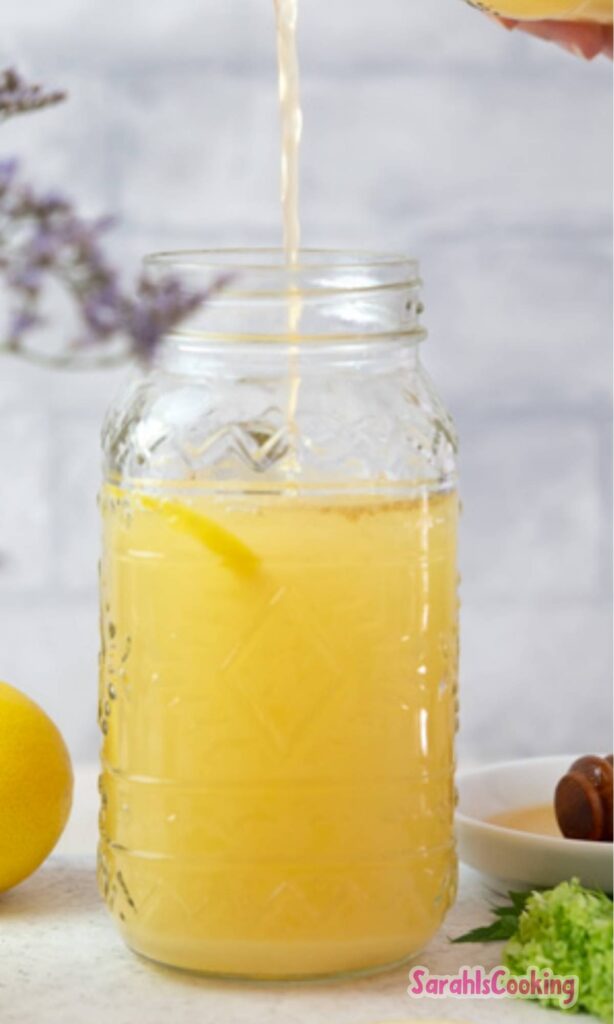
To serve, mix one part syrup with six parts soda water. Add lemon slices or a splash of fresh lemon juice if you like things extra bright.
For a Hugo-style drink, replace most of the water with prosecco and add fresh mint or lemon balm leaves. It never fails to feel like summer.
Serving ideas I come back to every summer
The most obvious use is with sparkling water, and honestly, it never gets old. I keep a bottle in the fridge and reach for it whenever plain water feels boring.
It is also beautiful over fruit salad. Strawberries, peaches, or melon especially. The syrup ties everything together without overpowering the fruit.
On ice cream, it works best with simple flavors. Vanilla, yogurt, or even lemon sorbet. The cold pulls out the herbal notes in the nicest way.
I also use a splash in cocktails when I want something lighter than a full liqueur. It adds complexity without making drinks heavy or sweet.
Tips
- Harvest lemon balm before flowering for the best aroma.
- Always let the sugar syrup cool before adding leaves.
- Only use the yellow part of the lemon peel.
- Stir the syrup gently during its resting time.
- Store bottles cool and do not overtighten the caps.
None of these tips are complicated, but together they make the difference between a good syrup and a really lovely one. Small care shows in the final result.
I have skipped steps before, rushed cooling, or over-peeled lemons. The syrup always tells on me later. This is one of those recipes that rewards attention.
Why lemon balm syrup feels special to me
There are faster syrups out there. Ones you can boil and bottle in an hour. Lemon balm syrup is not that, and I think that is why it stays with me.
It carries time inside it. Days of resting. A specific moment in the garden. A certain quality of light. When I open a bottle in late summer, it brings all of that back.
I also love that it is quiet. It does not shout for attention. It slips into drinks and desserts and makes them better without trying to be the star.
That kind of food feels generous to me. And maybe that is why I keep making it, year after year, even when the pantry is already full.
Buon rinfresco!

Lemon Balm Syrup Recipe
Description
Lemon balm syrup captures the bright, citrusy essence of summer in a bottle. Perfect for mixing into sparkling water, cocktails like the Hugo, or drizzling over ice cream and fruit salads, this aromatic syrup is both versatile and easy to make at home. Harvested before flowering for peak flavor, lemon balm (also known as melissa) infuses the syrup with its delicate lemony notes and subtle herbal complexity.
ingredients
Instructions
- Wash the lemon balm leaves thoroughly and pat dry. Strip the leaves from the stems.
- In a large saucepan, bring the water to a boil. Add the sugar, citric acid, and the yellow zest of the lemons (use a sharp knife or peeler to avoid the bitter white pith). Stir until dissolved and simmer for 3–5 minutes. Remove from heat and let cool completely.
- Once cooled, add the freshly squeezed lemon juice and the lemon balm leaves to the sugar syrup.
- Cover the container with cling film and let the mixture steep in a cool, dark place (like a cellar) for 5 days. Stir gently once or twice a day.
- After 5 days, strain the syrup through a fine-mesh sieve or cheesecloth into a clean pot to remove all plant material.
- Pour the strained syrup into sterilized glass bottles. Do not seal tightly—use screw caps loosely to allow any fermentation gases to escape and prevent cracking.
- Store bottles in a cool, dark place. The syrup will keep well for up to 6 months.
- To serve: Mix 1 part syrup with 6 parts sparkling water, add fresh lemon slices or juice. For a Hugo cocktail, replace most of the water with Prosecco and garnish with mint or lemon balm leaves.
Nutrition Facts
Servings 20
Serving Size 100
- Amount Per Serving
- Calories 164kcal
- % Daily Value *
- Total Carbohydrate 42g15%
- Sugars 41g
* Percent Daily Values are based on a 2,000 calorie diet. Your daily value may be higher or lower depending on your calorie needs.
Note
- Harvest tip: Pick lemon balm on a dry, sunny day before it flowers for the most intense aroma.
- Storage: Always use sterilized bottles and store in a cool, dark place. Loosen caps slightly to prevent pressure buildup.
- Serving ideas: Try over vanilla ice cream, in lemonade, or as a sweetener for herbal iced tea.