
There’s something deeply reassuring about a pot of soup quietly simmering on the stove. The gentle bubbling, the slow release of aromas, the sense that nourishment is on its way—it all feels grounding in the best possible way.
Italian Penicillin Soup delivers that feeling every single time. It’s the kind of dish that makes you slow down, breathe a little deeper, and trust that a warm bowl can genuinely improve your day. This soup isn’t flashy or complicated. It’s comforting, steady, and deeply satisfying—exactly what you reach for when you need care in edible form.
Over the years, I’ve returned to this recipe whenever I want something soothing but still full of flavor. It’s simple food done thoughtfully, and that’s where its quiet magic lives.
More Than Just a Nickname
The name “Italian Penicillin” isn’t meant to be literal, of course. It’s an affectionate way of describing how restorative this soup feels, especially when you’re run down, under the weather, or just craving something gentle.
In many Italian households, this type of brothy soup is a first response to fatigue or illness. It’s served warm, lightly seasoned, and packed with soft vegetables and pasta that’s easy on the stomach. Think of it as Italy’s soulful answer to chicken noodle soup—less about bold spices and more about balance, warmth, and care.
What makes it special isn’t one standout ingredient, but how everything works together to create something greater than the sum of its parts.
The Heart of the Matter: A Vegan Twist
Traditionally, Italian Penicillin Soup relies on chicken broth and a generous finish of Parmesan cheese for depth. When I started experimenting with a plant-based version, I wanted to preserve that same savory richness without leaning on dairy or meat.
The key turned out to be white miso paste. Used sparingly, it adds a gentle umami backbone that mimics the roundness Parmesan usually provides. It doesn’t make the soup taste Asian or overpower the herbs—it simply deepens the broth in a way that feels natural and comforting.
This vegan adaptation still tastes soulful and familiar, just lighter and accessible to more diets. It’s one of those swaps that feels clever without feeling forced.
Ingredients Needed for the Recipe
1 tablespoon olive oil
1 large onion, diced
2 medium carrots, sliced
2 celery stalks, sliced
1 yellow bell pepper, diced
1 parsnip, peeled and diced
3 garlic cloves, minced
4 sprigs fresh thyme, leaves stripped
1 sprig fresh rosemary, leaves stripped and chopped
6 cups low-sodium vegetable broth
1 bay leaf
1 teaspoon white miso paste
1 cup dry pastina pasta, cooked
½ lemon, juiced
¼ cup fresh parsley, chopped
Salt and pepper to taste
Each ingredient has a role here. The root vegetables create natural sweetness, the herbs add warmth and aroma, and the lemon at the end keeps everything from feeling heavy.
What Exactly is Pastina, Anyway?
Pastina is one of those ingredients that seems humble until you realize how much comfort it delivers. The word simply means “little pasta,” and that’s exactly what it is—tiny shapes like stars, dots, or minuscule shells.
Because it’s so small, pastina cooks quickly and absorbs the surrounding broth beautifully. It thickens the soup slightly and ensures every spoonful has a bit of pasta, a bit of vegetable, and plenty of liquid.
If you’ve never cooked with it before, this soup is the perfect introduction. It turns a simple broth into something incredibly cozy.
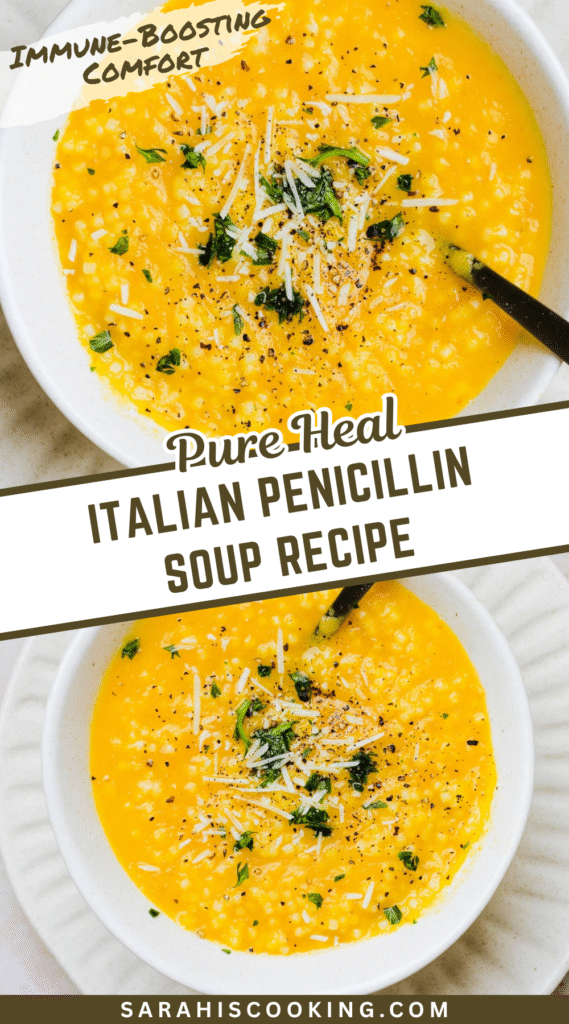
How to make Italian Penicillin Soup?
Step 1: Gathering Your Aromatics
Start by dicing your onion, slicing the carrots and celery, and chopping that lovely yellow bell pepper and parsnip.
You want everything to be roughly the same size, you know, so they all cook at the same, gentle pace.
This isn’t a race; it’s the first, mindful step in building layers of flavor.
Step 2: The Sizzling Start
Warm the olive oil in a large, heavy-bottomed pot over a steady medium heat. Now, in go all those beautiful, chopped vegetables.
You’ll hear a satisfying sizzle as they hit the pot. We’re not looking to brown them here, just to soften them up and sweeten them a bit.
Give them a good 5 to 7 minutes, stirring occasionally, until the onion turns translucent and the kitchen starts to smell amazing.
Step 3: A Fragrant Interlude
Next, stir in the minced garlic, the delicate thyme leaves, and that wonderfully pungent chopped rosemary.
Ah, now the real magic begins. Cook this for just a minute or two, until the garlic and herbs become incredibly fragrant.
Be careful not to let the garlic burn, though—it can turn bitter in the blink of an eye.
Step 4: Building the Broth
Time for the liquid gold! Pour in all six cups of your vegetable broth. Now, for our secret weapon: the miso.
To help it dissolve seamlessly, spoon a little of the warm broth into a small bowl, whisk in the miso paste until it’s smooth, and then pour it all back into the pot.
Finally, drop in that single, elegant bay leaf. It will work its subtle, background magic as the soup simmers.
Step 5: The Simmering Transformation
Bring the pot to a lively boil, then immediately reduce the heat to a gentle, happy simmer. Let it bubble away, uncovered, for 15 to 20 minutes.
This is when the vegetables become tender and the flavors truly meld together into one harmonious, comforting whole.
The wait is part of the process, filling your home with the most incredible, anticipatory aroma.
Step 6: Creating the Perfect Texture
Here’s a clever trick for a soup that feels both brothy and substantial. Carefully remove about half of the vegetables from the pot and set them aside for a moment.
Then, using an immersion blender, puree the soup that’s left in the pot until it’s completely smooth and creamy.
If you don’t have an immersion blender, you can carefully transfer the hot soup in batches to a standing blender—just be very cautious.
Step 7: The Grand Finale
Now, return the reserved vegetables back to the pot. Stir in your cooked pastina, letting it warm through in the rich, thickened broth.
Finish it all off with a bright, fresh squeeze of lemon juice and a generous handful of chopped parsley.
Season with salt and a good crack of black pepper to taste. Give it one final stir, and it’s ready to heal the world, one bowl at a time.
Tips
- For the very best flavor, try to use low-sodium vegetable broth. This gives you complete control over the seasoning, especially since the miso adds its own saltiness.
- Don’t be shy about making this soup your own. Toss in a handful of spinach or kale right at the end, or add some diced potatoes for extra heartiness.
- And please, for the love of all that is good, use fresh lemon juice. The bottled stuff just can’t provide that same vibrant, uplifting zing.
How to Store and Reheat Your Liquid Gold
Any leftover soup can be stored in an airtight container in the refrigerator for up to 3 days. The flavors often meld and become even better overnight.
This soup also freezes beautifully for up to 3 months. Just thaw it overnight in the fridge before you plan to reheat it.
When reheating, you might find the soup has thickened quite a bit. Simply add a splash of water or broth to thin it back to your desired consistency.
The Best Bread for Dipping
This soup absolutely begs for a piece of good, crusty bread to sop up every last drop. A thick slice of a rustic, chewy sourdough is a perfect partner.
Or, if you’re feeling ambitious, a warm, fluffy, no-knead bread baked until golden brown is pure heaven.
For a lighter meal, a simple side salad with a sharp, lemony vinaigrette provides a lovely, fresh contrast to the rich, cozy soup.
Is There Real Science Behind the Comfort?
While this soup won’t literally cure a virus, its comfort is more than just psychological. The warm, steamy broth can help to soothe a sore throat and clear sinus congestion.
It’s also incredibly hydrating, which is crucial when you’re feeling unwell. And the easy-to-digest vegetables and pasta provide gentle, sustaining energy.
So, while it’s not a medicine, it is a powerful, nurturing tool for helping your body feel cared for and supported while it heals.
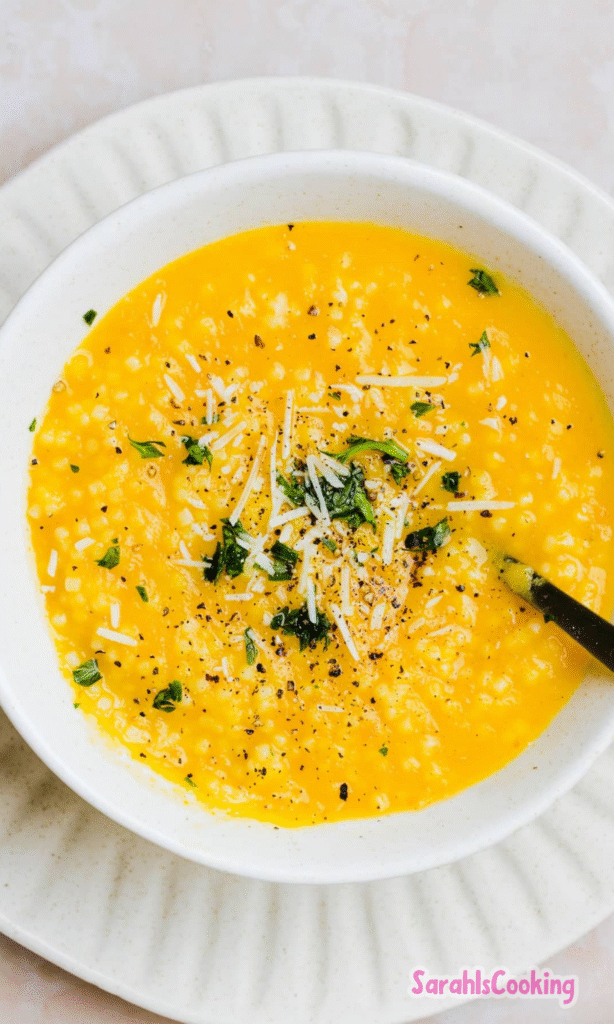

Italian Penicillin Soup Recipe
Description
Italian penicillin soup is exactly what you need when you feel under the weather—and this version is vegan! A comfort food recipe you'll love.
ingredients
Instructions
- Heat the olive oil in a large pot over medium heat. Add the onion, carrots, celery, parsnip, and yellow bell pepper. Cook for 5–7 minutes, stirring occasionally, until the vegetables are softened.
- Stir in the garlic, thyme leaves, and chopped rosemary. Cook for 1–2 minutes until fragrant.
- Pour in the vegetable broth, then add the miso paste and bay leaf. Bring to a boil, then reduce heat and let it simmer for 15–20 minutes, until the vegetables are tender.
- Remove about half of the vegetables and set them aside. Use an immersion blender to blend the remaining soup until smooth (or carefully transfer to a blender). Return the reserved vegetables to the pot.
- Stir in the cooked pastina pasta and allow it to heat through. Add the lemon juice and parsley, then season with salt and pepper to taste.
Nutrition Facts
Servings 6
Serving Size 1 bowl (approx. 1.5 cups)
- Amount Per Serving
- Calories 119kcal
- % Daily Value *
- Total Fat 3gg5%
- Saturated Fat 0.4gg2%
- Trans Fat 0gg
- Cholesterol 0mgmg0%
- Sodium 1047mgmg44%
- Potassium 296mgmg9%
- Total Carbohydrate 22gg8%
- Dietary Fiber 3gg12%
- Sugars 6gg
- Protein 3gg6%
- Calcium 38 mg
- Iron 1 mg
* Percent Daily Values are based on a 2,000 calorie diet. Your daily value may be higher or lower depending on your calorie needs.
Note
- Refrigerator: Store any leftover Italian penicillin soup in an airtight container in the refrigerator for up to 3 days.
- Freezer: The soup can also be frozen for up to 3 months in a freezer-safe container or zip-top bag. Thaw in the refrigerator before reheating.
- To reheat: Transfer the desired portion of soup to a pot and heat over medium-low until warmed through or heat the soup in the microwave. The soup will thicken during storage, so you may want to add water to thin it out a bit.