
Move over Aperol spritz. There is a new cocktail commanding attention during aperitivo hour, and it goes by the name Hugo. This Northern Italian creation has quietly taken over drink menus and social media feeds, and for good reason. It delivers complexity without bitterness and refreshment without weight.
I first encountered the Hugo spritz while traveling through Europe, watching locals sip something pale and herbaceous under late afternoon sun. One taste explained everything. The floral notes hit first, followed by dry bubbles, then a clean finish. It was balanced in a way that felt intentional, not accidental.
Back home, I started testing. The standard spritz formula did not translate directly because elderflower liqueur behaves differently than bitter aperitivos. It required its own ratio. After multiple rounds of adjustment, this version landed exactly where it needed to be. It is light, aromatic, and structurally sound.
Who This Recipe Is For
This recipe is for anyone who wants a reliable cocktail that does not require constant attention. It suits home cooks who appreciate precision but also value ease. You do not need a bar setup or professional tools to execute this correctly.
If you have ever found Aperol spritz too bitter or simply want something less aggressive, this is your drink. It also works for those hosting gatherings and needing something that scales easily without losing integrity. The skill level here is beginner-friendly, but the result tastes considered.
This is not a recipe for improvisation without understanding consequences. It is for readers who want to know why each ingredient matters and how to adjust without breaking the drink.
Why This Recipe Works
The standard International Bartenders Association spritz formula follows a three-two-one ratio. Three parts prosecco, two parts bitter liqueur, one part soda. That works when the liqueur provides structure through bitterness. Elderflower liqueur does not. It is sweet and delicate, so the same ratio would overwhelm the drink with sugar and mute the bubbles.
This recipe uses a two-three-three ratio instead. Two parts elderflower liqueur, three parts prosecco, three parts soda water. The increased soda water does two things. It dilutes the sweetness just enough to let the floral notes breathe, and it adds volume without additional alcohol, making this suitable for prolonged sipping.
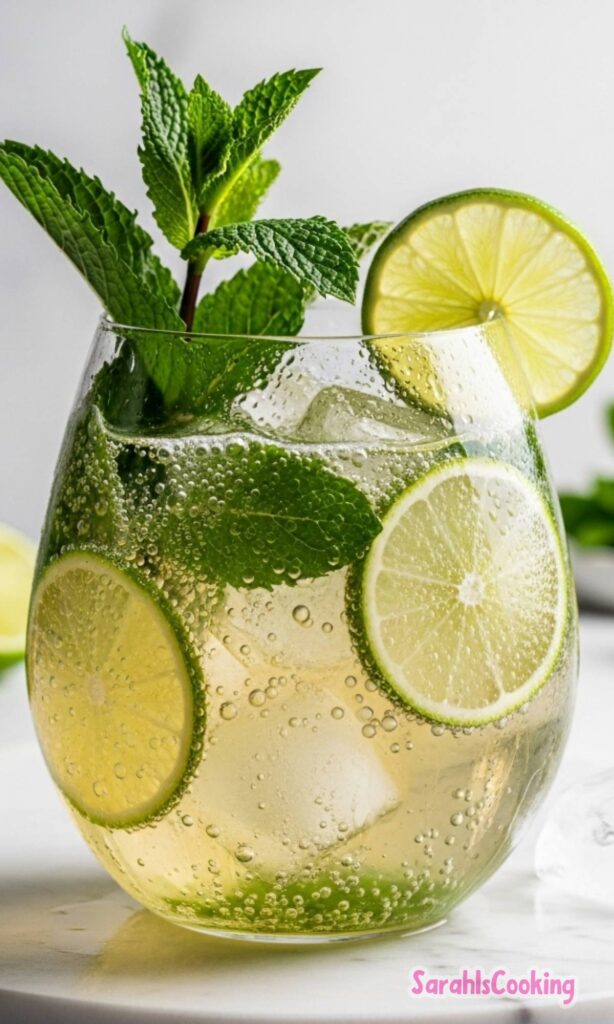
The mint is not decorative here. It sits at the bottom of the glass, slowly releasing essential oils as the drink sits. The lemon slice adds acidity that lifts the elderflower rather than competing with it. Every component has a job, and nothing is redundant.
Ingredients Needed for the Recipe
- Ice cubes: They keep the drink cold while gradually diluting to the proper level. Use large cubes if possible they melt slower and prevent premature watering down.
- Fresh mint sprig: Provides aromatic lift and a subtle cooling effect that plays against the floral sweetness. The mint must be fresh, not dried.
- Elderflower liqueur: The backbone of the drink. It supplies sweetness, floral aroma, and body. St-Germain is the standard, but other brands work as long as they are not syrupy.
- Prosecco chilled: Adds structure through acidity and bubbles. A dry prosecco is essential here because sweetness already comes from the liqueur.
- Soda water chilled: Provides dilution and effervescence without altering flavor. It also extends the drink so the alcohol does not hit too hard.
- Lemon slice: Brightens the entire glass. The oil from the peel and the acidity from the juice keep everything in balance.
Ingredient Insights and Function
Elderflower liqueur determines everything about this cocktail. It is made from the petals of the elderberry shrub, which grows throughout Europe. The flavor sits somewhere between pear and lychee, with distinct floral top notes. If you substitute elderflower cordial, the drink becomes noticeably sweeter and loses alcoholic structure. You can still do it, but you are making something different. Cordial also lacks the viscosity that helps the drink layer properly.
Prosecco choice matters more than price. A bone-dry prosecco keeps the finish clean. If your prosecco leans sweet, the drink will taste flabby. Look for words like brut or extra brut on the label. That ensures the bubbles serve as backbone rather than sugar delivery.
Soda water is not interchangeable with tonic water. Tonic adds quinine bitterness and sugar, which fights the elderflower rather than supporting it. Club soda works fine, but seltzer with no added minerals is actually preferable. You want clean carbonation.
Mint and lemon are not optional garnishes. The mint sits in the ice, slowly releasing aroma with every pour. The lemon slice expresses oils over the surface before being dropped in. If you skip either, the drink loses aromatic complexity.
How to make Hugo spritz?

Step 1 Prepare the glass and mint
Select a large wine glass. A stemmed glass works best because it keeps hand heat away from the drink. Fill the glass completely with ice all the way to the top. Do not skimp here. Less ice means faster melting and a diluted cocktail before you finish it.
Take one fresh mint sprig and gently slap it between your palms. This bruises the leaves slightly, releasing oils without shredding them. Place the mint sprig directly into the glass, nestling it into the ice. It will stay at the bottom, slowly perfuming the drink as the liquid passes through.
Step 2 Add the elderflower liqueur
Pour sixty milliliters of elderflower liqueur over the ice. That is one-quarter cup if you prefer measuring cups. Let it settle for a moment. The liqueur will coat the ice slightly, which helps it integrate slowly when the bubbles hit.
Do not stir yet. Stirring now would melt ice prematurely. The liqueur needs to sit until the prosecco and soda join it.
Step 3 Top with prosecco and soda water
Add ninety milliliters of chilled prosecco. Pour gently against the side of the glass to preserve carbonation. Follow immediately with ninety milliliters of chilled soda water, again pouring against the glass.
The drink should now be nearly full. The bubbles will rise through the liqueur, creating natural stratification. This layering is intentional. It means the first sip tastes different from the last, which keeps the drink interesting.
Step 4 Stir and garnish
Stir gently once with a long spoon. Just enough to combine without knocking out all the carbonation. The mint should stay at the bottom, so do not stir aggressively.
Take a fresh lemon slice. Express it over the surface of the drink by giving it a slight twist, then drop it in. The lemon will float briefly before settling against the ice. Serve immediately.
How I Tested and Refined This Recipe
The first version I made followed the classic spritz template. Three ounces prosecco, two ounces elderflower liqueur, one ounce soda. It was too sweet and heavy. The elderflower dominated everything, and the finish clung to the palate longer than it should have.
Second round I flipped the ratio. Two ounces prosecco, three ounces elderflower liqueur, three ounces soda. That was worse. Too much liqueur made the drink syrupy, and the soda could not cut through it. I let it sit for five minutes, and it became flat and cloying.
Third attempt I reduced the liqueur significantly. Two ounces prosecco, one ounce liqueur, three ounces soda. That tasted like vaguely floral seltzer. The elderflower disappeared entirely, and the drink had no structure. It was refreshing but boring.
The winning version landed at sixty milliliters liqueur, ninety milliliters prosecco, ninety milliliters soda. That is roughly two ounces liqueur, three ounces prosecco, three ounces soda. The liqueur still leads, but the soda and prosecco have enough volume to push back. The mint and lemon were non-negotiable from the beginning. I tested without them once, and the drink felt flat aromatically even though the flavor was correct.
Temperature testing mattered too. Chilling the prosecco and soda beforehand is essential. If either is warm, the ice melts too fast and the drink dilutes before the flavors integrate. I tried using room temperature soda once as an experiment. The result was a watery mess within two minutes.
Common Mistakes and How to Avoid Them
- Using sweet prosecco: If your prosecco has noticeable sugar, the drink becomes heavy. Check the label for brut or extra brut to ensure dryness.
- Skimping on ice: Less ice means faster dilution. Fill the glass completely even if it looks excessive.
- Stirring too early: Stirring before adding prosecco and soda melts ice unnecessarily. Wait until everything is in the glass.
- Muddling the mint: Mint should be gently slapped, not crushed. Muddling releases bitter chlorophyll compounds.
- Substituting tonic water: Tonic adds sugar and quinine that fight the elderflower. Use plain soda water only.
- Omitting the lemon: The acidity from the lemon slice balances the sweetness. Without it, the drink tastes flat.
- Pouring prosecco directly over ice: Pour against the glass side to preserve bubbles. Aggressive pouring knocks out carbonation.
Make-Ahead, Storage, and Freezing Guidance
The Hugo spritz does not hold well once assembled. The carbonation fades within ten minutes, and the ice dilutes the drink beyond repair. This is a make-and-serve immediately situation. Do not batch it in advance unless you are serving it within minutes.
You can pre-measure the elderflower liqueur into individual glasses and refrigerate them covered. That saves time during hosting. Keep the prosecco and soda chilled separately, and assemble only when ready to serve.
Leftover prosecco will keep in the refrigerator for one to two days if sealed with a wine stopper. It will lose some bubbles but remains usable for cooking or mimosas. Elderflower liqueur stores indefinitely at room temperature away from sunlight. Opened soda water goes flat within hours and should be discarded.
Do not freeze this cocktail. Freezing destroys carbonation permanently, and the texture upon thawing is flat and unappealing. If you have leftover assembled drink, it cannot be saved. Make only what you will finish.
Tips
- Chill the prosecco and soda water for at least four hours before using. Warm ingredients melt ice too fast.
- Use large ice cubes if available. They melt slower and keep the drink concentrated longer.
- Slap the mint between your palms instead of rubbing. This releases oils without bruising the leaves.
- Express the lemon slice over the glass before dropping it in. The oils mist onto the surface and add aroma.
- Stir exactly once. Over-stirring knocks out carbonation and disturbs the layering.
- Serve in a stemmed glass to keep hand heat away from the drink. Heat accelerates dilution.
- If using elderflower cordial instead of liqueur, reduce the amount and expect a sweeter, less complex result.
- For a non-alcoholic version, use elderflower cordial and replace prosecco with non-alcoholic sparkling wine or extra soda.
- Scale the recipe by multiplying ingredients proportionally. The two-three-three ratio holds for any batch size.
- Taste before serving. If it seems too sweet, add a splash more soda. If too strong, add ice and let it rest one minute.

Hugo Spritz Recipe
Description
Move over Aperol spritz, this is the summer of the Hugo spritz! This refreshing Italian cocktail combines prosecco, soda water, and the magical floral notes of elderflower liqueur. Created by bartender Roland Gruber in Northern Italy in 2005, this light, bubbly drink is perfect for afternoon aperitivo hour. Garnished with fresh mint and lemon, it's crisp, slightly sweet, and incredibly easy to make.
Ingredients
Instructions
- Fill a large wine glass to the top with ice cubes.Don't be shy with the ice – it keeps your drink perfectly cold!
- Add the fresh mint sprig to the glass.
- Pour 60ml (1/4 cup) elderflower liqueur over the ice and mint.
- Top with 90ml chilled prosecco and 90ml chilled soda water.Use a 2-3-3 ratio: 2 parts elderflower liqueur, 3 parts prosecco, 3 parts soda water
- Stir gently to combine all ingredients.
- Garnish with a fresh lemon slice and serve immediately.
Nutrition Facts
Servings 1
Serving Size 1 cocktail (approx. 240ml)
- Amount Per Serving
- Calories 185kcal
- % Daily Value *
- Total Fat 0gg0%
- Saturated Fat 0gg0%
- Trans Fat 0gg
- Cholesterol 0mgmg0%
- Sodium 10mgmg1%
- Potassium 30mgmg1%
- Total Carbohydrate 15gg5%
- Dietary Fiber 0gg0%
- Sugars 14gg
- Protein 0gg0%
- Calcium 1% mg
- Iron 0% mg
* Percent Daily Values are based on a 2,000 calorie diet. Your daily value may be higher or lower depending on your calorie needs.
Note
- Non-alcoholic version: Replace elderflower liqueur with elderflower cordial, and swap prosecco for non-alcoholic prosecco, extra soda water, lemonade, or sparkling apple juice.
- Ratio tip: This recipe uses a 2-3-3 ratio (elderflower:prosecco:soda). Adjust to taste – add more prosecco for dryness or more elderflower for sweetness.
- Ice is key: Fill your glass to the top with ice to keep ingredients super cold and prevent dilution.
- Prosecco choice: Use a dry, crisp prosecco with fresh fruity notes to balance the sweetness of elderflower liqueur.