
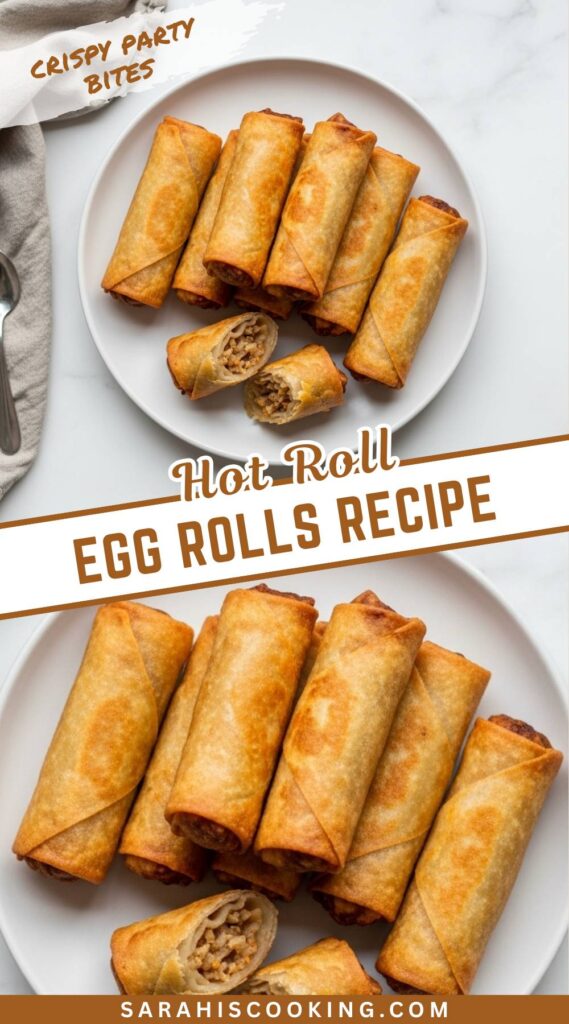
There’s something undeniably satisfying about biting into a perfectly crisp, golden egg roll—the delicate crunch giving way to a warm, savory filling. It’s a moment that feels almost magical, yet surprisingly achievable at home with a few careful steps.
Why Homemade Beats Takeout
Ordering egg rolls is easy, but making them yourself is a completely different experience—and one worth savoring. When you prepare them at home, you control every detail: the quality of ingredients, the seasoning, and the level of crispiness.
I’ve found that rolling and frying egg rolls is oddly therapeutic, too. There’s a rhythm to folding the wrappers and watching them transform into neat, golden parcels. And the pride of serving homemade egg rolls, hot from the fryer, is unmatched—it’s that extra “ingredient” that makes every bite taste even better.
Ingredients Needed for the Recipe
Preparing all your ingredients in advance makes the process smoother and far less stressful. Here’s a closer look at what you’ll need and why each component matters:
- Egg Roll Wrappers: These thin sheets of wheat-and-egg dough are the backbone of the recipe. They puff slightly when fried, giving you that iconic bubble-textured crunch. Keep them under a damp towel to prevent drying out while you work.
- Ground Pork: Rich and savory, pork binds the filling and provides a satisfying, hearty flavor. You can substitute with chicken, turkey, or even beef, but I find pork gives the most classic taste.
- Shredded Cabbage & Carrot: These vegetables add crunch, subtle sweetness, and balance the richness of the meat. Properly shredded, they also help keep the filling light.
- Soy Sauce & Sesame Oil: Together, they create the umami backbone of the filling. Soy sauce adds depth and saltiness, while sesame oil provides a nutty aroma that elevates the entire roll.
- Fish Sauce (Optional): Just a splash adds an extra layer of savory complexity. If you skip it, the rolls are still delicious.
- Fresh Ginger & Garlic: These aromatics cut through the richness and add a fragrant bite that makes the filling irresistible.
- Cornstarch & Water: This simple mixture forms a “glue” to seal the wrappers. It ensures your rolls stay intact during frying.
- Canola Oil: Its neutral flavor and high smoke point make it perfect for achieving golden, non-greasy egg rolls.
The Art of the Egg Roll Fold
Folding egg rolls is easier than it looks. Think of it like wrapping a tiny, savory gift—the key is keeping your wrappers pliable under a damp towel. Dry wrappers crack and tear, which is frustrating when you’re trying to achieve that perfect roll.
I like to set up a small assembly line: wrappers in one spot, filling in another, and cornstarch glue within reach. By the second or third roll, you’ll find a comfortable rhythm, and it will feel almost meditative.
How to Make Homemade Egg Rolls
Here’s a step-by-step guide to making golden, crispy egg rolls that rival any restaurant version
Step 1: Cook the Filling
Heat a medium skillet over medium heat and brown the ground pork. Break it into small, even pieces as it cooks, ensuring no pink remains—about five to seven minutes. Then add the shredded cabbage, carrots, soy sauce, sesame oil, optional fish sauce, sugar, and a pinch of salt.
Step 2: Finish the Filling
Sauté for four to five minutes, just until the vegetables soften slightly. They should retain a subtle crunch—overcooked veggies lead to a soggy filling. Finally, stir in minced garlic and ginger, cooking for another minute until fragrant. Remove from heat and let the filling cool slightly before rolling.
Step 3: Make Your “Glue” & Set Up
Mix 1 tablespoon of cornstarch with 1 tablespoon of water until smooth. This is your sealing paste. Lay a few wrappers on a clean surface and cover the rest with a damp towel to prevent drying.
Step 4: Fill the Wrappers
Place one wrapper in a diamond shape in front of you. Spoon roughly a quarter cup of filling onto the center, spreading it slightly into a horizontal log, leaving about an inch of wrapper clear at the bottom.
Step 5: The First Fold
Fold the bottom corner over the filling and roll once snugly. You should now have a flat tube with the top corner pointing away.
Step 6: Fold in the Sides
Fold the left and right corners inward toward the center. Dab a little cornstarch glue if the edges won’t stick. This “envelope” fold keeps the filling enclosed neatly.
Step 7: The Final Roll
Roll toward the top corner, keeping the roll firm to prevent air pockets. Seal the final corner with a touch of cornstarch paste and press briefly. Repeat with remaining wrappers and filling.
Step 8: Fry to Golden Perfection
Pour 2–3 inches of canola oil into a deep pot and heat to 365°F. Fry 3–4 egg rolls at a time without overcrowding. They should sizzle immediately, turning a uniform golden brown in about 3 minutes, turning occasionally.
Step 9: Drain and Serve
Remove with tongs or a spider skimmer and drain on a wire rack or paper towels. Let the oil return to temperature between batches for consistent results.
Beyond the Deep Fryer: Air Fryer & Oven Methods
For a lighter approach, an air fryer or oven works beautifully. In an air fryer, spray the rolls generously with oil and cook at 400°F for 6 minutes, flipping halfway. In the oven, preheat to 400°F, line a baking sheet with parchment, spray the rolls, and bake 15–20 minutes, flipping once. Both methods yield a crisp exterior with minimal oil.
Tips
- Cool the Filling: Hot filling can steam the wrapper, causing sogginess. Let it cool before rolling.
- Oil Temperature Matters: 365°F is ideal. Cooler oil leads to greasy rolls; hotter oil browns too quickly.
- Seal Tightly: Press out air pockets while rolling for a uniform, intact roll.
- Drain on a Rack: Keeps bottoms crispier than just paper towels.
- Reheat Carefully: Oven or toaster oven at 375°F preserves crispiness; the microwave makes them soggy.
Dipping Sauces and Serving Ideas
Soy sauce is a classic, simple choice. Sweet and sour sauce adds tangy vibrancy, while sweet chili sauce introduces a gentle heat. Serve with fried rice or a stir-fry for a complete meal, or stack them as appetizers—they’re always the first to disappear.
How to Store and Freeze
Cool cooked egg rolls completely before storing. Layer in an airtight container with parchment in between for up to 4 days in the fridge.
For freezing, assemble the rolls before frying. Place them on a tray without touching, freeze solid, then transfer to a freezer bag. Fry directly from frozen, adding 1–2 minutes to the cook time. This method is a game-changer for instant homemade egg rolls.
A Note on Substitutions and Variations
This recipe is highly adaptable: use chicken, turkey, beef, tofu, or mushrooms instead of pork. Pre-shredded coleslaw mix works for the veggies, and water chestnuts or green onions add extra texture and color. The filling is your playground—once you master the fold, creative flavor combos are endless. I even tried a dill pickle variation that was surprisingly delicious!
Homemade egg rolls aren’t just food—they’re a little celebration of flavor, texture, and patience. Once you make them, you’ll understand why every bite feels worth the effort.
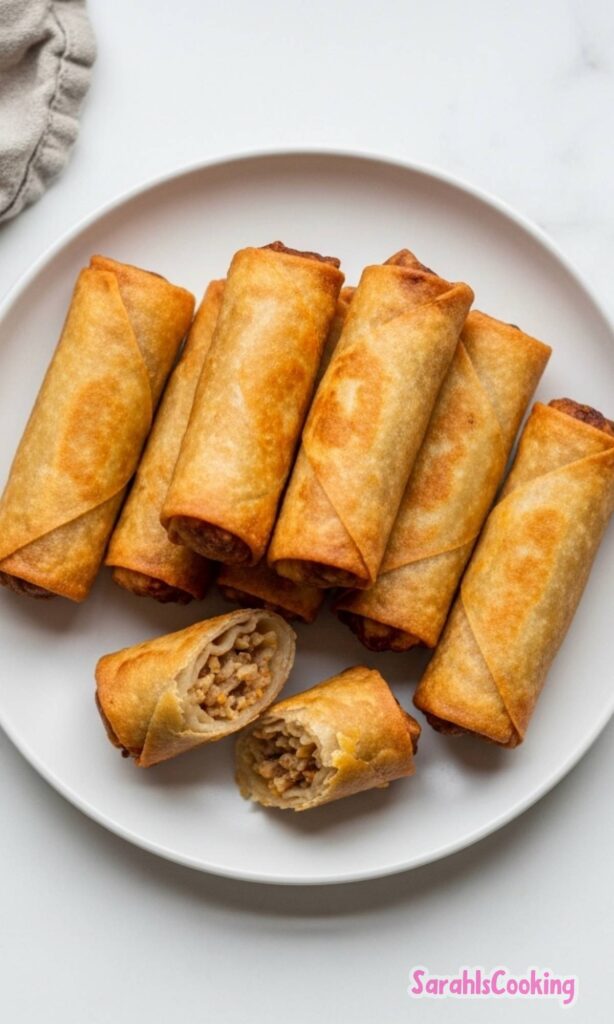

Homemade Egg Rolls Recipe
Description
Homemade Egg Rolls start with egg roll wrappers filled with a savory mixture of ground pork and fresh vegetables, rolled into a tight cylinder, and fried until golden and crispy. This classic American Chinese appetizer is easy to make at home and even better when paired with sweet and sour or chili dipping sauces. Bonus: instructions included for air fryer and oven baking options!
ingredients
Filling
Assembly & Frying
Instructions
Filling
- In a medium skillet over medium heat, add ground pork. Cook, stirring occasionally, until browned and crumbly, about 5–7 minutes.
- Add cabbage, carrots, soy sauce, sesame oil, fish sauce (if using), sugar, and salt. Sauté until vegetables soften, about 4–5 minutes. Stir in garlic and ginger; cook 1 more minute. Remove from heat and let cool slightly.
Assembly
- In a small bowl, mix cornstarch and water to create a slurry. Set aside.
- Place egg roll wrappers on a clean surface. Add ~¼ cup of filling to the bottom third of each wrapper.
- Brush edges with cornstarch slurry. Fold bottom corner over filling, then roll once. Fold in left and right sides toward center to form an envelope shape.
- Continue rolling tightly to the top corner, sealing with more slurry if needed. Set aside seam-side down.
Frying (Traditional Method)
- Heat 2–3 inches of canola oil in a deep pot to 365°F (185°C).
- Fry egg rolls in batches of 3–4 for ~3 minutes, turning occasionally, until golden brown and crispy.
- Drain on paper towels. Maintain oil temperature between batches.
Air Fryer Option
- Preheat air fryer to 400°F (204°C). Place egg rolls in basket, seam-side down, without overcrowding.
- Spray tops lightly with cooking spray. Air fry 3 minutes, flip, spray again, and cook 3 more minutes until crispy.
Oven-Baked Option
- Preheat oven to 400°F (204°C). Line a baking sheet with parchment paper.
- Arrange egg rolls on sheet, seam-side down. Lightly spray or brush with oil.
- Bake 15–20 minutes, flipping halfway, until golden and crisp.
Serving
- Serve hot with soy sauce, sweet and sour sauce, or sweet chili sauce.
Nutrition Facts
Servings 6
Serving Size 1 egg roll
- Amount Per Serving
- Calories 220kcal
- % Daily Value *
- Total Fat 10g16%
- Saturated Fat 3g15%
- Cholesterol 30mg10%
- Sodium 480mg20%
- Potassium 180mg6%
- Total Carbohydrate 18g6%
- Dietary Fiber 2g8%
- Sugars 3g
- Protein 14g29%
- Calcium 4 mg
- Iron 10 mg
* Percent Daily Values are based on a 2,000 calorie diet. Your daily value may be higher or lower depending on your calorie needs.
Note
- Make ahead: Assemble egg rolls and freeze before frying. Fry directly from frozen—add 1–2 extra minutes to cook time.
- Vegetarian option: Swap pork for crumbled tofu or chopped mushrooms.
- Storage: Fried egg rolls keep 3–4 days in the fridge or up to 3 months frozen. Reheat in oven or air fryer to maintain crispness.
- Wrappers: Store-bought egg roll wrappers work best; homemade wonton wrappers may be too small or delicate.