
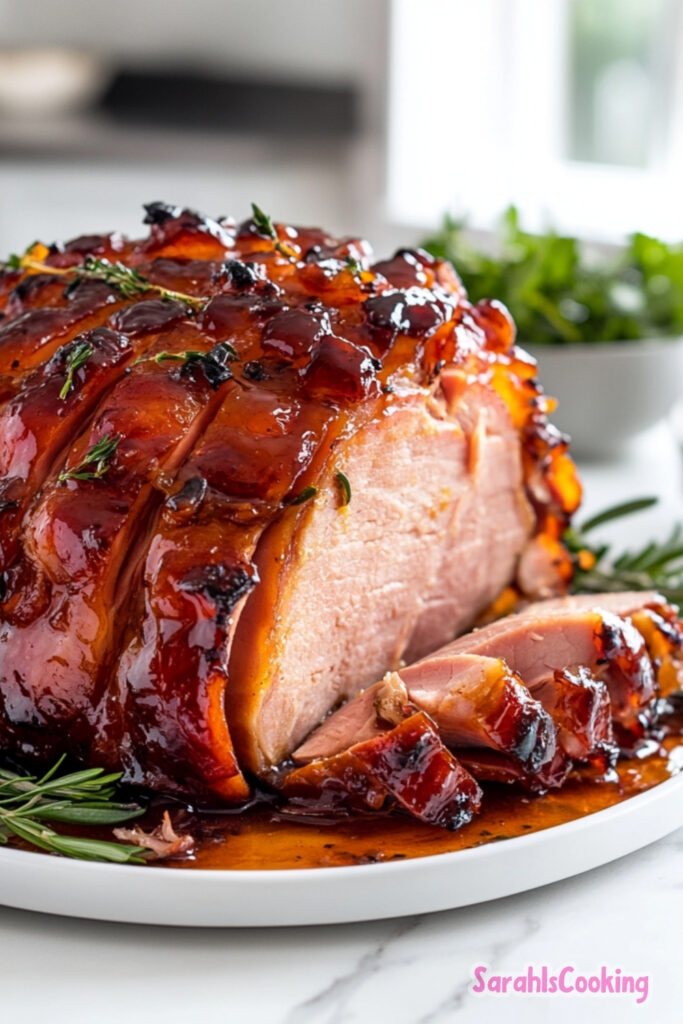
I treat this easy glazed ham recipe as a reliability test every time I make it. The goal is simple: juicy, evenly heated meat with a glossy, caramelized glaze that actually sticks. No guesswork, no overcooking, no dry edges.
Ham is already fully cooked when you buy it, which shifts the job from cooking to controlled reheating. That detail matters more than most people think. Once you understand that, the process becomes predictable and forgiving.
I rely on a low initial temperature, proper moisture control, and layered glazing at the end. Each step has a purpose, and when you follow them in order, the result is consistent every single time.
Ingredients Needed for the Recipe
- Bone-in ham (6 to 8 pounds) – This is the structural base of the recipe. The bone helps retain moisture during reheating and adds depth of flavor that boneless versions lack.
- Homemade glaze (about 1 cup) – Provides the caramelized exterior. The sugar content is essential because it melts, thickens, and forms that glossy coating during high heat.
- Aluminum foil – Controls moisture during the first stage. It traps steam, preventing the outer layers of the ham from drying out before the center warms through.
How to make Glazed Ham?

Step 1 – Preheat the Oven
I set the oven to 325°F and let it fully preheat before anything goes in. This temperature is low enough to gently warm the ham without pushing moisture out too quickly.
Rushing this step leads to uneven heating, especially in larger cuts. A stable oven temperature makes everything that follows more predictable.
Step 2 – Prepare and Position the Ham
I place the ham flat side down in a roasting pan. That orientation matters because the fat cap stays on top and slowly bastes the meat as it warms.
If I am using a non-spiral ham, I score a shallow diamond pattern across the surface. This creates channels that hold the glaze later instead of letting it slide off.
Step 3 – Apply the First Layer of Glaze
I brush or spoon about one-third of the glaze over the surface. If the ham is spiral-cut, I make sure it gets between the slices as well.
This first layer is not for caramelization yet. It starts building flavor and lightly coats the exterior so it stays hydrated during the covered bake.
Step 4 – Tent and Bake Low and Slow
I loosely tent the ham with foil and place it in the oven. For a 6 to 8 pound ham, I bake it for about 90 minutes at 325°F.
I monitor the internal temperature and aim for 140°F in the thickest part. Since the ham is already cooked, going beyond that risks drying it out.
Step 5 – Increase Heat and Add Second Glaze
Once the ham is close to temperature, I remove the foil and brush on another third of the glaze. Then I increase the oven to 400°F.
This shift in heat is where the glaze starts transforming. The sugars begin to bubble and thicken, creating the foundation of that sticky coating.
Step 6 – Build the Final Glaze Layer
After 15 to 20 minutes, I take the ham out briefly and apply the final portion of glaze. Then it goes back in uncovered for another 10 to 15 minutes.
This layering approach is key. Each round sets slightly before the next goes on, which builds a thicker, more even crust instead of a runny coating.
Step 7 – Rest Before Serving
I remove the ham from the oven and loosely cover it with foil. It rests for 20 to 30 minutes before carving.
During this time, the juices redistribute and settle back into the meat. Right before slicing, I baste it once more with the pan juices for extra shine and flavor.
Why This Recipe Works
This method works because it separates moisture control from caramelization. The low-temperature phase protects the internal structure of the ham while it warms evenly.
The foil tent creates a humid environment, which prevents surface dehydration. That step alone is the difference between tender slices and dry edges.
The glaze is applied in stages instead of all at once. Sugar needs time and heat to properly caramelize, and layering allows each coat to set before the next is added.
Raising the temperature at the end activates that caramelization without overcooking the interior. It is a controlled finish rather than an aggressive bake.
How I Tested and Refined This Recipe
I started by testing different oven temperatures from the beginning. Higher starting temperatures cooked the outside too fast, which led to dry outer layers before the center was ready.
I also tried glazing only once at the end. The result looked decent, but the glaze stayed thin and never developed that thick, lacquered finish I was after.
Another variable was foil coverage. Fully sealing the ham trapped too much steam and softened the exterior. A loose tent allowed just enough airflow while still retaining moisture.
I adjusted the glaze timing in small increments. Applying it too early caused burning, while applying it too late prevented proper buildup. The final method balances both timing and heat.
The resting period was another critical adjustment. Skipping or shortening it caused noticeable juice loss during slicing. Giving it a full rest made the texture more consistent throughout.
Common Mistakes and How to Avoid Them
- Overheating the ham past 140°F – This dries out the meat quickly. Always monitor internal temperature with a thermometer.
- Skipping the foil tent – Without it, the outer layers lose moisture before the center is warm.
- Applying all glaze at once – This prevents proper caramelization and results in a thin, uneven coating.
- Using too high heat from the start – Causes uneven texture and tough exterior layers.
- Not resting before carving – Leads to juice loss and drier slices.
- Ignoring placement in the pan – Flat side down ensures better moisture retention and self-basting.
Make-Ahead, Storage, and Freezing Guidance
I usually serve the ham right after resting, but it can hold in a 225°F oven for up to one hour if needed. Keeping it covered during that time prevents surface drying.
Once cooled, I store leftovers in the refrigerator for up to 5 days. The texture stays tender, though the glaze softens slightly as it sits.
Ham freezes well for up to 3 months when wrapped tightly. I thaw it in the refrigerator over 1 to 2 days to preserve texture and moisture.
To reheat, I place it in a roasting pan with a bit of liquid, cover it, and warm it at 350°F. This method restores moisture without overcooking the meat.
Tips
- Use a probe thermometer for consistent results.
- Score non-spiral ham to help the glaze adhere.
- Baste lightly between glaze layers if the surface looks dry.
- Do not rush the final caramelization stage.
- Save the bone for soups or broths.
- Slice against the grain for more tender pieces.

Easy Glazed Ham Recipe
Description
This easy glazed ham recipe delivers juicy, tender meat with a sticky, caramelized glaze that only takes a few ingredients to pull together. Perfect for Easter, Christmas, or any time you need to feed a crowd, this forgiving recipe starts with a pre-cooked ham that you simply warm through while building layers of glossy, flavorful glaze. Low-and-slow baking followed by a high-heat finish creates that restaurant-quality lacquered crust everyone loves.
ingredients
Instructions
- Preheat oven to 325°F (163°C).
- Place ham flat flesh side down in a 13×9 casserole dish or large roasting pan.Flat side down allows the fatty side to baste the meat as it renders
- If using spiral-sliced ham, brush ¼ cup glaze over the top and into the slices. For non-spiral ham, score surface in a diamond pattern (1" apart, ¼" deep) and work glaze into the cuts.Scoring helps glaze adhere and caramelize for maximum flavor
- Tent ham loosely with aluminum foil and bake at 325°F (163°C) for about 90 minutes (15-17 minutes per pound for a 6-8 lb ham).Use a meat thermometer; target internal temperature is 140°F (60°C)
- Remove foil, brush on another ¼ cup glaze, and increase oven temperature to 400°F (204°C). Bake uncovered for 15-20 minutes until glaze begins to caramelize.Watch closely to prevent burning during caramelization
- Brush on remaining glaze and return to oven for final 10-15 minutes to achieve a thick, glossy, lacquered finish.This final layer creates that signature restaurant-quality crust
- Remove from oven, cover loosely with foil, and rest for 20-30 minutes before carving.Resting allows juices to redistribute for maximum tenderness
- Baste one final time with pan juices and remaining glaze before slicing and serving.
Nutrition Facts
Servings 12
Serving Size 1 slice (about 8 oz with bone)
- Amount Per Serving
- Calories 300kcal
- % Daily Value *
- Total Fat 10gg16%
- Saturated Fat 3.5gg18%
- Trans Fat 0gg
- Cholesterol 65mgmg22%
- Sodium 1100mgmg46%
- Potassium 380mgmg11%
- Total Carbohydrate 18gg6%
- Dietary Fiber 0gg0%
- Sugars 15gg
- Protein 24gg48%
- Calcium 20mg mg
- Iron 1.2mg mg
* Percent Daily Values are based on a 2,000 calorie diet. Your daily value may be higher or lower depending on your calorie needs.
Note
- Use a meat thermometer: Ham is pre-cooked; reheat to 140°F (60°C) internal temp to avoid drying out.
- Spiral vs. non-spiral: Spiral-sliced lets glaze penetrate but dries faster; baste more frequently. Non-spiral holds moisture better.
- Score for flavor: For non-spiral ham, cut a diamond pattern to help glaze caramelize in every bite.
- Don't skip the rest: 20-30 minutes resting keeps juices in the meat, not on the cutting board.
- Smoking option: Smoke at 275°F (135°C) for 15-17 min/lb until 140°F internal for deeper flavor.
- Save the bone: Freeze the ham bone for incredible depth in soups like ham and lentil or ham and bean.