
This Easter Bunny Cake is designed to give you a festive, polished result without complicated techniques or specialty tools. It’s built on a simple sheet cake base that is easy to bake, cut, and decorate with confidence.
I’ve tested this approach to keep it reliable, even if you don’t bake often. The structure holds well when cut, the frosting is forgiving, and the decoration method allows flexibility without sacrificing presentation.
The goal here is not perfection, but a cake that looks joyful on the table and tastes consistently good. You get a centerpiece that feels thoughtful without adding stress to your holiday prep.
Who This Recipe Is For
This recipe is ideal for home bakers who want something festive but approachable. If you’re working with limited time or minimal decorating experience, this method removes the usual pressure.
It’s also a great option for families, especially if kids want to help decorate. The process is flexible enough to allow creativity without risking the final outcome.
If you value clear steps, predictable results, and a forgiving design, this cake fits right into your routine. It’s practical baking with a seasonal touch.
Why This Recipe Works
This cake works because it uses a single rectangular base, which provides stability when cutting into shapes. Compared to layered cakes, this reduces the risk of shifting or collapsing during decoration.
The combination of milk, sour cream, and oil creates a moist crumb that stays tender even after chilling. That matters because the cake must be firm enough to cut cleanly, yet soft enough to eat comfortably.
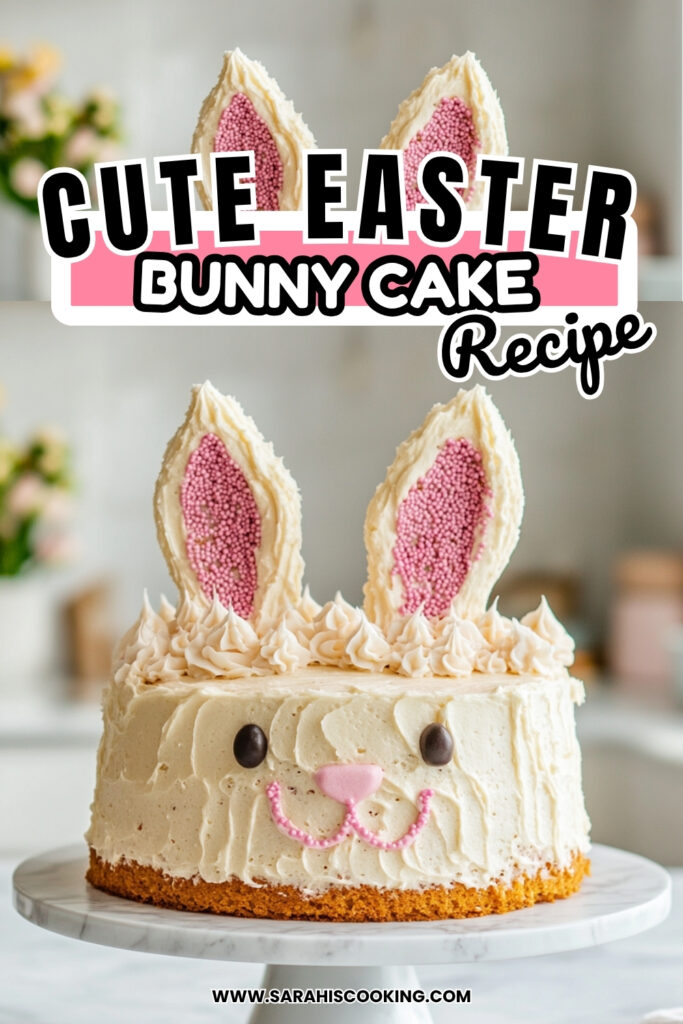
The frosting method is intentionally simple. Instead of smooth finishes that require precision, the textured “fur” hides imperfections and creates visual interest without technical skill.
Ingredients Needed for the Recipe
- Yellow or white cake mix – Provides a consistent base structure and balanced sweetness, reducing the risk of uneven texture.
- Whole milk – Adds richness and moisture, helping the cake remain soft even after refrigeration.
- Eggs – Bind the batter together and give the cake enough structure to hold its shape when cut.
- Sour cream – Enhances moisture and creates a finer crumb, preventing dryness.
- Vegetable oil – Keeps the cake tender and prevents it from firming up too much after cooling.
- Vanilla frosting – Acts as both a coating and decorative element, adding sweetness and structure.
- Pink frosting or candy – Used for facial details, adding contrast and visual clarity.
- Sprinkles – Provide texture and color, especially for the ears and decorative accents.
Ingredient Insights and Function
The cake mix is the foundation, and using it removes variability. While homemade batter can work, it introduces more risk in consistency, especially when cutting shapes.
Milk and sour cream work together to create a soft crumb. If you substitute lower-fat dairy, the cake may become slightly firmer and less forgiving when chilled.
Oil is preferred over butter here because it keeps the cake pliable. Butter-based cakes can firm up too much in the fridge, making clean cuts harder.
If you swap in gluten-free mix, expect a slightly more delicate structure. Handle the cake gently when cutting, and chill it longer for stability.
Frosting can be store-bought or homemade, but texture matters. If it’s too stiff, it won’t pipe smoothly. If too soft, it won’t hold the fur texture.
How to make Easter Bunny Cake?
Step 1 – Prepare and Bake the Cake
Preheat your oven to 350°F and line a 9×13 pan with parchment paper. This ensures easy removal and prevents tearing when transferring the cake.
Mix the batter until smooth but not overworked. Bake for about 25 minutes, checking for a clean toothpick in the center as your doneness indicator.
Step 2 – Cool Completely
Allow the cake to cool fully before handling. Warm cake is fragile and will crumble when cut, which affects the final shape.
Once cooled, the texture should feel set but still soft to the touch. This balance is key for clean shaping.
Step 3 – Cut the Bunny Shape
Transfer the cake to a cutting board and begin shaping the head by trimming into a rounded oval. Keep your cuts smooth and controlled.
Use leftover pieces to cut simple ear shapes. Precision is not required here since frosting will cover edges.
Step 4 – Chill for Stability
Place the shaped cake on a serving tray and refrigerate for at least 30 minutes. This firms up the structure and reduces crumbs during frosting.
The cake should feel slightly firm but not hard. This makes decorating much easier.
Step 5 – Prepare the Frosting
Whip your frosting until light and fluffy. This improves spreadability and makes piping smoother.
If using homemade buttercream, ensure it is at room temperature so it blends evenly and holds texture.
Step 6 – Create the Fur Texture
Pipe frosting using a star or grass tip to mimic fur. Work in small sections and layer lightly for a natural look.
If piping is not an option, spread frosting and dab with parchment to create texture. This method is just as effective.
Step 7 – Decorate the Face
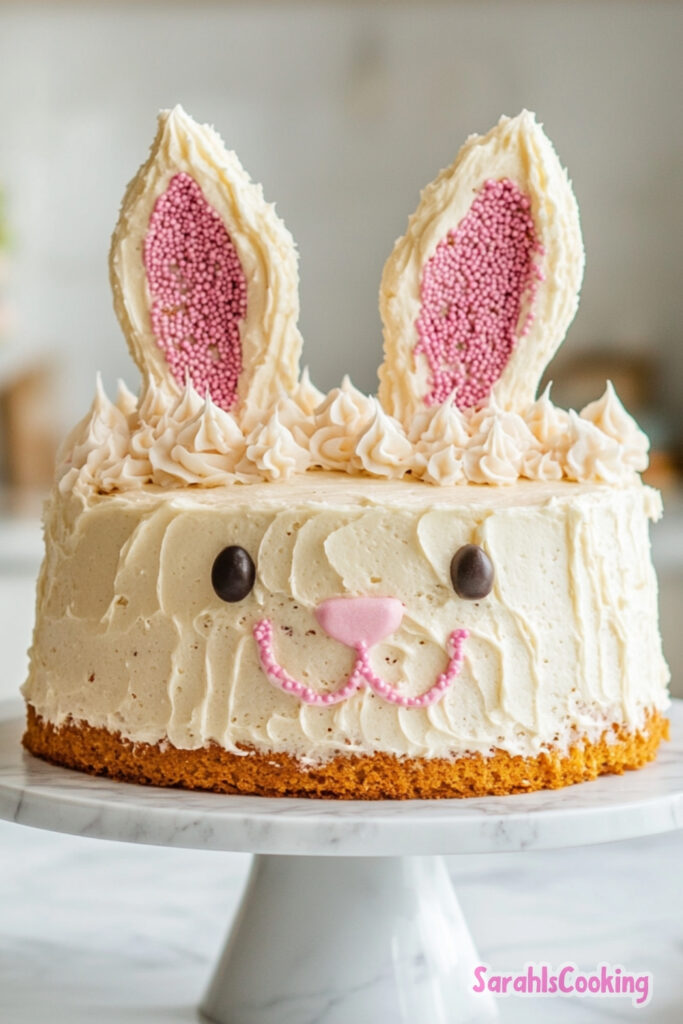
Add pink frosting or candy for the nose and inner ears. Use simple shapes to keep the design clean and readable.
Finish with sprinkles or candies for eyes and details. Keep placement balanced for a cohesive look.
How I Tested and Refined This Recipe
I started by testing layered cakes, but they proved unstable when cut into shapes. The layers shifted, and frosting became harder to control.
Switching to a single sheet cake solved most structural issues. It provided a solid base and made shaping more predictable.
I also tested butter-heavy batters, but they firmed up too much after chilling. The oil-based version stayed softer and easier to cut.
For frosting, I experimented with smooth finishes versus textured piping. The textured method consistently looked better and hid imperfections.
The final version focuses on reliability. Every step is designed to reduce risk and make the process repeatable without guesswork.
Common Mistakes and How to Avoid Them
- Cutting the cake while warm – leads to crumbling and uneven edges.
- Skipping the chilling step – makes frosting messy and difficult to control.
- Overmixing the batter – results in a dense and less tender crumb.
- Using frosting that is too stiff – prevents proper piping and texture.
- Using frosting that is too soft – causes decorations to lose shape.
- Cutting too aggressively – creates jagged edges that are harder to cover.
- Overloading decorations – can make the design look cluttered.
Make-Ahead, Storage, and Freezing Guidance
You can bake the cake a day in advance and store it tightly wrapped at room temperature. This actually improves ease of cutting the next day.
Once decorated, store the cake in the refrigerator for up to 24 hours. The texture remains soft, though the frosting will firm slightly.
For freezing, wrap the undecorated cake tightly and freeze for up to one month. Thaw in the fridge overnight before shaping and decorating.
Avoid freezing the fully decorated cake, as frosting texture can change and lose its intended finish.
Tips
- Use a serrated knife for smoother, cleaner cuts.
- Chill longer if your kitchen is warm.
- Work with small amounts of frosting at a time.
- Keep decorations simple for the best visual impact.
- Save cake scraps to make cake pops for extra treats.
- Test frosting consistency before piping onto the cake.
- Use parchment under the cake for easier cleanup.

Easter Bunny Cake Recipe
Description
Make your Easter celebration extra festive with this EASY Easter Bunny Cake Recipe. Just cut a simple bunny face out of a standard sheet cake, decorate with fluffy frosting "fur," and enjoy! This foolproof recipe requires no fancy pans or advanced baking skills, making it perfect for families and kids to decorate together. It turns a simple box mix into an adorable holiday centerpiece that tastes as good as it looks.
ingredients
Cake Base
Decoration
Instructions
Bake the Cake
Preheat and Prep
Preheat your oven to 350°F (175°C). Grease a 9x13 inch baking pan and line it with parchment paper for easy removal.Parchment paper is essential for getting the cake out cleanly before cutting.Mix Batter
In a large bowl, whisk together the cake mix, whole milk, eggs, sour cream, and vegetable oil until evenly combined. You can use a hand mixer or stand mixer on low speed.Scrape down the sides of the bowl to ensure all dry ingredients are incorporated.Bake
Pour the batter into the prepared pan and bake for 25 minutes. Insert a toothpick into the center; if it comes out clean, the cake is done.Do not overbake to keep the cake moist for cutting.
Shape and Chill
Cool Completely
Allow the cake to cool completely on a wire rack. It must be room temperature or colder before cutting to prevent crumbling.Warm cake will break apart when you try to cut the bunny shape.Cut Bunny Shape
Transfer the cooled cake to a cutting board. Starting halfway down the long side, cut away the corners to create a squat oval shape for the bunny's head. Cut two ear shapes from the top half of the cake using the scraps.Imperfections in the cut will be covered by the frosting 'fur'.Chill
Place the shaped cake on a serving tray and refrigerate for at least 30 minutes to firm up before decorating.Chilling makes the frosting application easier and cleaner.
Decorate
Prepare Frosting
While the cake chills, whip the vanilla frosting with an electric mixer until fluffy and increased in volume. Fill a piping bag fitted with a grass tip or star tip.If you don't have a piping tip, you can spread frosting thickly and dab it with a crumpled piece of parchment paper to create a fur texture.Add Fur
Pipe the white frosting all over the cake in short strokes to resemble fur. Cover the entire surface, including the ears.Don't worry about perfection; the textured look is intended.Final Details
Fill the inner ears with rainbow sprinkles. Use pink frosting to create a nose and mouth, and add jelly beans or M&Ms for the eyes and cheeks.Get creative! You can add a bow tie or use licorice for whiskers.
Nutrition Facts
Servings 12
Serving Size 1 slice
- Amount Per Serving
- Calories 385kcal
- % Daily Value *
- Total Fat 16gg25%
- Saturated Fat 6gg30%
- Trans Fat 0gg
- Cholesterol 55mgmg19%
- Sodium 320mgmg14%
- Potassium 95mgmg3%
- Total Carbohydrate 58gg20%
- Dietary Fiber 0gg0%
- Sugars 38gg
- Protein 4gg8%
- Calcium 8% mg
- Iron 6% mg
* Percent Daily Values are based on a 2,000 calorie diet. Your daily value may be higher or lower depending on your calorie needs.
Note
- Cake Scraps: Save the leftover cake pieces! Crumble them with a little frosting to make cake pops or cake balls for an extra treat.
- Gluten-Free Option: Simply substitute the regular cake mix with your favorite gluten-free brand. The method remains exactly the same.
- Frosting Texture: If you don't have a grass tip, spread a thick layer of frosting and use a fork or crumpled parchment paper to dab peaks into it for a furry look.
- Make Ahead: You can bake and cut the cake a day in advance. Wrap tightly and refrigerate. Decorate on the day of serving for the freshest look.