
This Easter Bundt Cake is designed to be both visually striking and consistently reliable. It delivers a soft, moist crumb with a balanced sweetness and a playful marbled interior that feels just right for a spring celebration.
I approach recipes like this with a testing mindset. Every ingredient and step has a purpose, from the added pudding for richness to the controlled mixing that keeps the texture tender instead of dense.
The result is a cake that looks impressive but comes together with simple techniques. It is the kind of recipe you can trust, even if you are baking on a busy holiday morning.
Who This Recipe Is For
This recipe is ideal for home bakers who want a festive dessert without complicated steps or specialty ingredients. It works well whether you are new to baking or have years of experience but want something dependable.
If you appreciate clear instructions and predictable results, this cake fits that need. It removes the guesswork while still giving you room to be creative with colors and decorations.
It is also a great option for families. The process is simple enough to involve kids in coloring and swirling the batter, while still producing a polished final cake.
Why This Recipe Works
This cake relies on a well-balanced ratio of moisture, fat, and structure. The boxed cake mix provides a stable base, while the added pudding mix enhances both flavor and softness without weakening the crumb.
Sour cream plays a critical role by adding fat and acidity, which tenderizes the cake and helps it stay moist even after cooling. The combination of oil and eggs supports a smooth, cohesive batter that bakes evenly.
The marbling technique is intentional. By layering plain batter first and then adding colored portions, the structure remains intact while still creating a visually appealing swirl that does not collapse or overblend.
Ingredients Needed for the Recipe
- White or yellow cake mix – forms the structural base, providing consistent rise and crumb stability.
- Cheesecake-flavored instant pudding mix – adds richness, moisture retention, and a slightly denser texture.
- Sour cream – contributes fat and acidity, ensuring a tender crumb and preventing dryness.
- Milk – hydrates the dry ingredients and helps create a smooth batter consistency.
- Vegetable oil – provides lasting moisture and softness even after the cake cools.
- Eggs – bind the ingredients together and give the cake structure and lift.
- Vanilla extract – enhances overall flavor without overpowering the cake.
- Gel food coloring – creates vibrant pastel tones without thinning the batter.
- Powdered sugar – forms the base of the glaze, giving it a smooth and pourable texture.
- Melted butter – adds richness and helps the glaze set with a slight sheen.
- Milk for glaze – adjusts consistency, making the glaze easy to drizzle.
- Clear vanilla extract – keeps the glaze light in color while adding flavor.
Ingredient Insights and Function
The pudding mix is one of the most important additions here. It increases moisture retention and creates a slightly tighter crumb, which helps the cake hold its shape when sliced. Skipping it will result in a lighter but less rich texture.
Sour cream can be substituted with full-fat yogurt, but the flavor will be slightly tangier and the texture a bit looser. Low-fat options tend to reduce richness and can make the cake less satisfying.
Gel food coloring is strongly preferred over liquid. Liquid coloring can thin the batter and disrupt the balance, which may affect how the cake bakes. If you swap it, expect less defined swirls and potential texture changes.
How to make Easter Bundt Cake?
Step 1 – Prepare the Pan and Oven
Preheat your oven to 350°F and take time to properly prepare the Bundt pan. Grease every curve thoroughly, then lightly flour it to prevent sticking in detailed areas.
This step is not optional. A well-prepared pan ensures the cake releases cleanly and maintains its shape after baking.
Step 2 – Mix the Batter
Combine the cake mix, pudding mix, sour cream, milk, oil, eggs, and vanilla in a large bowl. Start mixing on low speed to avoid splashing, then increase to medium once combined.
Mix just until smooth, about one to two minutes. Overmixing at this stage can lead to a denser texture, so stop once the batter looks uniform and slightly glossy.
Step 3 – Divide and Color the Batter
Remove portions of the batter into separate bowls and add gel food coloring to each. Stir gently until the colors are even and vibrant.
Keep the portions balanced so the swirl effect remains visually appealing. Uneven amounts can lead to one color overpowering the others.
Step 4 – Layer the Batter
Pour the uncolored batter into the prepared pan first and spread it evenly. This base layer supports the structure and prevents colors from sinking.
Add spoonfuls of colored batter randomly on top. Use a light hand so the layers stay distinct before swirling.
Step 5 – Create the Marble Effect
Run a butter knife gently through the batter in a back-and-forth motion. Limit this to a few passes to avoid blending the colors completely.
The goal is defined swirls, not a uniform color. Overworking the batter here will muddy the design and reduce visual impact.
Step 6 – Bake the Cake
Bake for 30 to 35 minutes, checking at the lower end of the range. Insert a toothpick into the center and look for a few moist crumbs rather than wet batter.
Avoid opening the oven too early, as this can affect the rise. The cake should be lightly golden and spring back when touched.
Step 7 – Cool Completely
Allow the cake to cool in the pan briefly, then transfer it to a rack. Let it cool completely for at least one hour before adding glaze.
Applying glaze too soon will cause it to melt and disappear into the cake instead of forming a defined drizzle.
Step 8 – Prepare the Glaze
Mix powdered sugar and melted butter until smooth, then add milk and vanilla. Whisk until the glaze reaches a pourable consistency.
If it feels too thick, add milk one tablespoon at a time. The glaze should flow slowly but not run off completely.
Step 9 – Glaze and Decorate
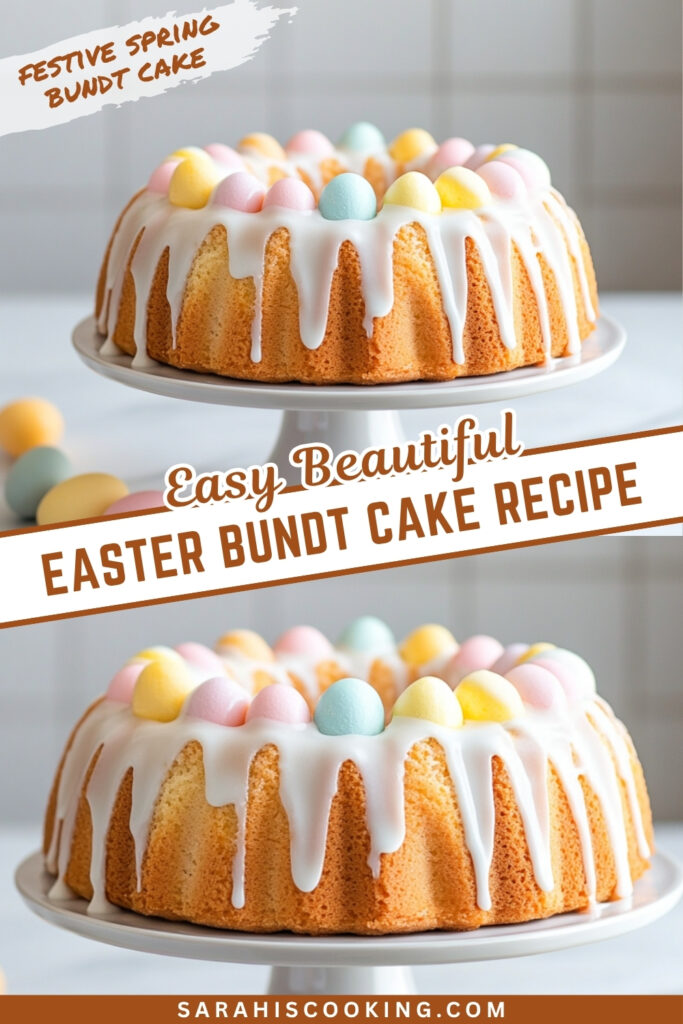
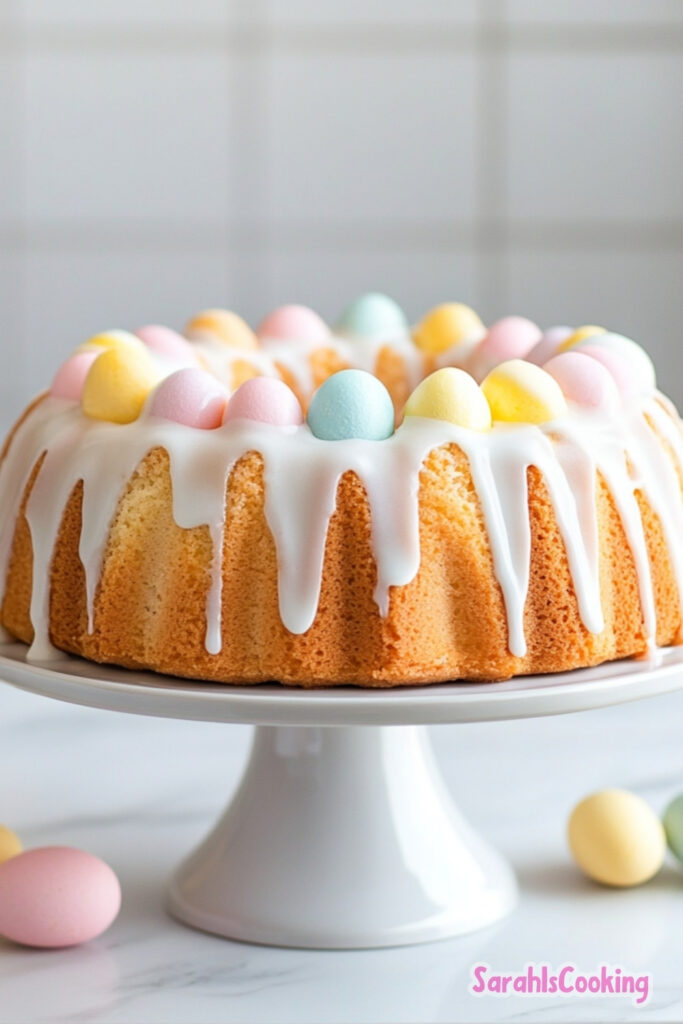
Pour the glaze over the cooled cake, letting it drip naturally down the sides. This creates the classic Bundt cake finish.
Top with pastel sprinkles or Easter candies while the glaze is still slightly wet so they adhere properly.
How I Tested and Refined This Recipe
I started with a standard boxed cake mix and quickly found the texture too light for a Bundt shape. It baked unevenly and lacked the richness I wanted for a holiday centerpiece.
Adding pudding mix improved moisture but initially made the batter too thick. Adjusting the liquid with milk balanced the consistency and allowed for a smoother bake.
I also tested different fat sources. Butter alone gave good flavor but a slightly firmer crumb, while oil provided the softness I was aiming for. The final version uses oil for reliability and moisture.
The swirling technique took a few attempts to refine. Early versions were overmixed, leading to dull colors. Limiting the number of knife passes created a cleaner marbled effect without compromising structure.
Common Mistakes and How to Avoid Them
- Overmixing the batter – leads to a dense, heavy cake instead of a soft crumb.
- Skipping proper pan preparation – causes sticking and broken edges when unmolding.
- Using too much food coloring – can alter batter consistency and affect baking.
- Over-swirling the batter – blends colors into a muddy tone rather than distinct swirls.
- Underbaking – results in a gummy center that collapses after cooling.
- Glazing a warm cake – prevents the glaze from setting and causes it to soak in.
Make-Ahead, Storage, and Freezing Guidance
This cake holds well at room temperature for up to three days when stored in an airtight container. The texture remains soft, though the glaze may firm slightly over time.
If you need to prepare it in advance, bake the cake and freeze it without the glaze. Wrap it tightly in plastic wrap and foil to protect against freezer burn.
Freeze for up to two months, then thaw overnight at room temperature. Add the glaze after thawing to restore its fresh appearance and texture.
Tips
- Use a cookie scoop for evenly sized portions of colored batter.
- Tap the pan gently on the counter to release air bubbles before baking.
- Rotate the pan halfway through baking if your oven has hot spots.
- Test doneness in multiple spots for accuracy.
- Let the glaze thicken slightly before pouring for better control.
- Decorate immediately after glazing so toppings stick properly.

Easter Bundt Cake Recipe
Description
This beautifully decorated Easter Bundt Cake features a soft, moist texture and festive marbled colors, making it the perfect centerpiece for your Easter celebrations. Starting with a simple boxed cake mix enhanced with cheesecake-flavored pudding, sour cream, and vanilla, this recipe guarantees extra moisture and rich flavor. The batter is divided and dyed in vibrant pastel shades of green, pink, and purple, then swirled together for a stunning visual effect. Finished with a sweet, buttery glaze and festive sprinkles, this cake is easy to make, fun to decorate, and guaranteed to impress your family and guests.
ingredients
Cake Ingredients
Glaze Ingredients
Instructions
Preheat and Prep
Preheat your oven to 350°F (175°C). Generously grease a 10-cup Bundt pan with nonstick cooking spray or cake release, then lightly flour the pan.Ensuring the pan is well-greased prevents sticking.Make the Batter
In a large bowl (using a hand mixer) or stand mixer bowl, combine the cake mix, cheesecake instant pudding mix, sour cream, ½ cup milk, vegetable oil, eggs, and vanilla extract.Mix Until Smooth
Mix on low speed for 30 seconds, scraping down the edges of the bowl. Then, beat on medium speed for 1-2 minutes until the batter is well combined and smooth.Divide and Color
Reserve about 1 cup of plain batter to pour into the pan first. Divide the remaining batter evenly into 3 separate bowls (approx. ½ cup each). Add a few drops of green, pink, and purple gel food coloring to each bowl, stirring well until you reach your desired pastel shade.Gel coloring provides vibrant colors without thinning the batter.Layer and Swirl
Pour the reserved uncolored batter into the prepared Bundt pan and spread evenly. Using a cookie scoop or spoon, randomly drop spoonfuls of the colored batters over the plain layer. Gently run a butter knife back and forth through the batter a few times to create a swirl. Do not over-swirl, or the colors will blend into brown.Bake
Bake for 30-35 minutes. Test for doneness by inserting a toothpick into the center; it should come out with only a few moist crumbs, not wet batter.Cool Completely
Let the cake cool in the pan for 10 minutes, then invert onto a wire rack. Allow it to cool completely (at least 1 hour) before applying the glaze.Glazing a warm cake will cause the glaze to melt off.Make the Glaze
In a medium bowl, stir together the powdered sugar and melted butter. Whisk in the 3 tablespoons of milk and clear vanilla extract until completely smooth. If the glaze is too thick, add more milk 1 tablespoon at a time until it is pourable.Decorate and Serve
Pour the glaze over the top of the cooled cake, letting it drip naturally down the sides. Immediately top with pastel sprinkles, mini chocolate eggs, or jelly beans before the glaze sets. Slice and serve.
Nutrition Facts
Servings 12
Serving Size 1 slice
- Amount Per Serving
- Calories 485kcal
- % Daily Value *
- Total Fat 23gg36%
- Saturated Fat 6gg30%
- Trans Fat 0gg
- Cholesterol 75mgmg25%
- Sodium 420mgmg18%
- Potassium 95mgmg3%
- Total Carbohydrate 68gg23%
- Dietary Fiber 0.5gg2%
- Sugars 48gg
- Protein 5gg10%
- Calcium 12% mg
- Iron 4% mg
* Percent Daily Values are based on a 2,000 calorie diet. Your daily value may be higher or lower depending on your calorie needs.
Note
- Freezing Instructions: You can freeze the cake without the glaze. Wrap it tightly in plastic wrap and foil, then freeze for up to 2 months. Thaw overnight in the refrigerator before decorating.
- Pudding Substitution: If you cannot find cheesecake pudding, vanilla or white chocolate instant pudding works perfectly as a substitute.
- Color Tips: Feel free to use any pastel shades you love—blue, yellow, or lavender work just as well as pink, green, and purple.
- Make Ahead: This cake tastes even better the next day as the flavors meld. Bake it a day in advance and store covered at room temperature.