
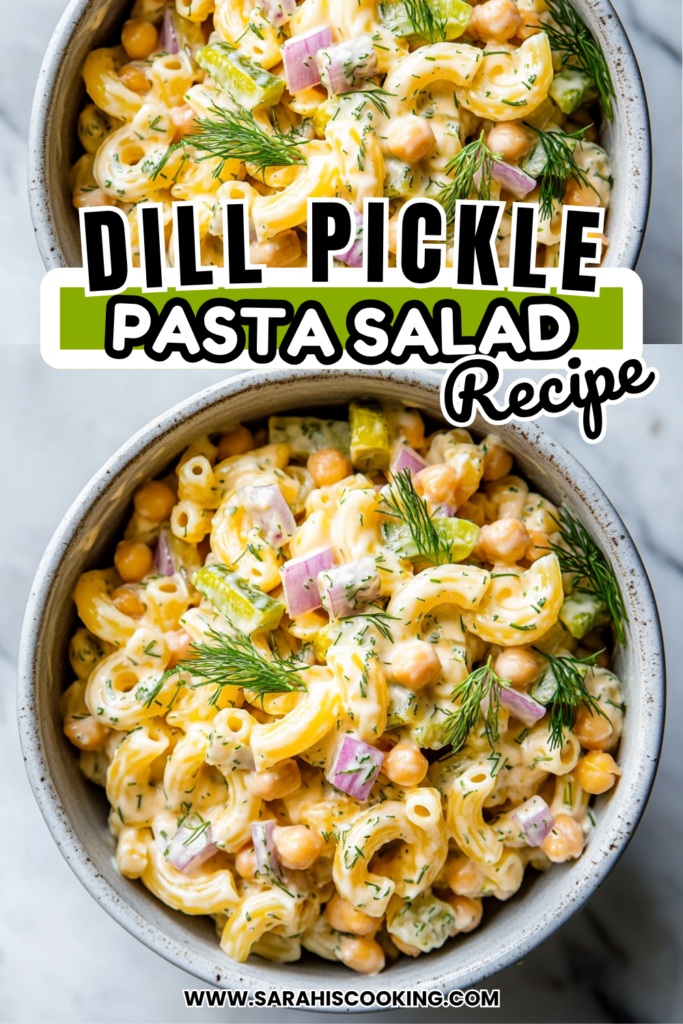
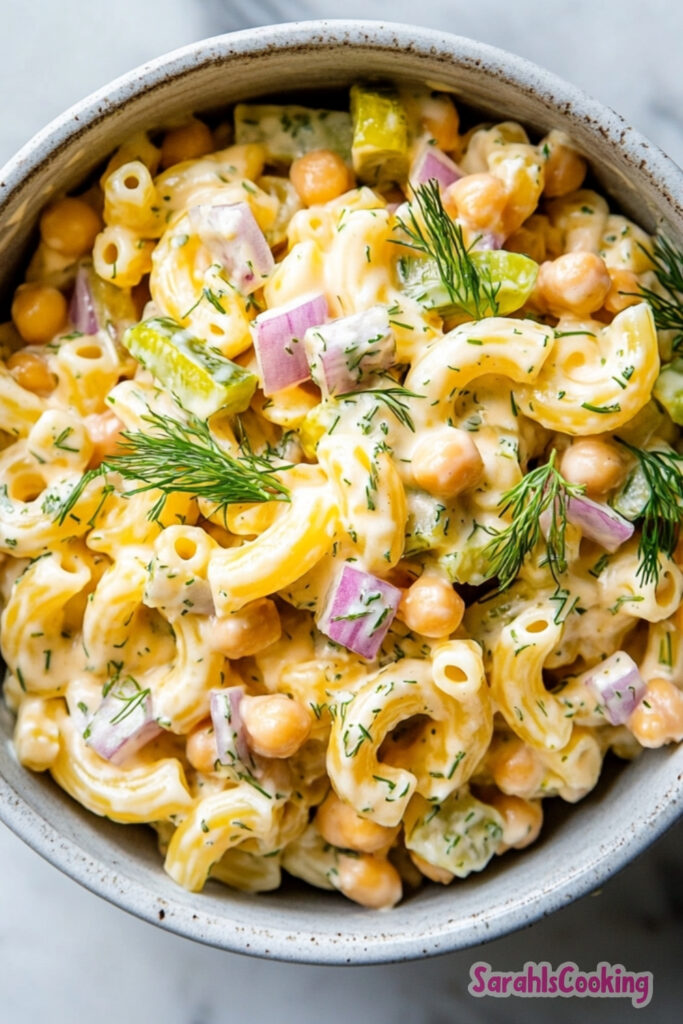
A creamy, tangy dill pickle pasta salad with chickpeas and vegan cheddar. Ready in 25 minutes. Great for meal prep or backyard BBQs.
Some recipes exist purely to satisfy a craving. This dill pickle pasta salad is one of them. It is creamy, tangy, and crunchy all at once. The whole thing comes together in about twenty-five minutes, which makes it practical for weeknight dinners or weekend meal prep.
I have tested this version multiple times to get the balance right. Too much pickle juice makes the dressing thin. Too little and the tang disappears. The final recipe holds up beautifully in the fridge for days, which matters when you are cooking for yourself or packing lunches.
This is not a delicate salad. It is sturdy, filling, and unapologetically pickle-forward. If you eat pickles straight from the jar, you will likely make this on repeat.
Ingredients Needed for the Recipe
- Macaroni pasta (4 cups cooked, about 2 cups dry) – The pasta provides the structural base. It absorbs the dressing without becoming mushy and gives the salad enough heft to work as a main dish.
- Dill pickles (¾ cup, chopped) – These are the star. Use kosher dill or sour pickles. Avoid bread-and-butter pickles here, since their sweetness throws off the savory-tangy balance.
- Red onion (½ small, finely diced) – Red onion adds sharpness and crunch. Finely dicing it prevents oversized chunks from overwhelming each bite.
- Chickpeas (15 oz can, drained and rinsed) – Chickpeas bring protein and creaminess. They also help the salad feel like a complete meal rather than just a side dish.
- Vegan cheddar (¾ cup, shredded) – The cheese adds richness and a familiar creamy texture. Choose a brand that melts well and has a sharp flavor.
- Fresh dill (2 tbsp, finely chopped) – Fresh dill is non-negotiable here. It ties the pickle flavor together and adds brightness that dried dill cannot match.
- Green onion (1, chopped) – Green onion gives a mild, fresh finish. Use both the white and green parts.
- Unsweetened vegan yogurt (½ cup) – This is the creamy base of the dressing. Use plain, unsweetened yogurt. Coconut, soy, or oat varieties all work as long as they are neutral in flavor.
- Pickle juice (¼ cup) – The pickle juice thins the dressing and adds concentrated tang. Do not skip it. This is where much of the flavor comes from.
- Dijon mustard (1 tbsp) – Dijon adds sharpness and helps emulsify the dressing. It also deepens the savory notes.
- Olive oil (1 tbsp, optional) – Olive oil adds richness and a smooth mouthfeel. You can omit it for a lower-fat version, but the salad will taste slightly leaner.
- Garlic powder (1 tsp) – Garlic powder provides background warmth without the harshness of raw garlic.
- Salt and pepper (to taste) – The pickles and pickle juice already add significant salt. Taste before adding more.
How to make Dill Pickle Pasta Salad?
Step 1 – Cook and Cool the Pasta
Bring a large pot of salted water to a rolling boil. Add the macaroni and cook according to package directions until al dente. Undercook it slightly by about one minute, since the pasta will absorb dressing later. Overcooked pasta turns mushy and falls apart when mixed.
Drain the pasta in a colander. Immediately rinse it with cold water, stirring gently until every piece is cool to the touch. This stops the cooking process and removes excess starch, which would otherwise make the dressing gluey. Let the pasta drain well while you prep the other ingredients.
Step 2 – Chop and Combine the Salad Base
While the pasta cooks, chop the dill pickles into small, uniform pieces. Aim for quarter-inch dice. Finely dice the red onion so no single piece overwhelms the bite. Chop the fresh dill and green onion, and drain and rinse the chickpeas thoroughly.
In a large mixing bowl, combine the cooled pasta, chopped pickles, red onion, chickpeas, shredded vegan cheddar, and fresh dill. Do not add the dressing yet. Toss the dry ingredients with your hands or a large spoon so everything is evenly distributed before the dressing goes in.
Step 3 – Whisk the Creamy Pickle Dressing
In a separate small bowl or a jar with a lid, combine the vegan yogurt, pickle juice, Dijon mustard, olive oil (if using), garlic powder, and a pinch of black pepper. Whisk vigorously until smooth and completely uniform. The dressing should be thick but pourable, similar to a creamy ranch.
Taste the dressing at this stage. It should taste tangy and slightly sharp from the mustard. If it needs more salt, add a small pinch, but remember the pickles will contribute salt to the final salad. Set the dressing aside.
Step 4 – Dress and Rest the Salad
Pour the dressing over the pasta mixture. Toss thoroughly with a large spoon or spatula, scraping the bottom of the bowl to ensure every piece gets coated. The pasta should look glossy and lightly coated, not swimming in dressing.
Cover the bowl and refrigerate for at least thirty minutes before serving. This resting time is critical. The pasta absorbs the dressing, and the flavors meld together. Taste again before serving and adjust with additional pickle juice, salt, or pepper as needed. If the salad seems dry after resting, stir in a tablespoon or two of reserved pickle juice.
Why This Recipe Works
Most creamy pasta salads rely heavily on mayonnaise or heavy dressings that mask the other ingredients. This version uses yogurt as the base, which keeps the salad lighter while still providing creaminess. The pickle juice does double duty here: it thins the yogurt to a pourable consistency and infuses every bite with tang.
The ratio of pasta to mix-ins is intentional. Four cups of cooked pasta give you enough surface area to hold the dressing without overwhelming the pickles and chickpeas. Chickpeas add protein and a creamy interior texture that contrasts with the crunchy pickles and red onion. The vegan cheddar melts slightly into the dressing, creating a cohesive bite rather than separate components.
Rinsing the pasta with cold water is not optional here. That step removes surface starch, which would otherwise cause the dressing to thicken and become pasty as the salad sits. The cold water also stops the cooking process immediately, so the pasta stays firm enough to hold its shape through several days in the fridge.
How I Tested and Refined This Recipe
I made this salad six times before settling on the final version. The first attempt used dill relish instead of chopped pickles. The relish disappeared into the dressing and left no satisfying pickle crunch. Chopping whole pickles by hand solved that problem completely.
The second version had too much dressing. I used a full cup of yogurt and half a cup of pickle juice. The salad was soupy, and the pasta turned mushy within a day. Cutting the yogurt back to half a cup and the pickle juice to a quarter cup gave the right coating without excess liquid.
I also tested the salad without the resting period. It tasted flat and one-dimensional. The thirty-minute rest allows the pasta to absorb the pickle juice and the garlic powder to bloom. Skipping that step makes the salad taste like cold pasta with dressing stirred in rather than a cohesive dish.
The olive oil was a late addition. Early versions without it tasted lean and slightly harsh from the yogurt. One tablespoon of olive oil rounds out the acidity and gives the dressing a smoother mouthfeel without making it heavy.
Common Mistakes and How to Avoid Them
- Overcooking the pasta. Mushy pasta cannot hold the dressing. Cook to al dente or slightly under. Rinse immediately with cold water to stop carryover cooking.
- Skipping the cold water rinse. Unrinsed pasta releases starch into the dressing, creating a gluey, unappealing texture. Rinse until the water runs clear and the pasta is completely cool.
- Adding the dressing to warm pasta. Warm pasta absorbs dressing too quickly and becomes soggy. Always cool the pasta completely before combining.
- Using sweet pickles or bread-and-butter pickles. The sugar in sweet pickles clashes with the tangy yogurt dressing. Stick with kosher dill or sour pickles.
- Chopping pickles too large. Large pickle chunks overwhelm the salad. Dice them to the size of the pasta pieces so every forkful has balanced ingredients.
- Skipping the resting time. The salad tastes flat if served immediately. Thirty minutes in the fridge transforms the flavors.
Make-Ahead, Storage, and Freezing Guidance
This dill pickle pasta salad is ideal for make-ahead meals. Prepare the full recipe, cover tightly, and refrigerate for up to four days. The flavor actually improves on day two, as the dressing continues to soak into the pasta and chickpeas.
After day three, the pickles lose some of their crunch, and the pasta softens slightly. It is still perfectly edible, but the texture declines. For best results, eat within the first two to three days.
Freezing is not recommended. The yogurt-based dressing separates upon thawing and becomes grainy. The pasta also turns mushy. If you need to prep further ahead, cook the pasta and chop the vegetables separately, then store them in airtight containers. Combine everything with the dressing on the day you plan to eat it.
If the salad seems dry after sitting in the fridge, stir in one to two tablespoons of reserved pickle juice before serving. This restores moisture and brightens the flavor without making the dressing thin.
Tips
- Use a sharp knife to dice pickles and onions. Blunt blades crush the vegetables and release excess liquid.
- Reserve extra pickle juice from the jar before you start. You will need it for the dressing and potentially for refreshing the salad later.
- Let the salad sit at room temperature for ten minutes before serving if it has been refrigerated for more than a few hours. The dressing thickens when cold and needs a moment to loosen.
- Double the recipe for large gatherings. This salad scales easily and holds up well on a buffet table for about two hours.
- Add a handful of fresh spinach or arugula just before serving for extra color and a peppery bite.
- Use gluten-free pasta if needed. Cook it al dente and rinse thoroughly, as gluten-free pasta releases more starch than wheat-based pasta.

Dill Pickle Pasta Salad Recipe
Description
If you’re the kind of person who eats pickles straight from the jar, this dill pickle pasta salad is going to be your new obsession. Ready in half an hour, it is creamy, crunchy, tangy, and loaded with flavor. This vegan recipe holds up beautifully in the fridge, making it perfect for weekly meal prep, picnics, or backyard BBQs. Between the pasta, chickpeas, and vegan cheese, this is more than just a side dish—it has everything you need in a main meal!
Ingredients
Salad Base
Creamy Dill Dressing
Instructions
Cook the Pasta
Cook your macaroni noodles according to package directions until al dente. Drain and rinse thoroughly with cold water until completely cooled to stop the cooking process.Combine Salad Ingredients
In a large mixing bowl, combine the cooled noodles, chopped dill pickles, diced red onion, drained chickpeas, shredded vegan cheddar, fresh dill, and green onion.Make the Dressing
In a separate small bowl or jar, whisk together the vegan yogurt, pickle juice, Dijon mustard, olive oil (if using), garlic powder, salt, and pepper until smooth and creamy.Assemble and Chill
Pour the dressing over the pasta salad mixture and toss gently to coat evenly. Taste and adjust salt or add more pickle juice if desired. For the best flavor, let it sit in the fridge for at least 30 minutes before serving.Meal Prep Option
If meal prepping, you can make salad jars by combining the dressing ingredients in the bottom of 3 to 4 jars, and layering the ingredients in this order: chickpeas, red onion, pickles, macaroni, cheese, and fresh dill. Shake before eating.
Nutrition Facts
Servings 4
Serving Size 1/4 of recipe
- Amount Per Serving
- Calories 451kcal
- % Daily Value *
- Total Fat 12.1g19%
- Saturated Fat 2.5g13%
- Sodium 992mg42%
- Potassium 289mg9%
- Total Carbohydrate 69.4g24%
- Dietary Fiber 8.9g36%
- Sugars 3.4g
- Protein 15.5g31%
* Percent Daily Values are based on a 2,000 calorie diet. Your daily value may be higher or lower depending on your calorie needs.
Note
No chickpeas? Use white beans or edamame. Use gluten-free pasta to make this gluten-free. Leftover pickle juice can be used for tahini dill dip or tofu sandwiches.