
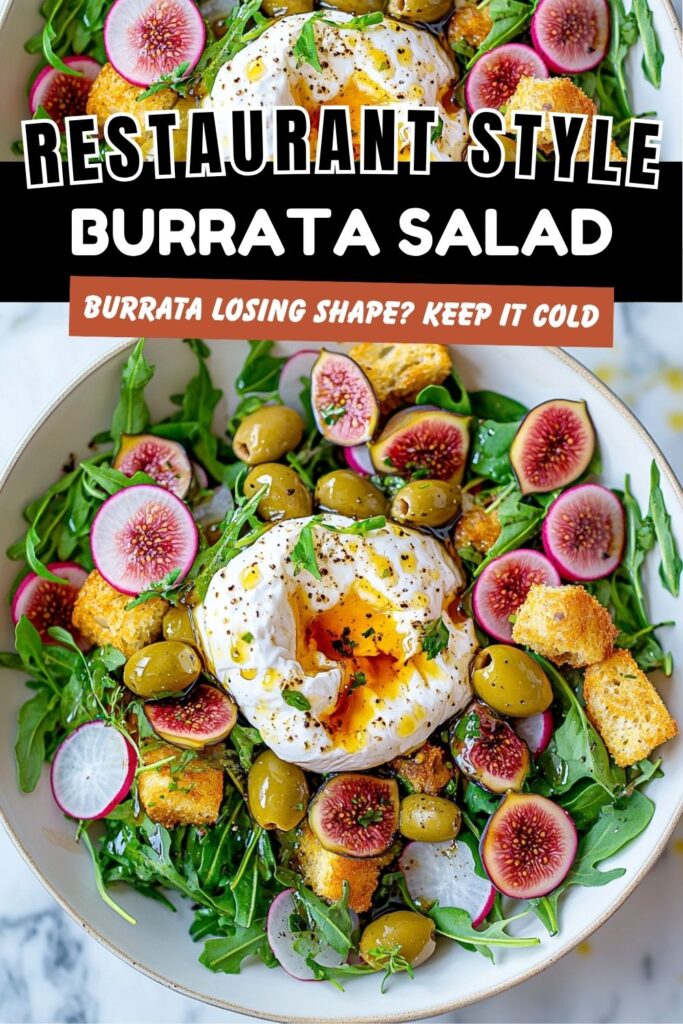
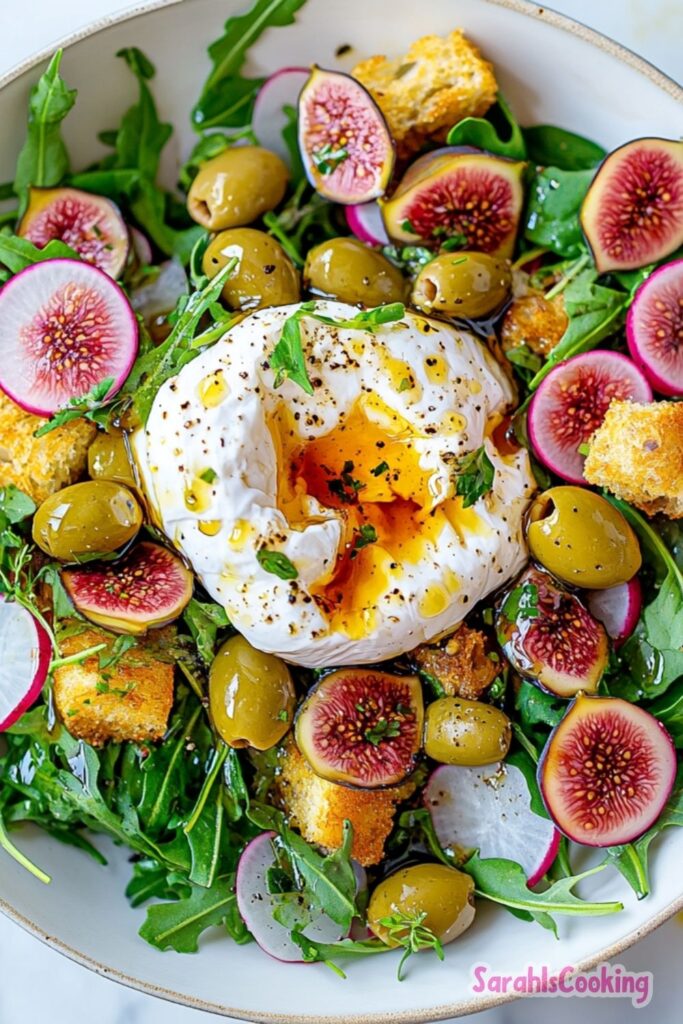
Burrata Salad with creamy burrata, fresh figs, and balsamic dressing. A crisp, refreshing, restaurant-quality salad you can easily make at home
This burrata salad is built to deliver a consistent, balanced result every time. The contrast between crisp greens and rich, creamy burrata is intentional, not accidental.
I approach this recipe with the same mindset I bring to baking. Each component has a role, and when assembled correctly, the texture and flavor come together cleanly without guesswork.
It’s a fast recipe, but not a careless one. With a few thoughtful steps, you get a salad that feels structured, satisfying, and worthy of serving as a main or a refined side.
Ingredients Needed for the Recipe
- Burrata cheese – the centerpiece of the salad, providing a creamy interior that balances the crisp textures beneath it.
- Arugula – forms the structural base, adding a peppery bite that cuts through the richness of the cheese.
- Fresh figs – bring natural sweetness and moisture, helping soften the sharp edges of greens and acidity.
- Onion (sliced) – adds a mild sharpness that builds depth and contrast in each bite.
- Green olives – contribute saltiness and a slight briny note that enhances overall flavor complexity.
- Radishes (thinly sliced) – provide crunch and a clean, slightly spicy finish that keeps the salad from feeling heavy.
- Croutons – add texture and structure, ensuring the salad has bite and doesn’t collapse into softness.
- Shallot (minced) – forms the aromatic base of the dressing, offering subtle sharpness without overpowering.
- Fresh herbs (basil and thyme) – layer in freshness and fragrance, tying together the greens and dressing.
- Salt – enhances all flavors and ensures balance across sweet, creamy, and acidic elements.
- Olive oil – acts as the fat base of the dressing, coating ingredients and delivering a smooth mouthfeel.
- Balsamic syrup – provides acidity and sweetness, creating a cohesive dressing that binds the salad.
How to make Burrata Salad?
Step 1 – Prepare the Dressing
In a small bowl, whisk together olive oil, balsamic syrup, minced shallot, herbs, and salt. The mixture should emulsify slightly and look glossy, not separated.
Taste and adjust if needed. The dressing should feel balanced with mild sweetness, gentle acidity, and a smooth finish that lightly coats a spoon.
Step 2 – Build the Base Layer
Spread the arugula evenly across a serving plate. Keep it loose rather than packed to allow airflow and maintain texture.
Drizzle about two tablespoons of dressing directly over the greens. This step is essential, as it seasons the base instead of leaving it bland underneath.
Step 3 – Add the Fresh Elements
Layer sliced figs over the greens, spacing them so each serving gets some sweetness. The fruit should be ripe but firm enough to hold its shape.
Scatter onions lightly. Too much in one spot will overpower the salad, so distribute evenly for controlled flavor.
Step 4 – Add Texture Components
Sprinkle croutons, radishes, and olives across the salad. Aim for even distribution so every bite includes crunch, salt, and freshness.
This stage defines the structure. You should see clear contrast between soft, crisp, and firm elements.
Step 5 – Place the Burrata
Gently place the burrata ball at the center of the salad. Keep it cold until this moment to maintain its shape and creamy interior.
You can leave it whole for presentation or lightly score it with a knife to allow the cream to open naturally when served.
Step 6 – Finish and Serve
Drizzle the remaining dressing over the entire salad, focusing lightly on the burrata. The surface should glisten without becoming saturated.
Serve immediately while the textures are intact and the cheese is at its ideal consistency.
Why This Recipe Works
The success of this salad comes from contrast. Creamy burrata sits against crisp greens and crunchy elements, creating a layered eating experience rather than a flat one.
The dressing ratio is deliberate. A higher oil content softens acidity and allows the burrata to remain the focal point instead of competing with sharp flavors.
Pre-dressing the greens ensures the base is seasoned. Without this step, the salad would taste uneven, with flavor concentrated only on the top layer.
Each ingredient is placed with purpose. Nothing is mixed aggressively, which preserves structure and keeps textures distinct until the moment of serving.
How I Tested and Refined This Recipe
I tested this salad across several variations, starting with different greens. Spinach felt too soft, while mixed greens diluted the flavor, so arugula became the clear choice.
The dressing took a few adjustments. Early versions had too much balsamic, which overwhelmed the burrata. Reducing it and increasing olive oil created a more balanced finish.
I also experimented with fruit options. Tomatoes worked, but figs provided a deeper sweetness and better structural integrity when plated.
Timing was another key factor. Letting the salad sit even briefly after assembly caused the croutons to soften and the burrata to lose its clean presentation.
The final version reflects those refinements. It holds texture, maintains balance, and delivers a consistent result without requiring last-minute corrections.
Common Mistakes and How to Avoid Them
- Using room temperature burrata – it becomes too soft and loses its shape quickly. Keep it chilled until serving.
- Skipping the initial dressing on greens – results in a bland base layer that cannot be corrected later.
- Overdressing the salad – excess liquid causes sogginess and masks the natural flavors.
- Cutting burrata too early – the creamy interior leaks and disrupts the structure before serving.
- Using underripe figs – they lack sweetness and can feel firm and unbalanced.
- Piling ingredients unevenly – leads to inconsistent bites instead of a cohesive experience.
- Letting the salad sit too long – textures degrade, especially the croutons and greens.
Make-Ahead, Storage, and Freezing Guidance
This salad is best assembled just before serving. The components can be prepped in advance, but final assembly should be done fresh.
The dressing can be stored in the refrigerator for up to two weeks. Shake or whisk before using, as natural separation will occur.
Prepared salad without dressing can be held for a few hours in the refrigerator, but once dressed, it should be eaten immediately.
Burrata does not freeze well. Freezing alters its texture, making the creamy center grainy and less enjoyable.
Leftovers are not ideal. If necessary, store separately and consume within one day, understanding the texture will soften significantly.
Tips
- Use a wide, shallow plate to maintain even distribution.
- Slice radishes thinly for better texture balance.
- Taste your dressing before using it every time.
- Keep burrata sealed until the moment you need it.
- Use fresh herbs generously but not excessively.
- Break croutons slightly if they are too large.
- Serve immediately for best texture contrast.

Burrata Salad Recipe
Description
This Burrata Salad is a celebration of fresh, crisp textures and creamy richness. Featuring a bed of peppery arugula, sweet fresh figs, and crunchy radishes, it is topped with a luxurious ball of burrata cheese. A homemade balsamic-herb dressing ties everything together for a dish that feels restaurant-quality yet is simple enough for any weeknight. It’s refreshing, elegant, and perfectly balanced.
Ingredients
Salad Base
Balsamic Herb Dressing
Instructions
Prepare the Dressing
In a small bowl or jar, combine the minced shallot, fresh herbs (basil and thyme), salt, olive oil, and balsamic syrup. Whisk vigorously or shake until well emulsified. Set aside.Assemble the Greens
Place the fresh arugula on a serving plate or divide between two plates. Drizzle approximately 2 tablespoons of the prepared dressing over the arugula and toss gently to coat. This ensures the base is flavorful.Add Toppings
Arrange the sliced figs, radish slices, green olives, and croutons evenly over the bed of arugula.Add the Burrata
Carefully place the whole ball of burrata cheese in the center of the salad. If desired, you can cut it into quarters using a sharp knife just before serving to let the creamy interior ooze out.Final Dressing
Drizzle the remaining dressing generously over the burrata and the surrounding ingredients. Serve immediately while the cheese is cold and the greens are crisp.
Nutrition Facts
Servings 2
Serving Size 1 plate
- Amount Per Serving
- Calories 420kcal
- % Daily Value *
- Total Fat 34g53%
- Saturated Fat 9g45%
- Cholesterol 35mg12%
- Sodium 680mg29%
- Potassium 450mg13%
- Total Carbohydrate 24g8%
- Dietary Fiber 4g16%
- Sugars 16g
- Protein 12g24%
* Percent Daily Values are based on a 2,000 calorie diet. Your daily value may be higher or lower depending on your calorie needs.
Note
For best results, ensure the burrata is chilled but not frozen. Do not dress the salad too far in advance to prevent the arugula from wilting. Fresh figs can be substituted with peaches or tomatoes depending on the season.