
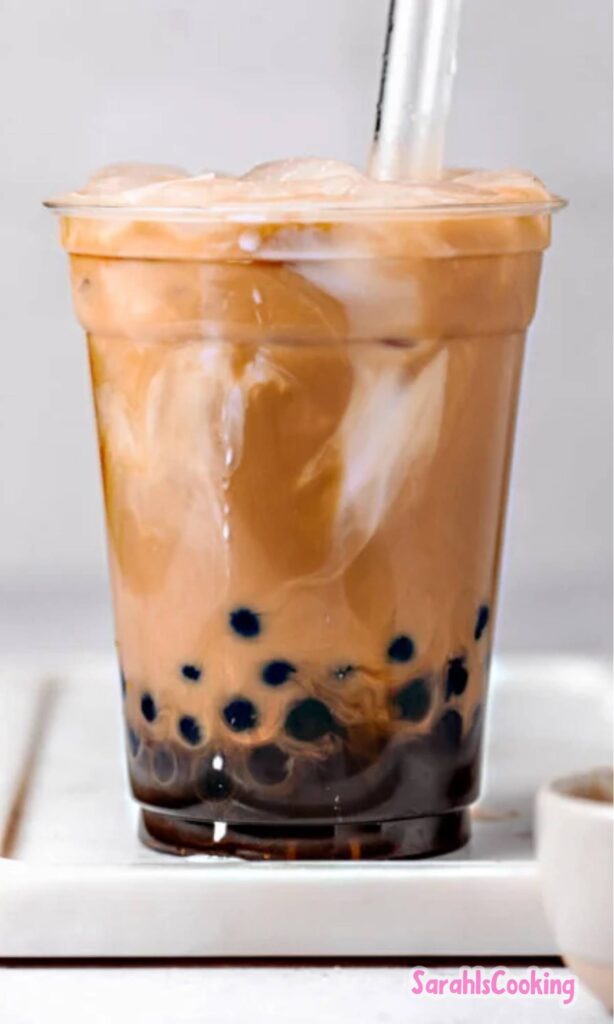
A good bubble tea should taste like tea first. It should be balanced, lightly sweet, and built around pearls that are properly cooked and pleasantly chewy. When those elements are right, the drink feels intentional rather than sugary or flat.
This version focuses on strength, texture, and timing. The tea is brewed with care to avoid bitterness. The pearls are cooked and rested so the centers hydrate fully. The assembly prevents dilution. Each step exists to protect flavor and consistency so you can make it again with the same result.
Who This Recipe Is For
This recipe is for home cooks who want bubble tea that tastes structured and balanced, not overly sweet or artificial. If you prefer drinks with depth and you notice texture details, this method will suit you well.
It is also for anyone who has tried making boba at home and felt disappointed. Hard centers, rapid pearl hardening, or tea that turned gray once milk was added are common frustrations. The method here addresses those specific failures with clear timing and temperature checkpoints.
You do not need advanced skill, but you do need attention to detail. The difference between average and excellent bubble tea is often five minutes of steeping time or a short resting period for the pearls.
Why This Recipe Works
Controlled Tea Extraction for Depth Without Bitterness
Black tea forms the backbone of traditional milk tea. It must be strong enough to hold up to dairy and sweetener, but not harsh. Many home recipes call for boiling water poured directly over tea and steeped briefly. That approach often produces either weak tea or astringency.
In testing, I found that letting the boiled water rest briefly before steeping allowed for a longer extraction without bitterness. Slightly reduced temperature preserves aromatic oils while still drawing out body and color. A 15 minute steep at this moderated heat produced a rich amber tea with malt notes and clean edges.
Shorter steeps lacked structure once milk was added. Longer steeps at full boil temperature pulled excessive tannins. The final method balances strength and smoothness so the tea remains distinct after chilling.
Treating Tapioca Pearls as a Primary Component
Tapioca pearls are not a garnish. They are a structural element of the drink. Undercooked pearls feel chalky in the center. Overcooked pearls become mushy and lose elasticity.
Pearls require two stages. First, active boiling to hydrate the exterior. Second, resting off heat in hot water so the core finishes cooking gently. Skipping the rest period consistently produced faint white centers in testing, even when the exterior looked done.
A light coating of syrup after draining prevents sticking and slows moisture loss. Without that step, the pearls clumped together and began firming within 30 minutes. Proper handling extends their pleasant chew window long enough to enjoy the drink comfortably.
Temperature Strategy to Prevent Dilution
Hot tea poured over ice tastes thin. The ice melts rapidly and dilutes flavor before you take a full sip. That is why the tea is chilled before assembly.
Chilling first allows ice to function as a temperature stabilizer rather than a diluter. The result is a drink that tastes consistent from the first sip to the last. It also protects the balance between tea, milk, and sweetness.
Ingredient Insights and Function
Black Tea
Loose leaf black tea provides stronger structure than many standard tea bags. It releases flavor more evenly and often contains larger leaf pieces, which contribute body.
If using tea bags, increase the quantity slightly to compensate for smaller leaf particles and lower extraction strength. A weak tea base will turn gray once milk is added and will taste flat regardless of added sugar.
Green or jasmine tea can be used, but steep time must be reduced and water temperature lowered further. These teas become bitter quickly. For readers who enjoy working with green tea beverages, the technique parallels the precision used in a Matcha Latte Recipe, where temperature control protects delicate flavor.
Tapioca Pearls
Fresh, high quality pearls cook more evenly. Pearls that have been exposed to air for long periods can crack or cook inconsistently.
Use a large pot with ample water. Crowding reduces temperature stability and leads to uneven hydration. Stir immediately after adding pearls to prevent sticking at the base of the pot.
After cooking, pearls should appear fully translucent. Any opaque center indicates undercooking and will feel chalky when bitten.
Sweetener
Granulated sugar dissolves best while the tea is warm. Stirring it into hot tea ensures even distribution and prevents gritty texture at the bottom of the glass.
Simple syrup works well and can improve integration slightly, especially in larger batches. If you enjoy experimenting with infused syrups, a subtle herbal option such as the one used in my Lemon Balm Syrup Recipe can add dimension without overpowering the tea. Adjust sweetness carefully. Added flavors shift perception of tannins.
Dairy Component
Half and half provides fat content that rounds sharp edges without masking the tea. Whole milk creates a lighter drink with less body. Oat milk adds mild sweetness and a slightly thicker texture but can soften the tea’s structure.
Avoid using very low fat milk. It often produces a thin mouthfeel and emphasizes bitterness.
Step by Step Success Guidance
Brewing the Tea Base
Bring water to a full boil, then allow it to rest briefly before pouring over the tea. This pause matters. Overly aggressive heat extracts harsh compounds early.
Steep uncovered for about 15 minutes. The tea should deepen to a rich amber. The aroma should be malty and clean. If it smells sharp or overly dry, the water was likely too hot or the steep extended too long.
Strain thoroughly. Fine particles left behind can intensify bitterness during chilling.
Sweetening and Creaming
Add sugar while the tea is still warm. Stir until completely dissolved. Undissolved sugar settles and creates inconsistent sweetness between servings.
Add half and half gradually and stir. The color should shift to a warm caramel tone. If it appears pale beige, the tea base was too weak.
Taste before chilling. This is the only stage where adjustments are straightforward. Once chilled, sweetness perception drops slightly, so the tea should taste just a touch sweeter than your ideal final flavor.
Cooking and Resting the Pearls
Use a large pot with rapidly boiling water. Add pearls and stir immediately. They will sink at first and then begin to float.
Maintain a steady boil according to package timing. After the active cook, turn off heat and let the pearls sit covered in hot water. This rest allows the center to finish hydrating gently.
Drain and rinse briefly under cool water to remove surface starch. Transfer immediately into syrup. Pearls should feel elastic and spring back when pressed lightly.
Assembly Timing
Spoon warm pearls into glasses. Pour chilled tea over them. Stir gently to distribute.
Serve promptly. Pearls are best within one to two hours of cooking. After that, texture gradually firms as starch retrogradation begins.
How I Tested and Refined This Recipe
I tested steep times at 8, 12, 15, and 20 minutes using the same tea and water volume. At 8 minutes, the tea tasted smooth but disappeared once milk was added. At 20 minutes with boiling water, bitterness became noticeable even after sweetening.
Allowing the water to cool slightly and steeping for 15 minutes produced the strongest body without harsh edges. That combination held its flavor after chilling and dilution from ice.
Pearl testing revealed similar patterns. Cooking only to the minimum suggested time resulted in faint white centers. Extending the boil without resting made the exterior too soft while the core remained slightly firm.
The rest period proved essential. It allowed even hydration without structural breakdown. Skipping the syrup coating led to noticeable sticking and faster hardening within 45 minutes.
I also tested whole milk and oat milk in place of half and half. Whole milk created a lighter drink but reduced roundness. Oat milk added sweetness that slightly masked the tea. Half and half provided the most consistent balance.
Each adjustment narrowed variability. The final ratios are intentional because they produce the same strength and texture across repeated batches.
Common Mistakes and How to Avoid Them
Bitter or Astringent Tea
Cause: Water too hot or steep time too long.
Correction: Let boiled water rest briefly before steeping and adhere to the 15 minute window.
Weak, Watery Flavor
Cause: Insufficient tea concentration or pouring hot tea over ice.
Correction: Increase tea quantity slightly if using bags and chill before assembly.
Hard or Chalky Pearls
Cause: Undercooked centers or skipping the rest period.
Correction: Ensure full boil during cooking and allow pearls to sit in hot water off heat.
Pearls Firming Too Quickly
Cause: Exposure to air and lack of syrup coating.
Correction: Transfer warm pearls directly into syrup and keep covered until serving.
Milk Muting the Tea
Cause: Excess dairy or low fat milk.
Correction: Use half and half in measured proportion and taste before chilling.
Make Ahead, Storage, and Freezing Guidance
The tea base can be prepared up to 24 hours in advance and stored covered in the refrigerator. Stir before serving to redistribute settled solids.
Cooked tapioca pearls are best used the same day. Refrigeration accelerates starch retrogradation, which causes them to harden. Reheating can soften them slightly, but texture rarely returns to its original elasticity.
If necessary, microwave pearls briefly with a spoonful of syrup. Expect partial recovery, not perfection.
Freezing cooked pearls is not recommended. Ice crystal formation damages their structure and produces a crumbly texture after thawing.
For gatherings, prepare the tea base ahead and cook pearls just before guests arrive. Bubble tea pairs well with light savory bites. If serving alongside small plates, options like my Easy Bruschetta Recipe provide contrast without overwhelming the drink.
Final Reinforcement
Bubble tea rewards precision. Small decisions about temperature, steep time, and pearl handling determine whether the drink tastes balanced or disappointing. When the tea is brewed with intention and the pearls are treated as more than an afterthought, the result feels composed and reliable.
Follow the structure closely the first time. Once you understand how each step protects flavor and texture, adjustments become intuitive rather than risky.

Bubble Tea Recipe
Description
Rediscover the nostalgic joy of bubble tea with this authentic Chinese recipe featuring strong black tea, creamy half-and-half, and perfectly chewy black tapioca pearls (boba). Made with real tea leaves and balanced sweetness, this homemade version avoids artificial powders and cloying syrups—delivering a refreshingly genuine bubble tea experience.
Ingredients
For the Tea Base
For the Tapioca Pearls (Boba)
Instructions
Prepare the Bubble Tea
Brew the tea
Bring 4½ cups of water to a rolling boil. Turn off heat and let cool for 10 minutes (to preserve tea flavor and nutrients). Place black tea leaves in a large heatproof bowl or kettle using an infuser or tea bag. Pour the hot water over and steep for 15 minutes.Sweeten and add cream
Strain the tea if loose leaves were used. Stir in 4½ tablespoons of sugar until fully dissolved. Mix in ¾ cup half-and-half until smooth.Chill
Refrigerate the tea mixture for at least 1 hour to chill thoroughly (do not add ice, to avoid dilution).
Cook the Tapioca Pearls
Boil boba
Bring 6 cups of water to a rolling boil in a deep pot. Add 1 cup dried black tapioca pearls. Return to a boil, cover, and reduce heat to medium-low. Cook for 15 minutes, stirring occasionally to prevent sticking.Rest and check
Turn off heat and let covered pot sit for another 15 minutes. Drain and rinse pearls under cold water.Repeat if needed
If pearls still have white opaque centers, repeat the boiling and resting steps until fully translucent.Sweeten boba
Dissolve 3 tablespoons sugar in 1 cup warm water to make a simple syrup. Add cooked and rinsed boba to this syrup to prevent sticking and add sweetness.
Assemble the Drink
Serve
Spoon ¼ cup of sweetened boba into each serving glass. Pour chilled black milk tea over the pearls. Serve immediately with a wide straw.
Nutrition Facts
Servings 4
Serving Size 1 glass (approx. 12 oz)
- Amount Per Serving
- Calories 270kcal
- % Daily Value *
- Total Fat 10gg16%
- Saturated Fat 6gg30%
- Trans Fat 0gg
- Cholesterol 30mgmg10%
- Sodium 60mgmg3%
- Potassium 180mgmg6%
- Total Carbohydrate 44gg15%
- Dietary Fiber 0gg0%
- Sugars 38gg
- Protein 3gg6%
- Calcium 10 mg
* Percent Daily Values are based on a 2,000 calorie diet. Your daily value may be higher or lower depending on your calorie needs.
Note
- Storage tip: Cooked boba is best used within 1–2 hours for optimal chewiness. Do not refrigerate boba—it hardens quickly.
- Customize: Swap black tea for green, jasmine, or oolong. Use plant-based milk for a dairy-free version.
- Straw matters: Use a large-diameter straw (typically 10–12mm) to enjoy the boba with each sip!