
A truly great carrot cake should be deeply moist, warmly spiced, and balanced enough to let the carrots shine rather than disappear behind sugar. This recipe delivers exactly that. The texture is tender, the crumb stays soft for days, and the flavor develops beautifully after resting.
I have baked carrot cakes for years, both for family gatherings and occasional orders. Over time, I learned that the difference between a decent carrot cake and a truly reliable one lies in ingredient balance and mixing technique.
This version reflects that experience. It is carefully structured to produce a cake that is rich but not heavy, sweet but not cloying, and stable enough to frost and slice cleanly.
If you want a carrot cake that turns out consistently moist, flavorful, and bakery-quality at home, this is the one I trust.
Who This Recipe Is For
This recipe is designed for home bakers who want dependable results without unnecessary complexity. If you appreciate clear instructions and recipes that work exactly as written, you will feel comfortable making this cake.
It suits beginner bakers who are ready to try a layered cake, as well as experienced bakers who want a reliable carrot cake they can serve for celebrations or casual gatherings.
The method is straightforward, but the details matter. Paying attention to mixing time, carrot texture, and baking temperature will reward you with a cake that tastes like it came from a professional kitchen.
Why This Recipe Works
The structure of this carrot cake relies on a precise balance between oil, eggs, flour, and moisture from the carrots. Oil provides tenderness and prevents the cake from drying out, while eggs stabilize the batter and help the cake rise properly.
The generous amount of grated carrots adds both moisture and natural sweetness. Instead of disappearing into the batter, the carrots create a soft, textured crumb that stays moist even after refrigeration.
Cinnamon adds warmth without overpowering the cake. Raisins contribute small pockets of sweetness and chew, which contrasts nicely with the soft crumb.
The final layer of cream cheese frosting completes the structure. Its tangy richness cuts through the sweetness of the cake and ties all the flavors together.
Ingredients Needed for the Recipe
- Eggs – Provide structure, richness, and aeration. Whipping the eggs with sugar helps build volume in the batter.
- Granulated sugar – Sweetens the cake while also contributing to browning and moisture retention during baking.
- Vegetable oil – Keeps the cake exceptionally moist and tender, even after chilling or freezing.
- Vanilla extract – Enhances overall flavor and rounds out the sweetness of the cake.
- All-purpose flour – Forms the base structure of the cake and supports the moisture-heavy batter.
- Baking powder – Acts as the leavening agent that allows the cake to rise and develop a soft crumb.
- Ground cinnamon – Adds warm spice notes that complement the sweetness of the carrots.
- Fresh carrots – Provide moisture, texture, and subtle natural sweetness throughout the cake.
- Raisins – Introduce chewy texture and concentrated sweetness that balances the spiced batter.
- Cream cheese frosting – Adds tangy richness and provides a smooth, stable finish for the layered cake.
- Orange and green food coloring – Used for decorative carrot piping on top of the finished cake.
Ingredient Insights and Function
Eggs are essential to this cake’s stability. When beaten with sugar for several minutes, they trap air and create the base structure that supports the heavy carrot batter.
Oil is another key element. Unlike butter-based cakes that can dry out quickly, oil-based cakes retain moisture for several days. That is why carrot cake often tastes even better the day after baking.
The carrots themselves must be finely grated. Large shreds create tough pockets that do not soften during baking. Fine shreds blend seamlessly into the batter and keep the crumb soft.
If you prefer to substitute raisins, chopped dates or dried cranberries work well. Removing them entirely will still produce a good cake, though the flavor will be slightly less complex.
For a gluten-free version, a high-quality one-to-one gluten-free flour blend can replace the all-purpose flour. However, the crumb may be slightly more delicate.
Oil substitutions such as coconut oil or avocado oil are possible, but they may add subtle flavor differences. Neutral vegetable oil remains the most reliable option.
How to make Best Carrot Cake Recipe?
Step 1 – Prepare the Baking Pan and Oven
Preheat the oven to 340°F (170°C). Grease and line a 9-inch springform pan or round cake pan with parchment paper to prevent sticking.
This slightly lower baking temperature helps the thick batter bake evenly. Carrot cakes require longer baking time, so stable heat is important.
Step 2 – Whisk the Wet Ingredients
In a large mixing bowl, combine the eggs, sugar, vegetable oil, and vanilla extract. Use a stand mixer or hand mixer on high speed for about 3 to 4 minutes.
The mixture should become pale and thick. This step introduces air into the batter, which helps the cake rise despite its dense ingredients.
Step 3 – Combine the Dry Ingredients
In a separate bowl, whisk together the flour, baking powder, and cinnamon until evenly distributed.
Adding the dry ingredients separately ensures that the leavening and spices are evenly incorporated before they enter the batter.
Step 4 – Mix Wet and Dry Ingredients
Reduce the mixer speed to low and slowly add the dry ingredients into the egg mixture. Mix only until the batter becomes smooth.
Avoid overmixing here. Too much mixing develops gluten in the flour, which can lead to a dense or tough cake.
Step 5 – Fold in Carrots and Raisins
Add the finely grated carrots and raisins to the batter. Stir gently until evenly distributed.
The batter will become thick and textured at this stage. That is exactly what you want for a moist carrot cake.
Step 6 – Bake the Cake
Pour the batter into the prepared pan and smooth the surface lightly.
Bake for 70 to 80 minutes. The cake is ready when a skewer inserted into the center comes out clean and the surface feels lightly springy.
Step 7 – Cool the Cake
Allow the cake to cool in the pan for about 10 minutes before transferring it to a cooling rack.
Cooling completely is important before frosting. Warm cake will melt the cream cheese frosting and make layering difficult.
Step 8 – Frost and Assemble
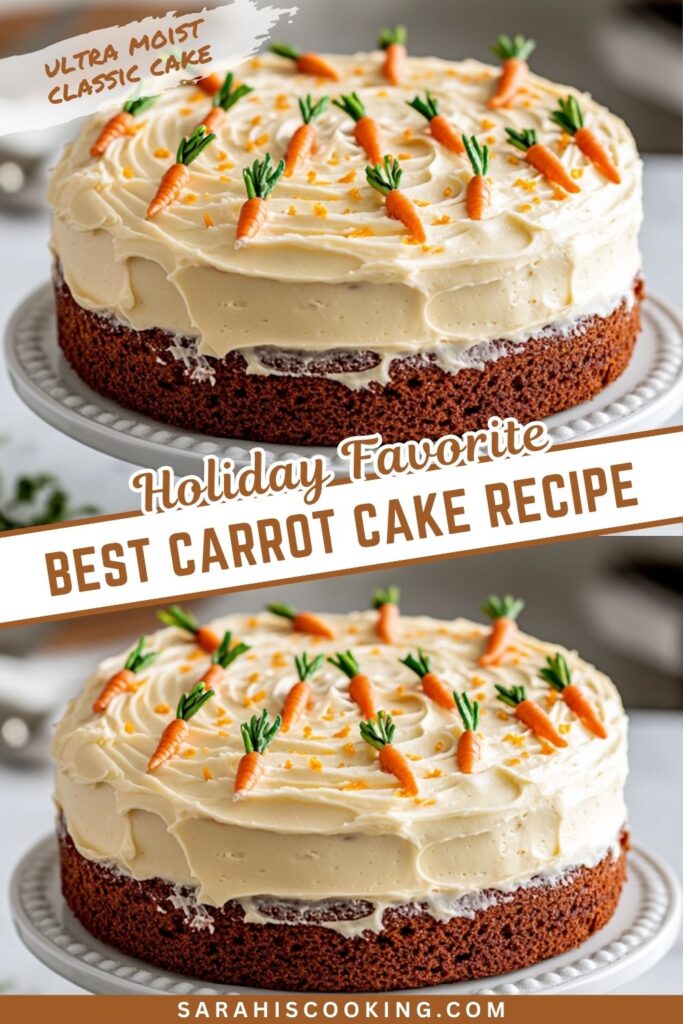
Once cooled, slice the cake horizontally into four layers. Spread cream cheese frosting between each layer and across the top.
Reserve a small portion of frosting to tint orange and green for decorative carrot piping if desired.
How I Tested and Refined This Recipe
Early versions of this cake used butter instead of oil. While the flavor was pleasant, the crumb became dry after refrigeration. Switching to oil created a much softer texture that stayed moist for days.
I also experimented with different carrot quantities. Smaller amounts produced a cake that felt closer to spice cake. Increasing the carrots significantly improved moisture and texture.
The mixing method required adjustment as well. Initially I mixed everything together at once, but that produced uneven rise and occasional dense spots.
Separating the wet and dry ingredients before combining solved that issue. Whipping the eggs and sugar first created better aeration and a lighter crumb.
Baking temperature also mattered. Higher temperatures browned the edges too quickly while the center remained underbaked. Lowering the oven to 340°F produced consistent results.
The final version is the result of these adjustments. Each step is intentional and designed to protect texture, moisture, and structure.
Common Mistakes and How to Avoid Them
- Using large carrot shreds – coarse carrots remain tough in the baked cake.
- Overmixing the batter – this develops gluten and leads to a dense crumb.
- Underwhipping the eggs and sugar – insufficient aeration reduces cake rise.
- Baking at too high a temperature – edges overbake while the center remains wet.
- Frosting the cake while warm – the frosting melts and slides off the layers.
- Removing the cake too early – carrot cakes require a full baking time because of their moisture content.
Make-Ahead, Storage, and Freezing Guidance
This carrot cake actually improves after resting overnight. The moisture redistributes through the crumb and the flavors deepen.
Unfrosted cake layers can be wrapped tightly and stored at room temperature for up to two days before assembling.
Once frosted, the cake should be refrigerated and kept in an airtight container. It will stay fresh for about four days.
The cake also freezes well. Wrap individual layers or slices in plastic wrap and foil, then freeze for up to three months.
To serve, thaw the cake overnight in the refrigerator and allow it to sit at room temperature for about an hour before slicing.
Tips
- Finely grate the carrots for the best crumb texture.
- Let the cake rest overnight if possible for deeper flavor.
- Add a small pinch of salt to enhance the sweetness.
- Toasted chopped nuts can be added for extra texture.
- A small amount of freshly grated ginger adds subtle warmth.
- Check the cake near the end of baking with a skewer rather than relying on time alone.
- Always frost completely cooled cake layers for clean assembly.
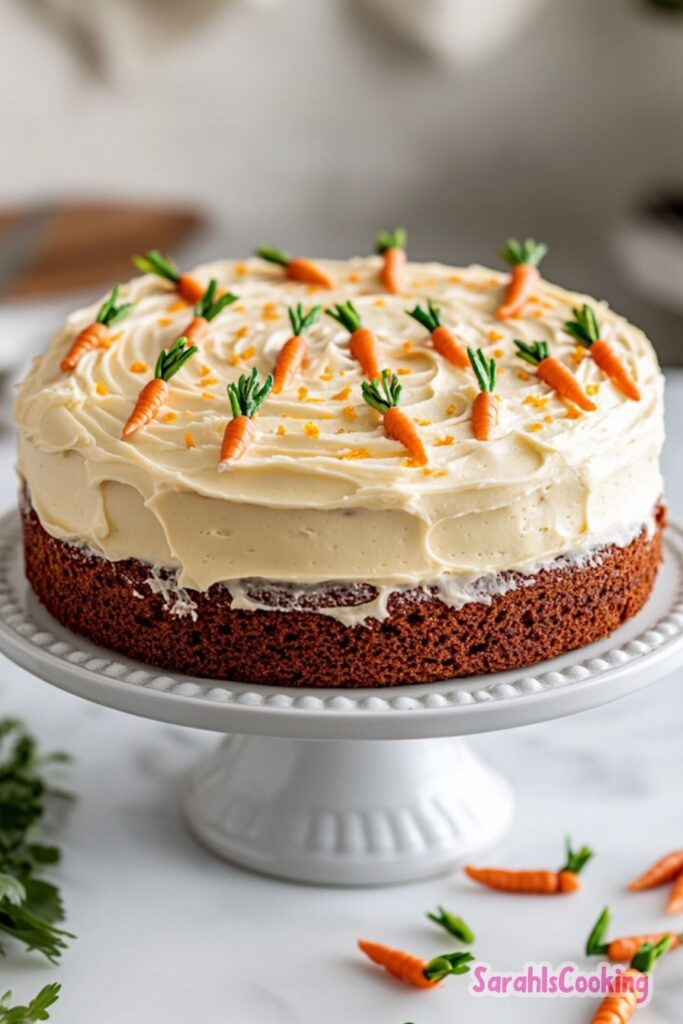

Best Carrot Cake Recipe
Description
This Best Carrot Cake Recipe stands out with its unbeatable flavor, featuring sweet carrots, plump raisins, and a hint of cinnamon. Paired with creamy, tangy cream cheese frosting, it's a dessert that's moist, flavorful, and perfect for any occasion. This cake gets even better after resting, making it ideal to prepare a day ahead.
ingredients
Best-Ever Carrot Cake
Instructions
Prep
Pre-heat the oven to 340°F (170°C). Grease and line a 9" springform pan with parchment paper. Set aside.Make the Wet Ingredients Mixture
Using a stand mixer (or electric hand-mixer) whisk together eggs, sugar, oil and vanilla extract on High speed until very thick, about 3-4 minutes.Make the Dry Ingredients Mixture
In a separate bowl mix together the flour, baking powder, and cinnamon and stir on Low speed into the egg mixture.Add Carrots and Raisins
Lastly, add in the grated carrots and raisins and mix in until well combined.Bake the Cake
Pour mixture into the pan and bake for 70-80 minutes, or until a skewer comes out clean.Cool the Cake
Leave to cool in tins for 10 mins then turn onto a cooling rack.Prepare Colored Frosting
Take about ½ cup (4oz/115 g) of cream cheese frosting and color half with orange food coloring and the remaining with green. Put into piping bags fitted with small round nozzles. Set aside.Assemble the Cake
Cut the cake into 4 layers and spread the cream cheese frosting in-between them saving some to spread on top of the cake.Decorate
Using the colored frosting pipe carrots on top of the cake.Serve
You can cut and enjoy the cake straight away or store it covered in the fridge for up to 4 days. Before serving allow it to sit at room temperature for at least 60 minutes.
Nutrition Facts
Servings 12
Serving Size 1 slice
- Amount Per Serving
- Calories 685kcal
- % Daily Value *
- Total Fat 35gg54%
- Saturated Fat 6gg30%
- Trans Fat 0gg
- Cholesterol 75mgmg25%
- Sodium 285mgmg12%
- Potassium 245mgmg8%
- Total Carbohydrate 88gg30%
- Dietary Fiber 2gg8%
- Sugars 62gg
- Protein 7gg15%
- Calcium 95mg mg
- Iron 2.1mg mg
* Percent Daily Values are based on a 2,000 calorie diet. Your daily value may be higher or lower depending on your calorie needs.
Note
- Finely shred carrots: Make sure your carrots are finely shredded, otherwise they won't get fully incorporated and you'll have big tough chunks of carrot in your soft cake.
- Add pineapple: You can add crushed pineapple for extra flavors and moisture.
- Fresh ginger: A little freshly grated ginger (about ½ teaspoon) is an excellent addition to this cake.
- Add nuts: If you like walnuts, pecans, or other nuts in your carrot cake, you can add roughly 1/4 - 1/3 cup of finely chopped toasted nuts to the batter.
- Don't overmix frosting: Don't overmix the Cream Cheese Frosting, just mix until smooth and creamy.
- Cool completely: Let the cake cool completely before frosting, otherwise, the frosting will melt and get messy.