
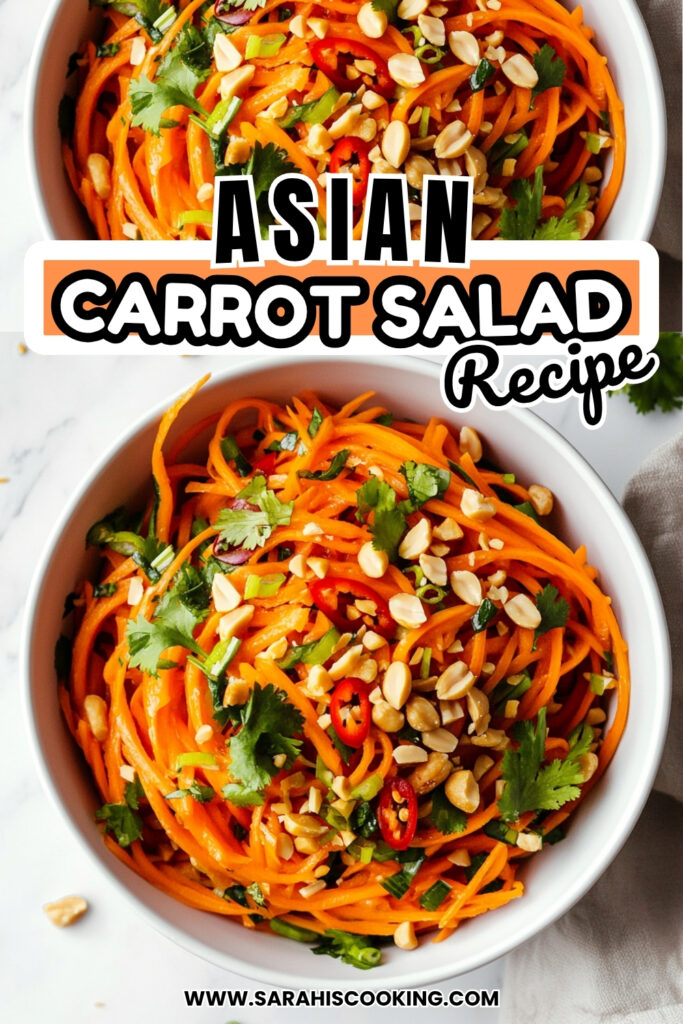
This Asian carrot salad is one of those recipes I rely on when I need something fresh, crisp, and dependable. It comes together quickly, but more importantly, it delivers consistent texture and balance every single time.
I approach this salad with the same mindset I bring to baking. Every ingredient has a purpose, and every step affects the final structure. When done right, the carrots stay firm, the dressing clings instead of pooling, and each bite feels layered rather than flat.
The result is a salad that works just as well next to rich mains as it does on its own. It is bright, slightly spicy, and grounded by a nutty depth that keeps it from feeling too sharp or acidic.
Ingredients Needed for the Recipe
- Carrots – The structural base of the salad. Using ribbons instead of grated pieces keeps them crisp and prevents excess moisture from diluting the dressing.
- Sugar – Balances the acidity from citrus and sharpness from mustard. It smooths the overall flavor and helps the dressing feel cohesive.
- Lemon (zest and juice) – Provides direct acidity and brightness. The zest adds aromatic oils that deepen the citrus flavor without adding more liquid.
- Lime (zest and juice) – Adds a floral citrus note that complements the ginger and chili. It rounds out the sharper lemon acidity.
- Mirin seasoning – Brings mild sweetness and subtle umami. It helps bridge the gap between the salty and acidic components.
- Dijon mustard – Acts as an emulsifier, helping the dressing bind together instead of separating. It also adds a gentle tang.
- Sesame oil – Contributes a nutty richness that anchors the dressing and gives it body.
- Soy sauce – Provides salt and depth. It enhances the natural sweetness of the carrots without overpowering them.
- Red chili – Adds controlled heat. It should be noticeable but not dominant, creating a gentle background warmth.
- Garlic – Brings sharpness and depth. It cuts through the sweetness and adds complexity to the dressing.
- Fresh ginger – Provides a clean, spicy warmth that lifts the entire dish. It is essential for freshness and should never be substituted with ground ginger.
- Coriander – Adds a fresh herbal note that lightens the overall flavor profile.
- Green onion – Offers mild sharpness and texture contrast. It finishes the salad with a fresh bite.
- Roasted peanuts – Add crunch and richness. They provide contrast to the softening carrots and complete the texture.
How to make Asian Carrot Salad?
Step 1 – Prepare the Carrots
Peel the carrots and use a vegetable peeler or mandoline to create long ribbons. Aim for even thickness so they soften at the same rate without becoming limp.
If the ribbons feel too thick or stiff, run the peeler over them once more. You want flexibility without losing that crisp snap.
Step 2 – Build the Dressing Base
In a bowl, combine the sugar with lemon juice and lime juice first. Whisk until the sugar dissolves fully, as undissolved sugar will create a grainy texture.
This step sets the foundation. If the sugar is not fully incorporated here, the dressing will never feel smooth later.
Step 3 – Add the Emulsifiers and Liquids
Whisk in the mirin, Dijon mustard, sesame oil, and soy sauce. Mix steadily until the dressing looks slightly thickened and cohesive.
You should see the oil fully integrated, not floating on top. This is your checkpoint for a stable dressing.
Step 4 – Layer in Aromatics
Add the chopped chili, lemon zest, lime zest, garlic, ginger, and coriander. Stir until evenly distributed.
At this stage, the aroma should be bright with a noticeable ginger warmth. If it smells flat, it likely needs more citrus zest.
Step 5 – Toss the Carrots
Add the carrot ribbons to the bowl and toss thoroughly. Use your hands or tongs to ensure every ribbon is coated.
Continue tossing for about a minute. The carrots should start to relax slightly but still hold their structure.
Step 6 – Finish and Serve
Transfer to a serving dish and top with chopped peanuts and green onion. Let it sit for 10 to 15 minutes if time allows.
This resting period helps the carrots absorb the dressing while maintaining their crunch. Serve slightly chilled or at room temperature.
Why This Recipe Works
The success of this salad comes down to balance and structure. The ratio of acid to sweetness is carefully controlled so neither dominates, allowing the natural carrot flavor to remain present.
Using carrot ribbons instead of grated pieces is a deliberate choice. Ribbons hold their internal moisture, which prevents the dressing from becoming diluted and keeps the texture crisp.
The dressing itself is built in layers. Dissolving sugar first, then emulsifying fats and acids, ensures a stable mixture that coats evenly rather than separating.
Finally, the combination of ginger, chili, and citrus creates a layered heat profile. It is not just spicy. It is warm, bright, and slightly sharp, which keeps each bite interesting.
How I Tested and Refined This Recipe
I started with grated carrots, thinking it would save time. That version failed quickly. The carrots released too much water, and within minutes the dressing tasted diluted and flat.
Switching to ribbons changed everything. The texture stayed intact, and the dressing clung properly. That became the non-negotiable base of the recipe.
I also tested different sweeteners. Standard sugar worked best for consistency, while erythritol required extra steps to dissolve. When not dissolved properly, it left a noticeable gritty texture.
The acidity took a few rounds to balance. Lemon alone felt too sharp, while lime alone lacked depth. Combining both created a fuller, more rounded citrus profile.
I adjusted the ginger multiple times. Too much overwhelmed the dish, while too little made it forgettable. The final amount adds warmth without overpowering the other elements.
Common Mistakes and How to Avoid Them
- Using grated carrots – This releases excess water and makes the salad soggy within minutes.
- Not dissolving the sugar fully – Leads to a grainy dressing that never properly integrates.
- Skipping the resting time – The flavors will not develop, and the carrots will taste separate from the dressing.
- Adding too much sesame oil – This can overpower the salad and make it feel heavy.
- Using ground ginger instead of fresh – Results in a dull, dusty flavor that does not blend well.
- Overloading with chili – Masks the balance and turns the dish one-dimensional.
Make-Ahead, Storage, and Freezing Guidance
This salad can be made slightly ahead, and in many ways it improves after sitting for about 15 to 20 minutes. The carrots soften just enough while still holding their shape.
Stored in an airtight container in the refrigerator, it will keep well for up to two days. Beyond that, the texture starts to decline and the dressing becomes less vibrant.
Freezing is not recommended. The high water content in the carrots causes them to break down completely once thawed, leaving a limp and uneven texture.
There is no reheating involved here. If stored cold, simply let it sit at room temperature for a few minutes before serving to bring the flavors back into balance.
Tips
- Use a Y-peeler for the most consistent carrot ribbons.
- Warm citrus juice slightly if using sugar substitutes to help dissolve them.
- Taste the dressing before adding carrots and adjust salt or acid as needed.
- Chop peanuts just before serving to keep them crunchy.
- For a sharper finish, add a small splash of extra lime juice at the end.
- Swap coriander with mint or basil for a different herbal note.
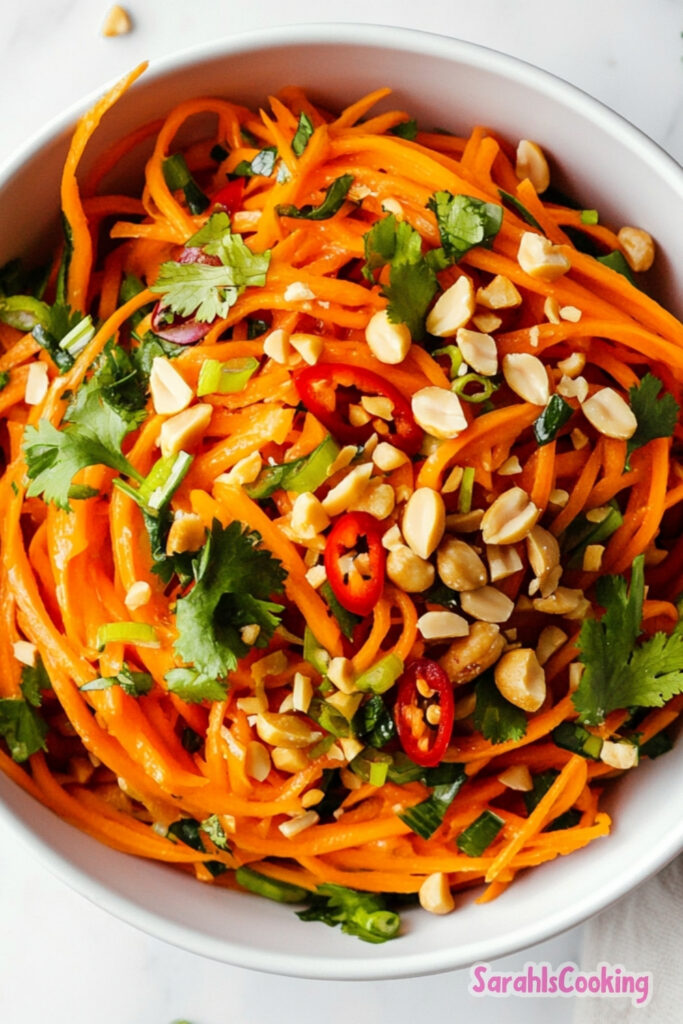

Asian Carrot Salad Recipe
Description
This Asian Carrot Salad is the answer to every ‘what can I serve as a side dish’ question. It’s crunchy, tangy, slightly spicy, and completely addictive. Sometimes I need recipes that don’t require turning on the oven. I created this salad because I wanted something refreshing to cut through rich meats at our Sunday BBQs. The best part? Even my son, who usually dodges vegetables, went back for seconds because of that peanut dressing. It’s low-carb, ready in 15 minutes, and tastes even better the next day!
Ingredients
For the Salad
For the Ginger Peanut Dressing
Instructions
- Peel carrots and slice into thin ribbons using a peeler or mandoline.For the prettiest presentation, use a Y-peeler or mandoline to create long, even ribbons or use a Karoto carrot sharpener to make cute curls.
- In a bowl, whisk sugar with lemon and lime juice, mirin seasoning, mustard, sesame oil, and soy sauce until sugar dissolves.If using granular sweetener like Natvia, microwave with the citrus juice for 10-15 seconds first to dissolve.
- Add chopped chili, lemon and lime zest, garlic, ginger, and coriander. Mix well.
- Toss carrot ribbons in dressing until evenly coated.
- Plate and sprinkle with peanuts and green onion.
- Serve immediately or chill slightly.This salad is actually better after sitting for 15-20 minutes as the carrots soften slightly and absorb the flavors.
Nutrition Facts
Servings 4
Serving Size 1 cup
- Amount Per Serving
- Calories 185kcal
- % Daily Value *
- Total Fat 12g19%
- Saturated Fat 1.8g9%
- Sodium 210mg9%
- Potassium 380mg11%
- Total Carbohydrate 17g6%
- Dietary Fiber 3.5g15%
- Sugars 9g
- Protein 4g8%
- Calcium 4 mg
- Iron 4 mg
* Percent Daily Values are based on a 2,000 calorie diet. Your daily value may be higher or lower depending on your calorie needs.
Note
- Sugar Substitute (Keto / Low Carb): You can swap the sugar for Natvia or Erythritol (1:1 ratio). Granular sweeteners don't dissolve well in cold liquid. Microwave the sweetener with the lime juice for 10-15 seconds until warm, whisk to dissolve, then add the remaining ingredients.
- Carrot Cutting Tip: For the prettiest presentation, use a Y-peeler or mandoline to create long, even ribbons or use the Karoto carrot sharpener to make cute curls.
- Make Ahead: This salad is actually better after sitting for 15-20 minutes as the carrots soften slightly and absorb the flavors. It keeps well in the fridge for up to 2 days.
- Nut-Free Option: Skip the peanuts or replace them with toasted sesame seeds or crispy fried shallots for crunch.
- Oil Swap: Sesame oil gives a distinct nutty flavour, but you can use olive oil or avocado oil if preferred.
- Herb Options: Try swapping coriander for mint or basil for a different flavour profile.