
A veggie tray is often treated as the backup plan. Something added at the last minute to make a spread feel balanced. In practice, it is one of the first things guests interact with, and one of the easiest places to lose credibility if it looks tired or careless. When a veggie tray is done with intention, it becomes a strategic piece of the table rather than filler.
I have put together versions of this tray for family gatherings, school events, church potlucks, and larger parties where the food sat out for hours. The difference between a tray that gets picked over and one that disappears comes down to freshness, balance, and planning. This recipe is built around those factors. It is not about novelty or decoration. It is about execution that makes vegetables genuinely appealing.
This approach assumes you want something reliable. Something that looks abundant, stays crisp, and actually gets eaten.
Who This Veggie Tray Recipe Is For
This recipe is for hosts who want a dependable option that feels thoughtful without being complicated. It works for people who want their table to look intentional, even when the rest of the menu is simple.
It is also designed for parents and entertainers who want vegetables to be appealing rather than obligatory. The structure, dip choices, and prep timing are all aimed at encouraging people to come back for more, instead of walking past the tray after one glance.
This is not a themed tray or a novelty presentation. It is a classic vegetable tray done carefully, with attention to what works in real settings.
Why This Veggie Tray Works
A successful veggie tray relies on contrast. Texture matters just as much as flavor. Crunchy vegetables signal freshness and hold up well under repeated dipping. Juicier vegetables provide relief from thicker dips and richer foods on the table. When both are present, the tray feels balanced rather than monotonous.
Multiple dips play a larger role than most people expect. In testing this setup across gatherings, trays with one dip consistently stalled early. Trays with two or three dips stayed active. Different ages and preferences gravitate toward different flavors, and variety keeps people engaged longer.
There is also a visual component. When vegetables are spaced properly and grouped with intention, the tray looks abundant even when portions are reasonable. That perception encourages people to take some without worrying about being the first to disturb the arrangement.
This recipe is designed to prevent the most common failure points. Bland trays, soggy vegetables, and empty dip bowls all lead to vegetables being ignored. The structure here avoids those outcomes.
Choosing the Right Vegetables and Why Each One Earns Its Spot
Crunchy Anchors
Carrots, celery, and broccoli form the backbone of the tray. These vegetables have firm structure and hold their texture over time. They deliver dip effectively and do not collapse after sitting out.
Carrots offer sweetness and crunch, which appeals to both kids and adults. Celery provides a clean, crisp bite that balances heavier dips. Broccoli florets hold sauces well and remain sturdy even when dipped repeatedly. These vegetables are forgiving and dependable, which makes them ideal anchors.
Softer vegetables tend to release moisture and lose appeal quickly. That is why these firmer options are prioritized.
Juicy and Refreshing Elements
Cucumbers, cherry tomatoes, and bell peppers add contrast. Their moisture and natural sweetness balance richer dips and heavier snacks on the table.
Cucumbers refresh the palate and work especially well alongside creamy dips. Cherry tomatoes bring bursts of acidity and juiciness that break up repetitive textures. Bell peppers add color and sweetness while staying firm enough to handle thicker sauces.
Including these vegetables prevents the tray from feeling dry or heavy. It also keeps people interested longer, since each bite feels different.
How to Prep Vegetables So They Stay Crisp
Proper prep is where many veggie trays fail. Washing vegetables without drying them thoroughly leads to pooling water and diluted flavor. Cutting too far in advance causes limp texture and dull appearance.
After washing, vegetables should be dried completely. A salad spinner works well for items like celery and broccoli. Cucumbers and peppers benefit from patting dry with a clean towel. Once dry, chilling the vegetables uncovered for a short time firms their texture and improves crunch.
Cutting should be timed based on the vegetable. Carrots, celery, and broccoli can be cut several hours ahead without issue if stored properly. Cucumbers and tomatoes are best cut closer to serving to prevent moisture release. In testing, cutting these too early consistently led to watery trays and softer texture.
This approach reduces the risk of sogginess and keeps flavors clean.
Step by Step Veggie Tray Assembly Beyond the Recipe Card
Selecting the Platter
The platter should match the size of the group. Too small and the tray looks crowded. Too large and it feels sparse. Flat platters allow for better spacing, while shallow bowls can trap moisture.
Material matters as well. Ceramic and glass stay cooler longer than plastic, which helps maintain crispness. Whatever you choose, the goal is space and stability.
Arrangement Strategy That Actually Works
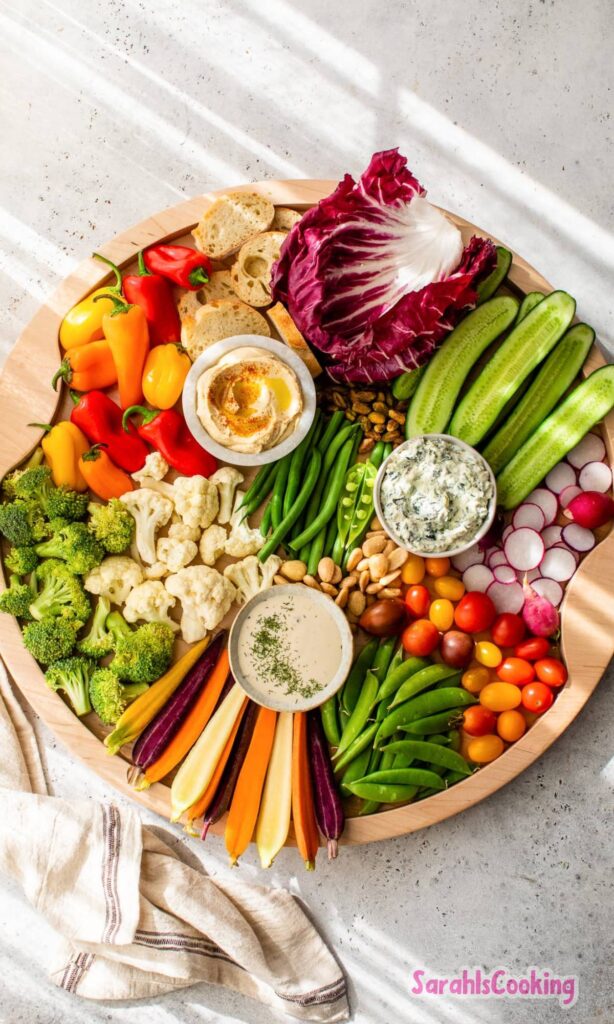
Grouping vegetables by type creates visual clarity. Alternating colors within those groups prevents the tray from looking segmented. Leaving small gaps between piles makes the tray look fuller and easier to navigate.
Spacing also affects how people interact with the tray. When vegetables are tightly packed, guests hesitate. When there is room to grab without disturbing everything else, people are more comfortable serving themselves.
Dip Placement for Real World Use
Multiple dip bowls work better than one central bowl. They reduce crowding and make the tray accessible from more than one side. This is especially important at larger gatherings.
A dependable option like a homemade hummus works well here because it can be made ahead and holds its texture. Placing dips slightly inward from the edge prevents accidental spills while keeping them easy to reach.
Dip Pairings That Make the Tray Disappear Faster
Different vegetables benefit from different dips. Thick, creamy dips cling well to firm vegetables like carrots and broccoli. Looser or more acidic dips work better with cucumbers and peppers.
Balancing familiar flavors with one bolder option keeps the tray approachable. A classic like guacamole pairs naturally with bell peppers and cucumbers, while a layered dip such as a 7 Layer Dip makes sense when the veggie tray anchors a larger snack spread.
The goal is to complement the vegetables rather than overpower them. When dips are chosen thoughtfully, vegetables become the vehicle rather than the afterthought.
Common Veggie Tray Mistakes and How to Avoid Them
Overcrowding is the most common issue. When vegetables are piled too tightly, moisture builds and texture suffers. Leaving space solves both problems.
Relying on a single dip limits appeal. Even a well made dip cannot serve every preference. Adding one additional option significantly increases engagement.
Prepping too far in advance without moisture control leads to limp vegetables and diluted flavor. Timing prep based on vegetable type prevents this. These mistakes are easy to avoid with a bit of planning, and they make a noticeable difference.
Smart Variations Based on Occasion
Party and Game Day Veggie Trays
For game day, the veggie tray often supports heavier foods. Scaling portions slightly larger helps balance the table. Pairing it with heartier snacks like chicken wings or Chex Party Mix gives guests lighter options between richer bites.
In these settings, durability matters more than elegance. Focus on vegetables that hold up and dips that can sit out longer.
Lighter, Fresh Add Ons
For smaller gatherings, fresh herbs or lightly marinated vegetables add interest without complicating prep. Pickled elements used sparingly add acidity and visual contrast. Pickled red onions work well when scattered lightly near sturdier vegetables.
These additions should enhance the tray, not dominate it.
Make Ahead, Storage, and Food Safety Guidance
Most vegetables can be washed and cut up to 24 hours ahead if stored properly. Firm vegetables should be kept in airtight containers with a dry paper towel to absorb excess moisture. Softer vegetables are best prepped closer to serving.
Assembled trays can be stored briefly in the refrigerator if covered loosely. Tight wrapping traps moisture and leads to condensation. Dips should be stored separately until just before serving to maintain texture and food safety.
Keeping vegetables cold until serving improves both safety and texture. This approach reduces stress on the day of the event and keeps quality high.
Serving Ideas That Elevate a Simple Veggie Tray
A veggie tray works best as part of a broader spread. It pairs well with light breads or simple sides without overlapping purpose. Adding something like an easy bruschetta creates variety while keeping the focus on fresh flavors.
The tray can also serve as a visual anchor on the table. When placed centrally and refreshed as needed, it encourages balanced eating without drawing attention to itself.
FAQ: Veggie Tray Questions Readers Actually Ask
How far ahead can I make a veggie tray?
Most components can be prepped a day ahead, but assembly is best done the day of. Firmer vegetables hold longer, while cucumbers and tomatoes should be cut closer to serving.
How do I keep vegetables from drying out?
Store prepped vegetables in airtight containers with a damp paper towel only if needed, and keep them chilled. Avoid exposing them to air for long periods before serving.
How much veggie tray do I need per person?
Plan for about one to one and a half cups of vegetables per person when the tray is part of a larger spread. Increase this if vegetables are the primary snack.
Can I customize this for kids versus adults?
Yes. Adjust dip choices and vegetable ratios rather than making separate trays. Familiar flavors encourage kids, while variety keeps adults interested.

Veggie Tray Recipe
Description
Learn how to make a vibrant, fresh veggie tray - the perfect appetizer for parties, game day, or healthy snacking! Packed with colorful vegetables and served with your favorite dips, this homemade veggie platter is cheaper, fresher, and tastier than store-bought versions. Plus, it’s so easy to assemble that you’ll never go back to pre-packaged trays again.
ingredients
Instructions
- Wash all vegetables thoroughly. Soak in cold or salted water for 5–10 minutes to crisp them up, then drain and pat dry.
- Cut celery, cucumbers, and bell peppers into bite-sized sticks or slices. Leave cherry tomatoes and baby carrots whole if desired.
- Arrange the prepared vegetables on a large platter, grouping by type or alternating colors for visual appeal.
- Place small bowls of your favorite dips (like ranch, hummus, or bean dip) directly on the platter or serve alongside.
- Serve immediately, or cover with plastic wrap and refrigerate for up to 4 hours before serving to keep veggies crisp.
Nutrition Facts
Servings 8
Serving Size 1 cup of vegetables + 2 tbsp dip
- Amount Per Serving
- Calories 120kcal
- % Daily Value *
- Total Fat 4gg7%
- Saturated Fat 1gg5%
- Trans Fat 0gg
- Cholesterol 5mgmg2%
- Sodium 180mgmg8%
- Potassium 420mgmg12%
- Total Carbohydrate 18gg6%
- Dietary Fiber 5gg20%
- Sugars 8gg
- Protein 4gg8%
- Calcium 40 mg
- Iron 1 mg
* Percent Daily Values are based on a 2,000 calorie diet. Your daily value may be higher or lower depending on your calorie needs.
Note
- Make it festive: Use holiday-themed platters or add edible flowers and fresh herbs like parsley or dill as garnish.
- Keep it crisp: Store cut veggies in ice water for 10 minutes before assembling to enhance freshness.
- Customize: Add snap peas, radishes, jicama, or green beans for extra variety.
- Transport tip: Use a lidded plastic tray if taking to a potluck or party.