
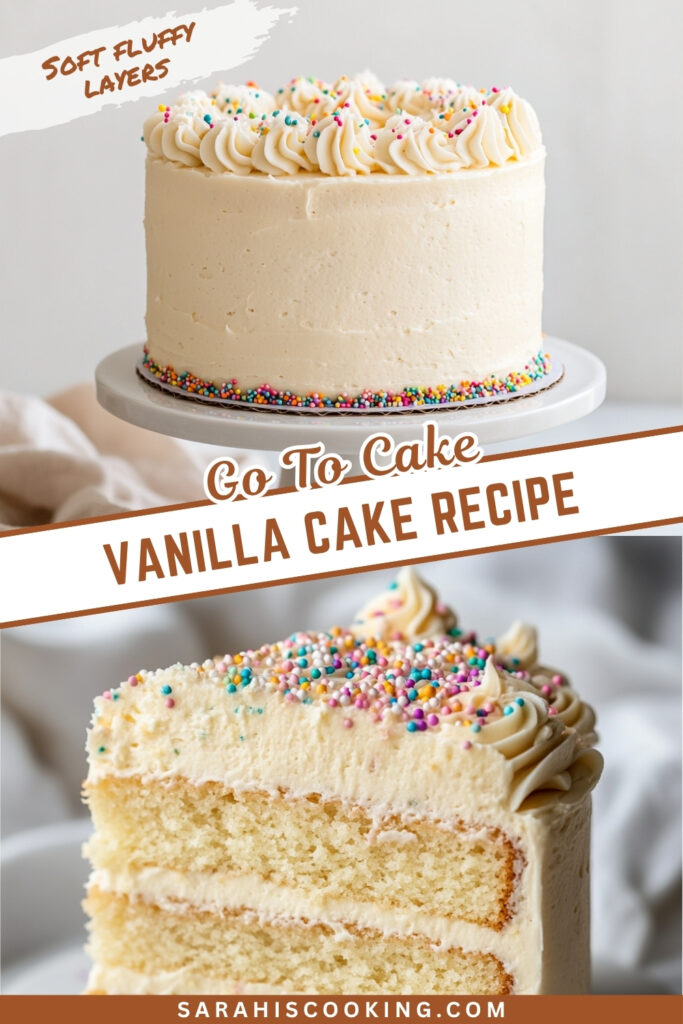
Plush, moist, bakery-style vanilla cake made with reverse creaming, vanilla bean paste, and whipped buttercream for balanced sweetness and reliable results.
This is the vanilla cake I rely on when results matter. It delivers a plush crumb, rich flavor, and structure that slices cleanly without feeling heavy.
I approach baking with a testing mindset, and this formula reflects careful balance rather than guesswork. Every ingredient plays a defined role in texture, stability, and flavor clarity.
The reverse creaming method creates a cake that feels soft yet structured. Paired with whipped vanilla bean buttercream, the final result is polished but very achievable at home.
Who This Recipe Is For
This recipe is ideal for home bakers who want consistent results without relying on box mixes. It rewards attention to detail but does not require professional equipment.
If you enjoy understanding why a recipe works, this cake provides clarity through method and structure. Beginners can succeed, while experienced bakers will appreciate the intentional ratios.
It is especially suited for birthdays, layered celebration cakes, or any occasion where a dependable vanilla base is needed.
Why This Recipe Works
The structure of this cake relies on the reverse creaming method, which coats flour in fat before liquid is added. This limits gluten formation and creates a finer crumb that feels tender but stable.
Using both butter and oil provides dual benefits. Butter contributes flavor while oil preserves moisture over several days, preventing dryness that often affects traditional butter cakes.
Sour cream adds acidity and fat, strengthening the crumb without making the cake dense. Combined with milk powder, the batter develops a resilient texture that rises evenly.
Vanilla bean paste provides concentrated flavor without thinning the batter. The result is a cake that tastes unmistakably vanilla rather than simply sweet.
Ingredients Needed for the Recipe
- Cake flour – low protein content creates a delicate crumb that stays soft after cooling
- Granulated sugar – sweetens while contributing to structure and moisture retention
- Dry milk powder – concentrated milk proteins improve tenderness and promote even rise
- Baking powder – provides primary lift for a balanced interior structure
- Baking soda – reacts with sour cream acidity to improve rise and texture
- Kosher salt – sharpens flavor and balances sweetness
- Unsalted butter – contributes richness and supports stable crumb formation
- Vegetable oil – keeps cake moist for multiple days without heaviness
- Warm water – hydrates dry ingredients without increasing density
- Sour cream – adds fat and acidity for softness and structural strength
- White distilled vinegar – enhances leavening reaction and tender texture
- Vanilla bean paste – provides concentrated vanilla flavor and aromatic depth
- Eggs – supply structure, emulsification, and stability
- Egg yolks – add richness and improve crumb softness
- Powdered sugar – sweetens buttercream while maintaining smooth texture
- Soft butter for frosting – whips into a stable, airy base
- Warm water for frosting – creates silky consistency without excessive sugar
Ingredient Insights and Function
Cake flour is foundational to this recipe’s texture. Its reduced protein level produces a softer crumb that remains tender even after refrigeration.
Sour cream provides both fat and acidity, which supports gluten control while maintaining structure. Yogurt may work as a substitute, but the texture will be slightly less rich.
Milk powder acts as a structural enhancer by adding protein without additional liquid. Removing it will still produce a cake, but the crumb may feel less cohesive.
Vanilla bean paste delivers flavor intensity without thinning the batter. Pure extract can be substituted, though the flavor profile becomes slightly lighter.
Using both oil and butter ensures the cake stays moist for days. Replacing oil entirely with butter can result in faster drying.
How to make Vanilla Cake?
Step 1 – Prepare the pans and oven
Preheat the oven to 350°F. Grease two 8-inch round pans and line the bottoms with parchment to ensure clean release.
If available, wrap pans with damp cake strips. This slows edge baking and supports even rise across the layers.
Step 2 – Combine dry ingredients
Mix cake flour, sugar, milk powder, baking powder, baking soda, and salt in a large bowl. Uniform distribution prevents uneven texture.
Whisk thoroughly to eliminate pockets of leavening agents that could cause tunneling.
Step 3 – Incorporate butter
Add room temperature butter slices gradually while mixing on medium-low speed. The mixture should resemble coarse sand with small crumbs.
This step coats flour particles in fat, controlling gluten formation and improving tenderness.
Step 4 – Add oil
Slowly pour in vegetable oil while mixing continues. The texture should become slightly finer and cohesive but still crumbly.
Stop mixing once the texture is uniform. Overworking can reduce lightness.
Step 5 – Combine liquid ingredients
In a measuring glass, mix warm water, sour cream, vinegar, and vanilla bean paste until smooth. Ensure sour cream is fully blended.
Gradually pour into the flour mixture while mixing on low speed until a smooth batter forms.
Step 6 – Add eggs
Lightly beat the eggs and yolks before slowly incorporating into the batter. Mix only until fully combined and creamy.
The batter should appear pourable with a slightly thick consistency.
Step 7 – Divide and bake
Divide batter evenly between prepared pans and smooth the surface. Bake on the middle rack for 35 to 40 minutes.
Cakes are ready when tops are lightly golden and a toothpick shows moist crumbs.
Step 8 – Cool properly
Allow cakes to rest in pans for 20 minutes before transferring to a rack. Cooling completely prevents frosting instability.
Warm cake layers can cause buttercream to melt and slide.
Step 9 – Whip butter for frosting
Beat very soft butter on medium-high speed for five minutes. Scrape bowl and whip for another five minutes until pale and glossy.
This extended mixing creates structure without relying on excessive sugar.
Step 10 – Finish buttercream
Add powdered sugar, salt, and vanilla bean paste. Mix until smooth before incorporating warm water gradually.
The finished frosting should feel silky and spread easily.
Step 11 – Assemble the cake
Level cake layers using a serrated knife. Spread a generous layer of buttercream between layers.
Apply remaining frosting evenly over the top and sides. Chill briefly if frosting becomes too soft.
How I Tested and Refined This Recipe
I tested variations of fat ratios to determine the ideal balance between flavor and moisture. Cakes made with only butter tasted rich but dried faster after cooling.
Increasing oil improved softness but weakened vanilla flavor clarity. The final ratio preserves both moisture and aromatic depth.
I experimented with different dairy components including milk and yogurt. Sour cream consistently produced the most stable crumb without heaviness.
Milk powder was tested in small increments. Even minor additions improved resilience and created a smoother mouthfeel.
Reverse creaming was compared to traditional creaming across multiple batches. The tighter crumb and consistent rise made it the preferred method.
Common Mistakes and How to Avoid Them
- Using cold butter prevents proper coating of flour and creates uneven texture
- Overmixing after adding eggs can cause dense layers
- Skipping parchment paper increases risk of sticking
- Opening the oven early can interrupt structure development
- Using dark pans may produce overly browned edges
- Adding too much flour results in dry texture
- Frosting warm cake leads to slipping layers
- Underwhipping butter produces dense frosting
Make-Ahead, Storage, and Freezing Guidance
Cake layers can be baked up to two days in advance and stored wrapped in the refrigerator. Chilled layers are easier to level and frost cleanly.
The fully assembled cake keeps well refrigerated for up to five days. Texture remains soft due to the oil content in the batter.
For freezing, wrap unfrosted layers tightly in plastic wrap and freeze for up to two months. Thaw overnight in the refrigerator.
Serve at room temperature for the softest crumb. Slight chilling creates a firmer slice that still tastes moist.
Tips
- Weigh flour for best accuracy
- Use room temperature ingredients for smoother batter
- Whip butter longer than expected for airy frosting
- Level cake layers before assembling for stability
- Use light colored aluminum pans for even browning
- Mix on low speed once liquids are added
- Test doneness with a toothpick near the center
- Chill cake briefly if frosting becomes too soft
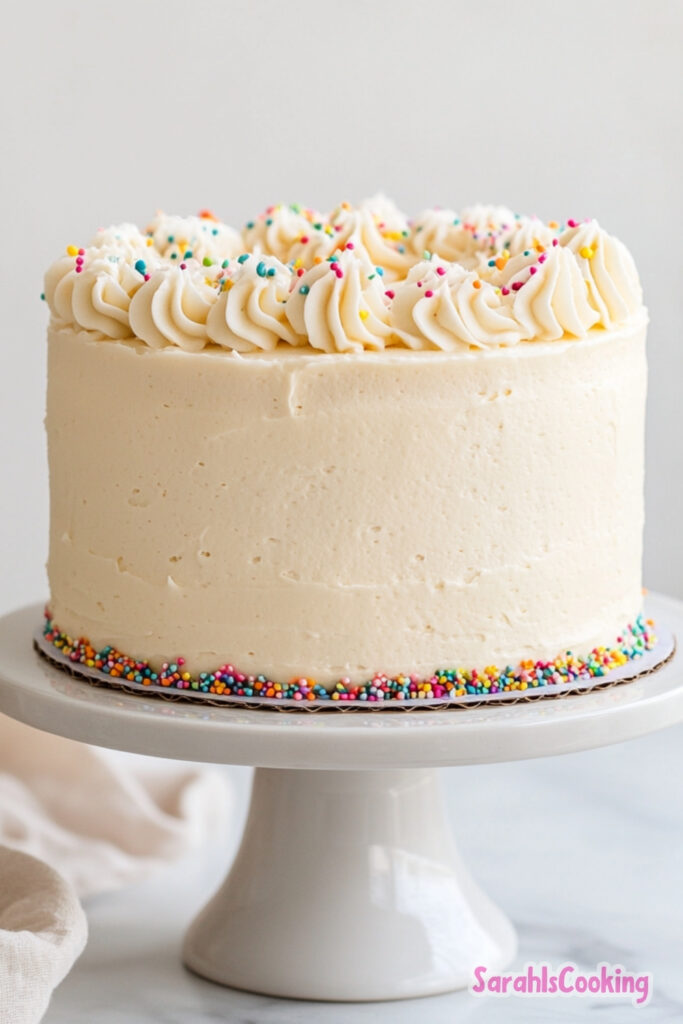

Vanilla Cake Recipe
Description
This is the BEST vanilla cake you can make at home! Soft, plush, and incredibly moist, with rich vanilla flavor and a perfectly smooth vanilla buttercream. Ideal for birthdays, celebrations, or anytime you crave a bakery-worthy vanilla cake.
ingredients
Vanilla Cake
Vanilla Buttercream
Instructions
Vanilla Cake
- Preheat oven to 350°F (175°C). Grease and line two 8-inch cake pans with parchment paper. Optionally wrap with damp cake strips for even baking.
- In a large bowl, whisk together cake flour, sugar, milk powder, baking powder, baking soda, and salt.
- Add butter slices gradually on medium-low speed until small lumps form, then slowly add oil until mixture is crumbly.
- Mix water, sour cream, vinegar, and vanilla; pour into batter and mix until smooth.
- Beat eggs lightly and slowly add to batter. Mix until smooth and creamy, scraping sides with a spatula.
- Divide batter evenly between pans and bake 35–40 minutes until golden and toothpick comes out clean.
- Cool cakes in pans for 20 minutes, then transfer to a wire rack to cool completely.
Vanilla Buttercream
- Beat butter on medium-high for 5 minutes, scrape down bowl, then beat another 5 minutes until glossy and white.
- Add powdered sugar, salt, and vanilla; mix on medium-low to combine, then medium speed until smooth. Mix in water for creamy consistency.
- Level cake tops, spread a thick layer of frosting on the first cake layer, place second layer on top, then frost entire cake. Chill 30 minutes if frosting is too soft.
Nutrition Facts
Servings 12
Serving Size 1 slice
- Amount Per Serving
- Calories 420kcal
- % Daily Value *
- Total Fat 20gg31%
- Saturated Fat 11gg56%
- Trans Fat 0gg
- Cholesterol 105mgmg35%
- Sodium 230mgmg10%
- Potassium 150mgmg5%
- Total Carbohydrate 58gg20%
- Dietary Fiber 1gg4%
- Sugars 38gg
- Protein 5gg10%
- Calcium 70mg mg
- Iron 1.5mg mg
* Percent Daily Values are based on a 2,000 calorie diet. Your daily value may be higher or lower depending on your calorie needs.
Note
- Use prepackaged cake flour for the best texture.
- Optional: wrap pans in damp cake strips for even baking.
- Store cake in the refrigerator for up to 3 days; best served at room temperature.
- Whip buttercream thoroughly for a glossy, smooth texture.