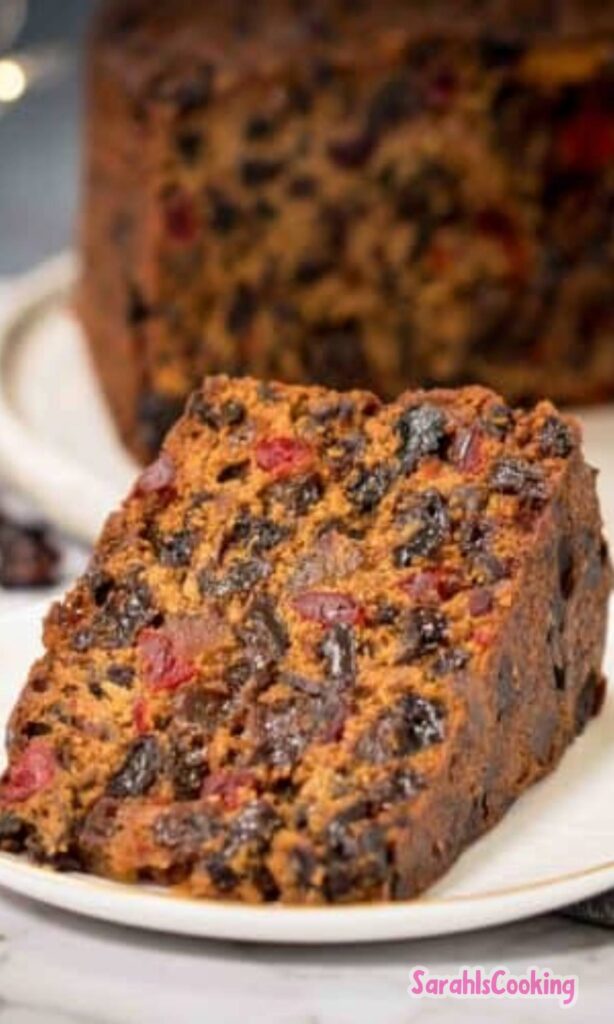
There’s something about the smell of fruit, spices, and rum wafting through the house that signals the holidays have officially begun. This Easy Traditional Christmas Cake Recipe is one of those baking rituals that’s as much about the process as it is about the indulgent slices that follow.
Over the years, I’ve come to cherish the slow, methodical preparation—the chopping of dried fruits, the careful soaking, and the patient wait while the cake matures. Every step feels like a small act of love, culminating in a dense, moist fruit cake that’s rich, comforting, and utterly festive.
While there are countless variations of Christmas cakes, this recipe keeps things classic. It’s English in style, packed with sultanas, currants, cherries, and dates, with a gentle touch of warm spices.
The magic truly happens with the soaking in rum or brandy, giving each bite a depth of flavor that improves the longer the cake rests. Whether you enjoy a slice fresh out of the oven or let it mature for weeks, this cake delivers a holiday experience in every forkful.
Ingredients Needed for the Recipe
- Sultanas or golden raisins (3 cups): Provide the bulk of the sweet, plump fruit base for the cake.
- Raisins, roughly chopped (1 1/2 cups): Add texture and a slightly tangy sweetness to balance the richer fruits.
- Dates, finely chopped (1 3/4 cups): Contribute stickiness and deep caramel notes.
- Dried currants (1 cup): Intensify the fruity flavor and add small bursts of sweetness.
- Candied orange slices, finely chopped (5 slices): Offer bright citrus flavor and a subtle tang to lift the cake.
- Candied cherries, chopped (2/3 cup): Introduce color and a slightly tart sweetness; you can use red, green, or a mix.
- Chopped candied pineapple (1/4 cup): Adds moisture and tropical notes.
- Chopped candied apricots (1/2 cup): Give a chewy texture and mild fruity sweetness.
- Rum, brandy, or dry sherry (1/2 cup): Used to soak the fruit and later brush the cake, enhancing flavor and preserving moisture.
- Unsalted butter, softened (1 cup): Forms the rich base of the cake batter and binds ingredients together.
- Brown sugar, firmly packed (1 cup): Sweetens and adds caramel depth to the batter.
- Eggs (5): Provide structure and richness; they emulsify the batter for a smooth texture.
- All-purpose flour (2 cups): The main structural component for the cake.
- Baking powder (1 tsp): Gives a slight lift to the dense batter.
- Ground cinnamon (1 tsp): Adds warmth and a subtle holiday spice.
- Ground cloves (1/2 tsp): Enhances the aromatic depth of the cake.
- Ground nutmeg (1/2 tsp): Complements the other spices with a sweet, nutty undertone.
- Extra rum or brandy (3 Tbsp): For brushing on the baked cake to keep it moist and flavorful.
Choosing the Right Fruit and Alcohol
Selecting Your Dried Fruit
The success of a Christmas cake hinges on the fruit. Sultanas, raisins, and currants are non-negotiable—they form the backbone. Dates are critical for texture, adding chewiness and natural sweetness. Beyond these, you have flexibility. Candied cherries, orange slices, pineapple, and apricots can be adjusted to your taste. I often experiment with the balance, but keeping most pieces small—roughly the size of a sultana—ensures even distribution and avoids overpowering bites.
Alcohol or Juice: The Flavor Boost
Soaking the fruit is where the cake really starts to shine. Brandy, rum, or sherry are classic choices. Personally, I prefer spiced dark rum for its warmth, though brandy offers a traditional English touch. The soak rehydrates the fruit while infusing it with flavor. For those avoiding alcohol, orange or apple juice works, though the cake will need refrigeration and won’t last as long. Remember, this isn’t just a flavor step—it also helps preserve the cake for weeks if stored properly.
How to make Easy Traditional Christmas Cake Recipe?
Step 1 - Soak the Fruit
Combine all the dried fruits with your chosen alcohol in a large bowl. Mix thoroughly to ensure each piece is coated, then cover and leave at room temperature for at least 24 hours, up to a week. Stir daily if you have time; it helps the flavors mingle and plumps up the fruits. The longer the soak, the richer and moister your cake will be.
Step 2 - Prepare the Cake Tin
Preheat your oven to 265°F (130°C) for a conventional oven. Line a 9-inch round cake pan with triple layers of parchment paper for the base and sides, extending the paper 2 inches above the rim. This protects the edges during the long bake and ensures even cooking. A well-prepared tin is essential for a perfectly baked, evenly cooked cake.
Step 3 - Make the Batter
Cream the softened butter and brown sugar until well combined. The mixture should be smooth but not overly fluffy. Add the eggs one at a time, mixing thoroughly after each. Don’t worry if the batter looks a little curdled—this is normal. Sift the flour, baking powder, and spices into the mixture and fold gently. Finally, add the soaked fruit and any leftover liquid, mixing carefully by hand to prevent smashing the fruit.
Step 4 - Fill and Smooth
Transfer the batter to the prepared pan, smoothing the top with a spatula. Make a slight dip in the center to encourage an even rise. The batter will be heavy, so be gentle. This step ensures your cake will bake flat and evenly, making optional decoration easier later.
Step 5 - Bake to Perfection
Bake in the preheated oven for approximately 3 1/2 hours, or 2 hours 45 minutes if using a combi steam oven. The cake is done when it’s deep golden brown, slightly springy to the touch, and pulling slightly away from the pan edges. For precision, use an instant-read thermometer: the center should reach 206-209°F (97-98°C). This guarantees the dense fruit mixture is fully cooked.
Step 6 - Brushing and Cooling
Brush the top of the hot cake with extra alcohol. Let it cool overnight in the pan on a wire rack. Once cool, turn out the cake and optionally brush again. Wrap tightly in double plastic wrap and a layer of foil, storing in a cool, dark place. If possible, let it mature for at least a week, feeding with alcohol once a week for extra moisture and flavor development.
Serving & Presentation Ideas
Traditional Elegance
For a classic look, cover your cake with a layer of marzipan followed by smooth royal icing. It creates a pristine, festive canvas perfect for holiday gatherings. You can keep it simple or add decorative touches like holly or festive figurines on top.
Alternative Serving Styles
If you prefer a rustic, less formal approach, serve slices as they are, perhaps with a dollop of custard or a drizzle of cream. The dense, fruity cake pairs beautifully with a cup of spiced tea or hot chocolate, creating a cozy, comforting holiday treat. Small slices also make lovely edible gifts for friends and neighbors.
Tips
- Soak your fruit at least 24 hours in advance, but a week is ideal for maximum flavor and moisture.
- Use a heavy, well-lined cake tin to prevent burning and ensure even cooking during the long bake.
- Don’t rush adding eggs to butter and sugar; add one at a time for a smooth batter.
- Check doneness with a thermometer rather than a skewer—the fruit can make skewer tests unreliable.
- Brush with alcohol weekly while storing; it keeps the cake moist and develops deeper flavors.
- If decorating with marzipan and royal icing, let the cake mature first for best results.
- For smaller tins, adjust baking time and use a thermometer to check doneness.
- Non-alcoholic versions should be refrigerated and eaten sooner, as they won’t preserve as long.
Baking this Easy Traditional Christmas Cake Recipe is more than just following steps—it’s a holiday ritual. From soaking the fruits to brushing with rum, each stage adds character and depth. By the time you slice into the finished cake, you’re rewarded with rich, dense, moist fruitiness that embodies the essence of Christmas. Whether shared with loved ones or savored quietly at home, this cake becomes a centerpiece of festive comfort.