
There is a noticeable difference between guacamole that quietly sits on the snack table and guacamole that disappears within minutes. The difference is rarely in the ingredient list. It is in the handling.
This recipe is the result of deliberate testing and repetition. It is balanced but assertive, creamy without being heavy, and bright enough to keep each bite interesting. Nothing extra is added for novelty. Every ingredient has a defined role, and each step is intentional.
When guacamole is treated as a composed dish rather than an afterthought, it earns its place on the table.
Who This Recipe Is For
This recipe is designed for cooks who want consistency.
It is for the host who needs a bowl that holds up through a gathering without turning brown or watery. It is for the home cook who has been disappointed by bland, flat guacamole and wants to understand why it happened. It is also for anyone who values texture as much as flavor.
If you prefer heavily loaded versions filled with tomatoes, garlic, or sour cream, this will feel restrained. The focus here is avocado first, supported with precision.
Why This Recipe Works
Balance of Fat, Acid, Salt, and Freshness
Avocado is almost entirely fat. That richness is what makes guacamole luxurious, but it also dulls flavor if not balanced properly. Acid and salt are not optional. They are structural.
Lime juice cuts through fat and sharpens the overall flavor profile. Without it, guacamole tastes heavy and muted. With too much, it becomes sharp and sour. The correct amount brightens without announcing itself.
Salt amplifies every other ingredient. Avocado on its own tastes mild. Proper seasoning makes it taste more like itself. Under-salted guacamole is the most common failure I see.
Fresh elements, including white onion, cilantro, and jalapeño, introduce contrast. They prevent the texture from feeling one-dimensional and give the dip lift.
When these elements are in proportion, the result feels complete rather than cluttered.
Texture Is a Flavor Component
Many recipes instruct you to mash until smooth. That produces a paste.
Texture influences perception. Small pieces of avocado create contrast. That contrast makes the guacamole taste fresher and lighter. Over-mashing releases moisture from the fruit and collapses its structure, which leads to a dense, slightly watery mixture.
During testing, I compared fully mashed guacamole with a version that retained visible chunks. The chunked version consistently tasted brighter and less heavy, even though the ingredient list was identical.
Texture is not cosmetic. It changes the eating experience.
Ingredient Breakdown: What Each One Actually Does
Avocados
Hass avocados are the most reliable choice. Their higher fat content produces a creamy texture without excess water.
Ripeness determines everything. An underripe avocado feels firm and resists gentle pressure. Its flavor will be flat and grassy. An overripe one feels soft and may have dark streaks inside. That fruit will taste dull and can introduce bitterness.
To test ripeness, hold the avocado in your palm and press gently. It should yield slightly without collapsing. If the small stem nub at the top lifts easily and the flesh underneath is green, it is ready.
Timing matters. If avocados are firm, place them in a paper bag at room temperature. Once ripe, refrigerate to slow further softening. This prevents the common mistake of buying too early and rushing the process.
No technique can compensate for poor fruit.
White Onion
White onion provides a clean, crisp bite that supports rather than dominates.
I tested red onion in multiple batches. Even when minced finely, it contributed a sweeter, more assertive flavor and a lingering aftertaste that distracted from the avocado. White onion integrates more seamlessly.
Cutting technique matters. The onion must be minced very finely. Large pieces create sharp bursts of flavor that feel unbalanced.
Fresh Cilantro
Cilantro adds lift. It counteracts the richness of avocado and keeps the overall flavor from feeling heavy.
Dried cilantro does not provide the same aromatic freshness and should not be substituted. If cilantro is omitted entirely, the guacamole will taste flatter and more monotone.
Jalapeño
Jalapeño contributes more than heat. It adds a green, grassy sharpness that enhances complexity.
Remove the seeds and membranes for controlled spice. Finely mince so the heat distributes evenly. Large pieces create uneven bites.
If substituting serrano, expect noticeably more heat. Adjust carefully.
Lime Juice
Lime performs two jobs. It brightens flavor and slows oxidation.
Adding lime early in the mixing process helps preserve color. However, excess lime makes the mixture loose and sour. Through testing, I found that about 2 teaspoons per avocado provides balance without thinning the texture.
Lemon can be used in a pinch, but the flavor is cleaner and less aromatic.
Salt and Ground Coriander
Salt is non-negotiable. Start conservatively and adjust.
Ground coriander is subtle but transformative. It adds a mild warmth and citrus-adjacent note that deepens flavor without making the guacamole taste spiced.
When I tested batches without it, the difference was noticeable but difficult to name. With it, people consistently commented that something tasted “complete.”
Use a light hand. It should not be identifiable.
Step-by-Step Success Beyond the Recipe Card
Prepare the Avocados Properly
Slice lengthwise, twist to separate, and remove the pit carefully. Scoop the flesh directly into your mixing bowl.
Working directly in the bowl limits handling and reduces oxidation time. Bruising from excessive scraping can create uneven texture.
Mash to Creamy With Structure
Use a fork or potato masher. Press gently and stop early.
You are looking for a mixture that holds together but still shows small, soft chunks. If it looks like baby food, you have gone too far.
This stage determines the final texture. Once over-mashed, it cannot be reversed.
Add Lime Early
Add lime juice before incorporating other ingredients fully. Acid on the surface of the avocado slows browning while you mix.
This small sequencing adjustment improves both color and flavor integration.
Fold, Do Not Stir Aggressively
Add onion, cilantro, jalapeño, salt, and coriander. Fold gently until evenly distributed.
Aggressive stirring breaks down avocado further and releases moisture. Folding preserves structure and prevents a watery result.
Taste With Intention
Taste once fully mixed.
If it tastes flat, add a small pinch of salt. If it tastes heavy, a few additional drops of lime may help. Make adjustments gradually. Small changes have noticeable effects.
Let the guacamole sit covered for 15 to 20 minutes before serving. During side-by-side testing, the rested version tasted more cohesive. Salt needs time to distribute evenly through fat.
To Tomato or Not
Tomato is the most debated addition.
Out-of-season tomatoes release excess liquid. That liquid thins the guacamole and dilutes flavor. Even well-seasoned guacamole can taste washed out once tomato juice is introduced.
If using tomato, choose one that is ripe and firm. Remove seeds and watery pulp. Dice finely and fold in gently just before serving.
When tomatoes are in peak season, they can complement the mixture. Most of the year, they compromise texture.
Common Mistakes and How to Prevent Them
Bland Guacamole
Cause: insufficient salt.
Avocado mutes seasoning. Add salt incrementally and taste after each adjustment. Waiting a few minutes between additions allows flavors to settle.
Rapid Browning
Cause: excessive air exposure or inadequate acid.
Press plastic wrap directly against the surface before refrigerating. Eliminate air pockets. Lime slows oxidation but cannot overcome poor storage.
Mushy Texture
Cause: over-mashing or overripe avocados.
Prevention is key. Stop mashing while visible structure remains. Select fruit carefully.
Watery Guacamole
Cause: tomatoes, aggressive stirring, or overly ripe fruit.
If excess liquid forms, stir gently and assess. Prevention is more effective than correction.
Understanding cause and effect prevents repetition of the same mistake.
Substitutions With Consequences
Red onion will create a stronger, sweeter flavor. Use less and mince very finely.
Garlic introduces sharpness quickly. Even a small amount can overpower avocado. If used, grate finely and start with a minimal quantity.
Lemon juice brightens but lacks lime’s aromatic depth.
Omitting cilantro results in a heavier profile. Consider adding a small amount of finely sliced green onion for freshness.
Each substitution shifts the balance. Adjust expectations accordingly.
Make-Ahead, Storage, and Food Safety
Short-Term Storage
Transfer guacamole to an airtight container. Smooth the surface. Press plastic wrap directly onto the surface to remove air exposure.
A practical technique is placing a small piece of white onion directly on the surface before sealing. The sulfur compounds help slow browning. Remove before serving and stir gently.
Stored properly, guacamole maintains best quality for about 24 hours. Slight surface darkening can be stirred back in if minimal.
Food Safety Considerations
Because guacamole contains fresh produce and no preservatives, refrigeration is essential. Do not leave at room temperature for more than two hours.
If serving at a gathering, consider placing the bowl over a larger bowl of ice to maintain temperature.
Freezing Guidance
Guacamole can be frozen if it does not contain onion or tomato. Mash avocado with lime and salt only, then freeze in an airtight container.
Thaw in the refrigerator. Texture will be slightly softer but suitable for spreading on dishes such as Avocado Toast Recipe or incorporating into a bowl meal.
Serving Ideas Beyond Chips
Guacamole is versatile when properly balanced.
Spoon it into tacos, especially with seafood. It pairs particularly well with dishes like Easy Shrimp Tacos Recipe, where the creaminess offsets spice.
Add a generous scoop to a Healthy Burrito Bowl Recipe for richness without additional sauces.
It also works as a finishing garnish on soups. A dollop stirred into Chicken Tortilla Soup Recipe adds contrast and depth.
When the base recipe is sound, it adapts easily.
How I Tested and Refined This Recipe
I tested multiple variables over several batches.
I compared red onion versus white onion in identical ratios. White onion consistently integrated better.
I tested lime at different levels. Too little left the flavor heavy. Too much thinned the mixture and made it sharp.
I evaluated texture by mashing fully smooth versus leaving structure. The structured version tasted fresher and lighter.
I tested resting time. The batch allowed to rest for 20 minutes had noticeably better flavor cohesion.
I also trialed versions without ground coriander. Each time, tasters described those batches as missing something subtle.
The final method reflects those comparisons. Ingredient quantities are restrained to preserve balance. Mash level is controlled to protect texture. Lime is added early to support color and flavor.
This recipe is simple by design, not by accident.
A Reliable Standard
Guacamole rewards attention.
When ingredients are selected carefully and handled with intention, the result feels composed rather than casual. It becomes something guests return to without prompting.
Reliability is what keeps a recipe in rotation. This one has earned its place.
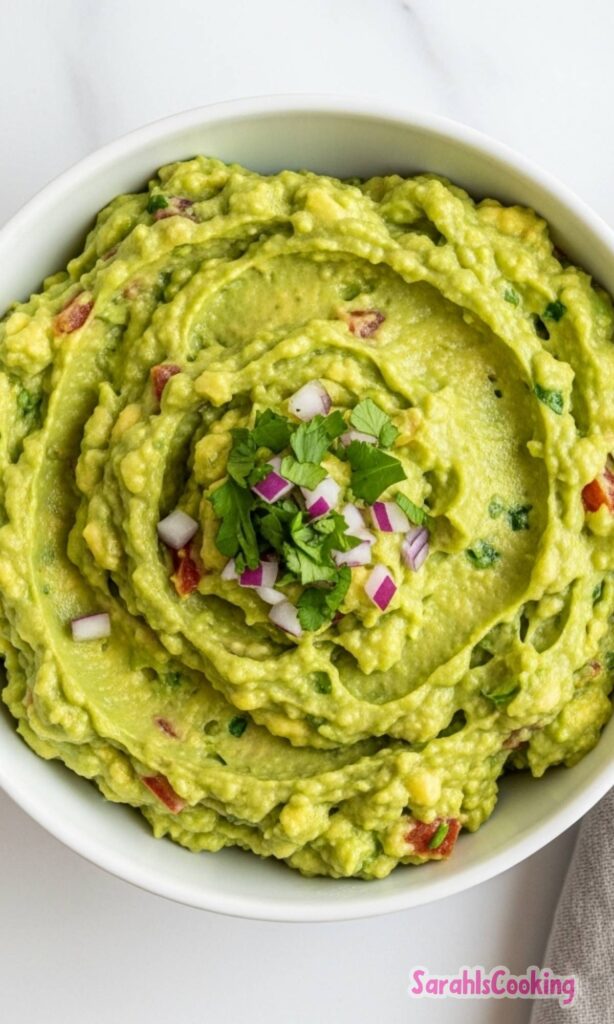

The Best Guacamole Recipe
Description
Learn how to make the best guacamole! This authentic guacamole recipe turns out perfectly every time thanks to a few simple tricks. It’s creamy, fresh, and completely irresistible—made with just six core ingredients and one secret spice. No sour cream, no mayo, no fillers—just real, whole-food flavor that’s vegan, gluten-free, and always a crowd-pleaser.
ingredients
Instructions
- Using a spoon, scoop the flesh of the avocados into a low serving bowl, discarding any bruised or browned areas.
- Using a pastry cutter, potato masher, or fork, mash the avocado until it reaches your desired texture—slightly chunky is ideal.
- Promptly add the finely chopped onion, cilantro, jalapeño, lime juice, ground coriander, and salt. Stir gently to combine.
- Taste and adjust seasoning—add more salt (up to ½ teaspoon extra) until flavors really sing. Add a splash more lime juice if needed.
Nutrition Facts
Servings 6
Serving Size ¼ cup
- Amount Per Serving
- Calories 180kcal
- % Daily Value *
- Total Fat 16gg25%
- Saturated Fat 2.5gg13%
- Trans Fat 0gg
- Cholesterol 0mgmg0%
- Sodium 390mgmg17%
- Potassium 485mgmg14%
- Total Carbohydrate 11gg4%
- Dietary Fiber 7gg29%
- Sugars 1gg
- Protein 2gg4%
- Calcium 20 mg
- Iron 1 mg
* Percent Daily Values are based on a 2,000 calorie diet. Your daily value may be higher or lower depending on your calorie needs.
Note
- Tomato option: If you have gorgeous in-season red tomatoes, feel free to add ½ cup finely chopped, well-drained tomato.
- Storage tip: To keep guacamole green for up to 3 days, place a chunk of onion on top before sealing with plastic wrap. The sulfur in onions slows oxidation!
- Serving ideas: Perfect with tortilla chips, veggie sticks, tacos, burrito bowls, quesadillas, or nachos.
- Variations: Top with crumbled cotija cheese, toasted pepitas, adobo sauce, or mango salsa for fun twists.