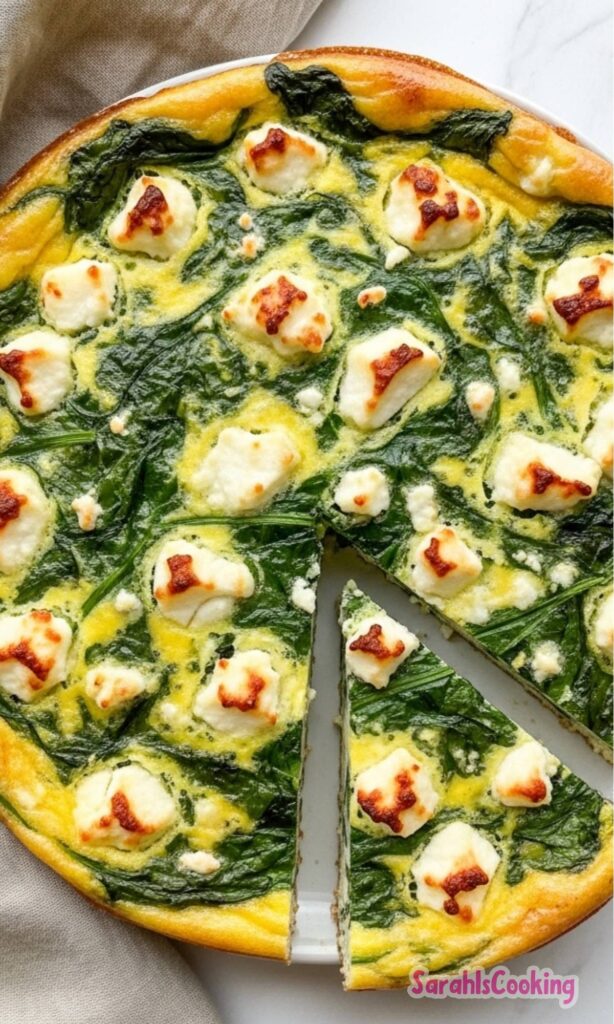
This outline establishes a reliable, repeatable method for preparing a spinach and feta frittata using a balance of sautéed aromatics, properly handled greens, and a structured egg base that bakes evenly in the oven. The focus is on technique-driven success rather than guesswork.
The goal is to help readers achieve a tender, well-set interior, concentrated flavor from cooked spinach, and bright contrast from fresh garnishes and marinated onions without excess moisture or overcooking.
Who This Recipe Is For
This recipe is designed for home cooks who want a dependable, protein-forward meal suitable for brunch, lunch, or a simple dinner, with minimal specialty equipment beyond an oven-safe skillet.
It particularly suits readers who value practical efficiency and make-ahead flexibility while still expecting thoughtful layering of flavor and texture.
Readers already comfortable with egg-based dishes will find the workflow familiar, especially if they’ve practiced fundamentals like **How to Boil Eggs Perfectly (Every Time)** and want to build on that confidence with a baked preparation.
Why This Recipe Works
The structure relies on removing excess moisture from the spinach, softening onions to develop sweetness, and combining eggs with a portion of puréed greens to distribute flavor evenly throughout the custard.
Baking the mixture at a consistent temperature allows the eggs to set gently, while feta contributes salinity and creaminess without requiring additional dairy.
This balance ensures the frittata is neither watery nor dense, a common failure point when vegetables are added without proper handling.
Ingredient Insights and Function
Baby spinach is used in both cooked and fresh forms, delivering concentrated flavor within the custard and a lighter finish when added just before serving.
Eggs provide the structural base, setting into a sliceable texture when baked, while feta cheese introduces pockets of richness and seasoning that reduce the need for complicated additions.
Garlic and sautéed onions build aromatic depth, and a quick vinegar-maple marinade adds contrast that cuts through the savory profile.
Vegetable oil supports proper sautéing and prevents sticking, ensuring the mixture transitions cleanly from stovetop to oven.
Step-by-Step Success Guidance for Spinach and Feta Frittata
Preparation Phase
This stage focuses on organizing components: marinating onions, sautéing aromatics, and cooking the spinach in batches so moisture can be pressed out before combining with eggs.
Proper draining is essential to avoid dilution of the egg mixture, which is one of the most common structural risks in vegetable-heavy frittatas.
Execution Phase
The partially puréed spinach-and-egg mixture creates an even distribution of greens, preventing separation while still allowing visible texture from the remaining vegetables and cheese.
Layering the feta, onions, and reserved spinach over the poured egg base ensures distinct pockets of flavor rather than a uniform blend.
Finishing and Doneness Cues
Baking continues until the center is set and the surface turns lightly golden, signaling that the proteins have coagulated without becoming rubbery.
A resting period allows carryover heat to finish setting the interior, making slicing cleaner and preserving moisture.
How I Tested and Refined Spinach and Feta Frittata
Testing focused on managing water content from the spinach, adjusting sauté time for onions to prevent sharpness, and determining the correct egg-to-vegetable ratio for stability.
Trials confirmed that dividing the spinach between puréed and whole portions improved both flavor distribution and final texture, while pressing out liquid prevented collapse after baking.
Cooling time was validated as a necessary step to help the structure hold, rather than serving immediately from the oven.
Common Mistakes When Making Spinach and Feta Frittata
Skipping the draining step for cooked spinach leads to excess moisture that prevents proper setting and creates a soggy base.
Overbaking can cause a dry, crumbly texture, while underbaking results in a loose center that does not slice cleanly.
Using high heat to rush the sautéing stage may brown the garlic prematurely, introducing bitterness instead of balanced flavor.
Make-Ahead, Storage, and Freezing Guidance
The frittata holds well when prepared in advance, making it suitable for meal planning or next-day lunches, as its flavor remains stable after refrigeration.
Allowing it to cool fully before storing helps maintain texture and prevents condensation from softening the surface.
It can be served cold, room temperature, or gently reheated, often alongside fresh, simple dishes like **Easy Cucumber Salad Recipe** to balance richness.
For brunch spreads, pairing slices with items such as **Avocado Toast Recipe** creates a complete meal without additional cooking.
This dish is perfect for brunch, dinner or lunch the following day. This super simple frittata combines baby spinach, eggs and feta cheese, with a pickled onion topping. We suggest that you make the best of these local ingredients that are both delicious and affordable.
ingredients
2small red onions (thinly sliced)
1tbsp apple cider vinegar (15 ml)
1tsp maple syrup (5 ml)
3tbsp vegetable oil (45 ml)
11oz baby spinach (312 g container, or 2 x 5 oz containers)
2cloves garlic (chopped)
10large eggs
1cup feta cheese (120 g, crumbled)
Instructions
1
With the rack in the middle position, preheat the oven to 400°F (200°C).
2
In a bowl, combine half of 1 onion with the vinegar and maple syrup. Set aside. Drain when ready to serve.
3
In a 9-inch (23 cm) cast iron skillet over medium heat, soften the remaining onions in 1 tbsp (15 ml) of the oil. Set aside on a plate.
4
Set aside ½ cup (15 g) of the baby spinach in a bowl for serving.
5
In the same skillet, soften the garlic and the remaining spinach in 2 tbsp (30 ml) of the oil. Drain in a sieve, pressing down on the spinach to extract as much liquid as possible. Set half of the cooked spinach aside on the plate of onions. Place the other half of the cooked spinach in a bowl. Rinse out the skillet and brush it well with oil.
6
In the bowl of cooked spinach (without the onions), add 2 of the eggs. Using a hand blender, coarsely purée the mixture. Add the remaining eggs and whisk to combine. Season with salt and pepper. Pour the egg mixture into the skillet. Top with ¾ cup (90 g) of the feta, the cooked onions and remaining cooked spinach.
7
Bake the frittata in the oven for 20 minutes or until cooked through and golden. Let cool for 15 minutes.
8
Top the frittata with the reserved fresh spinach and the marinated onions. Garnish with the remaining feta. Cut into wedges and serve.
Nutrition Facts
Servings 5
Serving Size 1 wedge (approx. 1/5 of frittata)
Amount Per Serving
Calories300kcal
% Daily Value *
Total Fat22gg34%
Saturated Fat8gg40%
Trans Fat0gg
Cholesterol370mgmg124%
Sodium450mgmg19%
Potassium350mgmg10%
Total Carbohydrate8gg3%
Dietary Fiber2gg8%
Sugars4gg
Protein18gg36%
Calcium 200mg mg
Iron 3mg mg
* Percent Daily Values are based on a 2,000 calorie diet. Your daily value may be higher or lower depending on your calorie needs.
Note
Baby spinach tip: We love its rich vitamin content and that it can turn a budget-conscious dish into a mouth-watering meal. We're using it both cooked and raw here to really get the most out of it.
Cooking tip: Cook half the spinach at a time in the oil, as needed, to ensure even wilting.
Make ahead: This frittata is perfect for lunch the following day—serve warm or at room temperature.
Dietary friendly: This recipe is naturally nut-free, lactose-free, and gluten-free.
Pin this recipe to share with your friends and followers.
Sarah
Food and Lifestyle Blogger
Hi, I’m Sarah, a home cook and baker who believes that good food doesn’t need to be complicated to be meaningful. This blog is where I share approachable, dependable recipes made with care — the kind of dishes you can come back to again and again.