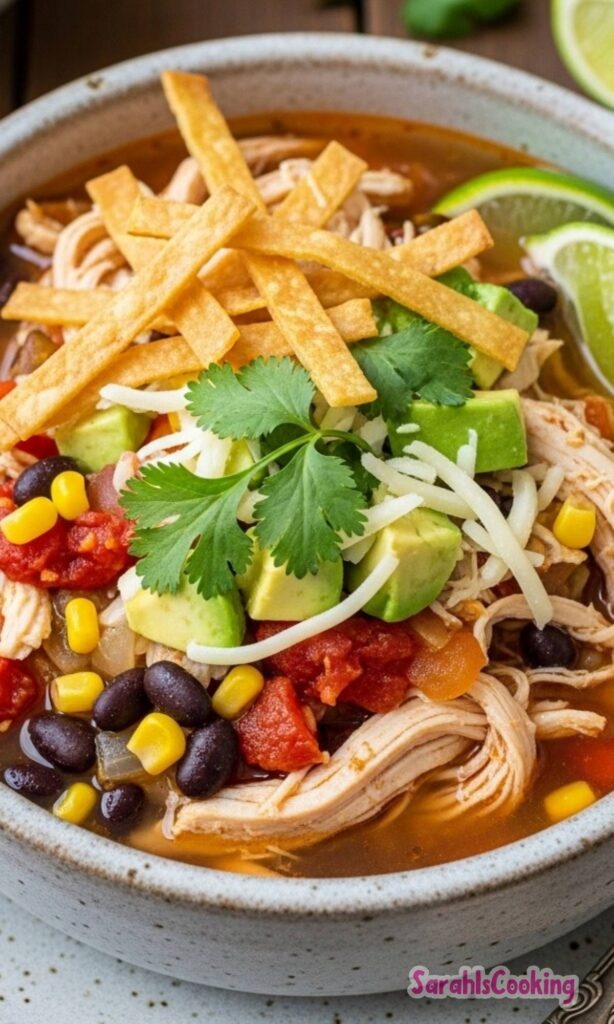
This slow-cooker chicken tortilla soup delivers rich, smoky depth with minimal hands-on effort. By combining fire-roasted tomatoes, warm spices, and tender chicken, the recipe builds complex flavor gradually as it simmers. The set-it-and-forget-it method makes this soup particularly valuable for busy weeks when a satisfying, homemade meal feels out of reach.
What matters most here is reliability. The ingredients work together during long, gentle cooking to create broth that tastes carefully tended, even though the slow cooker does all the work. This version prioritizes texture balance—hearty but not heavy, with bright finishes that let each person customize their bowl.
- Sarah's experience: I've made this soup dozens of times during demanding weeks, and it consistently delivers comfort without complication.
- Testing insight: The biggest variable is cook time—pushing toward six hours deepens flavor noticeably without drying the chicken.
- Risk reduction: This recipe forgives ingredient swaps and timing fluctuations, making it ideal for cooks who need flexibility.
Who This Recipe Is For
This recipe suits cooks who want maximum flavor return for minimal active time. It works for beginners learning to trust slow-cooker methods and for experienced home cooks needing a dependable meal that doesn't require hovering. The instructions assume basic knife skills but no advanced techniques.
Success looks like tender shredded chicken, broth with layered warmth, and toppings that add contrast. The soup should feel substantial enough for dinner but flexible enough for leftovers or casual gatherings.
- Beginner reassurance: The slow cooker handles timing and temperature—you cannot overcook this soup within the recommended window.
- Success clarification: Proper doneness means chicken shreds easily with forks and broth tastes balanced, not watery or one-dimensional.
Why Slow-Cooker Chicken Tortilla Soup Works
The method relies on low, steady heat to coax sweetness from vegetables and bloom spices without burning. Fire-roasted tomatoes provide smoky backbone that would otherwise require charring peppers or tomatillos. Chicken breasts cook gently while submerged, absorbing broth flavor rather than drying out or turning stringy.
Layering ingredients instead of stirring initially allows gradual mingling. The cheese stirred in at the end creates light creaminess without dulling the broth's brightness, and freshly fried tortilla strips maintain crunch that packaged chips cannot match.
- Structural logic: Black beans add creaminess and protein while holding their shape during long cooking.
- Precision reinforcement: Adding frozen corn rather than canned preserves texture and clean sweetness.
Ingredient Insights and Function
Chicken breasts form the protein base, but their real job is absorbing surrounding flavors while releasing enough richness to bolster the broth. White onion and bell peppers soften completely, dissolving into the soup and contributing natural sweetness that balances spice heat.
Fire-roasted tomatoes are non-negotiable here—regular diced tomatoes lack the smoky depth that makes this soup taste slow-simmered. Black beans add earthy creaminess and heft, while frozen corn provides intermittent sweetness and textural contrast. Chili powder brings warmth with mild heat, and cumin contributes earthy, almost nutty undertones that define the soup's character.
Monterey Jack cheese melted at the end introduces subtle creaminess without overpowering. Fresh cilantro used twice—during cooking and as garnish—ensures brightness cuts through the richness. The tortilla strips fried in olive oil deliver salt and crunch that transform each spoonful.
- Substitution clarity: Thighs work well and add richness; rotisserie chicken shortcuts are outlined in notes.
- Risk reduction: Rinsing canned beans removes excess sodium and prevents murky broth.
- Experience note: I've tested with various cheese options—Monterey Jack melts most smoothly without making soup greasy.
Step-by-Step Success Guidance for Slow-Cooker Chicken Tortilla Soup
Preparation Phase
Chopping vegetables uniformly ensures even softening during the long cook. Rinse black beans thoroughly until water runs clear. Measure spices before beginning so adding them is straightforward.
Place chicken breasts in an even layer at the bottom—this keeps them submerged as the soup cooks, which is essential for moist results. Layer remaining ingredients on top without stirring; this initial separation allows each component to release flavor gradually.
Execution Phase
Cook on low for five to six hours. The soup is ready when chicken shreds effortlessly with forks and vegetables have softened completely. Resist lifting the lid during cooking—each peek releases heat and extends necessary cook time.
When shredding chicken, leave some pieces slightly larger for varied texture. Stir in shredded Monterey Jack cheese, then replace the lid for exactly five minutes to melt gently.
Finishing and Doneness Cues
While cheese melts, fry tortilla strips in olive oil until golden and crisp, about three minutes per batch. Drain on paper towels and salt immediately so seasoning adheres.
Taste soup before serving and adjust salt if needed. The finished broth should taste layered—smoky, warm, and slightly sweet—with chicken that shreds easily but maintains structure. Ladle into bowls and finish generously with toppings; the lime squeeze at the end is essential for brightening all the slow-cooked flavors.
- Experience-based refinement: I let the soup cook closer to six hours whenever possible—the depth improvement is noticeable.
- Visual checkpoint: Properly melted cheese should disappear into broth, not float in clumps.
- Execution safeguard: Fry tortilla strips close to serving time; if making ahead, store in paper bags, not airtight containers.
How I Tested and Refined Slow-Cooker Chicken Tortilla Soup
Initial tests revealed that spice quantities needed adjustment—early versions tasted flat despite including expected amounts. Increasing cumin and chili powder while adding salt earlier in cooking solved this. I also tested cooking times ranging from four to eight hours and found the sweet spot at five to six hours on low; shorter times left vegetables too firm, and longer times made chicken texture slightly cottony.
Bean type mattered more than expected. Black beans hold shape and add creaminess, while pinto beans broke down too much. I also experimented with stirring in cheese at different points—adding it too early made broth murky, while melting at the very end preserved clarity and added just enough richness.
- Failure insight: One batch using regular diced tomatoes instead of fire-roasted tasted noticeably flat and required additional spices to rescue.
- Authority reinforcement: These tests confirmed that fire-roasted tomatoes and proper spice ratios are structural, not optional.
Common Mistakes When Making Slow-Cooker Chicken Tortilla Soup
Using regular diced tomatoes instead of fire-roasted removes the smoky foundation that makes this soup distinctive. The result tastes okay but lacks depth, requiring with additional smoked paprika or chipotle.
Adding sour cream directly to the pot rather than individual bowls dulls the broth's brightness and can cause slight curdling. Toppings should stay separate so each person balances creaminess and acidity according to preference.
Over-shredding chicken until it becomes stringy rather than chunky reduces textural satisfaction. Leaving some pieces slightly larger maintains heartiness.
- Prevention strategy: Always verify you have fire-roasted tomatoes before starting—this single ingredient determines success.
- Structural safeguard: Add dairy only at serving time unless the recipe specifically directs otherwise.
Make-Ahead, Storage, and Freezing Guidance
This soup improves overnight as flavors continue melding. Refrigerate in airtight containers for up to five days. Reheat gently on stovetop or in microwave, adding fresh toppings after warming.
Freezing works beautifully for up to three months. Cool completely before transferring to freezer-safe containers, leaving slight headroom for expansion. Thaw overnight in refrigerator before reheating. Store tortilla strips separately at room temperature—they lose texture if frozen or refrigerated with soup.
- Texture expectation: Soup may thicken slightly after refrigeration; thin with splash of broth or water when reheating if needed.
- Quality preservation: Add avocado and lime only after reheating, never before storing.
- Experience note: I often double the batch specifically for freezing—having this soup ready makes busy weeks genuinely easier. For another make-ahead option that freezes well, try this Chicken Noodle Soup Recipe.