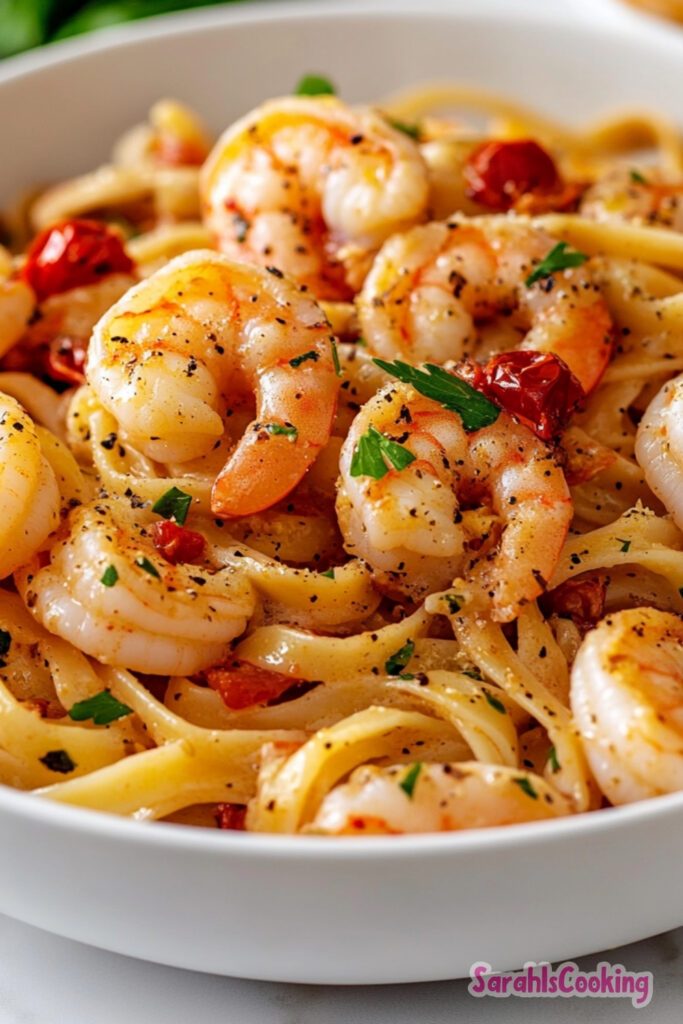
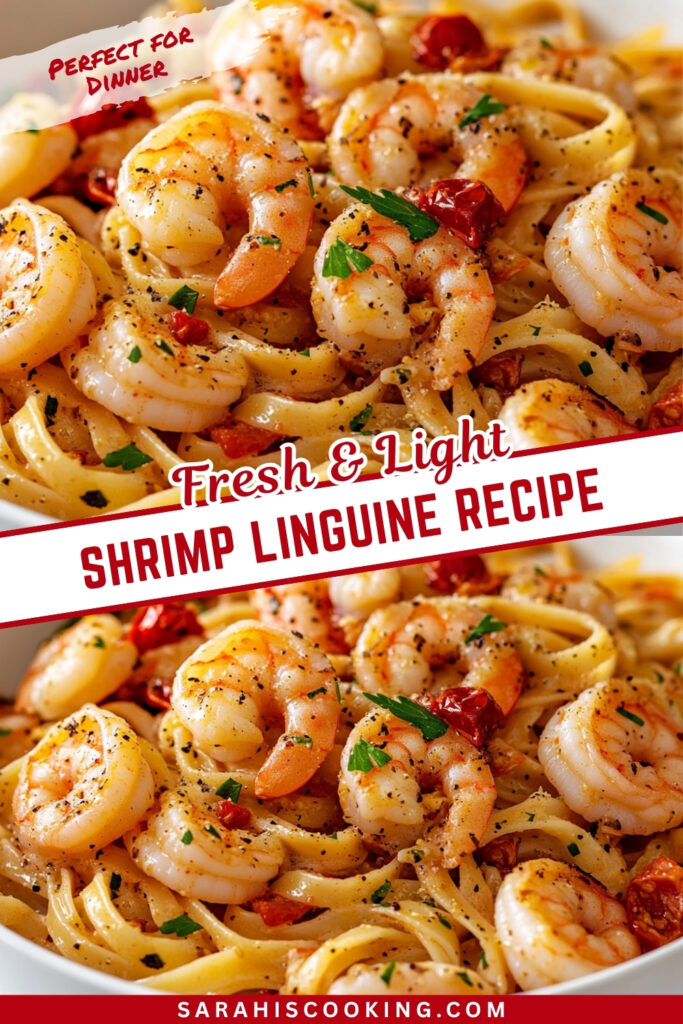
This shrimp linguine with white wine and tomatoes is one of those meals that delivers consistently, even on a busy night. It comes together in about 25 minutes, but the flavor feels layered and intentional, not rushed.
I rely on this method when I want something light but still satisfying. The sauce is built without cream, using pasta water and wine to create a silky coating that clings to every strand of linguine.
Over time, I’ve adjusted small details to make sure the shrimp stay tender, the pasta stays structured, and the sauce never turns watery. Once you understand the sequence, it becomes a repeatable, dependable dinner.
Ingredients Needed for the Recipe
Linguine - Provides a flat, sturdy surface that holds the light sauce better than thinner pasta, helping everything coat evenly.
Butter - Adds a base richness and helps carry the chili and garlic flavors through the sauce.
Red chili flakes - Brings a subtle heat that balances the sweetness of shrimp and tomatoes without overwhelming the dish.
Shrimp (21/25 size, peeled and deveined) - The main protein; this size cooks quickly while staying juicy if handled correctly.
Minced garlic - Builds the aromatic backbone of the sauce and enhances the natural sweetness of the shrimp.
Diced tomatoes - Provide acidity and body, helping to create a balanced, slightly textured sauce.
White wine - Deglazes the pan and adds brightness, lifting the overall flavor without making the dish heavy.
Pasta water - Essential for emulsifying the sauce and helping it cling to the pasta instead of separating.
Extra virgin olive oil - Finishes the sauce with a smooth texture and rounds out the flavors.
Fresh parsley or chives - Adds freshness and a clean finish that keeps the dish from feeling flat.
Optional fried capers - Introduce a salty, crisp contrast that adds depth if you want an extra layer.
How to make Shrimp Linguine with White Wine and Tomatoes?
Step 1 - Boil the Pasta Properly
Bring a large pot of salted water to a rolling boil, then cook the linguine until just shy of al dente. Aim for about one minute less than the package instructions.
This timing matters because the pasta will finish cooking in the sauce later. Reserve at least one cup of the starchy pasta water before draining.
Step 2 - Start the Flavor Base
Heat a large skillet over medium-high heat and melt the butter. Add the red chili flakes and stir briefly, just 10 to 15 seconds, until fragrant.
You don’t want the butter to brown here. Keep the heat controlled so the chili infuses gently without burning.
Step 3 - Cook the Shrimp Carefully
Add the shrimp in a single layer and cook for about 2 to 3 minutes. Watch for the color change to pink and slight curling.
Remove them while still slightly underdone. This prevents the final dish from having rubbery shrimp, which is one of the most common issues.
Step 4 - Build the Garlic Layer
With the shrimp still in the pan briefly, add the minced garlic and stir for about 30 seconds. The goal is to release aroma, not brown it.
Transfer the shrimp out of the skillet, leaving the flavorful bits behind. Those browned pieces are essential for depth.
Step 5 - Cook the Tomatoes
Add the diced tomatoes directly into the same skillet. Let them cook for 1 to 2 minutes until slightly softened but not mushy.
This short cook keeps some structure in the tomatoes, which adds texture to the final dish.
Step 6 - Deglaze with White Wine
Pour in the white wine and scrape the bottom of the pan to release the browned bits. Let it simmer for about 2 minutes.
You’re reducing the wine slightly here. It should smell mellow, not sharp, before moving to the next step.
Step 7 - Combine Everything
Add the shrimp back into the pan along with the cooked linguine and about one cup of pasta water. Toss everything together over medium heat.
The liquid will look loose at first, but it will tighten as it emulsifies with the starch from the pasta.
Step 8 - Finish and Adjust
Drizzle in the olive oil and add the fresh herbs. Toss again until the sauce lightly coats the noodles and the shrimp are fully cooked.
Serve immediately while the sauce is still glossy. The texture is best right off the heat.
Why This Recipe Works
This recipe is built on balance rather than richness. Instead of relying on cream, it uses pasta water and wine to create a light but cohesive sauce.
The ratio of liquid to pasta is deliberate. Too much water and the sauce separates, too little and it dries out. One cup of reserved water gives just enough starch to bind everything.
Cooking the shrimp separately also matters. It allows precise control over texture, so the shrimp stay tender while the sauce develops independently.
The layering of garlic, chili, tomatoes, and wine creates depth without heaviness. Each component has a clear role, which keeps the dish clean and focused.
How I Tested and Refined This Recipe
When I first tested this, I kept everything in the pan at once. The shrimp overcooked quickly, and the texture just didn’t hold up.
Separating the shrimp early was the first major improvement. It gave me control over doneness and allowed me to build the sauce without rushing.
I also experimented with the amount of pasta water. Too little made the pasta sticky, while too much diluted the flavor. One cup consistently gave the best balance.
Another adjustment was the timing of the garlic. Adding it too early caused it to brown and turn slightly bitter. Keeping it brief and controlled made the flavor cleaner.
The final version feels intentional because each step solves a specific issue I ran into during testing. Nothing here is accidental.
Common Mistakes and How to Avoid Them
Overcooking the shrimp - Remove them early while slightly underdone; they will finish cooking later.
Skipping pasta water - Without it, the sauce won’t bind properly and will feel thin or oily.
Burning the garlic - Keep the heat moderate and cook it briefly to avoid bitterness.
Using too much wine - Excess liquid can overpower the dish and prevent proper emulsification.
Overcooking the pasta - Always stop short of fully cooked to maintain structure in the final toss.
Not scraping the pan - Those browned bits are essential for building depth in the sauce.
Letting the dish sit too long - The sauce thickens quickly as it cools and can turn sticky.
Make-Ahead, Storage, and Freezing Guidance
This dish is best served immediately, but leftovers can be stored in an airtight container in the refrigerator for up to 4 days.
As it sits, the pasta will absorb more of the sauce, making it slightly softer. The shrimp may firm up a bit but will still be enjoyable if reheated properly.
Reheat gently in a skillet over medium-low heat with a splash of water to loosen the sauce. Avoid microwaving at high power, which can toughen the shrimp.
Freezing is not ideal for this recipe. The texture of the shrimp and pasta both suffer, and the sauce can separate when thawed.
Tips
Salt your pasta water well; it’s your first layer of seasoning.
Pat shrimp dry before cooking to get better searing and flavor.
Use a wide skillet so the pasta can toss evenly without clumping.
Keep the sauce moving while finishing to help emulsification.
Add a squeeze of lemon at the end if you want extra brightness.
Use fresh herbs at the last moment to preserve their flavor.
Adjust chili flakes to your heat preference, but start small.
This shrimp linguine recipe is ready in 25 minutes. Juicy skillet shrimp are tossed with linguine in a garlic white wine tomato sauce, finished with pasta water and fresh herbs for a light, no-heavy-cream dinner.
ingredients
1lb linguine
3tbsp butter
1/4tsp red chili flakes
1lb 21/25 shrimp (peeled and deveined)
2tbsp minced garlic
1cup diced tomatoes
1/4cup white wine (Sauvignon Blanc or Pinot Grigio)
1cup water from the pasta pot (reserved)
2tbsp extra virgin olive oil
chives or parsley (for garnish)
fried capers (optional)
Instructions
1
Bring a pot of salted water to a boil and cook the linguine al dente according to package instructions, usually about 10 minutes.
2
Place a large skillet over medium high heat, and melt the butter. Add the red chili flakes and stir for 15 seconds.
3
Add the shrimp to the pan and cook for about 2-3 minutes, until nearly cooked through. Add the minced garlic and stir for 30 seconds, then remove the shrimp from the pan.
4
Add the diced tomatoes to the skillet and cook for 1 or 2 minutes until slightly softened. Deglaze the pan by adding the white wine, then scraping off the brown bits off the bottom of the pan.
5
Cook this mixture for another 2 minutes, then toss in the cooked shrimp (including any juices), the cooked linguine noodles, and 1 cup of pasta water. Toss well and add the olive oil and herbs. Enjoy!
Nutrition Facts
Servings 6
Amount Per Serving
Calories384kcal
% Daily Value *
Total Fat6g10%
Saturated Fat3g15%
Cholesterol105mg35%
Sodium481mg21%
Total Carbohydrate60g20%
Dietary Fiber3g12%
Sugars3g
Protein21g42%
* Percent Daily Values are based on a 2,000 calorie diet. Your daily value may be higher or lower depending on your calorie needs.
Note
Caper Variation: My brother adds pan-fried capers to this dish and it tastes awesome!
Fresh Lemon: Add 1 teaspoon of lemon zest and a squeeze of fresh lemon juice to the pasta at the very end.
Spice It Up: Toss the shrimp with 1 teaspoon of Old bay seasoning or Cajun Seasoning for extra flavor.
Storage: Keep in an airtight container in the fridge for up to 4 days.
Keywords:
shrimp linguine, white wine shrimp, easy pasta recipe, seafood dinner, 25 minute meal, garlic shrimp pasta
Pin this recipe to share with your friends and followers.
Sarah
Food and Lifestyle Blogger
Hi, I’m Sarah, a home cook and baker who believes that good food doesn’t need to be complicated to be meaningful. This blog is where I share approachable, dependable recipes made with care — the kind of dishes you can come back to again and again.