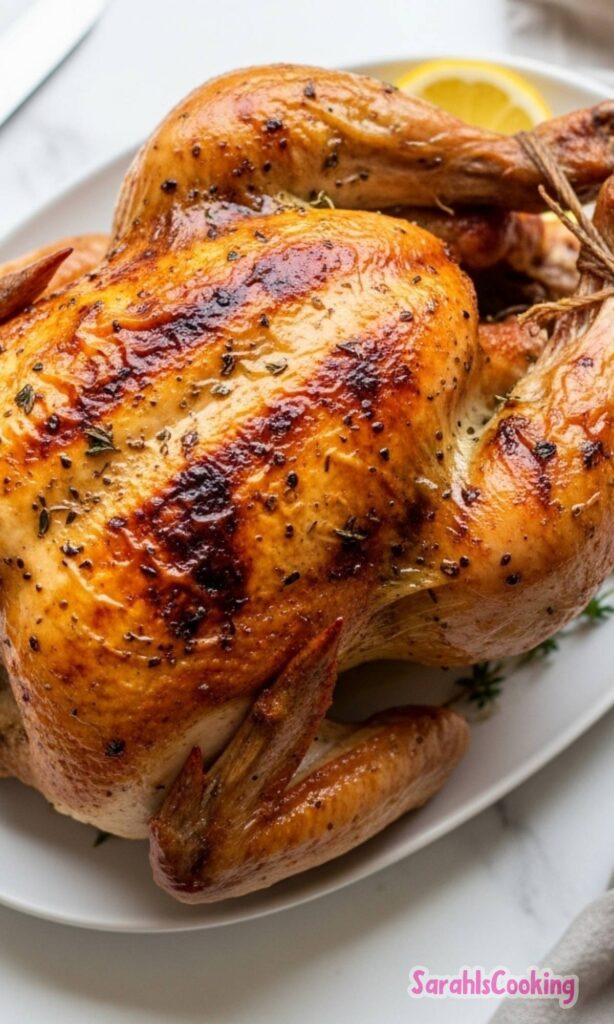
This outline establishes a method-driven approach to rotisserie chicken that prioritizes consistency, balanced flavor, and repeatable results. The focus is on using a small group of purposeful ingredients to transform a whole bird into a meal with crisp skin and deeply juicy meat.
Rather than relying on complicated marinades or heavy seasoning, this recipe demonstrates how controlled heat, proper salting, and aromatic stuffing create reliable, restaurant-quality outcomes in a home kitchen.
Who This Recipe Is For
This recipe is ideal for home cooks who want a dependable, low-fuss main dish that feels elevated but is grounded in simple technique. It suits both beginners learning whole-bird preparation and experienced cooks seeking a repeatable rotisserie method.
It is especially useful for those who value practical cooking systems—meals that can anchor a weekly routine and generate versatile leftovers for dishes like Simple Shredded Chicken Recipe applications throughout the week.
Why Rotisserie Chicken Works
The continuous rotation ensures even heat exposure, preventing moisture loss while allowing fat to render gradually. This movement eliminates hot spots and bastes the chicken naturally in its own juices, which leads to both tenderness and uniform browning.
The restrained seasoning approach allows lemon, garlic, and hardy herbs to infuse the meat internally through steam, creating flavor from the inside out without overwhelming the natural taste of the chicken.
Ingredient Insights and Function
A 4–5 pound whole chicken is intentionally chosen for its ability to cook evenly within the 75–90 minute window. Larger birds risk drying before reaching temperature, while smaller birds overcook too quickly under rotational heat.
Lemon quarters release moisture and acidity inside the cavity, subtly tenderizing the meat. Garlic softens and sweetens as it roasts, contributing savory depth. Rosemary and thyme are selected because they withstand long cooking without losing aromatic integrity.
Salt plays a structural role by drawing moisture to the surface, aiding in crisp skin development. Optional olive oil can enhance browning but is deliberately minimal to avoid flare-ups or scorching.
Step-by-Step Success Guidance for Rotisserie Chicken
Preparation Phase
Proper drying of the chicken is essential to achieving crackling skin. Trussing creates a compact shape that cooks evenly and stabilizes the bird on the spit, reducing the risk of uneven rotation.
Seasoning must be thorough and deliberate, ensuring salt reaches every surface so flavor penetrates as the chicken cooks.
Execution Phase
Cooking at approximately 375°F (190°C) allows fat to render slowly while the rotating motion self-bastes the meat. A drip pan captures flavorful juices that can be repurposed for vegetables or side dishes.
Visual cues—deep golden skin and steady rotation—work alongside thermometer verification to guide the cooking process.
Finishing and Doneness Cues
Pulling the chicken at 160°F (71°C) in the thigh allows carryover cooking to finish the process without overcooking. Resting for at least 10 minutes redistributes juices, ensuring slices remain moist.
The finished texture should feel tender yet structured, never shredding prematurely when carved.
How I Tested and Refined Rotisserie Chicken
Testing focused on bird size, salt distribution, and cavity aromatics to determine how to maximize moisture without additional fats or marinades. Trials confirmed that moderate sizing and internal citrus produced the most consistent results.
Eliminating butter-based rubs reduced burning and flare-ups, reinforcing that simplicity—not excess—delivers the cleanest flavor and most reliable texture.
Common Mistakes When Making Rotisserie Chicken
Skipping the drying step leads to rubbery skin instead of crispness. Failing to balance the bird properly on the spit can cause uneven cooking or mechanical strain during rotation.
Relying solely on cook time instead of temperature is another frequent issue. Rotisserie environments vary, making a thermometer essential for accuracy, much like precision matters in techniques such as How to Boil Eggs Perfectly (Every Time).
Over-seasoning or adding sugary or dairy-based coatings can result in burnt exteriors before the interior finishes cooking.
Make-Ahead, Storage, and Freezing Guidance
Once cooled, the chicken stores well in an airtight container for up to four days, maintaining both flavor and texture. Shredded leftovers freeze effectively for up to three months, making this recipe a strong foundation for meal prep.
The carcass can be simmered into stock, extending the value of the dish into soups such as Chicken Noodle Soup or used to enrich grains and vegetables.
For serving, pairing the chicken with bright, fresh sides like Cucumber Salad provides contrast to the richness and keeps the meal balanced without additional complexity.