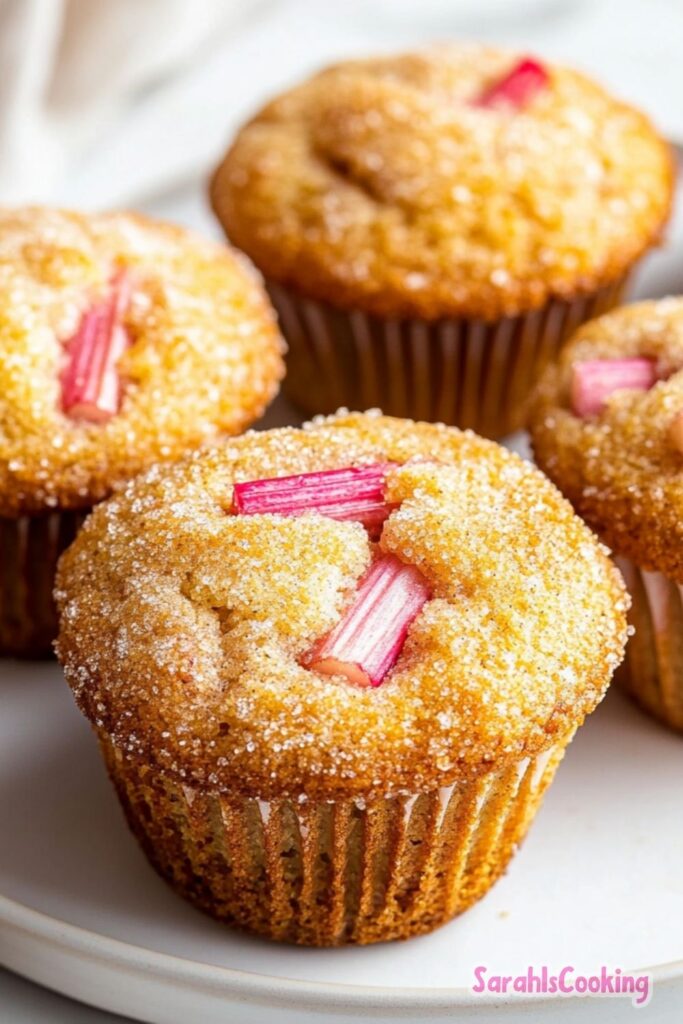
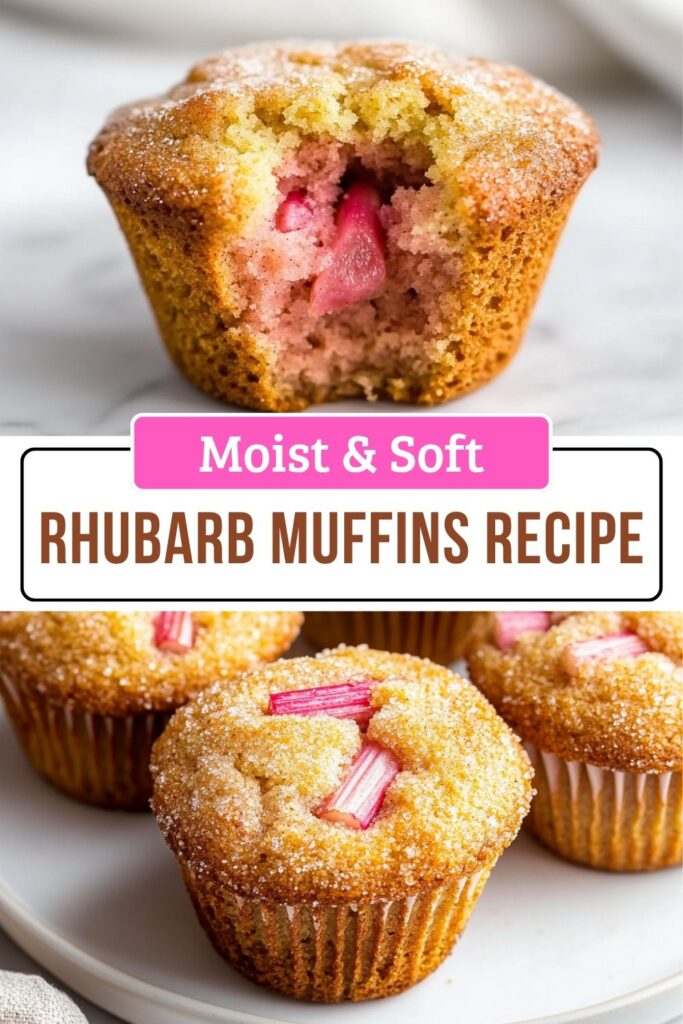
Excerpt: Moist rhubarb muffins with a cinnamon sugar topping, perfectly balanced in flavor and texture. A reliable, bakery-style recipe for consistent results.
These rhubarb muffins are built for consistency. You get a tender crumb, a balanced sweetness, and enough structure to hold generous pieces of tart rhubarb without collapsing.
I’ve tested this formula with the goal of reliability first. The batter comes together quickly, bakes evenly, and produces muffins that stay soft without turning dense or greasy.
If you want a muffin that feels bakery-quality but still works in a home kitchen without guesswork, this is that recipe. It’s straightforward, but every step serves a purpose.
Ingredients Needed for the Recipe
Sugar - Provides sweetness and contributes to moisture retention, helping the muffins stay soft after baking.
Brown sugar - Adds depth and slight caramel notes while increasing moisture due to its molasses content.
Vegetable oil - Keeps the crumb tender and moist without firming up like butter does when cooled.
Buttermilk - Adds acidity that reacts with baking soda, creating lift and a softer crumb structure.
Egg - Binds the batter together and provides structure so the muffins hold their shape.
Vanilla extract - Rounds out the flavor and softens the sharpness of the rhubarb.
All-purpose flour - Forms the structural base, giving the muffins enough strength without making them heavy.
Baking soda - Reacts with the buttermilk to create rise and a light interior texture.
Rhubarb - Brings tartness and moisture pockets that contrast the sweet batter.
Sugar (for topping) - Creates a crisp, lightly caramelized surface during baking.
Cinnamon - Adds warmth and enhances the overall flavor without overpowering the rhubarb.
Butter (for topping) - Helps bind the topping and encourages a slightly crumbly texture.
How to make Rhubarb Muffins?
Step 1 - Prepare the Oven and Pan
Preheat the oven to 350°F and line a 24-cup muffin tin. Proper preheating ensures the batter begins rising immediately once placed in the oven.
If the oven is not fully heated, the muffins may spread instead of rising properly. This step sets the foundation for structure.
Step 2 - Mix the Wet Ingredients
In a large bowl, combine the sugar, brown sugar, oil, buttermilk, egg, and vanilla. Stir until the mixture is smooth and cohesive.
You’re looking for a glossy, uniform texture. Any streaks of egg or uneven sugar distribution can affect how the muffins bake.
Step 3 - Add the Dry Ingredients
Add the flour and baking soda to the wet mixture. Stir gently until just combined, stopping as soon as no dry flour pockets remain.
Overmixing at this stage develops gluten, which leads to tough or peaked muffins. The batter should look slightly thick but still soft.
Step 4 - Fold in the Rhubarb
Add the diced rhubarb and fold it into the batter until evenly distributed. The pieces should be well dispersed without breaking down.
Keep the mixing minimal. The goal is even distribution without overworking the batter.
Step 5 - Prepare the Cinnamon Topping
In a small bowl, combine the sugar, cinnamon, and softened butter. Use a fork to mix until it forms a slightly crumbly texture.
This mixture should hold together lightly when pressed. If it’s too wet, it won’t create a crisp topping.
Step 6 - Fill the Muffin Cups
Divide the batter evenly among the muffin cups, filling each about two-thirds full. This allows room for rise without overflow.
Consistent filling ensures even baking. Uneven portions can lead to some muffins overbaking while others remain underdone.
Step 7 - Add the Topping
Spoon about one teaspoon of the topping onto each muffin. Distribute it evenly so each muffin gets a balanced finish.
This topping melts slightly as it bakes, creating a lightly crisp surface that contrasts the soft interior.
Step 8 - Bake
Bake for 18 to 22 minutes. The muffins are done when the tops are set and a toothpick inserted into the center comes out clean.
Rotate the pan halfway through if your oven has hot spots. This helps ensure even browning.
Step 9 - Cool Properly
Let the muffins cool in the pan for about 15 minutes, then transfer them to a wire rack to cool completely.
Removing them too early can cause breakage, while leaving them too long in the pan can trap moisture and soften the bottoms.
Why This Recipe Works
The balance between oil and buttermilk is intentional. Oil provides lasting moisture, while buttermilk contributes structure and tenderness through acidity.
The sugar ratio supports both sweetness and texture. Using both granulated and brown sugar prevents the muffins from drying out while adding depth.
The relatively high amount of rhubarb ensures each bite has contrast. The batter is strong enough to hold it without collapsing, which is key for consistency.
How I Tested and Refined This Recipe
I started by testing different fat options. Butter created good flavor but resulted in a firmer crumb once cooled, which wasn’t ideal for next-day texture.
Switching to oil improved softness, but the muffins initially lacked structure. Adjusting the flour ratio solved this, creating a stable but tender crumb.
I also tested varying amounts of rhubarb. Too little made the muffins bland, while too much caused excess moisture and uneven baking.
The topping took a few rounds as well. A dry sugar mixture didn’t adhere properly, while too much butter made it greasy instead of crisp.
This final version reflects those adjustments. Each element has been tuned to balance moisture, structure, and flavor without unnecessary complexity.
Common Mistakes and How to Avoid Them
Overmixing the batter - Leads to dense, tough muffins instead of a light crumb.
Using cold ingredients - Prevents proper emulsification and can affect texture.
Skipping proper rhubarb prep - Excess moisture from unprepared rhubarb can make muffins soggy.
Overfilling the muffin cups - Causes overflow and uneven baking.
Underbaking - Results in a gummy center even if the tops look done.
Leaving muffins in the pan too long - Traps steam and softens the exterior.
Make-Ahead, Storage, and Freezing Guidance
These muffins can be stored at room temperature in an airtight container for 2 to 3 days. They maintain moisture well due to the oil-based batter.
Over time, the topping will soften slightly, but the interior remains tender. If needed, a quick reheat can restore some surface texture.
For freezing, place cooled muffins in freezer-safe bags and store for up to 3 months. They thaw well without losing structure.
To reheat, warm them in a low oven or microwave briefly. Avoid overheating, as this can dry out the crumb.
Tips
Cut rhubarb into evenly sized pieces for consistent baking.
Use fresh baking soda for proper rise.
Do not skip the resting time after baking before removing from the pan.
Measure flour correctly to avoid a dense texture.
Keep mixing minimal once flour is added.
Rotate the pan halfway through baking for even results.
These moist and tender Rhubarb Muffins are bursting with diced tart rhubarb and topped with a sweet cinnamon crumble. They are the perfect way to start your day or enjoy with afternoon coffee. Easy to make without an electric mixer, these muffins bring a bright, fresh flavor profile that celebrates spring produce.
PrepPreheat oven to 350°F (175°C). Line 24 muffin cups with paper liners or grease well with cooking spray.
2
Mix Wet IngredientsIn a large bowl, stir together the granulated sugar, brown sugar, vegetable oil, buttermilk, egg, and vanilla extract until well combined.
3
Add Dry IngredientsAdd the flour and baking soda to the wet mixture. Stir gently until just combined. Do not overmix, or the muffins may become tough.
4
Fold in RhubarbGently fold in the diced rhubarb until evenly distributed throughout the batter. Set aside.
5
Make ToppingIn a small bowl, combine the topping sugar, cinnamon, and softened butter. Use a fork to mix until it resembles coarse crumbs.
6
Fill and TopDivide the batter evenly among the 24 muffin cups, filling each about 2/3 full. Sprinkle approximately 1 teaspoon of the cinnamon topping over each muffin.
7
BakeBake for 18-22 minutes, or until a toothpick inserted into the center comes out clean.
8
CoolLet the muffins cool in the pan for 15 minutes, then remove them to a wire rack to cool completely.
Nutrition Facts
Servings 24
Serving Size 1 muffin
Amount Per Serving
Calories210kcal
% Daily Value *
Total Fat5.5g9%
Saturated Fat1.2g6%
Cholesterol10mg4%
Sodium115mg5%
Potassium95mg3%
Total Carbohydrate38g13%
Dietary Fiber1.5g6%
Sugars22g
Protein2.5g5%
* Percent Daily Values are based on a 2,000 calorie diet. Your daily value may be higher or lower depending on your calorie needs.
Note
Store at room temperature in an airtight container for 2-3 days. To freeze, place cooled muffins in freezer bags for up to 3 months. If using frozen rhubarb, thaw and drain excess liquid before adding to batter.
Pin this recipe to share with your friends and followers.
Sarah
Food and Lifestyle Blogger
Hi, I’m Sarah, a home cook and baker who believes that good food doesn’t need to be complicated to be meaningful. This blog is where I share approachable, dependable recipes made with care — the kind of dishes you can come back to again and again.