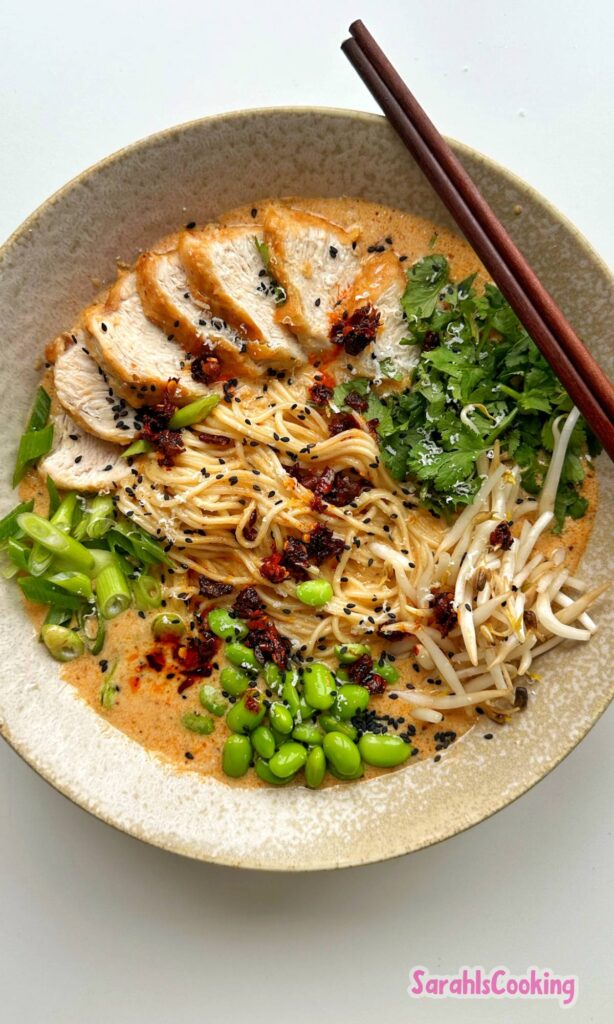
There’s something undeniably comforting about a steaming bowl of homemade ramen. It’s not just the noodles or the broth; it’s the way all the components come together in a delicate balance of flavors. I’ll be honest—making ramen from scratch takes time and patience, but the payoff is incredible.
Each spoonful is rich, savory, and deeply satisfying, a far cry from the instant packs we all know. Once you get the hang of it, though, it becomes less intimidating and a lot more fun. Trust me, the effort is totally worth it.
My approach focuses on building the soup in layers, combining a flavorful chicken dashi, rich tare, tender chashu, and perfectly marinated nitamago. Add in a drizzle of spicy garlic la-yu and fresh ramen noodles, and you’ve got a dish that feels like a special occasion, even on a weeknight.
Ingredients Needed for the Recipe
- Chicken Dashi: 8 cups low-sodium chicken broth, 16 dried shiitake mushrooms, 30 g kombu, 20 g dried bonito flakes - used as the base of the soup for deep umami flavor.
- Tare & Chashu: 1 1/4 cups low-sodium soy sauce, 1 1/4 cups mirin, 1/2 cup sake, 1 1/2 cups water, 1/4 cup granulated sugar, 2 Tbsp. packed brown sugar, 1 2" piece fresh ginger, 3 cloves garlic, 3 green onions, 1 lb. pork belly - makes the concentrated flavoring for the broth and the braised pork topping.
- Nitamago (Marinated Eggs): 4 cold large eggs, 2 1/2 cups reserved chashu-tare liquid - gives the soft-boiled, flavor-infused egg topping.
- Garlic La-Yu: 8 cloves garlic, 1/2 cup canola oil, 1 Tbsp. ground chili or 1 1/2 Tbsp. crushed red pepper flakes, 2 tsp. sesame seeds - optional, for a spicy, savory kick.
- For each serving: 4 oz. fresh ramen noodles, 1 1/2 cups chicken dashi, 2 reserved shiitake mushrooms, 3 Tbsp. or more tare, 2 slices chashu, 1 nitamago halved, 1 green onion (thinly sliced), 2 tsp. la-yu, nori (optional) - assemble the ramen bowl with noodles, broth, and toppings.
How to make Homemade Ramen?
Step 1 - Make the Chicken Dashi
Start by bringing the chicken broth to a bare simmer in a medium saucepan. Remove from heat and let it cool for a couple of minutes. Then, add the shiitake mushrooms and kombu. Let these steep for about 5 minutes to release their delicate flavors. Next, add the bonito flakes and steep for another 5 minutes. Strain everything carefully, reserving the solids for later use with the eggs or as part of the topping. This slow, layered approach ensures the broth isn’t overwhelming but is full of umami depth.
Step 2 - Prepare the Pork Belly
Before braising, you’ll want to blanch the pork belly. Place it in a pot with water, bring to a low simmer briefly, then drain and rinse. This helps remove impurities and ensures the pork stays tender. It’s a small step that makes a huge difference in texture.
Step 3 - Make the Tare and Braise the Chashu
Combine soy sauce, mirin, sake, sugars, ginger, garlic, and green onions in a pot over medium heat and bring to a gentle simmer. Lower the heat, add the pork belly, and cover. Cook on low heat for about 1 hour 20 minutes, turning occasionally. You want it meltingly tender, almost falling apart, so patience is key. After cooking, let it cool slightly before slicing and reserve the braising liquid for later seasoning and marinating the eggs.
Step 4 - Make Nitamago (Marinated Eggs)
Bring water to a rolling boil and carefully lower in the eggs that have been pricked gently at the rounded end. Boil for 6 minutes for that perfect jammy yolk. Transfer to an ice bath to stop cooking, then peel carefully. Place the peeled eggs in a bowl, pour over the reserved tare, and weigh them down with kombu so they’re fully submerged. Let them marinate in the fridge for 4 to 12 hours. The result is a soft, flavorful egg that adds richness to each bowl.
Step 5 - Make Garlic La-Yu
For a punch of spice, heat garlic gently in oil over the lowest heat possible until tender and translucent. Avoid frying. Remove from heat and stir in chili flakes and sesame seeds. Let it cool, then store in an airtight container. It’s optional but adds a wonderful aromatic heat that elevates the bowl beautifully.
Step 6 - Cook the Ramen Noodles
Bring a pot of salted water to a boil and cook fresh ramen noodles until just al dente, usually about a minute. Stir gently to prevent sticking. Drain and set aside, ready to absorb the savory broth.
Step 7 - Assemble the Ramen Bowl
Warm the dashi with sliced shiitake mushrooms until just simmering. In each serving bowl, place the noodles, pour over the broth, and add a few spoonfuls of tare. Arrange slices of chashu, a halved nitamago, green onions, and optional nori. Drizzle lightly with la-yu if you want that spicy garlic kick. Each element should complement the others without overpowering the delicate balance.
Tips
- Use high-quality ingredients, especially for kombu and pork belly, for the best flavor.
- Patience is key—low and slow cooking yields the most tender chashu.
- Marinate eggs overnight if possible; the flavor deepens beautifully.
- Don’t oversteep the dashi ingredients—short bursts keep the broth clean and aromatic.
- Fresh noodles make a huge difference; if unavailable, try high-quality dried noodles but cook carefully.
Homemade Ramen Variations
Ramen is endlessly customizable. For a vegetarian option, swap chicken dashi for a mushroom-based broth and add roasted miso veggies. Zoodle ramen is a fun low-carb alternative, keeping the flavors while changing the texture. You can even explore fusion bowls, like birria ramen, to mix traditional Japanese techniques with bold Mexican flavors. Each variation keeps the heart of ramen alive while letting you play with tastes and textures.
Storage and Serving Ideas
This recipe makes enough broth, toppings, and noodles for four servings. Broth and tare can be stored separately in the fridge for up to a week. Reheat gently on the stove before serving. Leftover noodles should be cooked fresh or briefly reheated to maintain texture. Serve ramen in individual bowls, layering noodles first, broth second, and toppings last, so each bite is perfectly balanced. Garnish with green onions, a drizzle of la-yu, or toasted sesame seeds for an extra touch.
Making homemade ramen is a labor of love, but once you taste the rich, comforting flavors, every step feels worth it. From the silky, marinated eggs to the melt-in-your-mouth pork, it’s a dish that turns any meal into an experience. Take your time, enjoy the process, and watch as your kitchen fills with the most inviting aromas—this is ramen done right.