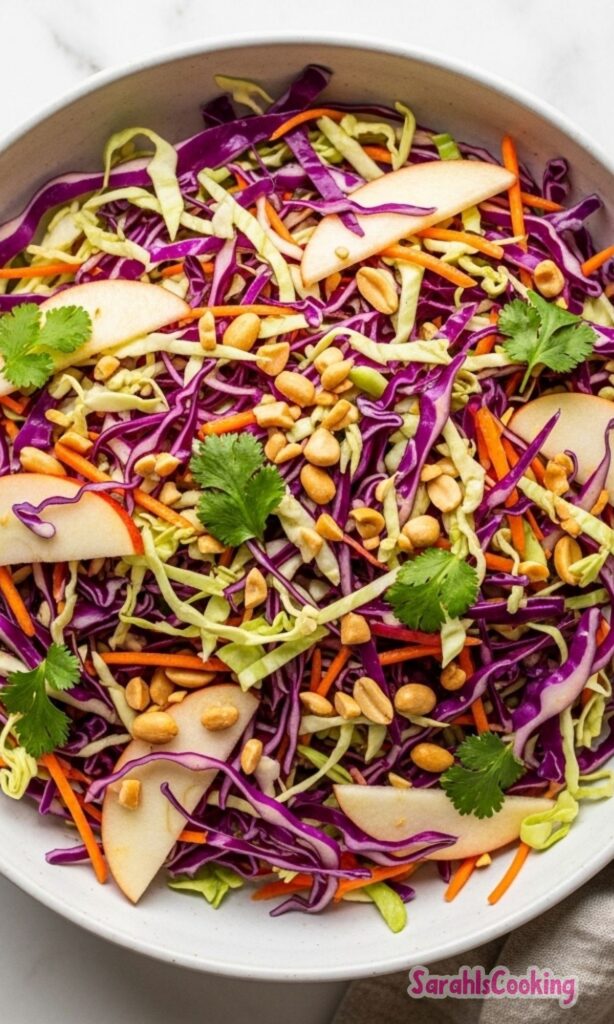
Finding a salad that works as a side dish, holds up for a few days in the fridge, and actually tastes satisfying can feel like a tall order. This rainbow cabbage salad solves all of those problems at once. It is crunchy, deeply flavorful, and built on a dressing that brings everything together without wilting the vegetables into submission.
I developed this recipe with the same precision I bring to my baking projects. Every component serves a purpose, from the structural integrity of the cabbage to the emulsifying power of the tahini. This is not one of those salads that gets soggy after an hour. It is designed to stay crisp, vibrant, and worth eating for days.
Who This Recipe Is For
This recipe is for anyone who has ever been disappointed by a salad that looked beautiful but tasted flat. It is for cooks who want a reliable side dish that works for meal prep, potlucks, or a quick lunch without last-minute assembly.
The skill level here is firmly beginner-friendly. If you can chop vegetables and whisk together a dressing, you can make this salad successfully. There is no complicated technique involved, just attention to a few details that separate a good result from a great one.
Why This Recipe Works
The structure of this salad is built on contrast. Red cabbage provides the backbone with its dense, crunchy texture that does not break down easily. The cucumber adds a lighter, more refreshing crispness while the carrot ribbons contribute a tender bite that bends rather than snaps.
The dressing is where the intentional choices really show. Tahini acts as both a flavor base and an emulsifier, coating each vegetable evenly without pooling at the bottom of the bowl. Ginger and garlic provide warmth while lemon juice and maple syrup balance each other for acidity and sweetness that brightens rather than overpowers.
Cashews add a final textural element that shifts the experience from simple vegetable salad to something more substantial. They offer a buttery crunch that complements the creamy dressing and the crisp vegetables without competing with any of them.
Ingredients Needed for the Recipe
Red cabbage – Provides the structural foundation with its dense, water-rich crunch that holds up to dressing without going limp
Cucumber – Adds a contrasting cool crispness and hydrating element that balances the stronger flavors
Carrot – Brings natural sweetness and a tender-crisp texture that differs from the cabbage and cucumber
Cilantro – Contributes fresh, herbaceous notes that cut through the richness of the tahini dressing
Red bell pepper – Offers sweetness and a juicy crunch that adds another layer of texture to the mix
Cashews – Provide a buttery crunch and mild richness that makes the salad more satisfying as a main or side
Tahini – Creates the creamy base of the dressing while acting as an emulsifier to keep everything cohesive
Lemon juice – Adds acidity that balances the richness of the tahini and prevents the vegetables from oxidizing
Garlic – Brings pungent depth that anchors the dressing and ties the vegetable flavors together
Ginger – Contributes warmth and a slight peppery note that lifts the entire dressing
Maple syrup – Provides just enough sweetness to round out the acidity and bitterness without making the dressing taste sweet
Olive oil – Helps thin the dressing while adding richness and helping the flavors coat the vegetables evenly
Salt – Essential for seasoning each layer and drawing out the natural flavors of the vegetables
Ingredient Insights and Function
Tahini is the most important ingredient in the dressing and the one that requires the most attention. Not all tahini is created equal. Some brands are thick and paste-like while others are runnier. If your tahini is very thick, you may need to add a little extra warm water to achieve a pourable consistency. The warmth of the water matters because it helps loosen the tahini without causing it to seize.
For the vegetables, size and cut matter more than you might expect. The cabbage should be diced into pieces about half an inch. Too large and you will struggle to get a balanced bite. Too small and it can turn into mush as the salad sits. The cucumber should be thinly sliced so it bends slightly rather than adding bulk. The carrot ribbons are not just for appearance. They create pockets of tender texture that contrast with the crunchier elements.
Cilantro is divisive but it serves a structural purpose here beyond flavor. Its leaves are delicate enough to soften slightly in the dressing while stems add a little extra crunch. If you must substitute, flat-leaf parsley will work but the flavor profile will shift significantly. Basil is too soft and will turn dark quickly. Green onions can work but they bring a sharper allium note that changes the balance.
Cashews can be omitted for a nut-free version but you will lose that buttery crunch. Pumpkin seeds or sunflower seeds make acceptable substitutes. They bring their own flavor and texture but neither is a perfect match. If you keep the cashews, look for raw or lightly roasted unsalted varieties so you control the salt level entirely.
How to make Rainbow Cabbage Salad?
Step 1 - Prepare the Dressing
Combine the tahini, lemon juice, minced garlic, minced ginger, maple syrup, olive oil, and salt in a jar or small bowl. Whisk thoroughly until the mixture becomes smooth and uniform. The tahini will thicken initially before loosening up. Add the warm water gradually while whisking continuously until the dressing reaches a consistency that coats the back of a spoon. Taste and adjust salt or sweetness at this point. The dressing should be well seasoned because underseasoning here will leave the whole salad flat.
Step 2 - Prep the Vegetables
Dice the red cabbage into pieces roughly half an inch in size. Thinly slice the cucumber into rounds about an eighth of an inch thick. Use a vegetable peeler to create long ribbons from the carrot. Dice the cilantro including the tender parts of the stems. Thinly slice the red bell pepper into strips about a quarter inch wide. Keep the cashews whole or give them a rough chop depending on your texture preference.
The order of prep matters less than the consistency of the cuts. Take your time with this step because uneven pieces will lead to uneven bites. If the cabbage pieces are much larger than everything else, you will end up with mouthfuls of plain cabbage and not enough of the other elements.
Step 3 - Combine Everything
Place all of the prepared vegetables and the cashews into a large bowl. Pour the dressing over the top. Use tongs or your hands to toss thoroughly until every piece is evenly coated. The dressing should cling to the vegetables rather than pooling at the bottom. If it seems too thick, you can add another teaspoon of warm water and toss again.
Let the salad rest for about five minutes before serving if you have time. This brief rest allows the flavors to meld slightly while the vegetables stay completely crisp. The salad is ready immediately but that short pause improves the harmony without sacrificing texture.
How I Tested and Refined This Recipe
The first version of this salad used a much simpler lemon juice and oil dressing. It was fine but it lacked depth and the vegetables shed the dressing within minutes. Every bite after the first few felt undressed and sad. That failure pointed me toward a creamier base that would actually cling to the cabbage and cucumber.
I tested tahini against almond butter and sunflower seed butter in subsequent rounds. Almond butter was too sweet and masked the vegetables. Sunflower seed butter turned an unappetizing gray-green color within hours. Tahini won for its neutral flavor that lets the vegetables shine and its stable color over time.
The ginger quantity took three tries to get right. Too little and the dressing felt flat. Too much and it overwhelmed everything else including the cabbage. Half a thumb of ginger minced fine gives enough warmth without taking over. The maple syrup started at two tablespoons which made the dressing taste like dessert. Dropping it to one tablespoon let the acidity and tahini speak while still providing that necessary balance.
I also tested the ratio of vegetables extensively. The first attempt used equal amounts of everything and the result was muddled. Too many competing textures meant no single element stood out. Scaling back the cucumber and increasing the cabbage gave the salad a clearer hierarchy. The cabbage remains the star while the other vegetables support rather than fight it.
Common Mistakes and How to Avoid Them
Watery dressing – Adding too much water at once will make the dressing thin and runny. Add it gradually and stop when the consistency looks right. You can always add more but you cannot take it out.
Gummy tahini – If the tahini seizes and becomes grainy or overly thick, the water was too cold or added too quickly. Use warm water and whisk constantly to keep the emulsion smooth.
Wet vegetables – Any moisture on the vegetables will dilute the dressing and make it slide off. Wash and dry everything thoroughly before cutting. Spin the cilantro dry in a salad spinner or pat it with paper towels.
Underseasoned salad – Seasoning the dressing properly before adding it to the vegetables is critical. Once it is mixed in, you cannot adjust evenly. Taste the dressing alone and make it slightly saltier than you think it needs to be.
Soggy texture – Adding the dressing too far in advance will eventually soften the vegetables. If you are meal prepping, store the dressing separately and toss just before serving. The salad will stay crisp for three days mixed but the first day is the peak.
Overpowering ginger – Ginger intensity varies widely. Start with the smaller end of the range and taste the dressing before adding more. You can always add extra minced ginger but you cannot remove it.
Make-Ahead, Storage, and Freezing Guidance
This salad will keep in the refrigerator for up to three days when stored in an airtight container. The cabbage stays remarkably crisp throughout that time while the cucumber softens slightly but retains some crunch. The dressing continues to penetrate the vegetables so the flavor actually improves on day two.
If you want to prepare components ahead, chop all the vegetables and store them separately in the refrigerator for up to two days. Make the dressing and keep it in a sealed jar at room temperature for a few hours or in the refrigerator for up to five days. If the dressing thickens in the fridge, let it sit at room temperature for fifteen minutes and whisk in a teaspoon of warm water to bring it back.
Freezing is not recommended for this salad. The vegetables contain too much water and will collapse into an unappealing texture when thawed. The dressing would also separate and become grainy. This is strictly a fresh or refrigerated salad.
Leftovers that have already been dressed will keep for the full three days. Give them a quick stir before serving to redistribute the dressing that may have settled. The cashews will soften slightly over time but they will still add texture.
Tips
Use a mandoline for the cucumber if you have one. It ensures perfectly even slices that all behave the same way in the salad.
Toast the cashews lightly in a dry skillet over medium heat for three to four minutes. Watch them carefully because they burn fast. Toasting deepens their flavor and adds extra crunch.
Roll the carrot ribbons up loosely before adding them to the bowl. This prevents them from clumping together and makes them easier to distribute evenly.
If you are sensitive to raw garlic, let the minced garlic sit in the lemon juice for five minutes before adding the other dressing ingredients. The acid mellows the sharpness without losing the flavor.
Taste a piece of red cabbage before you start. If it tastes particularly bitter, soak the diced pieces in ice water for ten minutes then drain and dry thoroughly. This pulls out some of the bitterness.
Wash your hands after handling the cilantro stems if you find their flavor too strong. The oils linger and can transfer to other parts of the salad as you toss.
Serve this salad alongside anything rich or fatty. It cuts through heavier dishes beautifully and cleanses the palate between bites.
A vibrant rainbow cabbage salad with a creamy ginger tahini dressing that will make your tastebuds sing! Packed with colorful phytonutrient-rich vegetables, this crunchy, nutritious salad is not only delicious but also supports longevity. Perfect as a side dish, appetizer, or light meal.
Ingredients
For The Dressing
½cup tahini
½ lemon (juiced)
1clove garlic (minced)
½thumb ginger (minced)
1tbsp maple syrup
2tbsp olive oil
2tbsp warm water
½tsp salt
For The Salad
½head red cabbage (diced)
½ cucumber (thinly sliced)
1 carrot (ribboned)
1 ½cups cilantro (diced)
1 red bell pepper (thinly sliced)
½cup cashews
Instructions
1
Combine all dressing ingredients (tahini, lemon juice, minced garlic, minced ginger, maple syrup, olive oil, warm water, and salt) in a jar or bowl.
2
Whisk until smooth and creamy. Taste and adjust salt or sweetness as needed.
3
Prep all salad vegetables: dice red cabbage, thinly slice cucumber and red bell pepper, ribbon the carrot, and dice cilantro.
4
Combine all prepared salad ingredients in a large bowl and add the cashews.
5
Pour the ginger tahini dressing over the salad and toss well to combine.
6
Serve immediately or store in an airtight container in the fridge for up to 3 days.
Nutrition Facts
Servings 8
Serving Size 1 serving
Amount Per Serving
Calories127.9kcal
% Daily Value *
Total Fat8.5g14%
Saturated Fat1.2g6%
Sodium204.1mg9%
Potassium310.8mg9%
Total Carbohydrate11.8g4%
Dietary Fiber2.8g12%
Sugars5g
Protein3.9g8%
Calcium 59.4 mg
Iron 1.3 mg
* Percent Daily Values are based on a 2,000 calorie diet. Your daily value may be higher or lower depending on your calorie needs.
Note
Tahini substitution: If you have a sesame allergy, substitute tahini with almond butter, sunflower seed butter, or try the Green Goddess Dressing.
Nut-free option: Omit cashews or replace with pumpkin seeds, sunflower seeds, or croutons.
Cilantro alternative: Not a fan of cilantro? Use fresh parsley, basil, or green onions instead.
Meal prep friendly: This salad keeps fresh for up to 3 days in the fridge—perfect for weekly meal prep!
Serving ideas: Enjoy on its own, with tortilla chips, over rice, roasted potatoes, or as a wrap filling.
Pin this recipe to share with your friends and followers.
Sarah
Food and Lifestyle Blogger
Hi, I’m Sarah, a home cook and baker who believes that good food doesn’t need to be complicated to be meaningful. This blog is where I share approachable, dependable recipes made with care — the kind of dishes you can come back to again and again.