
Quick Rhubarb Cake with a tender crumb and bright tart flavor. This one-bowl recipe is simple, reliable, and perfect for effortless baking at home.
This quick rhubarb cake is built for reliability. It uses a simple one-bowl method that consistently produces a soft, tender crumb with a balanced sweet-tart finish.
I approach recipes with a testing mindset, and this one stands out because it removes unnecessary complexity. The steps are straightforward, but each one serves a clear structural purpose.
The result is a light vanilla cake layered with slightly sour rhubarb that softens as it bakes. It comes together quickly, but it does not feel like a shortcut once you taste it.
Ingredients Needed for the Recipe
- Granulated sugar – sweetens the batter and helps create a tender crumb by weakening gluten structure.
- Eggs – provide structure and stability while adding moisture and richness to the cake.
- Melted butter – adds flavor and contributes to a soft, cohesive texture without requiring creaming.
- Milk or buttermilk – hydrates the batter and improves tenderness, with buttermilk adding slight acidity.
- Vanilla or vanilla bean paste – enhances flavor depth and balances the tartness of the rhubarb.
- All-purpose flour – forms the structural base of the cake, giving it shape and support.
- Baking powder – acts as the primary leavening agent, creating lift and a light crumb.
- Salt – sharpens flavor and balances sweetness.
- Diced rhubarb – provides moisture and tart contrast, softening into the batter as it bakes.
- Extra sugar for topping – draws out moisture from the rhubarb and creates a lightly crisp surface.
How to make Rhubarb Cake?
Step 1 – Prepare the Oven and Pan
Preheat your oven to 350°F. This ensures the batter begins baking immediately and rises properly.
Grease an 8 or 9 inch cake pan thoroughly. A well-prepared pan prevents sticking and supports even edges.
Step 2 – Whisk Eggs and Sugar
In a large bowl, whisk the eggs with the sugar until the mixture looks pale and slightly thickened. This step introduces air and begins building structure.
You should notice a smoother, lighter texture. That visual cue matters more than exact timing.
Step 3 – Add Wet Ingredients
Stir in the melted butter, milk, and vanilla. The batter should loosen and become glossy at this stage.
Make sure the butter is not too hot. Warm is fine, but excessive heat can affect the eggs.
Step 4 – Incorporate Dry Ingredients
Add the flour, baking powder, and salt directly into the bowl. Stir gently until just combined.
The batter should look smooth but not overworked. Stop mixing as soon as no dry streaks remain.
Step 5 – Transfer and Top
Pour the batter into the prepared pan and spread it evenly. The surface should be level for even baking.
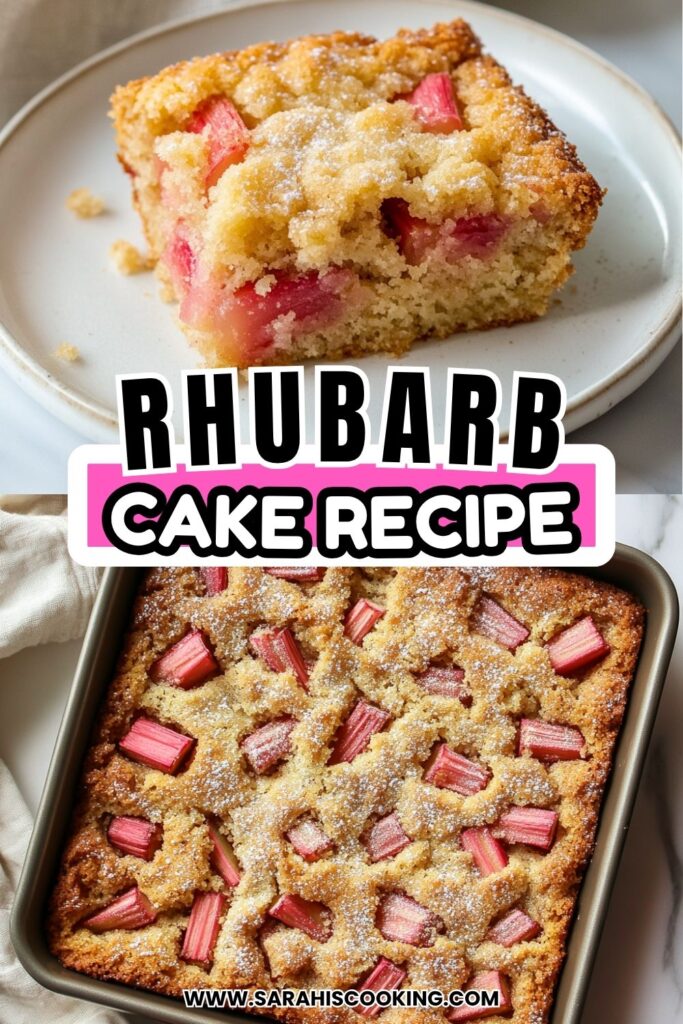
Scatter the diced rhubarb across the top, then sprinkle with the reserved sugar. This layering creates a balanced texture.
Step 6 – Bake to Set
Bake for about 30 minutes. The cake is done when a knife inserted in the center comes out clean.
The top should be lightly golden, and the edges will begin to pull slightly from the pan.
Step 7 – Cool and Serve
Allow the cake to cool slightly before serving. It can be enjoyed warm or at room temperature.
As it rests, the crumb settles and becomes easier to slice cleanly.
Why This Recipe Works
This cake relies on a balanced ratio of liquid to flour, which keeps the crumb tender without becoming dense. The eggs and sugar provide structure while still allowing softness.
Using melted butter simplifies the process and avoids the need for creaming, yet still delivers richness. The baking powder provides enough lift to keep the texture light.
The rhubarb is placed on top instead of mixed in. This prevents excess moisture from disrupting the batter while still allowing the fruit to soften and integrate during baking.
How I Tested and Refined This Recipe
I tested variations with different fat levels and found that too much butter made the cake heavy. Reducing it slightly kept the crumb soft without losing flavor.
I also experimented with mixing the rhubarb into the batter. That version baked unevenly and created wet pockets, so placing it on top proved more consistent.
Adjusting the sugar was important. Less sugar made the rhubarb too sharp, while more sugar masked its character. The final balance keeps both elements distinct.
Common Mistakes and How to Avoid Them
- Overmixing the batter – leads to a tough texture instead of a soft crumb.
- Adding overly hot butter – can partially cook the eggs and affect structure.
- Using too much rhubarb – introduces excess moisture and prevents proper setting.
- Underbaking – results in a gummy center rather than a clean slice.
- Skipping pan preparation – increases the risk of sticking and tearing.
- Incorrect oven temperature – too low causes dense texture, too high leads to uneven baking.
Make-Ahead, Storage, and Freezing Guidance
This cake keeps well at room temperature for up to two days when covered. The texture remains soft, though the top will lose some crispness.
For longer storage, refrigerate it for up to five days. The crumb will firm slightly, but gentle reheating restores softness.
You can freeze the cake for up to two months. Wrap it tightly to prevent freezer burn, and thaw at room temperature before serving.
Tips
- Cut rhubarb into evenly sized pieces for consistent baking.
- Use room temperature eggs for smoother mixing.
- Check doneness at the 25-minute mark to avoid overbaking.
- Let the cake rest before slicing for cleaner edges.
- Use vanilla bean paste for a more pronounced flavor.
- A light dusting of sugar before baking enhances the top texture.
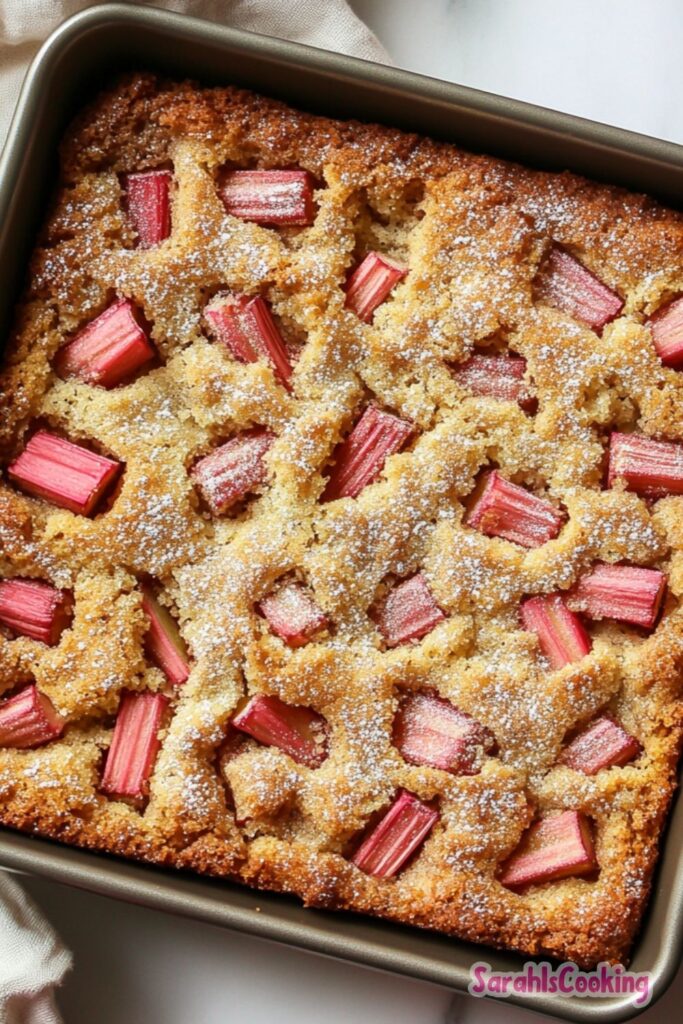

Quick Rhubarb Cake Recipe
Description
This one-bowl Quick Rhubarb Cake is the definition of effortless elegance. Known in French as "Gâteau Vite Fait" (Quickly Made Cake), this recipe comes from a cherished family tradition. It features a light, fluffy vanilla cake base studded with tart, fresh rhubarb pieces. The contrast between the sweet vanilla batter and the slightly sour rhubarb creates a bright, refreshing flavor profile perfect for spring celebrations or afternoon tea. Ready in under an hour, it’s a beginner-friendly dessert that delivers maximum flavor with minimal cleanup.
Ingredients
Cake Batter
Topping
Instructions
Prep
Preheat your oven to 350°F (175°C). Grease an 8 or 9-inch round cake pan with non-stick cooking spray or butter and set aside.Mix Wet Ingredients
In a large mixing bowl, whisk together the eggs and 2/3 cup of sugar until the mixture is light and slightly pale. Add the melted butter, milk, and vanilla extract, whisking until fully combined.Combine Dry Ingredients
Add the flour, baking powder, and salt to the wet mixture. Stir gently with a spatula or wooden spoon just until combined. Do not overmix; the batter should be smooth but thick.Assemble
Pour the batter into the prepared cake pan and spread it evenly. Scatter the diced rhubarb pieces over the top of the batter. Sprinkle the remaining 2 tablespoons of sugar evenly over the rhubarb.Bake
Bake for approximately 30 minutes, or until a knife inserted into the center of the cake comes out clean. The top should be golden brown.Serve
Allow the cake to cool in the pan for 10 minutes before removing. Serve warm or at room temperature. Enjoy the beautiful contrast of sweet cake and tart rhubarb!
Nutrition Facts
Servings 9
Serving Size 1 slice
- Amount Per Serving
- Calories 245kcal
- % Daily Value *
- Total Fat 5g8%
- Saturated Fat 2.5g13%
- Cholesterol 75mg25%
- Sodium 110mg5%
- Potassium 180mg6%
- Total Carbohydrate 46g16%
- Dietary Fiber 1.5g6%
- Sugars 28g
- Protein 4.5g9%
* Percent Daily Values are based on a 2,000 calorie diet. Your daily value may be higher or lower depending on your calorie needs.
Note
Storage Tips: Store covered at room temperature for up to 2 days, or in the refrigerator for up to 5 days. This cake freezes well for up to 3 months.
Variations: For a gluten-free option, substitute the all-purpose flour with a 1:1 gluten-free baking blend. You can also add a teaspoon of lemon zest to enhance the brightness of the rhubarb.