
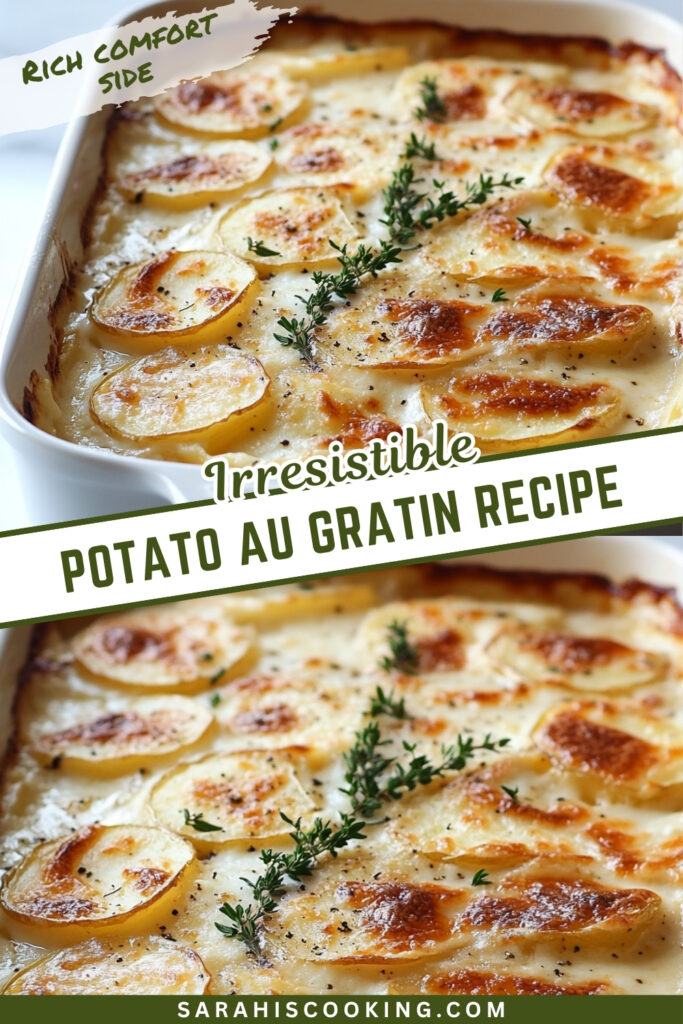
Potatoes au gratin is one of those dishes that looks simple on paper but depends heavily on precision to get right. When it works, the layers turn soft and tender, wrapped in a creamy sauce that thickens naturally in the oven. That balance doesn’t happen by accident.
I’ve made this enough times to know where things usually go wrong. Undercooked potatoes, broken sauce, or a greasy top can all sneak in if the method isn’t tight. This version is built to prevent those issues before they start.
The goal here is consistency. Thin slices, even layering, and controlled baking create a dish that cuts cleanly, holds its structure, and still feels rich without being heavy.
Ingredients Needed for the Recipe
- Russet potatoes – Their high starch content helps absorb the cream and allows the sauce to thicken naturally as it bakes, creating a cohesive structure instead of a watery base.
- Heavy cream – Provides the fat needed for a stable, velvety sauce that thickens under heat without curdling or separating.
- Parmigiano Reggiano – Adds saltiness and depth while also contributing to the structure as it melts and binds the layers together.
- Salt – Draws moisture from the potatoes and seasons each layer evenly, which is critical for flavor distribution throughout the dish.
- Black pepper – Adds mild heat and contrast, balancing the richness of the cream and cheese.
- Fresh thyme (optional) – Brings a subtle earthy note that cuts through the richness and adds dimension without overpowering the dish.
- Butter (for greasing) – Prevents sticking and encourages browning along the edges, which adds both texture and flavor.
How to make Potatoes Au Gratin?
Step 1 – Prepare the Baking Dish and Oven
Preheat your oven to 350°F and position a rack in the center. This ensures even heat circulation, which is essential for cooking the potatoes through without overbrowning the top.
Grease a 2-quart baking dish with butter, making sure to coat the corners and sides well. This step helps with clean serving later and promotes a golden edge.
Step 2 – Slice the Potatoes Evenly
Peel the potatoes and slice them as thinly and uniformly as possible. Consistency here matters more than speed, since uneven slices will cook at different rates.
If a potato feels unstable while slicing, trim a thin strip off one side so it sits flat. This small adjustment makes a big difference in control and accuracy.
Step 3 – Season the Potatoes
Place the sliced potatoes in a large bowl and toss them with salt and pepper. Mix thoroughly so every slice gets coated, not just the top layer.
This step ensures that seasoning is built into the structure, rather than relying on surface flavor after baking.
Step 4 – Build the Layers
Arrange a layer of potatoes in the bottom of the prepared dish, slightly overlapping each slice. This overlap helps create structure and prevents gaps.
Sprinkle a portion of the cheese over the layer, then pour a portion of the cream on top. Repeat this process to form four total layers, finishing with cream.
Step 5 – Bake Until Tender and Golden
Place the dish in the oven uncovered and bake for 60 to 75 minutes. The top should turn golden, and the cream should visibly thicken around the edges.
Check doneness by inserting a knife into the center. It should slide through easily without resistance, which confirms the potatoes are fully cooked.
Step 6 – Rest Before Serving
Remove the dish from the oven and let it sit for about 10 minutes. This resting period allows the sauce to set slightly and makes serving cleaner.
If using thyme, sprinkle it over the top just before serving. It adds a fresh note without interfering with the structure.
Why This Recipe Works
The structure of this dish relies on starch and fat working together. Russet potatoes release starch as they bake, which combines with the cream to naturally thicken the sauce without needing flour.
The layering method is deliberate. By distributing cheese and cream between layers instead of dumping everything on top, the dish cooks evenly and avoids dry pockets.
Baking uncovered is also intentional. It allows moisture to reduce while encouraging browning, which adds both flavor and a slight textural contrast on top.
How I Tested and Refined This Recipe
Early versions of this dish taught me quickly that not all potatoes behave the same. I tested with Yukon Golds, and while the flavor was good, the structure stayed too soft and almost waxy.
I also experimented with milk and half-and-half in place of heavy cream. Those batches never thickened properly and often turned slightly grainy under longer baking times.
Another issue was slicing thickness. Even a small variation led to uneven cooking, where some layers were perfect and others still firm. That’s what pushed me to focus on uniform slicing above all else.
The final version keeps things simple but precise. Each decision, from potato type to layering method, is there because removing it created a noticeable drop in quality.
Common Mistakes and How to Avoid Them
- Slicing potatoes too thick – This leads to undercooked centers even after extended baking time.
- Using low-fat dairy – The sauce won’t thicken properly and may separate during baking.
- Skipping proper layering – Dumping ingredients together creates uneven cooking and inconsistent texture.
- Covering the dish while baking – This traps moisture and prevents the top from browning.
- Not seasoning evenly – Flavor will sit only on the surface instead of throughout the dish.
- Pulling it out too early – Potatoes must be fully tender; resistance means more time is needed.
- Skipping the resting time – Cutting too soon results in a loose, runny texture instead of clean layers.
Make-Ahead, Storage, and Freezing Guidance
This dish can be assembled a day ahead and stored in the refrigerator before baking. Press plastic wrap directly against the top to limit discoloration, though slight darkening is normal.
Once baked, leftovers keep well in the refrigerator for up to 4 days. The texture will firm up as it chills, but it softens again when reheated.
Freezing is possible, though the cream may separate slightly after thawing. For best results, reheat in the oven at a moderate temperature until warmed through, rather than using a microwave.
Tips
- Use a sharp knife or mandoline for consistent slices.
- Always bake uncovered for proper browning.
- Rotate the dish halfway through baking if your oven has hot spots.
- Don’t skimp on resting time after baking.
- Use freshly grated cheese for better melting and flavor.
- Pour all remaining cream over the final layer to prevent dryness.
- Check doneness in the center, not just the edges.
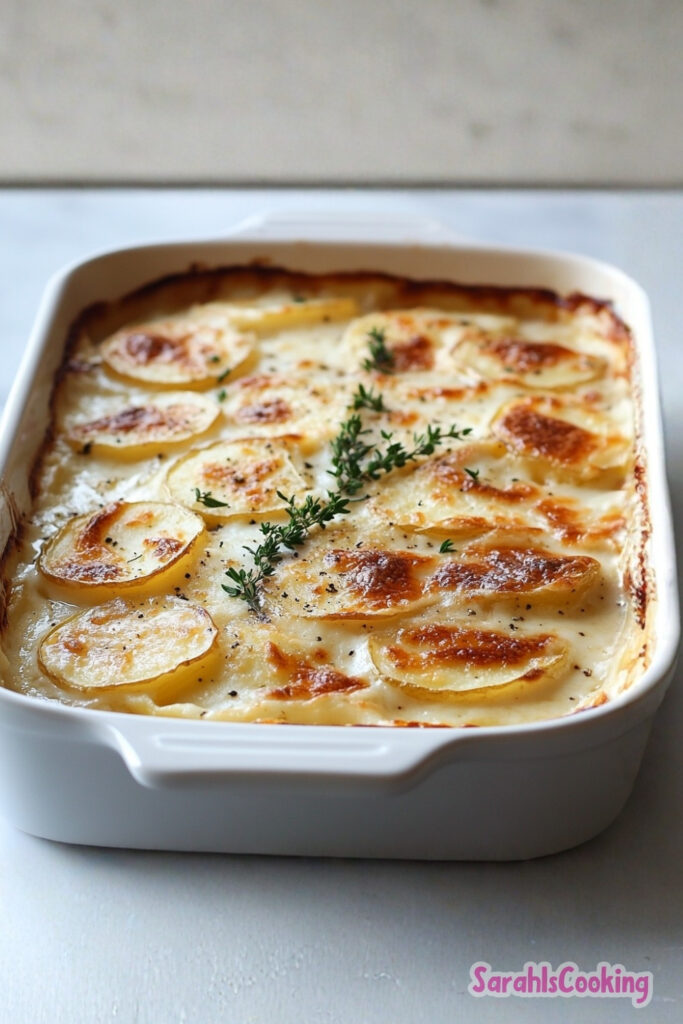

Potatoes Au Gratin Recipe
Description
Tender, golden, and irresistibly creamy, potatoes au gratin is the kind of crowd-pleasing side that makes any meal feel special. Layers of thinly sliced russet potatoes are baked in rich heavy cream and melted Parmigiano-Reggiano until the cream thickens into a luxurious sauce that blankets each bite. Perfect for Thanksgiving, holiday dinners, or any special occasion when you want to elevate your side dish game.
ingredients
Instructions
- Preheat the oven to 350°F (175°C) and set an oven rack in the middle position. Grease an 8-inch (or 2-quart) baking dish with butter.
- In a large mixing bowl, toss the sliced potatoes with the salt and pepper until evenly coated.
- Arrange some of the potato slices, with their edges overlapping, in a single layer on the bottom of the prepared baking dish. Sprinkle a quarter of the cheese over the potatoes, then pour a quarter of the cream over the cheese.
- Repeat with the remaining potatoes, cheese, and cream, forming 4 layers total. Pour any leftover cream over the top—you want to use it all.
- Place in the oven and bake, uncovered, for 60 to 75 minutes, or until the potatoes are tender when pierced with a knife and golden brown on top.
- Let the dish settle on the counter for about 10 minutes. Sprinkle with fresh thyme, if using, and then serve warm.
Nutrition Facts
Servings 8
Serving Size 1 serving (1/8 of recipe)
- Amount Per Serving
- Calories 399kcal
- % Daily Value *
- Total Fat 29 gg45%
- Saturated Fat 18 gg90%
- Cholesterol 101 mgmg34%
- Sodium 518 mgmg22%
- Total Carbohydrate 28 gg10%
- Dietary Fiber 2 gg8%
- Sugars 3 gg
- Protein 9 gg18%
* Percent Daily Values are based on a 2,000 calorie diet. Your daily value may be higher or lower depending on your calorie needs.
Note
- Best potatoes to use: Russet potatoes are ideal due to their high starch content, which helps them absorb the cream and bake into tender, melt-in-your-mouth layers.
- Don't substitute the cream: Heavy cream is essential for the sauce to thicken properly—milk or half-and-half won't give the same rich, velvety result.
- Make ahead tip: Assemble the gratin a day ahead, cover tightly with plastic wrap pressed directly against the potatoes to minimize discoloration, refrigerate, then bake before serving.
- Extra browning: If you'd like a deeper golden top, pop the finished gratin under the broiler for 1-2 minutes, watching closely to prevent burning.