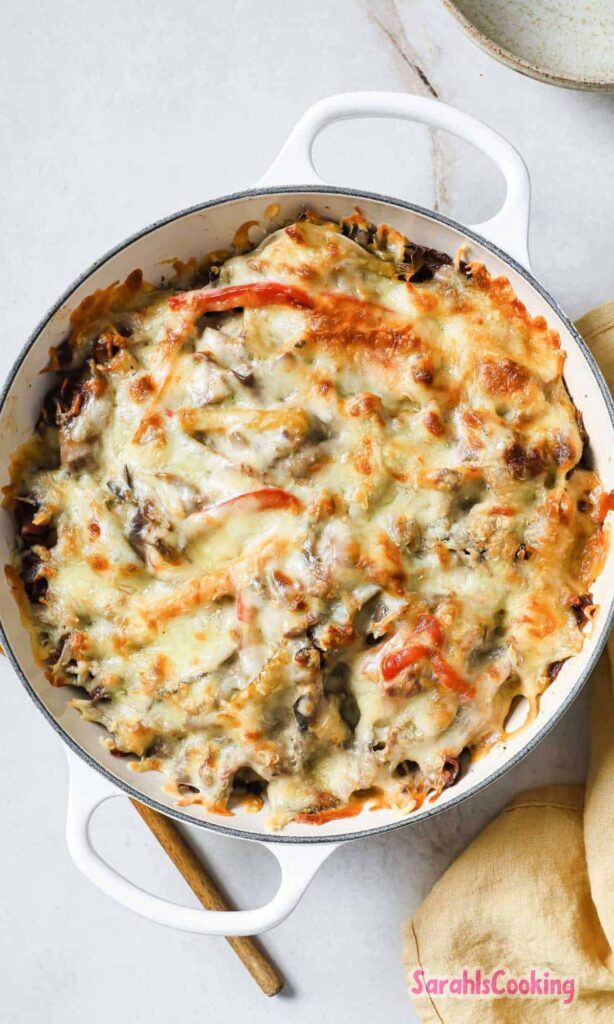
This outline establishes a clear, repeatable approach to building Philly Cheesesteak Casserole with dependable results using straightforward techniques and balanced ingredients.
The focus is on translating the classic sandwich flavors into a cohesive baked dish that delivers consistent texture, rich flavor development, and weeknight practicality.
Experience will be referenced where preparation shortcuts improve efficiency, testing insights will reinforce why the skillet-to-oven method works, and guidance will reduce the risk of overcooking the steak or breaking the cream cheese sauce.
Who This Recipe Is For
This recipe is designed for home cooks who want comfort food structure without complicated steps, making it ideal for both beginner and intermediate skill levels.
It especially suits families, meal-preppers, and anyone looking for a low-effort dinner that still feels intentional and satisfying.
Personal experience should highlight how this replaces the need to assemble individual sandwiches, testing insight should emphasize batch-cooking efficiency, and risk reduction should address ingredient prep before heat is applied.
Why Philly Cheesesteak Casserole Works
The recipe works because it layers flavor in stages: searing thinly sliced steak for browning, softening vegetables to build sweetness, and emulsifying cream cheese with broth to create a stable, rich base.
Baking briefly at the end allows the provolone to melt evenly while the flavors integrate without overcooking the protein.
Testing insights should explain the importance of not overcrowding the skillet, experience should reinforce how timing affects tenderness, and risk reduction should focus on maintaining gentle heat when forming the sauce.
Ingredient Insights and Function
Thinly sliced steak provides quick-cooking tenderness, while bell peppers, onions, and optional mushrooms contribute moisture, sweetness, and savory depth that define the classic flavor profile.
Cream cheese acts as the structural binder, beef broth loosens it into a smooth sauce, and Worcestershire sauce enhances umami without overpowering the dish.
Experience should note flexibility in beef selection, testing should validate the ratio of liquid to dairy for a stable texture, and risk reduction should caution against high heat that can cause separation.
Step-by-Step Success Guidance for Philly Cheesesteak Casserole
Preparation Phase
This phase focuses on slicing ingredients uniformly, preheating the oven, and organizing components so the cooking process remains fast and controlled.
Experience should emphasize mise en place as a time-saver, testing insights should address even slicing for consistent cooking, and risk reduction should highlight partially freezing steak to make thin slicing easier.
Execution Phase
Cooking begins with browning the steak in batches, followed by sautéing vegetables in the same pan to capture fond and deepen flavor before building the sauce.
The cream cheese, broth, and seasoning are stirred gently to create a cohesive mixture before returning the meat and transferring everything to a baking dish.
Experience should reinforce patience during sauce formation, testing should validate heat control, and risk reduction should explain why rapid boiling must be avoided.
Finishing and Doneness Cues
The casserole only needs a short bake to melt the provolone and allow the flavors to settle together, rather than extended oven time.
Visual cues such as fully melted cheese and light bubbling indicate readiness, while resting ensures cleaner portions.
Experience should mention carryover heat, testing should confirm the short bake window, and risk reduction should caution against overbaking, which toughens the steak.
How I Tested and Refined Philly Cheesesteak Casserole
I focused on testing pan temperature, cheese melt behavior, and sauce consistency to ensure the casserole stayed creamy rather than greasy or dry.
Adjustments included reducing oven time, balancing broth with cream cheese, and confirming that pre-cooking vegetables prevented excess moisture during baking.
Experience should describe real-world timing adjustments, testing insights should explain why the skillet stage matters most, and risk reduction should show how to avoid watery results.
Common Mistakes When Making Philly Cheesesteak Casserole
A common mistake is overcrowding the pan, which causes steaming instead of browning and prevents the dish from developing its signature savory depth.
Another issue is overheating the dairy mixture, which can lead to separation instead of a smooth sauce.
Experience should highlight batch cooking as essential, testing should explain texture failures, and risk reduction should guide readers to moderate heat and proper sequencing.
Make-Ahead, Storage, and Freezing Guidance
This casserole is well-suited for advance assembly, allowing it to be refrigerated before baking or frozen unbaked for longer storage without sacrificing structure.
Reheating works best at moderate temperatures to maintain creaminess while preventing the cheese from becoming rubbery.
Experience should discuss meal-prep convenience, testing should confirm storage timelines, and risk reduction should outline thawing before baking for even heating.
For serving balance, pairing this rich casserole with something fresh like Cucumber Salad can provide contrast and keep the meal from feeling too heavy.
If building a fuller comfort-food spread, a complementary side such as Mexican Rice Recipe offers a neutral base that absorbs the creamy texture well.
When planning ahead for gatherings, adding a simple starter like Italian Pasta Salad helps round out the table without increasing last-minute cooking workload.