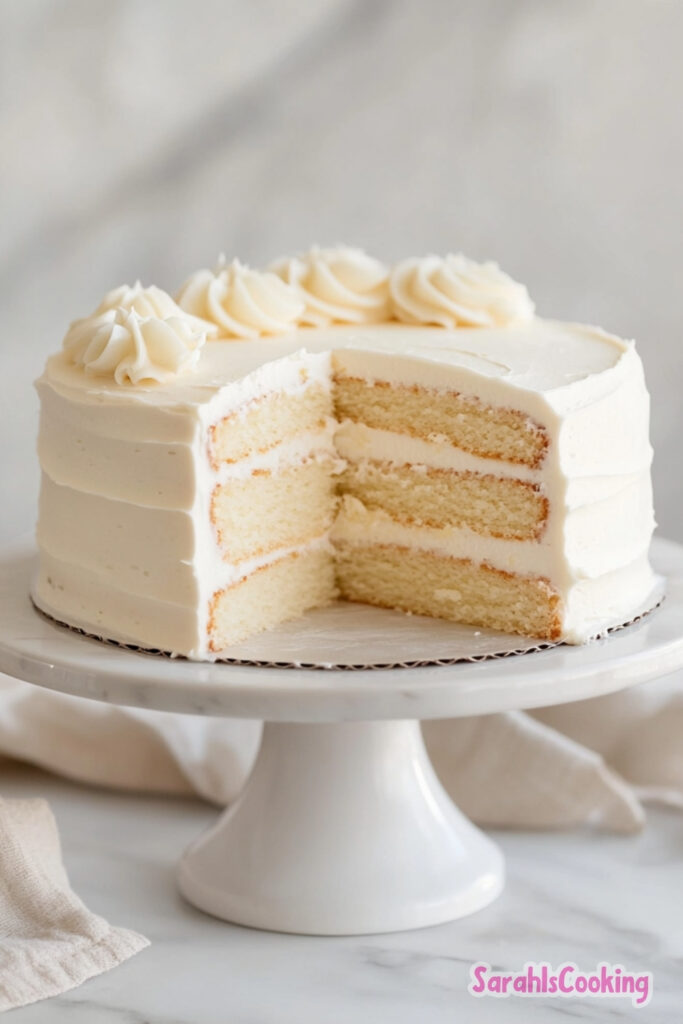
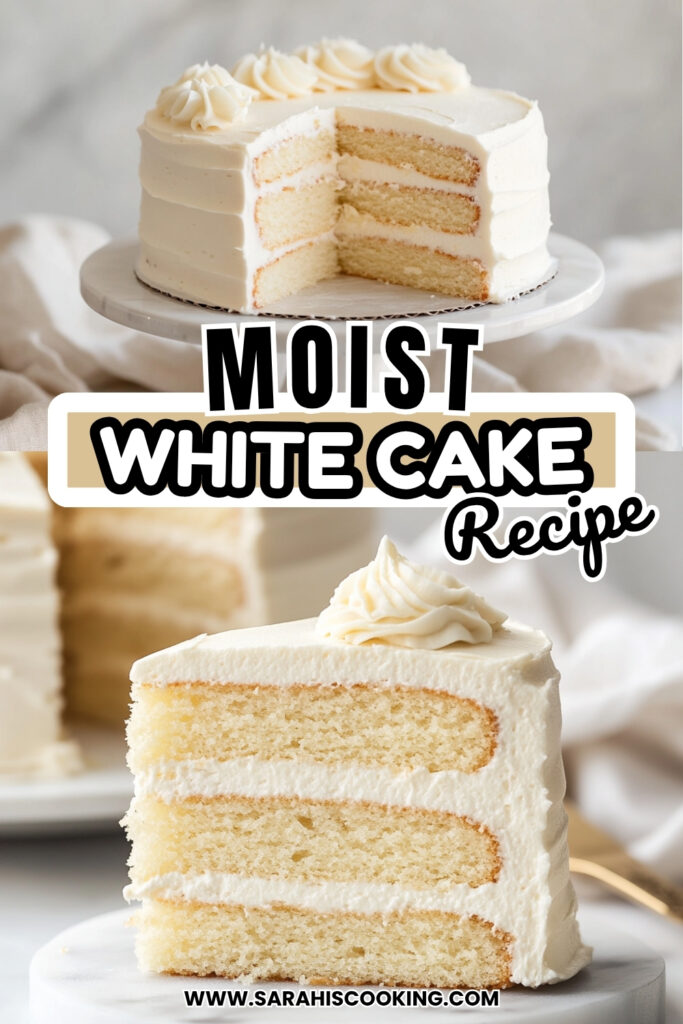
Exceptionally moist white cake with a soft crumb and classic wedding cake flavor. Balanced texture using sour cream and egg whites for reliable results.
This moist white cake is designed to deliver the soft texture and balanced flavor many bakers search for but rarely achieve from scratch. It has the delicate crumb expected from a classic celebration cake while still remaining sturdy enough for layering and decorating.
I created this recipe with reliability in mind. Every ingredient and mixing step was tested with intention so the result stays consistently moist without becoming dense or fragile. The flavor leans toward a traditional bakery-style white cake, subtle, clean, and versatile.
The inclusion of sour cream and a controlled fat ratio ensures a tender bite that stays soft for days. This makes the cake suitable for birthdays, weddings, and any occasion where appearance and texture matter equally.
Who This Recipe Is For
This recipe is ideal for home bakers who want predictable results and a polished texture without complicated techniques. It suits both intermediate bakers and beginners willing to follow precise steps carefully.
If you have struggled with dry white cakes or overly dense vanilla cakes, this method provides structure without sacrificing moisture. It also works well for those preparing layered cakes that require stability during frosting.
It is especially helpful for bakers who appreciate understanding why a recipe works, not just how to follow it. Precision leads to repeatability, and repeatability builds confidence.
Why This Recipe Works
White cakes often lack moisture because removing egg yolks reduces fat content. This recipe compensates by incorporating sour cream and a balanced blend of butter and shortening, restoring tenderness without compromising color.
The ratio of liquid to dry ingredients is carefully calibrated to produce a fine crumb that slices cleanly while remaining soft. Sour cream contributes acidity and fat, both of which enhance gluten structure without creating toughness.
The reverse creaming method coats flour particles in fat before liquids are introduced. This limits gluten development, preventing a rubbery texture and allowing the cake to remain delicate even after full baking time.
A small amount of almond emulsion and butter extract supports the classic wedding cake flavor profile. These additions remain subtle but deepen the overall taste without overpowering vanilla.
Ingredients Needed for the Recipe
All-purpose flour or cake flour - Provides structure; cake flour yields a finer crumb and lighter color.
Sugar - Sweetens while also helping retain moisture during baking.
Baking soda - Reacts with acidity in sour cream for balanced lift.
Baking powder - Supports even rise and contributes to soft texture.
Salt - Enhances flavor and balances sweetness.
Shortening - Adds stable fat for tenderness while maintaining white color.
Butter - Provides natural flavor richness and improves mouthfeel.
Sour cream - Supplies moisture and acidity for a tender crumb.
Milk - Adjusts batter consistency and supports even baking.
Almond emulsion (optional) - Enhances complexity without noticeable almond taste.
Butter extract (optional) - Restores buttery notes when shortening replaces some butter.
Egg whites - Provide structure and help maintain a pale cake color.
Ingredient Insights and Function
Flour choice directly influences both color and texture. Cake flour produces a lighter crumb because of its lower protein content, which limits gluten formation. All-purpose flour still works well but yields a slightly more structured slice.
Shortening plays an important structural role because it coats flour particles effectively during reverse creaming. This creates a uniform crumb that holds together during slicing. Replacing all shortening with butter will deepen flavor but slightly darken the cake.
Sour cream should be full fat for best results. Lower fat options contain more water and can weaken structure. Full fat yogurt can substitute if needed, but the crumb may be slightly less rich.
Almond emulsion adds a subtle bakery-style flavor often associated with traditional celebration cakes. The quantity is small enough that the flavor does not dominate. Omitting it will not harm structure but will slightly simplify flavor complexity.
Butter extract enhances buttery perception without affecting color. Some versions can taste artificial, so quality matters. It is optional but contributes to the classic profile many expect from white cakes.
How to make Moist White Cake?
Step 1 - Prepare the Oven and Pans
Preheat the oven to 325°F. Prepare two 8-inch round pans by greasing and lightly flouring them. Proper pan preparation prevents sticking and protects the delicate crumb structure during removal.
Low baking temperature allows the cake to rise gradually. This helps maintain moisture while reducing the risk of over-browning the exterior before the interior fully sets.
Step 2 - Combine Liquid Ingredients
Whisk together sour cream, milk, vanilla extract, almond emulsion, butter extract, and egg whites until smooth. The mixture should appear cohesive and slightly thick but still pourable.
Fully blending liquids ensures even flavor distribution. This step also helps prevent streaks in the finished crumb caused by uneven mixing later.
Step 3 - Mix Dry Ingredients
In a separate bowl, whisk together flour, sugar, baking powder, baking soda, and salt. Uniform distribution of leavening agents ensures consistent rise across all layers.
Even mixing at this stage prevents pockets of dense crumb or uneven texture. It also improves how fat coats the dry ingredients in the next step.
Step 4 - Apply Reverse Creaming Method
Add shortening and butter to the dry mixture in small pieces. Mix until the texture resembles damp sand. Each particle of flour should be lightly coated with fat.
This coating limits gluten development when liquid is introduced. The result is a soft crumb that remains stable without becoming tough.
Step 5 - Add Liquids in Two Stages
Pour in half of the liquid mixture and mix just until combined. The batter will begin to loosen but should remain thick.
Add the remaining liquid and mix again only until incorporated. Avoid extended mixing, which can cause excess gluten formation.
Step 6 - Final Mixing Check
Scrape the bowl sides and mix briefly for 10 to 15 seconds. The batter should appear smooth with no visible dry streaks.
Stopping at the correct point prevents dense texture. Overmixing at this stage can reduce tenderness significantly.
Step 7 - Bake the Cake
Divide the batter evenly between prepared pans. Bake for 45 to 50 minutes until the center springs back lightly when touched.
A toothpick inserted in the center should come out with a few soft crumbs. Overbaking can dry the crumb even if structure appears correct.
Step 8 - Cool and Prepare for Frosting
Allow cakes to cool in pans for about 10 minutes before transferring to a wire rack. Complete cooling prevents buttercream from melting during application.
Once cooled, the layers can be leveled and frosted. The crumb remains stable enough for stacking while still tender when sliced.
How I Tested and Refined This Recipe
I tested multiple fat ratios to balance flavor and color. Versions using only butter tasted rich but appeared slightly yellow. Versions using only shortening lacked depth and felt flat in flavor.
Adjusting sour cream quantity significantly improved moisture retention. Early versions using less sour cream baked evenly but lost softness after one day. Increasing the amount preserved tenderness without weakening structure.
I also tested different mixing methods. Traditional creaming produced more air pockets but created slightly uneven crumb texture. Reverse creaming resulted in a tighter crumb that sliced cleanly and held shape better during frosting.
Flavor testing included variations with and without almond emulsion. The addition of a small amount consistently produced a more recognizable bakery-style flavor, even among testers who normally avoid almond.
The final version balances flavor clarity, moisture retention, and structural strength. Each adjustment was made to support repeatable success rather than novelty.
Common Mistakes and How to Avoid Them
Overmixing the batter - develops excess gluten and creates a dense texture.
Using cold butter - prevents proper incorporation during reverse creaming.
Substituting low-fat dairy - reduces richness and weakens crumb structure.
Baking at higher temperature - can dry edges before the center sets.
Skipping pan preparation - increases risk of tearing delicate layers.
Overbaking - removes too much moisture from the crumb.
Adding liquids too quickly - prevents even distribution of ingredients.
Make-Ahead, Storage, and Freezing Guidance
This cake maintains moisture well when stored properly. Unfrosted layers can be wrapped tightly and kept at room temperature for up to two days.
Refrigerated layers remain fresh for up to five days but should be brought back to room temperature before serving. Cold cake can feel firmer than intended.
For longer storage, wrap layers in plastic wrap and freeze for up to two months. Thaw while still wrapped to prevent condensation from affecting texture.
Fully frosted cakes can also be refrigerated. Allow approximately 30 minutes at room temperature before serving to restore softness.
Tips
Measure flour carefully to avoid dry batter.
Use room temperature ingredients for smoother mixing.
Weigh batter in pans for even layer height.
Tap pans lightly to release air bubbles before baking.
Allow cake to cool completely before trimming layers.
Use a serrated knife for clean leveling.
Chill layers briefly before frosting for easier handling.
Pair with a smooth vanilla buttercream for balanced sweetness.
This Moist White Cake from scratch is soft, fluffy, and perfect for weddings or birthdays. Made with sour cream, butter, and shortening, it has that classic white cake flavor with incredible moisture.
Ingredients
2 1/2cups all-purpose flour (or 2 3/4 cups cake flour for a whiter cake)
2cups sugar
1/2tsp baking soda
1 1/2tsp baking powder
1tsp salt
2/3cup shortening
1/4cup unsalted butter (room temperature)
1cup sour cream (full fat)
1/2cup milk (whole milk preferred)
2tsp vanilla extract (or clear extract for whiter cake)
1/2tsp almond emulsion (optional)
1tsp butter extract (optional)
6egg whites large eggs
Instructions
1
Preheat oven to 325°F (163°C).
2
Grease and flour two 8-inch round cake pans (or three 6-inch pans).
3
In a bowl, whisk together sour cream, milk, vanilla extract, almond emulsion, butter extract, and egg whites until smooth. Set aside.
4
In a large bowl, mix flour, sugar, baking soda, baking powder, and salt.
5
Add shortening and butter in chunks to the flour mixture and mix until coated. Mixture will be crumbly.
6
Add half of the liquid mixture and mix until just combined. Then add the remaining liquid and mix again briefly.
Do not overmix to keep cake tender.
7
Scrape sides of the bowl and mix an additional 10–15 seconds.
Over-beating can toughen the cake.
8
Pour batter into prepared pans and bake 45–50 minutes until a toothpick comes out clean.
9
Cool on wire racks before frosting with buttercream.
Nutrition Facts
Servings 12
Serving Size 1 slice
Amount Per Serving
Calories420kcal
% Daily Value *
Total Fat20gg31%
Saturated Fat8gg40%
Trans Fat0gg
Cholesterol65mgmg22%
Sodium300mgmg13%
Potassium150mgmg5%
Total Carbohydrate57gg19%
Dietary Fiber1gg4%
Sugars36gg
Protein5gg10%
Calcium 60mg mg
Iron 1.5mg mg
* Percent Daily Values are based on a 2,000 calorie diet. Your daily value may be higher or lower depending on your calorie needs.
Note
For extra moist cake, use cake flour instead of all-purpose flour.
Allow egg whites to come to room temperature for better volume.
You can substitute full-fat yogurt for sour cream if unavailable.
Do not overmix to prevent a dense texture.
Keywords:
white cake, moist cake, wedding cake, birthday cake, homemade white cake
Pin this recipe to share with your friends and followers.
Sarah
Food and Lifestyle Blogger
Hi, I’m Sarah, a home cook and baker who believes that good food doesn’t need to be complicated to be meaningful. This blog is where I share approachable, dependable recipes made with care — the kind of dishes you can come back to again and again.