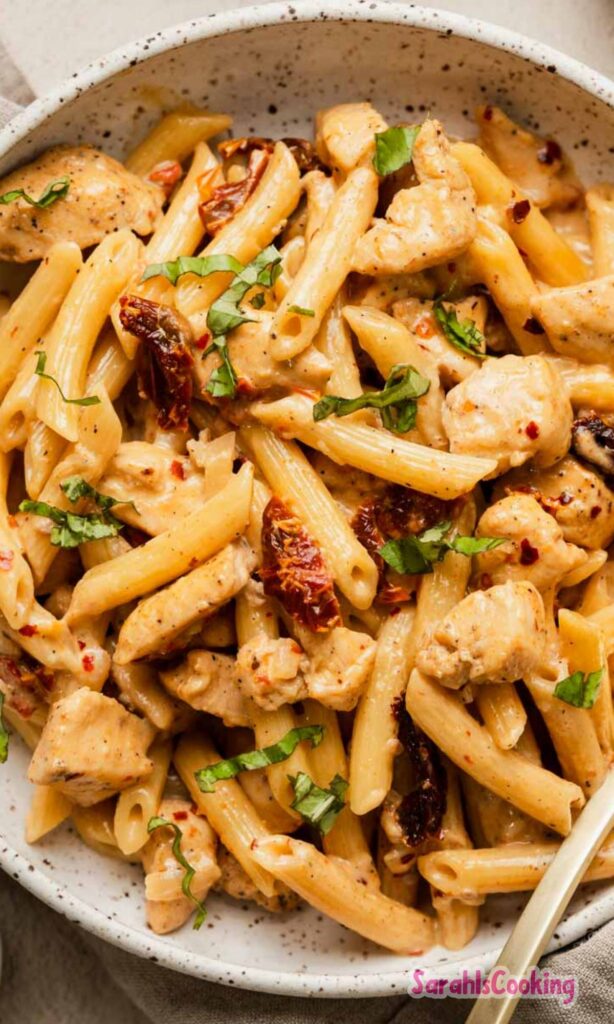
This outline establishes a reliable, repeatable approach to Marry Me Chicken Pasta Recipe, focusing on balanced richness, efficient technique, and clear execution. The goal is a creamy, savory pasta that feels special yet remains weeknight-accessible.
The structure emphasizes timing, heat control, and ingredient function so readers understand not just what to do, but why each step matters.
Personal experience should reinforce confidence in achieving a silky sauce and properly cooked chicken. Testing insights should validate timing and ratios. Risk reduction should address common cream-sauce pitfalls.
Who This Recipe Is For
This recipe is designed for home cooks who want a comforting, elevated dinner without complex methods. It suits beginner to intermediate skill levels thanks to its straightforward sequencing and short cook time.
It’s especially ideal for readers seeking a dependable “impressive but easy” meal that can be completed in about 30 minutes.
Personal experience should speak to weeknight practicality. Testing insights should highlight how the process stays manageable. Risk reduction should reassure readers about handling cream-based sauces.
Why Marry Me Chicken Pasta Recipe Works
The recipe succeeds because it layers flavor intentionally: browned chicken builds fond, garlic establishes aroma, and a combination of heavy cream, chicken stock, and bouillon creates depth without long simmering.
Sun-dried tomatoes balance the richness with concentrated sweetness and acidity, while Parmesan thickens the sauce naturally and adds savory structure.
Personal experience should explain how these simple ingredients create a cohesive dish. Testing insights should confirm the importance of gentle heat. Risk reduction should clarify why boiling the sauce breaks emulsification.
Ingredient Insights and Function
Boneless chicken breast provides lean protein that absorbs the sauce, while tubular pasta like penne or rigatoni captures the creamy mixture inside its ridges for full-flavored bites.
Heavy cream forms the emulsified base, Parmesan stabilizes and seasons, and garlic with Italian seasoning creates the familiar Italian-American profile that defines the dish.
Personal experience should note the difference freshly grated cheese makes in texture. Testing insights should explain why oil-packed sun-dried tomatoes outperform dry-packed versions. Risk reduction should guide readers away from substituting lower-fat dairy that may separate.
Step-by-Step Success Guidance for Marry Me Chicken Pasta Recipe
Preparation Phase
Cutting chicken into even, bite-sized pieces ensures quick, uniform cooking. Organizing ingredients before heating the pan allows the recipe to move smoothly without overcooking key elements.
Personal experience should emphasize mise en place as a time-saver. Testing insights should reinforce size consistency for even doneness. Risk reduction should explain why wet chicken prevents browning.
Execution Phase
Browning the chicken first develops flavor, while sautéing garlic briefly prevents bitterness. Liquids are added in sequence to build a controlled emulsion rather than a loose mixture.
The sauce should remain at a gentle simmer so proteins cook through without tightening and the dairy stays smooth.
Personal experience should describe visual cues like light bubbling. Testing insights should validate simmer timing. Risk reduction should warn against high heat.
Finishing and Doneness Cues
Al dente pasta is tossed directly into the sauce, allowing starch to bind everything together. Reserved pasta water fine-tunes consistency so the sauce clings rather than pools.
The finished dish should appear glossy, cohesive, and lightly thickened—not heavy or dry.
Personal experience should highlight texture checks. Testing insights should confirm how pasta water transforms the final result. Risk reduction should address overcooking pasta before combining.
How I Tested and Refined Marry Me Chicken Pasta Recipe
Testing focused on balancing cream-to-stock ratios, determining the ideal simmer window, and ensuring the chicken remained tender while the sauce thickened naturally.
Variations confirmed that freshly grated Parmesan melts more smoothly and that adding cheese too quickly can cause clumping.
Personal experience should share trial adjustments. Testing insights should explain what failed and why. Risk reduction should translate those lessons into clear reader guidance.
Common Mistakes When Making Marry Me Chicken Pasta Recipe
One of the most frequent issues is overheating the sauce, which causes separation. Another is under-seasoning the base, resulting in a flat final flavor despite rich ingredients.
Using pre-shredded cheese or skipping pasta water can also lead to a grainy or overly thick texture.
Personal experience should normalize these mistakes. Testing insights should connect each problem to technique. Risk reduction should offer precise fixes.
Make-Ahead, Storage, and Freezing Guidance
This dish holds well in the refrigerator for several days, though the pasta will absorb sauce over time. Gentle reheating with a splash of cream, milk, or broth restores its original consistency.
Because the sauce is dairy-based, freezing is not recommended, as thawing can break the emulsion and create a grainy texture.
Personal experience should describe reheating success on the stovetop. Testing insights should explain why slow warming preserves texture. Risk reduction should caution against microwave overheating.
Serving Context and Pairing Ideas
The richness of this pasta pairs best with fresh, crisp contrasts such as a light vegetable side or simple salad. A bright option like Cucumber Salad Recipe complements the creamy base without competing for attention.
For readers planning a fuller spread, positioning this alongside a baked dish such as Chicken Alfredo Stuffed Shells can create a comforting, pasta-focused menu for gatherings.
Personal experience should suggest balance in meal planning. Testing insights should explain contrast as a culinary principle. Risk reduction should discourage overly heavy pairings.
Adaptation Ideas for Confident Cooks
Once mastered, the method can be adapted with alternative proteins or added greens while maintaining the same sauce structure and timing.
The technique itself is flexible and can even be applied to pre-cooked proteins, similar to approaches used in Shredded Chicken, making it useful beyond this single dish.
Personal experience should encourage experimentation after success. Testing insights should clarify what elements must remain constant. Risk reduction should identify which substitutions are safe.