
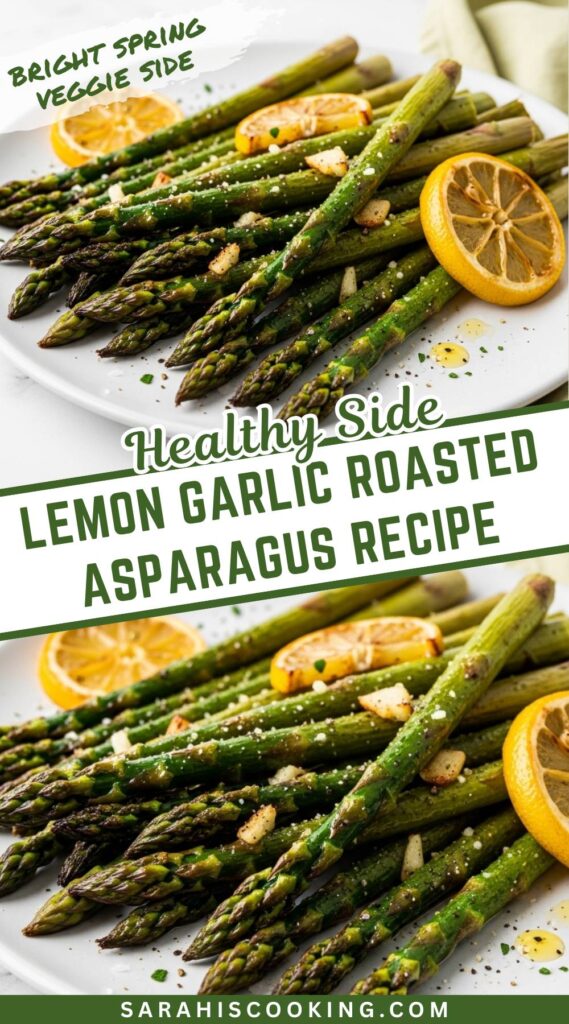
This Lemon Garlic Roasted Asparagus is built for consistency. It delivers bright flavor, clean texture, and reliable results without guesswork. Every step is intentional so the asparagus stays vibrant, never soggy.
I approach vegetable recipes the same way I approach baking. Timing, heat, and proportion matter more than extra ingredients. When done correctly, asparagus becomes tender with crisp edges and balanced acidity.
This is a method-driven recipe, not just a list of instructions. Once you understand why it works, you can repeat it confidently any time of year, especially during peak spring season.
Who This Recipe Is For
This recipe is for home cooks who want vegetables that actually taste good and not like an afterthought. If you have ever ended up with limp, overcooked asparagus, this method will change that.
It is approachable for beginners but precise enough for detail-oriented cooks. If you value repeatable outcomes and clear cues instead of vague directions, you will feel comfortable here.
It is also ideal for anyone cooking plant-forward meals who still wants structure, flavor layering, and proper texture development.
Why This Recipe Works
Asparagus needs high heat and short cooking time. Roasting at 425°F allows the exterior to caramelize before the interior collapses, preserving both structure and color.
The lemon is divided into zest, slices, and fresh juice added at different stages. This layering prevents bitterness and builds brightness without softening the vegetable too early.
Garlic is introduced late in the roasting process so it becomes aromatic instead of burnt. That timing shift is small but critical to the finished flavor.
A modest amount of oil ensures conduction without greasiness. The goal is to coat, not drench, so the asparagus roasts rather than steams.
Ingredients Needed for the Recipe
- Asparagus – The structural base of the dish. Its thickness determines roasting time and final texture.
- Olive oil – Promotes even heat transfer and light caramelization without masking flavor.
- Dried thyme – Adds a subtle herbal backbone that withstands oven heat better than fresh herbs.
- Onion granules – Provide savory depth that disperses evenly across the surface.
- Fresh lemon – Used in layers for acidity, aroma, and balance against roasting notes.
- Salt – Enhances natural sweetness and supports browning.
- Black pepper – Adds mild heat and complexity without overpowering.
- Fresh garlic – Introduced late to create fragrance and sharpness without burning.
- Vegan parmesan cheese – Optional, but contributes texture contrast and umami finish.
Ingredient Insights and Function
Thickness matters more than people expect. Thin asparagus cooks quickly and can turn limp if treated like thicker stalks, so always adjust time rather than forcing uniformity.
Olive oil or avocado oil both work, but avoid strongly flavored oils. You want conductivity, not interference, especially since lemon is a dominant note.
If you substitute garlic powder for fresh garlic, reduce the amount significantly. Powder disperses faster and can create an overly sharp coating instead of pockets of flavor.
Skipping lemon zest is not recommended. Juice alone adds acid, but zest provides aromatic oils that define the recipe’s character.
The vegan parmesan is flexible, but removing it entirely eliminates a textural counterpoint. If omitted, consider a light sprinkle of toasted crumbs for contrast.
How to make Lemon Garlic Roasted Asparagus?
Step 1 – Preheat and Prepare the Pan
Preheat the oven to 425°F before touching the vegetables. A fully heated oven ensures immediate roasting rather than gradual softening.
Line a large baking tray with parchment so heat circulates evenly and cleanup stays simple.
Step 2 – Wash and Dry Thoroughly
Rinse the asparagus, then dry it completely with a towel. Moisture left on the surface creates steam, which prevents browning.
This step directly affects texture, so do not rush it.
Step 3 – Trim the Ends
Snap each spear where it naturally breaks or cut off about 1 to 1½ inches. This removes fibrous bases that never soften properly.
Uniform trimming helps the batch cook evenly.
Step 4 – Season the Base Layer
Arrange the asparagus in a single layer and drizzle with 1 tablespoon olive oil. Toss gently to coat without pooling oil underneath.
Sprinkle thyme, onion granules, lemon zest, salt, and pepper evenly so each spear carries seasoning.
Step 5 – Add Lemon Slices and Begin Roasting
Lay thin lemon slices across the tray. They infuse flavor while the asparagus begins to tenderize.
Roast for 7 minutes as the first stage of cooking.
Step 6 – Introduce the Garlic
Mix minced garlic with the remaining teaspoon of olive oil. This protects the garlic from scorching.
After the initial roast, distribute the mixture over the asparagus and return the tray to the oven.
Step 7 – Finish Roasting Briefly
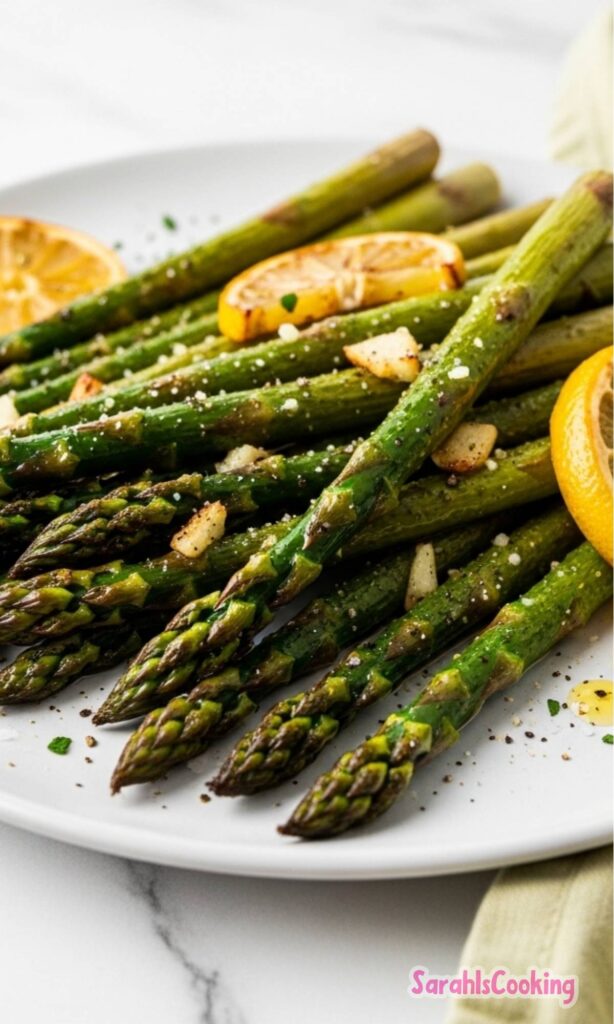
Roast for an additional 3 to 4 minutes depending on thickness. The asparagus should be bright green with lightly crisped tips.
Watch closely here because garlic transitions from golden to burnt quickly.
Step 8 – Add Fresh Lemon Juice and Finish
Remove from the oven and immediately squeeze fresh lemon juice over the hot asparagus. This preserves acidity and prevents steaming.
Sprinkle with vegan parmesan if using, then serve while still warm.
How I Tested and Refined This Recipe
My early versions added garlic at the beginning, which consistently burned before the asparagus finished cooking. The bitterness overwhelmed everything else.
I also tested lower oven temperatures around 375°F. The asparagus softened but never developed the slight blistering that gives roasted vegetables character.
Adjusting to a two-stage roast solved both issues. The asparagus begins cooking alone, then the garlic joins late enough to stay fragrant.
I experimented with adding lemon juice before roasting, but that caused the spears to steam. The texture became muted, so finishing with juice proved far better.
Even the oil amount changed over time. Too much created slick vegetables, while too little caused uneven browning. The final measurement provides just enough coating for reliable roasting.
Common Mistakes and How to Avoid Them
- Overcrowding the pan, which traps steam and prevents caramelization.
- Adding garlic too early, leading to burnt and bitter flavor.
- Using wet asparagus, which stops browning before it begins.
- Roasting at low temperatures that soften instead of roast.
- Cooking too long, causing dull color and limp texture.
- Adding lemon juice before baking, which leads to steaming.
- Ignoring stalk thickness when determining cooking time.
Make-Ahead, Storage, and Freezing Guidance
This dish is best freshly made, but leftovers can be stored in an airtight container in the refrigerator for up to 3 days. The flavor holds well even as the texture softens slightly.
Reheat in a hot oven or skillet rather than a microwave to restore some surface firmness. Gentle dry heat helps maintain structure.
Freezing whole spears is not ideal because they lose integrity when thawed. If freezing is necessary, chop the asparagus first and freeze pieces individually.
Frozen pieces work best when added directly to soups, risotto, or pasta dishes where texture is less critical.
Tips
- Choose spears of similar thickness so they cook evenly.
- Zest the lemon before cutting it to make handling easier.
- Use a large tray to keep the asparagus in a single layer.
- Check doneness early since roasting time varies by size.
- Look for bright green color as the visual cue for completion.
- Serve immediately for the best contrast of tender and crisp.
- Save trimmed ends to slice thinly and use in other dishes.

Lemon Garlic Roasted Asparagus Recipe
Description
This vibrant vegan asparagus recipe features tender-crisp spears roasted with fresh lemon, aromatic garlic, and a sprinkle of vegan parmesan. Perfectly seasoned and bursting with bright, fresh flavor, it's the ideal low-carb, keto-friendly side dish for spring dinners or any occasion. Ready in under 25 minutes with minimal prep!
ingredients
Instructions
- Preheat oven to 425°F (220°C). Line a large baking sheet with parchment paper.
- Wash asparagus and pat very dry. Trim ends by snapping naturally or cutting 1-1½ inches off the base.Save trimmed ends for soups or stir-fries
- Arrange asparagus on prepared baking sheet. Drizzle with 1 tbsp olive oil and toss to coat evenly.
- Sprinkle dried thyme, onion granules, 1 tsp lemon zest, salt, and pepper over asparagus. Toss again to distribute seasonings.Zest lemon before juicing
- Top with lemon slices and roast for 7 minutes.
- While asparagus roasts, mix minced garlic with remaining 1 tsp olive oil in a small bowl.
- Remove tray from oven, sprinkle garlic mixture evenly over asparagus, and return to oven for 3-4 more minutes.Timing depends on stalk thickness: ¼"=8-9 min total, ½"=10-11 min, ¾"=12-13 min
- Remove when tender but bright green. Squeeze fresh lemon juice (about 1 tbsp) over top and sprinkle with vegan parmesan.Add lemon juice after cooking to preserve crisp edges
- Let rest 1-2 minutes before serving. Garnish with extra lemon zest if desired.
Nutrition Facts
Servings 4
Serving Size 1 serving (about 6-7 spears)
- Amount Per Serving
- Calories 67kcal
- % Daily Value *
- Total Fat 4gg7%
- Saturated Fat 0.6gg3%
- Trans Fat 0gg
- Cholesterol 0mgmg0%
- Sodium 95mgmg4%
- Potassium 229mgmg7%
- Total Carbohydrate 5gg2%
- Dietary Fiber 2gg8%
- Sugars 2gg
- Protein 2gg4%
- Calcium 30mg mg
- Iron 2.5mg mg
* Percent Daily Values are based on a 2,000 calorie diet. Your daily value may be higher or lower depending on your calorie needs.
Note
- Trimming tip: Snap asparagus naturally or cut 1-1½ inches off the fibrous ends. Save ends for soups!
- Garlic timing: Add fresh garlic in the last 3-4 minutes only to prevent burning and bitterness.
- Crisp edges: Wait to add lemon juice until after roasting to avoid steaming the spears.
- Thickness guide: ¼" stalks: 8-9 min total • ½" stalks: 10-11 min • ¾" stalks: 12-13 min at 425°F.
- Storage: Keep leftovers in an airtight container in the fridge for 2-3 days. Reheat gently to maintain texture.