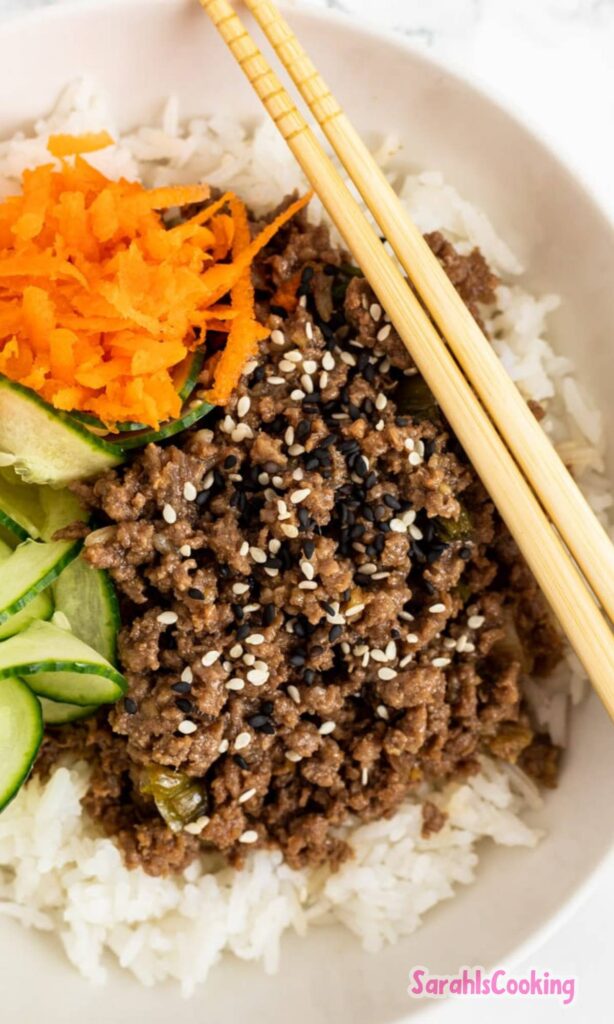
This outline establishes Korean Beef Bowl Recipe as a fast, flavor-driven meal built on pantry ingredients and efficient stovetop technique. The goal is to deliver a reliable dinner that balances savory depth, gentle sweetness, and texture contrast without complicated preparation.
The section should build authority by emphasizing repeatability, speed, and flexibility while reinforcing that the sauce-driven method is what makes this recipe dependable for busy weeknights.
Include a brief note on personal experience making this after long days, highlight that testing focused on sauce balance and thickening behavior, and reassure readers that the process is intentionally forgiving.
Who This Recipe Is For
This recipe is designed for home cooks who want a complete, satisfying meal in under 30 minutes without sacrificing depth of flavor. It works especially well for beginners learning skillet-based cooking and experienced cooks looking for a reliable rotation meal.
Clarify that the method suits flexible eating styles, whether served over rice, in lettuce wraps, or adapted with extra vegetables.
Reference practical adaptations and note where readers can pair it with fresh sides like Cucumber Salad to balance richness, while reinforcing confidence that substitutions such as ground turkey or chicken still succeed.
Why Korean Beef Bowl Recipe Works
The structure relies on a layered sauce that combines soy sauce, brown sugar, honey, rice vinegar, sesame oil, and ginger to create a balance of salty, sweet, tangy, and aromatic elements. Cornstarch thickening ensures the sauce coats the beef rather than pooling, which is key to the dish’s signature texture.
Because the sauce is mixed before cooking, the technique controls consistency and prevents clumping, allowing the skillet phase to focus entirely on browning and flavor development.
Testing emphasis should explain how pre-mixing affects starch activation, and risk-reduction guidance should remind readers not to add cornstarch to warm liquid.
Ingredient Insights and Function
Ground beef provides a rich base that absorbs the sauce, while onion and garlic create an aromatic foundation that softens and sweetens as they cook. Beef broth forms the liquid body of the sauce, and cornstarch transforms it into a glossy coating.
Soy sauce delivers umami intensity, while brown sugar and honey round out sharpness. Rice vinegar adds brightness so the dish does not feel heavy, and sesame oil finishes with a nutty aroma.
Explain ingredient purpose rather than listing measurements, include testing observations about balancing sweetness and salt, and guide readers on sodium control through broth or soy sauce selection.
Step-by-Step Success Guidance for Korean Beef Bowl Recipe
Preparation Phase
Success begins with organizing ingredients and whisking the sauce until completely smooth. This ensures the cooking process moves quickly and prevents last-minute scrambling once heat is applied.
Note where mise en place reduces stress, highlight that dissolving cornstarch fully is essential, and connect this preparation mindset to foundational kitchen habits similar to those used in How to Boil Eggs Perfectly (Every Time).
Execution Phase
The beef is browned first to develop flavor, then combined with onion and garlic to build depth before introducing the sauce. Draining excess fat keeps the final texture balanced rather than greasy.
Testing insights should explain how medium-high heat encourages browning without overcooking, while risk guidance should caution against constant stirring so the meat retains texture.
Finishing and Doneness Cues
The sauce should come to a gentle boil and reduce until it visibly thickens and clings to the beef with a glossy finish. This visual cue matters more than strict timing.
Include sensory indicators like sheen and coating consistency, reinforce that reduction happens quickly, and remind readers that brief resting off heat helps the sauce settle.
How I Tested and Refined Korean Beef Bowl Recipe
Development focused on achieving a sauce that thickens predictably while maintaining a balanced sweet-savory profile. Adjustments explored starch ratios, sweetness levels, and reduction time to prevent the mixture from becoming overly sticky or thin.
Trials with alternative proteins confirmed the method works with ground turkey, pork, or chicken, proving the formula is adaptable rather than rigid.
Share testing comparisons, explain small failures that informed the final process, and emphasize confidence-building takeaways for readers.
Common Mistakes When Making Korean Beef Bowl Recipe
One of the most frequent issues is adding cornstarch to warm broth, which causes lumps and uneven thickening. Another is skipping the reduction step, leaving the sauce watery instead of cohesive.
Overcrowding the skillet or failing to drain fat can also dilute flavor and texture, preventing the sauce from properly adhering to the meat.
Use this section to reduce reader risk, explain the “why” behind each mistake, and reinforce that visual cues matter more than rigid timing.
Make-Ahead, Storage, and Freezing Guidance
This dish stores well because the sauce protects the meat from drying out, allowing leftovers to maintain flavor and texture for several days. Refrigeration deepens the flavor as the ingredients continue to meld.
Freezing works best when the beef mixture is cooled completely before storage, then reheated gently with a splash of broth to loosen the sauce.
Include practical experience notes about doubling batches for meal prep, suggest pairing reheated portions with fresh toppings or herbs like those used in Pesto Sauce for contrast, and mention that leftovers can also be repurposed alongside Simple Shredded Chicken –style bowls for variety.