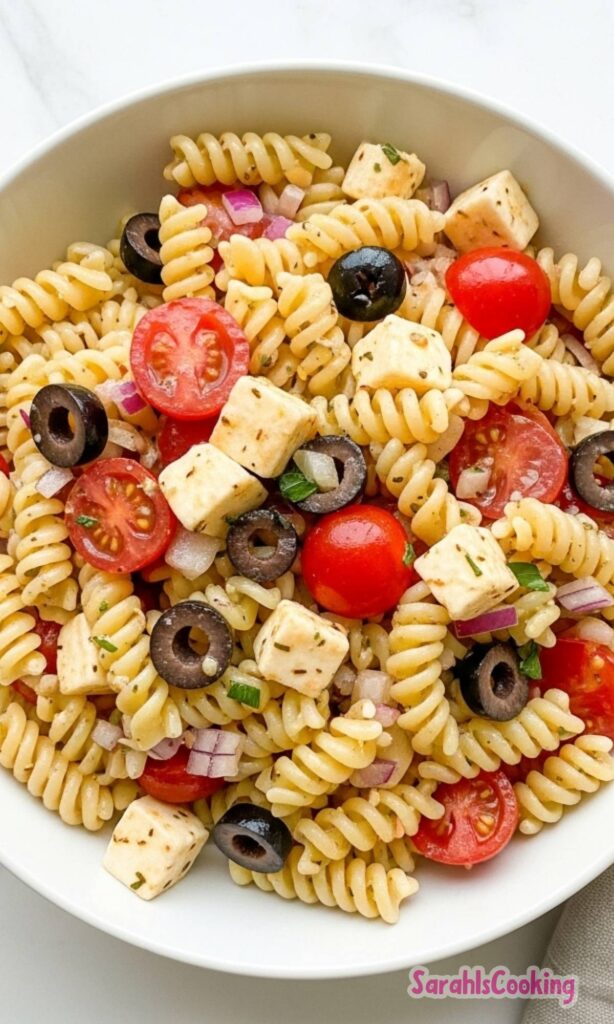
This is the kind of recipe I reach for when I want something dependable, generous, and quietly impressive. Italian pasta salad looks festive on the table, but it doesn’t demand constant attention or perfect timing. I’ve made this version more times than I can count for family gatherings, summer cookouts, and make-ahead lunches, and it has earned its place because it simply works.
The balance matters here. You get fresh crunch from vegetables, richness from cheese and salami, and just enough acidity to keep every bite lively. It’s filling without being heavy, bold without feeling overwhelming, and forgiving in a way that makes it ideal for real home cooking.
I’ve tested this salad across different seasons and situations, and the method below reflects what consistently delivers the best texture and flavor, even after sitting in the fridge overnight.
Who This Recipe Is For
This recipe is for cooks who want something reliable and repeatable. If you’ve ever been disappointed by a pasta salad that turned watery, bland, or mushy after chilling, this method was written with you in mind.
It’s also for anyone who values understanding why a recipe works. Each step has a purpose, from how the vegetables are prepped to when the dressing is added. Nothing is accidental, and nothing is there just to fill space.
If you’re cooking for a group and need a dish that holds up well next to grilled mains, this salad fits beautifully alongside recipes like Chicken Wings without competing for attention.
Why This Recipe Works
The success of this Italian pasta salad comes down to structure and restraint. The pasta is cooked just until al dente, so it keeps its shape even after absorbing dressing. The vegetables are treated intentionally, not all thrown in raw and hoping for the best.
Blanching the broccoli briefly removes bitterness while preserving its crunch and color. Rinsing both the pasta and broccoli stops carryover cooking, which is one of the most common reasons pasta salads fail.
The dressing is sharp but controlled. Using pepperoncini brine alongside red wine vinegar creates depth without overpowering the vegetables. Everything is coated, not drowned, so the salad tastes integrated instead of oily.
Ingredients Needed for the Recipe
- Fusilli pasta – The spiral shape holds onto dressing, keeping each bite flavorful instead of slippery or bland.
- Broccoli florets – Briefly blanched for crunch and color, they add structure and freshness without raw bitterness.
- Grape tomatoes – Sweet and juicy, they release just enough liquid to help marry the dressing.
- Baby cucumbers – Crisp and refreshing, they lighten the salad and balance the richer ingredients.
- Provolone cheese – Mild and creamy, it softens the acidity and adds richness without heaviness.
- Genoa salami – Salty and savory, it brings depth and makes the salad feel satisfying.
- Pepperoncini and brine – Gentle heat and acidity that sharpen the overall flavor profile.
- Red onion – Thinly sliced so it mellows as it sits, adding aroma without harshness.
- Black olives – Briny and earthy, they round out the salad and reinforce the Italian flavor base.
- Extra virgin olive oil – Forms the body of the dressing and carries flavor.
- Red wine vinegar – Provides brightness and balance.
- Garlic and garlic powder – Fresh garlic for punch, powder for background warmth.
- Dried parsley – Adds a mild herbal note without overpowering.
- Kosher salt – Essential for seasoning both the pasta water and the finished dish.
How to make Italian Pasta Salad Recipe?
Step 1 - Blanch the Broccoli
Bring a large pot of generously salted water to a rolling boil. Add the broccoli florets and cook for about 15 seconds, just until the raw edge is gone.
Immediately transfer the broccoli to a bowl of ice water to stop the cooking. Once cooled, drain very well and set aside.
Step 2 - Cook the Pasta
Using the same pot of water, cook the fusilli until al dente. The pasta should still have a firm bite, as it will absorb dressing later.
Drain and rinse under cold water to stop the cooking and remove excess starch. Let it drain thoroughly.
Step 3 - Prepare the Dressing
In a small bowl, whisk together olive oil, red wine vinegar, kosher salt, minced garlic, garlic powder, and dried parsley until emulsified.
Stir in the pepperoncini brine. This step adds depth and replaces the need for extra vinegar later.
Step 4 - Assemble the Salad
In a large bowl, combine the cooled pasta, broccoli, tomatoes, cucumbers, provolone, salami, red onion, olives, and pepperoncini.
Pour the dressing over the salad and toss gently until everything is evenly coated.
Step 5 - Rest and Chill
Cover and refrigerate the salad for at least one hour. This resting time allows the flavors to meld and the pasta to absorb the dressing.
Before serving, taste and adjust seasoning if needed.
Texture and Visual Cues to Watch For
A well-made Italian pasta salad should look vibrant, not dull or greasy. The vegetables should remain distinct and colorful, not faded or limp.
The pasta should hold its shape and feel tender but structured when bitten. If it feels spongy or overly soft, it was likely overcooked or dressed while too hot.
The dressing should lightly coat everything without pooling at the bottom of the bowl.
Common Mistakes and How to Fix Them
The most common issue is excess moisture. Wet vegetables or pasta dilute the dressing and flatten the flavor. Always drain thoroughly and pat dry if needed.
Another mistake is under-seasoning the pasta water. This is the only chance to season the pasta itself, and skipping it leads to a bland base.
If the salad tastes sharp straight from the fridge, let it sit at room temperature for 10 minutes. Cold dulls flavor, and a brief rest often fixes the issue.
Tips
- Salt the pasta water generously for built-in flavor.
- Rinse pasta and broccoli to stop carryover cooking.
- Use a very large bowl for easy, gentle tossing.
- Chill at least one hour before serving.
- Taste and adjust seasoning after chilling.
Substitutions and Their Consequences
Gluten-free pasta works well, but it must be cooked carefully and rinsed thoroughly. Overcooking will cause it to break down as it chills.
You can swap provolone for mozzarella or fontina, though softer cheeses will absorb more dressing and soften faster.
For a vegetarian version, omit the salami and add chickpeas or white beans. The salad will be lighter and less savory but still balanced.
If you enjoy sharper acidity, serving this alongside something creamy like Guacamole Recipe helps balance the meal.
Make-Ahead, Storage, and Freezing
This salad is ideal for making ahead. It can be prepared up to 24 hours in advance and actually improves as the flavors meld.
Store leftovers in an airtight container in the refrigerator for up to three days. If it looks dry, add a drizzle of olive oil and toss gently.
Freezing is not recommended. The pasta and vegetables lose their texture once thawed.
For casual spreads or parties, pairing this with Bruschetta Recipe creates a balanced table with minimal last-minute work.
If you’re planning a larger menu, this salad also complements bold mains and sauces like Pesto Sauce without getting lost.
Testing Notes and Reader Trust
I’ve tested this recipe using different pasta brands, varying chill times, and multiple vegetable ratios. The version shared here is the most consistent and forgiving.
The steps may look simple, but they are intentional. When followed as written, the salad holds its texture, flavor, and visual appeal every time.
This is the kind of recipe I rely on when consistency matters, and it’s one I’m confident sharing because I know how it performs beyond the first serving.