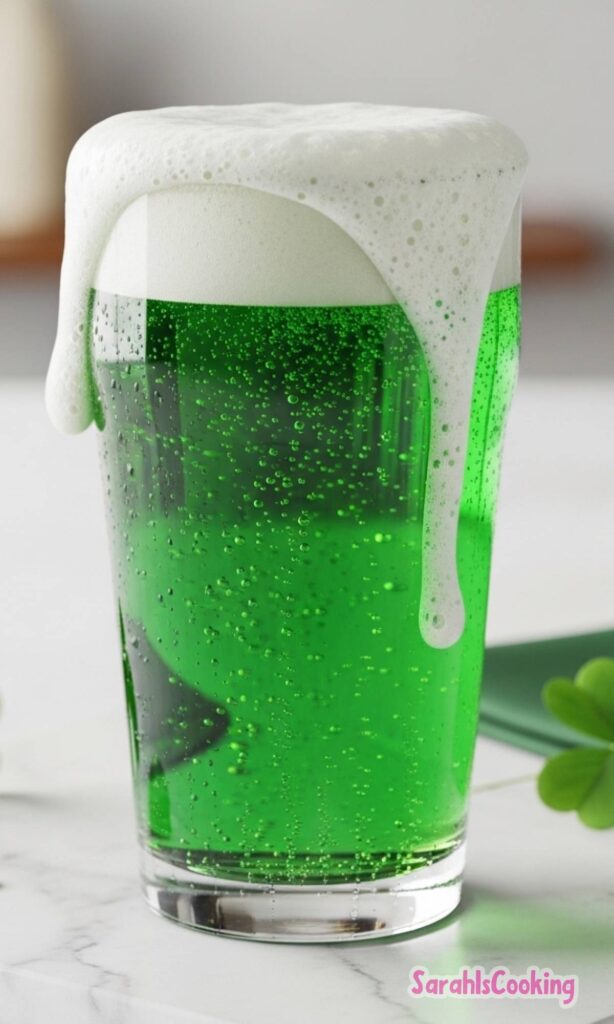
Green beer is one of those simple traditions that brings instant celebration to the table. The color alone signals that something festive is happening, and it takes only seconds to transform an ordinary beer into a bright St. Patrick’s Day drink.
I appreciate recipes that are both playful and reliable. This one delivers both. With just a light beer and a drop or two of food coloring, you get a vibrant green drink without altering the flavor or carbonation.
The key is understanding the order of steps and choosing the right type of beer. Once you know those small details, the result is consistent every time.
Who This Recipe Is For
This recipe is perfect for anyone hosting a St. Patrick’s Day gathering and wanting a quick visual centerpiece for the drink table. It works especially well for casual parties where simple preparation matters.
You do not need bartending experience or special equipment. If you can pour a beer into a glass, you can make green beer successfully.
Home entertainers who appreciate clean, predictable results will find this method dependable. It scales easily whether you are serving one drink or a dozen.
Why This Recipe Works
The effectiveness of green beer comes down to two things: color contrast and beer clarity. Light-colored beers provide the ideal canvas for the food coloring to disperse evenly and create a bright green tone.
Adding the food coloring before pouring the beer allows the liquid to naturally mix as it fills the glass. This eliminates the need for stirring, which could flatten carbonation.
The ratio of coloring to beer is intentionally small. One to two drops provide a vibrant hue without affecting flavor, aroma, or foam structure.
Ingredients Needed for the Recipe
12 ounces light beer - The base of the drink. A pale, clear beer allows the green color to show clearly and maintains the traditional crisp flavor.
1-2 drops green food coloring - Provides the signature color. Only a small amount is needed to tint the beer without altering taste.
Ingredient Insights and Function
The most important ingredient choice here is the beer itself. A light-colored beer such as a pilsner or pale lager works best because it provides a neutral background for the color.
Beers that are already dark will not show the color clearly. Stouts and porters remain brown regardless of how much coloring is added, which defeats the purpose of the drink.
Cloudy beers also present challenges. Hefeweizens and heavily hopped IPAs have natural haze that can muddy the green tone, producing a dull appearance rather than a bright one.
Green food coloring is powerful, which is why restraint matters. One drop often creates a soft green tint, while two drops produce a deeper festive shade.
If you substitute natural coloring sources such as matcha or spirulina, the beer flavor will change noticeably. Traditional liquid food coloring avoids that issue entirely.
How to Make Green Beer?
Step 1 - Prepare the Glass
Start with a clean pint glass that holds roughly 16 ounces. The glass should be completely dry to prevent the food coloring from streaking unevenly.
A standard pint glass leaves enough room for the beer to settle and maintain its foam. This space also helps the color distribute evenly as the liquid fills the glass.
Step 2 - Add the Food Coloring
Place one to two drops of green food coloring directly into the bottom of the glass. Do not stir or spread it around.
Keeping the coloring concentrated allows the pouring beer to mix it naturally. This produces a uniform green tone without disturbing the beer’s carbonation.
Step 3 - Slowly Pour the Beer
Begin pouring the beer slowly into the glass. Aim the stream toward the center rather than the side so the liquid flows directly over the food coloring.
As the beer fills the glass, the movement of the liquid will pull the coloring upward and distribute it throughout the drink.
Step 4 - Adjust the Color
After the beer is poured, evaluate the shade. If the green appears lighter than you prefer, add a single additional drop and gently swirl the glass.
Avoid adding multiple drops at once. Food coloring intensifies quickly and can turn the drink darker than intended.
Step 5 - Serve Immediately
Green beer is best served right after pouring. Fresh carbonation and foam keep the drink lively and refreshing.
Place the glass directly on the serving table or bar area and enjoy while the color is at its brightest.
How I Tested and Refined This Recipe
Even with a recipe this simple, small adjustments matter. I tested several approaches to confirm the cleanest method for consistent color.
The first version involved stirring the food coloring into the beer after pouring. While it worked visually, the stirring flattened the foam and slightly reduced carbonation.
Next, I tested adding the coloring after the glass was partially filled. That approach created streaks of darker green and uneven color distribution.
The most reliable method was adding the coloring first, then pouring the beer directly on top. The motion of the liquid naturally mixed the color without extra agitation.
I also experimented with different beer styles. Pilsners and light lagers produced the clearest green shade, while hazy beers created a cloudy result.
After repeating the process multiple times, the final method proved the simplest and most visually consistent. It requires minimal handling and preserves the beer’s natural carbonation.
Common Mistakes and How to Avoid Them
Using dark beer - Stouts and porters will not show the green color clearly.
Adding too much food coloring - More than two drops can create an overly dark or artificial look.
Stirring the beer - Stirring breaks down carbonation and reduces foam.
Pouring too aggressively - Fast pouring can create excessive foam and uneven color mixing.
Choosing cloudy beer styles - Hazy beers produce a dull or muddy green tone.
Make-Ahead, Storage, and Freezing Guidance
Green beer is designed to be made fresh and served immediately. The carbonation and foam are at their best right after pouring.
If the drink sits too long, the foam will dissipate and the beer will gradually go flat. The color will remain, but the texture of the drink will lose its lively character.
This drink does not freeze well and should never be stored for later use. Beer loses carbonation quickly once opened, making advance preparation impractical.
For parties, the best approach is preparing each glass individually as guests arrive. The process takes less than a minute and keeps every drink fresh.
Tips
Use chilled beer so the foam forms properly during pouring.
Hold the glass at a slight angle for the first half of the pour to control foam.
Use a clear glass to highlight the bright green color.
Start with one drop of coloring and increase only if needed.
Serve with salty appetizers like pretzels or cheese snacks to balance the drink.
Keep extra food coloring nearby if you are preparing multiple glasses.
It might not be a very Irish thing, but making Green Beer for St. Patrick's Day is definitely an American tradition we love! There's something fun and whimsical about drinking green beer on St. Patrick's Day. The best part? It's incredibly easy to make with just two ingredients: green food coloring and a light beer like a Pilsner. The food coloring won't change the taste at all – just adds that festive emerald hue!
ingredients
12oz light beer (pilsner, ale, Budweiser, Coors, or Corona work best)
1-2drops green food coloring (add more for darker color if desired)
Instructions
1
Add 1-2 drops of green food coloring to a clean pint glass.
Start with less, you can always add more
2
Slowly pour the light beer into the glass over the food coloring.
Pouring slowly helps the color distribute evenly
3
Gently stir once or twice if needed to fully incorporate the color.
Avoid over-stirring to preserve carbonation
4
Add additional drops of food coloring if a deeper green shade is desired, then serve immediately.
Best enjoyed cold and fresh
Nutrition Facts
Servings 1
Serving Size 12 oz
Amount Per Serving
Calories110kcal
% Daily Value *
Total Fat0gg0%
Saturated Fat0gg0%
Trans Fat0gg
Cholesterol0mgmg0%
Sodium14mgmg1%
Potassium96mgmg3%
Total Carbohydrate6gg2%
Dietary Fiber0gg0%
Sugars0gg
Protein1gg2%
Calcium 1% mg
Iron 1% mg
* Percent Daily Values are based on a 2,000 calorie diet. Your daily value may be higher or lower depending on your calorie needs.
Note
Beer selection tip: Use light-colored beers like pilsners, lagers, or light ales for best color results. Dark beers like Guinness won't show the green hue.
Avoid cloudy beers: Hoppy IPAs or Heifeweizens may not give you that clear emerald look.
Taste unchanged: Green food coloring is flavorless, so your beer will taste exactly the same – just look festive!
Make it a party: Set up a green beer bar with different light beers and let guests customize their shade of green.
Keywords:
green beer, st patricks day beer, festive drinks, easy beer cocktail, irish celebration
Pin this recipe to share with your friends and followers.
Sarah
Food and Lifestyle Blogger
Hi, I’m Sarah, a home cook and baker who believes that good food doesn’t need to be complicated to be meaningful. This blog is where I share approachable, dependable recipes made with care — the kind of dishes you can come back to again and again.