
Hot cross buns should be soft, lightly spiced, and structured enough to hold their shape without feeling dense. That balance is not accidental. It comes from controlled fermentation, proper hydration, and careful mixing.
I’ve made these enough times to know where things go wrong and how to keep them consistent. When the yeast is active and the dough is handled correctly, the result is tall, fluffy buns with a tender crumb.
These buns carry a subtle warmth from spices and a gentle sweetness from the glaze. The process is straightforward, but each step has a purpose. If you follow the cues, you’ll get reliable results every time.
Ingredients Needed for the Recipe
- Raisins or dried currants – These add sweetness and moisture pockets. Soaking them prevents them from pulling moisture out of the dough.
- Warm whole milk – Provides hydration and fat, which softens the crumb and supports yeast activity.
- Granulated sugar – Feeds the yeast initially and adds sweetness while also helping with browning.
- Active dry yeast – The leavening agent that creates rise and structure. Freshness is critical for proper fermentation.
- Unsalted butter – Adds richness and tenderness while slightly weakening gluten for a softer bite.
- Eggs – Contribute structure, color, and elasticity to the dough.
- Bread flour or all-purpose flour – Provides the gluten framework. Bread flour gives more chew and structure.
- Salt – Strengthens gluten and balances sweetness.
- Cinnamon, allspice, nutmeg – Add warmth and depth without overpowering the dough.
- Flour and water (for crosses) – Forms a paste that bakes into the traditional cross pattern.
- Powdered sugar and water (for glaze) – Creates a light coating that adds sweetness and shine.
How to make Hot Cross Buns?

Step 1 – Soak the Dried Fruit
Place the raisins or currants in boiling water and let them sit for about 10 minutes. This softens them and prevents dryness in the final dough.
Drain thoroughly and set aside. Excess water left behind will interfere with dough consistency, so don’t rush this step.
Step 2 – Activate the Yeast
Combine warm milk, a small portion of sugar, and the yeast. Let it sit until foamy, usually around 10 minutes.
If the surface doesn’t foam, the yeast is inactive. Stop here and start again with fresh yeast. This is your first checkpoint.
Step 3 – Build the Dough Base
Add the remaining sugar, one egg, and melted butter to the yeast mixture. Stir until evenly combined before adding dry ingredients.
This layering ensures even distribution and prevents clumps when flour is introduced.
Step 4 – Mix and Develop Gluten
Add flour, salt, and spices, then mix on low speed until combined. Increase to medium-low and knead until the dough becomes elastic and slightly tacky.
You’ll hear a light slapping sound against the bowl when it’s ready. The dough should feel soft but not stick heavily to your hands.
Step 5 – Incorporate the Fruit
Add the drained raisins and mix briefly. Overmixing at this stage can tear the gluten structure.
Keep it short, just enough to distribute evenly without breaking the dough.
Step 6 – First Rise
Transfer the dough to a lightly oiled bowl, cover it, and let it rise until doubled in size. This usually takes about 1½ hours in a warm space.
Temperature matters here. A cold room slows fermentation and affects texture.
Step 7 – Shape the Dough
Turn the dough onto a lightly floured surface and divide into 12 equal portions. Shape each into a tight ball by pulling edges inward.
Surface tension is important. Smooth, tight balls lead to better rise and structure.
Step 8 – Second Rise
Place the shaped dough balls in a greased 9×13 pan, leaving space between them. Cover and let them rise again until nearly doubled.
This second rise builds the final texture. Don’t rush it, but avoid over-proofing.
Step 9 – Egg Wash and Crosses
Brush the tops lightly with egg wash for color. Prepare the flour paste and pipe crosses across each bun.
The paste should be thick enough to hold its shape but still pipe smoothly.
Step 10 – Bake
Bake at 375°F for about 20 minutes until golden brown. The tops should be firm and lightly crisp.
Internal doneness shows in structure. The buns should feel light and springy when pressed.
Step 11 – Glaze While Warm
Mix powdered sugar and water until smooth, then brush over the warm buns.
This adds a thin sweetness and helps seal moisture into the crust.
Why This Recipe Works
This dough sits in a balanced zone between enriched and lean bread. Butter and eggs soften the crumb, while the flour ratio maintains enough gluten strength for structure.
Hydration is controlled through milk and eggs, keeping the dough soft but manageable. The soaking step ensures the fruit doesn’t disrupt that balance.
Two rises are essential. The first develops flavor and structure, while the second ensures a light interior. Skipping or shortening either one changes the final texture.
How I Tested and Refined This Recipe
I started with a higher butter ratio, thinking it would make the buns richer. It did, but the structure weakened and the buns spread too much.
Reducing butter slightly and adjusting flour brought back stability without sacrificing softness. That was the first major improvement.
I also tested skipping the fruit soak once. The buns baked fine, but the raisins felt dry and pulled moisture from the crumb. That confirmed the soaking step isn’t optional.
Another variable was mixing time. Under-mixed dough stayed dense, while over-mixed dough became tight. The “slapping” stage became my reliable indicator.
Finally, I tested rise times in different temperatures. Warmer environments gave better lift and softer texture, so I now always recommend a controlled warm spot.
Common Mistakes and How to Avoid Them
- Using expired yeast – This prevents proper rise and results in dense buns.
- Skipping the yeast activation step – You lose the chance to catch inactive yeast early.
- Adding too much flour – Leads to dry, heavy texture instead of soft crumb.
- Not soaking the dried fruit – Causes dryness and uneven moisture in the dough.
- Under-kneading the dough – Weak gluten results in poor structure.
- Over-kneading – Creates a tight dough that doesn’t expand well.
- Letting the dough rise in a cold space – Slows fermentation and affects texture.
- Over-proofing the second rise – Buns collapse or lose structure in the oven.
- Incorrect oven temperature – Too low dries the buns, too high over-browns the crust.
Make-Ahead, Storage, and Freezing Guidance
You can prepare the dough through shaping and refrigerate it before the second rise. This slows fermentation and allows flexibility in timing.
Stored at room temperature in an airtight container, the buns stay fresh for up to 5 days. The texture will gradually firm but remains pleasant.
For longer storage, freeze the baked buns once fully cooled. They hold well and can be reheated without significant texture loss.
To reheat, warm them briefly in the oven at 350°F or microwave for 10 to 15 seconds. This restores softness without drying them out.
Tips
- Use a kitchen scale for flour to avoid measurement errors.
- Keep milk temperature warm, not hot, to protect yeast activity.
- Lightly oil your hands when handling sticky dough instead of adding more flour.
- Let the dough double fully during the first rise for proper structure.
- Pipe crosses evenly for consistent baking and appearance.
- Glaze while buns are still warm for better absorption.
- Add orange zest for a subtle brightness without changing texture.
- Use bread flour if you want slightly chewier buns that stay soft longer.
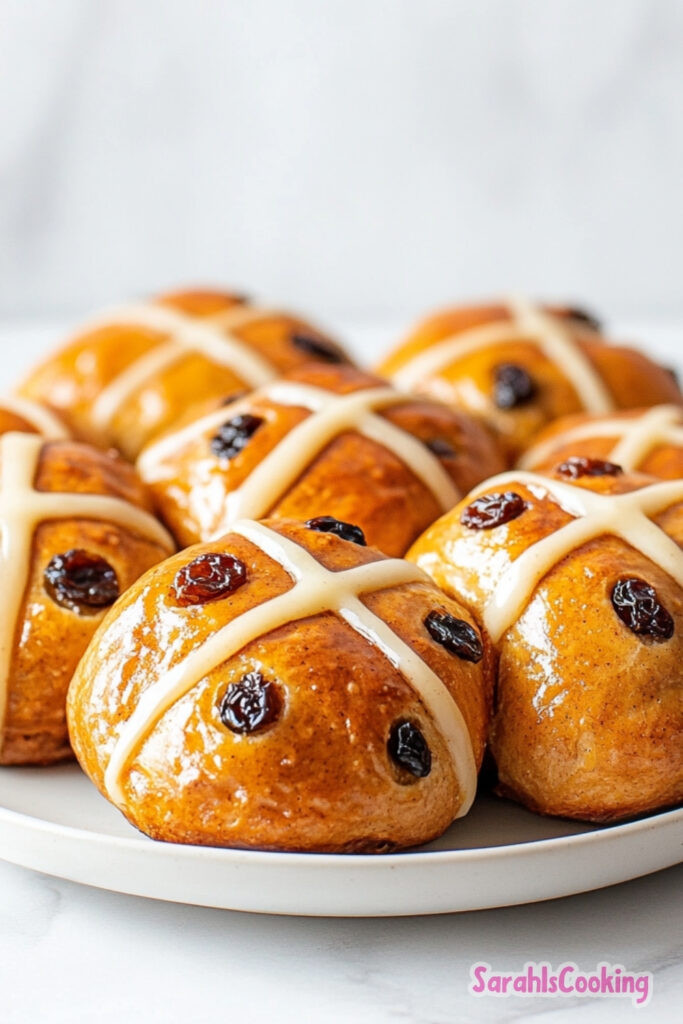

Hot Cross Buns Recipe
Description
Hot cross buns are an Easter tradition in many homes, but they're also easy enough to make whenever you want sweet bread! These sweet buns, with their trademark flour crosses on top, are lightly spiced, wonderfully fragrant, and brushed with a sweet powdered sugar glaze to finish. Perfect for spring gatherings, Easter brunch, or enjoying with a cup of tea any time of year.
ingredients
For the Dough
For the Crosses
For the Glaze
Instructions
Prepare the Dough
Soak the fruit
Place the currants or raisins in a bowl and cover with 1 cup of boiling water. Let soak for 10 minutes, then drain well and set aside.This plumps the fruit for a juicier bunActivate the yeast
In the bowl of a stand mixer, stir together the warm milk, ½ teaspoon sugar, and the yeast. Let the mixture sit until it's very foamy on top, about 10 minutes.If it doesn't foam, your yeast may be expired—start over with fresh yeastMix the dough
To the yeast mixture, add the remaining ½ cup sugar, 1 egg, and melted butter. Then add the flour, salt, cinnamon, allspice, and nutmeg. Attach the dough hook and mix on low speed to combine. Once mostly incorporated, increase to medium-low and mix until a tacky, elastic dough forms and makes a 'slapping' sound against the bowl, about 6 minutes.Dough should feel tacky but not stick to your handsAdd fruit and first rise
Mix in the drained raisins and knead for 30 more seconds. Transfer the dough to a lightly oiled bowl, turn to coat, cover, and let rise until doubled in size, about 1½ hours.Place in a warm, draft-free spot for best results
Shape and Second Rise
Prepare pan and shape buns
Lightly grease a 9×13-inch baking pan. Transfer dough to a lightly floured surface and divide into 12 equal pieces. Gather edges to center and pinch to seal, then flip and roll in a circular motion to form tight, smooth balls.Second rise
Place dough balls in the prepared pan, spaced equally apart. Cover and let rise again until almost doubled in size, about 1 hour.Preheat and egg wash
After 45 minutes of rise time, preheat oven to 375°F (190°C). When buns have risen, beat the remaining egg with 1 teaspoon water or milk and brush tops lightly with egg wash.
Crosses and Baking
Make and pipe crosses
In a small bowl, stir together the flour and water for crosses until a thick paste forms. Transfer to a piping bag or zip-top bag with corner cut off. Pipe a straight line through the center of each bun, then repeat perpendicular to form crosses.Work quickly so paste doesn't dryBake
Bake for 20 minutes or until golden brown on top. Let cool in the pan for 10 minutes.Buns are done when internal temperature reaches 190°F
Glaze and Serve
Make and apply glaze
In a small bowl, whisk together the powdered sugar and warm water until smooth. Brush the glaze over the warm buns before serving.Glaze sets as buns cool
Nutrition Facts
Servings 12
Serving Size 1 bun
- Amount Per Serving
- Calories 295kcal
- % Daily Value *
- Total Fat 10gg16%
- Saturated Fat 6gg30%
- Trans Fat 0gg
- Cholesterol 55mgmg19%
- Sodium 220mgmg10%
- Potassium 145mgmg5%
- Total Carbohydrate 47gg16%
- Dietary Fiber 2gg8%
- Sugars 19gg
- Protein 8gg16%
- Calcium 4% mg
- Iron 12% mg
* Percent Daily Values are based on a 2,000 calorie diet. Your daily value may be higher or lower depending on your calorie needs.
Note
- Use fresh yeast: Always check the expiration date. If yeast doesn't foam after 15 minutes in warm milk, start over with a new packet.
- Measure flour correctly: Weigh flour with a kitchen scale for accuracy. If using cups, fluff flour, spoon into cup, and level with a knife to avoid dense buns.
- Flavor variations: Add grated orange zest or ½ tsp ground cardamom/cloves to the dough for extra depth.
- Glaze crosses alternative: Skip flour crosses and pipe a thick powdered sugar glaze (¾-1 cup sugar + 1-2 tbsp liquid) over cooled buns for decorative crosses.
- Make ahead: After shaping, refrigerate buns overnight for the second rise. Let sit at room temp 1½ hours before baking next day.