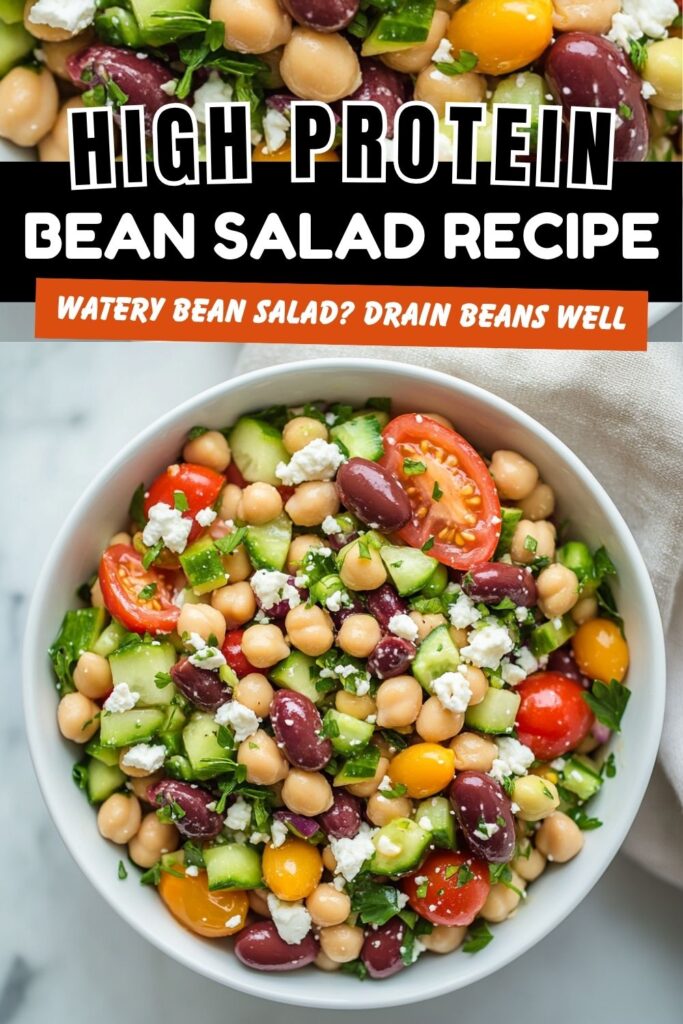
A fresh, protein-packed bean salad with vibrant veggies, feta, and a bright vinaigrette. Perfect for meal prep, balanced, filling, and easy.
This is the kind of recipe I rely on when I want something dependable, nourishing, and easy to repeat without second guessing. It delivers real substance, not just flavor, with a balance that holds up over several days.
I have made many variations of bean salads over the years, but this version stands out for how intentionally it’s built. The combination of beans, edamame, and fresh vegetables creates a structure that feels complete, not like a side dish trying to be more.
What matters here is consistency. Every component has a purpose, from texture to acidity to protein density, and when those pieces are aligned, the result is a salad that actually satisfies.
Ingredients Needed for the Recipe
Cannellini beans: Provide a soft, creamy base that absorbs dressing well and balances firmer ingredients.
Chickpeas: Add a slightly firmer bite and help create contrast in texture while boosting plant-based protein.
Shelled edamame: A dense protein source that brings structure and a subtle sweetness, preventing the salad from feeling too soft.
Cucumber: Adds crispness and hydration, keeping the salad light and refreshing.
Sweet onion: Brings sharpness and depth, cutting through the richness of beans and cheese.
Cherry tomatoes: Contribute acidity and juiciness, helping distribute flavor throughout the salad.
Kalamata olives: Add salt and fat, which anchor the overall flavor and enhance the vinaigrette.
Feta cheese: Provides creaminess and a tangy, salty element that ties everything together.
Fresh parsley: Adds brightness and freshness, preventing the salad from tasting heavy.
White balsamic vinegar: Delivers mild acidity without overpowering the other ingredients.
Fresh lemon juice: Sharpens the flavor and keeps the salad lively over time.
Olive oil: Carries flavor and adds richness, helping the dressing coat every ingredient evenly.
Honey: Balances acidity and salt with a subtle sweetness.
Garlic: Adds depth and a gentle heat that builds flavor complexity.
Dijon mustard: Acts as an emulsifier, keeping the dressing stable and cohesive.
Italian seasoning: Adds a layered herbal note without requiring multiple separate herbs.
Salt: Enhances all flavors and ensures the salad tastes complete.
How to make High Protein Bean Salad?
Step 1 - Build the Base
Start with a large mixing bowl and add the cannellini beans, chickpeas, and edamame. Make sure everything is well-drained and fully cooled so the dressing doesn’t separate later.
Add the diced cucumber, onion, tomatoes, olives, feta, and parsley. At this stage, the mixture should look evenly distributed with no heavy clusters.
Step 2 - Prepare the Dressing
In a separate bowl, combine the vinegar, lemon juice, olive oil, honey, garlic, mustard, seasoning, and salt. Whisk until the mixture thickens slightly and looks uniform.
The dressing should feel balanced, not overly sharp or oily. If it separates quickly, continue whisking until it emulsifies.
Step 3 - Combine and Coat
Pour the dressing over the bean mixture while it is still fresh. Use a wide spoon or spatula to gently fold everything together.
Work slowly to avoid breaking the beans. The goal is even coating without turning the salad mushy.
Step 4 - Final Adjustment
Taste the salad after mixing and adjust salt or acidity if needed. A small squeeze of lemon can brighten the entire dish.
Let the salad sit for 10 to 15 minutes before serving. This allows the flavors to settle and distribute more evenly.
Why This Recipe Works
The strength of this salad comes from its balance of textures. Soft beans, firm chickpeas, and slightly crisp edamame prevent monotony in every bite.
The dressing is intentionally structured with both vinegar and lemon juice. This layered acidity keeps the salad from tasting flat after refrigeration.
Fat from olive oil and feta plays a critical role in carrying flavor. Without it, the salad would feel sharp and disconnected rather than cohesive.
The ratio of solids to dressing is also deliberate. There is just enough liquid to coat, but not so much that it pools at the bottom.
How I Tested and Refined This Recipe
In early versions, I used only one type of bean. The result was too uniform and lacked contrast, which made the salad less satisfying over time.
I also tested the dressing with only vinegar and found it too aggressive after a day in the fridge. Adding lemon juice created a more stable and rounded acidity.
At one point, I increased the olive oil to see if it improved richness. It did initially, but the salad became heavy after chilling, so I scaled it back.
The biggest improvement came from adding edamame. It changed the protein density and gave the salad a firmer texture that held up across multiple servings.
Each adjustment was small, but together they created a version that tastes just as good on day three as it does when freshly made.
Common Mistakes and How to Avoid Them
Using warm beans, which can cause the dressing to separate and turn greasy.
Overmixing, which breaks down the beans and creates a pasty texture.
Skipping proper draining, leading to a watery salad that dilutes flavor.
Adding too much dressing at once, making the salad heavy and unbalanced.
Not tasting before serving, which often results in under-seasoning.
Cutting vegetables unevenly, causing inconsistent texture in each bite.
Make-Ahead, Storage, and Freezing Guidance
This salad stores well in an airtight container in the refrigerator for up to four days. The flavors deepen over time, which actually improves the overall taste.
As it sits, the dressing will settle at the bottom. A quick toss before serving brings everything back together.
The vegetables will soften slightly after the first day, but the structure remains intact because of the beans and edamame.
Freezing is not recommended. The texture of the beans and fresh vegetables will degrade and become watery once thawed.
This is best served cold or at room temperature. Reheating is unnecessary and can compromise both texture and flavor balance.
Tips
Dice vegetables evenly for consistent texture in every bite.
Let the salad rest before serving to improve flavor distribution.
Use freshly squeezed lemon juice for a cleaner, brighter taste.
Add extra herbs just before serving for a fresher finish.
If the salad feels dry after storage, add a small drizzle of olive oil.
Season lightly at first, then adjust after the salad rests.
This High Protein Bean Salad is a vibrant, nutrient-dense dish perfect for meal prep and healthy eating. Packed with cannellini beans, chickpeas, edamame, fresh vegetables, and feta cheese, it offers a satisfying crunch and bold Mediterranean flavors. Tossed in a zesty white balsamic vinaigrette, this salad is vegetarian-friendly, high in fiber, and delivers an impressive 19g of protein per serving. It’s ideal as a standalone lunch or a hearty side dish.
Ingredients
Salad Base
1can cannellini beans (15 oz / 425g, rinsed and drained)
1can chickpeas (15 oz / 425g, rinsed and drained)
1.5cups shelled edamame (cooked and cooled)
1cup cucumber (diced)
0.5cup sweet onion (diced)
1.5cups cherry tomatoes (quartered)
0.5cup kalamata olives (chopped)
1cup feta cheese (crumbled)
0.33cup fresh parsley (finely chopped)
White Balsamic Vinaigrette
2tbsp white balsamic vinegar (or white wine vinegar)
2tbsp fresh lemon juice
0.25cup extra virgin olive oil
0.5tbsp honey (or maple syrup)
1clove garlic (minced or microplaned)
1tsp Dijon mustard
1tsp Italian seasoning
0.5tsp salt (to taste)
0.25tsp black pepper (to taste)
Instructions
1
Prepare the Vegetables and BeansRinse and drain the cannellini beans and chickpeas thoroughly. If using frozen edamame, cook according to package instructions and allow to cool completely. Dice the cucumber, sweet onion, and chop the kalamata olives. Quarter the cherry tomatoes and chop the fresh parsley.
Ensure vegetables are dry to prevent the salad from becoming watery.
2
Combine Salad IngredientsIn a large mixing bowl, combine the cannellini beans, chickpeas, edamame, cucumber, sweet onion, cherry tomatoes, kalamata olives, feta cheese, and parsley.
3
Make the DressingIn a small bowl or jar, whisk together the white balsamic vinegar, lemon juice, olive oil, honey, minced garlic, Dijon mustard, Italian seasoning, salt, and black pepper until emulsified.
Taste and adjust seasoning if needed.
4
Toss and ServePour the dressing over the bean and vegetable mixture. Toss gently until all ingredients are evenly coated. Let it sit for 10 minutes to allow flavors to meld before serving.
Can be served immediately or chilled.
Nutrition Facts
Servings 5
Serving Size 1.5 cups
Amount Per Serving
Calories340kcal
% Daily Value *
Total Fat20g31%
Saturated Fat6g30%
Cholesterol25mg9%
Sodium680mg29%
Potassium550mg16%
Total Carbohydrate32g11%
Dietary Fiber11g44%
Sugars6g
Protein19g38%
* Percent Daily Values are based on a 2,000 calorie diet. Your daily value may be higher or lower depending on your calorie needs.
Note
Store leftovers in an airtight container in the refrigerator for up to 4 days. Shake or stir before serving as dressing may settle. For a vegan option, omit the feta cheese or use a plant-based alternative.
Keywords:
high protein salad, bean salad, meal prep, mediterranean diet, vegetarian, gluten free, healthy lunch
Pin this recipe to share with your friends and followers.
Sarah
Food and Lifestyle Blogger
Hi, I’m Sarah, a home cook and baker who believes that good food doesn’t need to be complicated to be meaningful. This blog is where I share approachable, dependable recipes made with care — the kind of dishes you can come back to again and again.