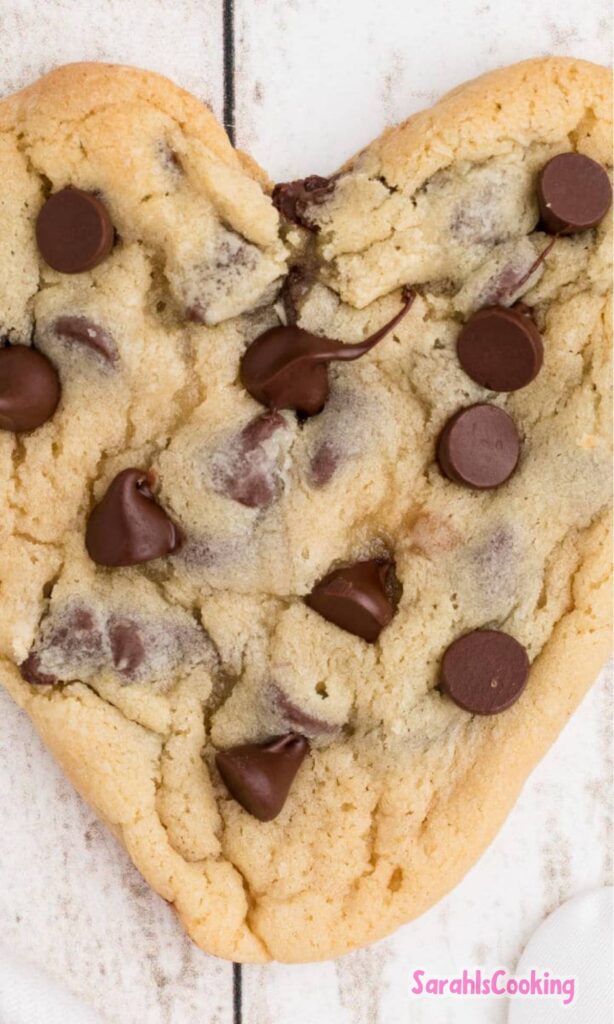
Easy Heart Shaped Chocolate Chip Cookies should feel just as reliable as your go to chocolate chip cookie, with the added detail of a defined heart that holds its shape in the oven. These are soft in the center, lightly set at the edges, and structured enough to look intentional rather than accidental.
This version was developed to solve a specific problem. Standard drop cookie dough spreads. Cut out sugar cookie dough holds shape but bakes up firmer. The goal here is to bridge that gap without sacrificing chew. The result is a dough that can be shaped by hand, chilled briefly, and baked with predictable spread and balanced texture.
Who This Recipe Is For
These cookies are for home bakers who want something seasonal without turning the kitchen into a decorating station. There is no rolling pin, no flour dusted counter, and no cookie cutters to wash. The shaping is done by hand, and the structure of the dough supports that choice.
They are beginner friendly in terms of mixing, but they reward attention to detail during shaping and baking. If you are comfortable making classic chocolate chip cookies and can follow visual cues, this recipe will feel approachable.
They are especially useful for:
- Valentine’s Day trays
- School or office treats
- Care packages
- Bake sales where visual appeal matters
If you prefer a firmer cookie that is meant for icing and crisp edges, a cut out dough such as my Heart Shaped Sugar Cookies Recipe may be a better fit. This recipe is built for softness first, shape second.
Why This Recipe Works
The structure of this dough is intentional. It is not simply classic cookie dough pressed into a heart and hoped for the best.
The fat balance starts with softened butter that is cool room temperature. When creamed with sugar for two to three minutes, it incorporates enough air to create lift without making the dough unstable. Over creaming introduces excess air, which collapses in the oven and encourages spread. Under creaming produces a dense cookie that does not rise evenly.
The sugar ratio matters. Brown sugar provides moisture and chew due to its molasses content. Granulated sugar contributes to spread and slight crispness at the edges. This recipe leans slightly toward brown sugar to support a soft center and reduce excessive flattening. Too much granulated sugar would cause the heart indentation to soften and round out.
The addition of one whole egg plus one extra yolk increases fat and emulsification. The extra yolk adds tenderness and moisture retention. In testing, a single whole egg produced cookies that were still good but less plush in the center. The extra yolk gives the interior a softer bite without weakening structure.
Flour quantity is calibrated to control spread. Even a two tablespoon reduction led to noticeably flatter cookies that required reshaping after baking. The final amount balances chew with stability.
Chilling is not optional if shape matters. A 20 to 30 minute chill firms the butter and allows the flour to hydrate. That hydration improves dough strength and reduces uncontrolled spread. Less than 15 minutes produced rounded tops and softened curves. Longer than 45 minutes made the dough stiff enough that it needed slight flattening before baking.
If you are familiar with a traditional drop style dough such as my Chocolate Chip Cookies Recipe, you will notice this version is slightly firmer before baking. That difference is deliberate and supports the shaped structure.
Temperature and timing close the loop. Baking at a consistent 350°F allows the edges to set while the center remains slightly underbaked. Removing the cookies when the edges are lightly golden but the center still looks soft prevents dryness and preserves chew.
Ingredient Insights and Function
Butter
Use salted butter if you prefer a subtle contrast against the chocolate. If using unsalted butter, add an extra pinch of salt to maintain balance. The butter should be softened but not shiny or greasy. When pressed, it should give slightly without collapsing.
Butter that is too warm encourages spread. Butter that is too cold will not cream properly and creates uneven texture.
Sugar Balance
Light brown sugar adds moisture and depth. Dark brown sugar can be used but will deepen flavor and slightly increase moisture. That may result in marginally softer cookies.
Granulated sugar contributes structure. Reducing it too much produces cookies that remain very pale and overly soft at the edges. The combination ensures defined shape with a tender center.
Eggs and Extra Yolk
The whole egg binds and provides structure. The extra yolk increases richness and improves chew. Omitting the extra yolk creates a slightly drier crumb and less supple center.
If substituting large eggs with medium, the texture will be slightly firmer due to reduced moisture.
Flour
All purpose flour provides the backbone. Measure by spooning into the measuring cup and leveling off. Scooping directly from the bag can compact flour and add excess, which leads to dry cookies.
A lower protein flour will yield softer cookies but may slightly weaken edge definition.
Baking Soda and Salt
Baking soda promotes spread and browning. Too much will cause excessive flattening and uneven rise. Salt sharpens sweetness and highlights chocolate flavor.
Chocolate Choices
A mix of chocolate chips and chopped chocolate creates both even distribution and larger melted pools. All chips will bake uniformly but look more structured. All chopped chocolate can melt unevenly and distort shaping if placed heavily near the center seam.
Mini chips can be used for more consistent distribution, especially if gifting to children. White chocolate increases sweetness and softens contrast.
For a different texture profile, a crisper dough such as my Butter Cookies Recipe highlights how ingredient balance changes structure entirely. That comparison underscores how intentional this softer dough is.
Step by Step Success Guidance
Creaming for Structure
Cream butter and sugars until the mixture lightens slightly in color and appears fluffy but not whipped. The texture should look cohesive and smooth, not oily.
If the mixture looks greasy or separated, the butter was too warm. Chill the bowl for 10 minutes before proceeding.
Incorporating Eggs
Add the whole egg and yolk and mix just until combined. Overmixing at this stage can create excess air and contribute to spread. The mixture should look glossy and uniform.
Mixing Dry Ingredients
Whisk flour, baking soda, and salt separately before adding. This prevents pockets of leavening. Add dry ingredients in stages and mix until no dry streaks remain.
Stop as soon as the flour disappears. Continued mixing develops gluten and toughens the cookie.
Folding in Chocolate
Fold chocolate in by hand. This reduces mechanical overmixing and keeps the dough tender. Reserve a few pieces to press on top before baking for visual balance.
Chilling and Shaping
Chill the dough for 20 to 30 minutes. The dough should feel cool and slightly firm but still pliable.
To shape:
- Scoop dough into even portions
- Split each portion in half
- Roll each half into a short log
- Join at the base to form a V
- Pinch the bottom point slightly
- Press a small indentation at the top center
Keep proportions balanced. If one side is larger, the cookie will bake asymmetrically.
If the kitchen is warm, place shaped hearts in the refrigerator for an additional 10 minutes before baking.
Baking for Defined Edges
Place cookies on a cool baking sheet lined with parchment. A warm sheet accelerates spread.
Bake until edges are lightly golden and centers appear slightly underdone. The surface should look set but soft.
If needed, gently nudge the curves inward with the back of a spoon while the cookies are still warm. Do this immediately after removing from the oven. Once cooled, the structure sets.
How I Tested and Refined This Recipe
Initial testing began with a standard drop cookie base. Shaped without chilling, the cookies spread into rounded forms. The heart indentation nearly disappeared.
I adjusted flour upward in one tablespoon increments. At two additional tablespoons, the shape held better but the texture became slightly cakier. The final ratio reduces spread without compromising chew.
Testing chill times revealed that no chill resulted in excessive flattening. Fifteen minutes improved structure but still softened the top indentation. Thirty minutes produced consistent definition. Sixty minutes required slight flattening before baking to prevent doming.
I also tested using only chocolate chunks. Large pools of melted chocolate near the seam caused uneven pull and occasional cracking. A mix of chips and chopped chocolate distributed weight more evenly.
The extra yolk was introduced after side by side comparisons showed the single egg version lacked depth and softness after cooling. The yolk improved texture even the next day, which matters for gifting.
Each adjustment was measured and repeated to confirm consistency across batches.
Common Mistakes and How to Avoid Them
Cookies Losing Their Shape
Cause: Insufficient chilling or overly warm butter.
Correction: Chill shaped dough briefly before baking and ensure butter is cool room temperature.
Overly Flat Cookies
Cause: Over creaming or too much granulated sugar.
Correction: Cream only until lightened and measure sugars carefully.
Dry or Crumbly Texture
Cause: Excess flour or overbaking.
Correction: Spoon and level flour. Remove cookies when centers still look slightly soft.
Uneven Hearts
Cause: Inconsistent shaping or uneven chocolate placement.
Correction: Keep halves equal in size and avoid placing large chocolate chunks directly along the seam.
Make Ahead, Storage, and Freezing Guidance
Baked cookies can be stored in an airtight container at room temperature for three to four days. Including a slice of sandwich bread helps maintain softness through moisture exchange.
Texture is best within the first two days. By day three, edges firm slightly but centers remain tender if stored properly.
For freezing dough, shape hearts and freeze on a lined tray until solid. Transfer to a freezer safe bag. Bake from frozen, adding one to two minutes to baking time. Expect slightly thicker centers when baking from frozen.
Baked cookies can also be frozen. Wrap tightly and store up to two months. Thaw at room temperature. For refreshed softness, warm in a 300°F oven for three to four minutes. Avoid microwaving, which can toughen edges.
Food safety remains straightforward. Because these contain eggs and butter, do not leave baked cookies at room temperature for extended periods beyond normal serving windows. Freeze promptly if storing long term.
Final Reinforcement
These cookies are built to balance softness and structure. The ratios support shaping. The chill supports definition. The baking cues protect texture.
When handled with attention to temperature and proportion, they deliver consistent results batch after batch. That consistency is what makes them dependable, whether you are baking for family, friends, or a full tray meant to impress.