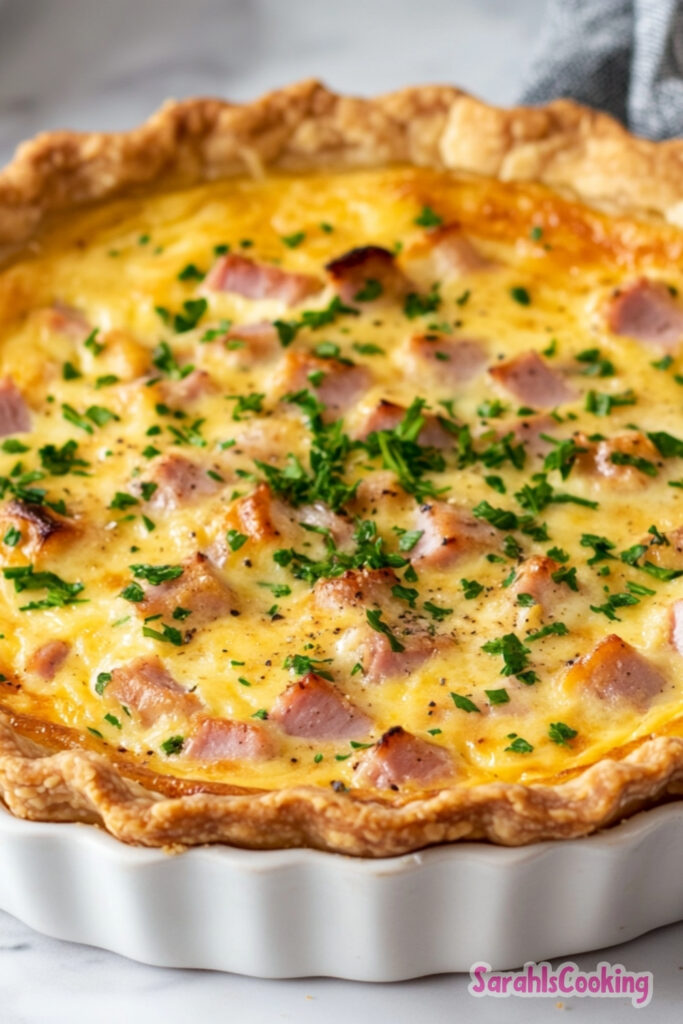
I come back to this ham and cheese quiche when I need something reliable, not just good. It sets cleanly, slices without collapsing, and holds its texture whether served warm or at room temperature.
The method is simple on purpose, but each step carries weight. When done right, the filling stays creamy without turning loose, and the crust bakes through without going soggy.
I’ve tested this enough to trust it for brunch tables and quick weekday lunches. It’s straightforward, but not careless. Every part has a job.
Ingredients Needed for the Recipe
Refrigerated pie crust - provides structure and containment; using a ready-made crust ensures consistent thickness and prevents uneven baking.
Eggs - the primary setting agent; they coagulate during baking to create the custard structure that holds the quiche together.
Half-and-half - balances richness and fluidity; it softens the egg structure so the filling stays tender instead of rubbery.
Fresh parsley - adds light herbal contrast; it cuts through the richness and keeps the flavor from feeling flat.
Dijon mustard - sharpens the overall flavor; its acidity enhances both the cheese and ham without overpowering them.
All-purpose flour - stabilizes the custard; it helps prevent separation and gives the filling a slightly firmer, sliceable texture.
Kosher salt - controls seasoning; essential for bringing out the full flavor of the dairy and eggs.
Black pepper - adds mild heat and depth; supports the savory profile without dominating it.
Diced ham - provides salt and texture; its firmness contrasts the soft custard and adds substance.
Sharp cheddar cheese - melts into the custard; contributes both flavor intensity and a slight thickening effect.
Shallot - adds mild sweetness and aroma; it softens during baking and blends into the filling without overpowering.
How to make Ham & Cheese Quiche?
Step 1 - Prepare the Oven and Crust
Preheat the oven to 375°F with a baking sheet inside. This step matters more than it seems because that hot surface helps cook the bottom crust immediately.
Fit the crust into a 9-inch pie plate, fold and crimp the edges, then chill it. A cold crust slows down fat melting, which keeps it from shrinking too quickly in the oven.
Step 2 - Build the Custard Base
In a large bowl, whisk the eggs and half-and-half until fully combined. You’re looking for a smooth, unified mixture with no streaks of egg white.
Add parsley, Dijon mustard, flour, salt, and pepper. Whisk again until the flour disappears completely. Any lumps here will show up later as uneven texture.
Step 3 - Layer the Fillings
Scatter the diced ham, shredded cheese, and chopped shallot evenly across the chilled crust. Distributing them first prevents everything from sinking to the bottom.
Pour the custard slowly over the fillings. Pause if needed to let it settle so the liquid fills all gaps without overflowing.
Step 4 - Bake with Heat Control
Place the quiche directly onto the preheated baking sheet. The immediate contact with heat helps firm up the base before the custard fully sets.
Bake for 40 to 45 minutes. The edges should puff slightly, and the center should jiggle just a little, not ripple. Overbaking at this stage leads to a dry texture.
Step 5 - Cool Before Slicing
Let the quiche rest on the baking sheet for at least 30 minutes. This cooling period allows the custard to finish setting internally.
If you cut too soon, the center will loosen and collapse. Waiting gives you clean slices and a stable texture.
Why This Recipe Works
The balance between eggs and dairy is deliberate. Too many eggs would create a firm, almost rubbery texture, while too much liquid would prevent the custard from setting properly.
Half-and-half sits in the middle, providing enough fat for richness without making the filling overly soft. It supports the eggs instead of competing with them.
The addition of a small amount of flour is subtle but important. It acts as insurance, stabilizing the mixture and preventing separation during baking.
Starting with a hot baking sheet changes how the crust behaves. Instead of slowly warming and softening, it begins cooking immediately, which reduces sogginess.
Layering the fillings before adding the custard also matters. It keeps the structure even, so each slice has a consistent distribution instead of dense pockets.
How I Tested and Refined This Recipe
I started with a basic custard ratio and quickly ran into texture issues. The first version was too loose in the center, even after extended baking.
Reducing the liquid slightly helped, but then the filling became too firm at the edges. That’s when I adjusted the ratio instead of just the bake time.
I tested versions with only milk, and while they worked, they lacked the richness needed to carry the ham and cheese. Switching to half-and-half fixed that balance.
The crust was another challenge. Without preheating the baking surface, the bottom stayed pale and soft. That changed immediately once I introduced the hot baking sheet method.
I also experimented with skipping the flour. The result was acceptable, but the slices didn’t hold as cleanly. Adding it back created a more reliable structure.
Final adjustments focused on distribution and seasoning. Even layering and a small amount of Dijon brought everything into alignment.
Common Mistakes and How to Avoid Them
Overbaking the quiche - leads to a dry, rubbery texture; remove it when the center still has a slight jiggle.
Skipping the crust chill time - causes shrinkage and uneven edges during baking.
Pouring custard too quickly - can displace fillings and create uneven layers.
Not fully whisking the eggs - results in streaky, inconsistent texture in the final bake.
Using low-fat dairy - reduces stability and richness, making the custard weak.
Cutting too soon - causes the center to collapse and lose structure.
Overloading with fillings - prevents proper setting and leads to a heavy, dense interior.
Make-Ahead, Storage, and Freezing Guidance
This quiche holds up well when made ahead. You can bake it fully, cool it completely, and refrigerate for up to one day without compromising texture.
Over time, the custard firms slightly in the fridge. Reheating at a low temperature, around 315°F, brings back some of that original softness without drying it out.
It can also be served at room temperature, which works well for gatherings. The structure remains stable even after sitting out for a while.
For longer storage, wrap slices tightly and freeze them. The texture will change slightly, becoming a bit firmer, but it remains fully usable.
Reheat frozen slices in the oven rather than the microwave. Gentle heat helps restore the custard without creating rubbery edges.
Tips
Use a light hand when seasoning since the ham already brings salt.
Grate cheese fresh for better melting and texture.
Keep the crust cold until the moment it goes into the oven.
Let the quiche rest longer if your kitchen is warm.
Slice with a sharp knife and wipe between cuts for clean edges.
Place the pie dish on a sturdy tray before moving it to avoid spills.
Check doneness early rather than late to prevent overbaking.
This classic ham and cheese quiche is the ultimate brunch showstopper! Featuring a buttery store-bought crust filled with a creamy custard of eggs and half-and-half, loaded with salty diced ham, sharp cheddar cheese, and a hint of Dijon mustard. No par-baking required—just bake on a preheated sheet for a perfectly crisp bottom. Perfect for Easter brunch, holiday gatherings, or a make-ahead breakfast any day of the week.
ingredients
1piece refrigerated pie crust (from a 14-oz box, for 9-inch pie plate)
4large eggs
1cup half-and-half (or substitute with milk + cream)
1tbsp fresh parsley, chopped (plus more for garnish)
1tbsp Dijon mustard
1 1/2tbsp all-purpose flour
1/4tsp kosher salt
1/4tsp black pepper (freshly ground)
8oz diced ham (deli ham or leftover holiday ham)
1cup sharp cheddar cheese, shredded
1small shallot, finely chopped (or substitute with 2 tbsp red onion)
Instructions
1
Preheat & PrepPreheat oven to 375°F (190°C). Place a baking sheet on the center rack to preheat. Fit the refrigerated pie crust into a 9-inch pie plate (not deep dish). Fold edges under and crimp as desired. Chill in refrigerator while preparing filling.
Preheating the baking sheet helps crisp the bottom crust—no par-baking needed!
2
Make CustardIn a large bowl, whisk together eggs, half-and-half, chopped parsley, Dijon mustard, flour, salt, and pepper until smooth and well combined.
Whisk vigorously to ensure flour is fully incorporated and no lumps remain.
3
Layer FillingsSprinkle diced ham, shredded cheddar cheese, and finely chopped shallot evenly over the bottom of the chilled pie crust.
Distribute ingredients evenly for consistent flavor in every slice.
4
Add Custard & BakePour the egg mixture over the ham and cheese filling. Carefully place the pie plate on the preheated baking sheet in the oven.
Use caution when placing the quiche on the hot baking sheet.
5
Bake Until SetBake for 40-45 minutes, or until the edges are puffed and golden, and the center is set with just a slight jiggle.
A knife inserted near the center should come out clean when fully baked.
6
Rest & ServeRemove from oven and let cool on the baking sheet for at least 30 minutes before slicing. Garnish with additional fresh parsley if desired.
Resting allows the quiche to set properly for clean slices and enhances flavor.
Nutrition Facts
Servings 8
Serving Size 1 slice (1/8 of quiche)
Amount Per Serving
Calories310kcal
% Daily Value *
Total Fat20gg31%
Saturated Fat10gg50%
Trans Fat0gg
Cholesterol145mgmg49%
Sodium485mgmg21%
Potassium175mgmg5%
Total Carbohydrate16gg6%
Dietary Fiber1gg4%
Sugars2gg
Protein14gg29%
Calcium 20% mg
Iron 5% mg
* Percent Daily Values are based on a 2,000 calorie diet. Your daily value may be higher or lower depending on your calorie needs.
Note
Make it ahead: Assemble and bake up to 1 day in advance. Store covered in the fridge; reheat at 315°F until warmed through.
Bacon swap: Substitute crispy crumbled bacon for the ham—cook, drain, and crumble before adding to crust.
Dairy alternatives: For half-and-half, use ½ cup heavy cream + ½ cup milk, or ½ cup sour cream + ½ cup milk for similar richness.
Extra veggies: Add sautéed spinach, mushrooms, or bell peppers—just cook first to remove excess moisture.
Serving tip: Quiche is delicious warm, at room temperature, or even chilled—perfect for brunch buffets!
Keywords:
ham and cheese quiche, brunch recipe, easy quiche, breakfast casserole, make-ahead brunch, Easter recipe
Pin this recipe to share with your friends and followers.
Sarah
Food and Lifestyle Blogger
Hi, I’m Sarah, a home cook and baker who believes that good food doesn’t need to be complicated to be meaningful. This blog is where I share approachable, dependable recipes made with care — the kind of dishes you can come back to again and again.