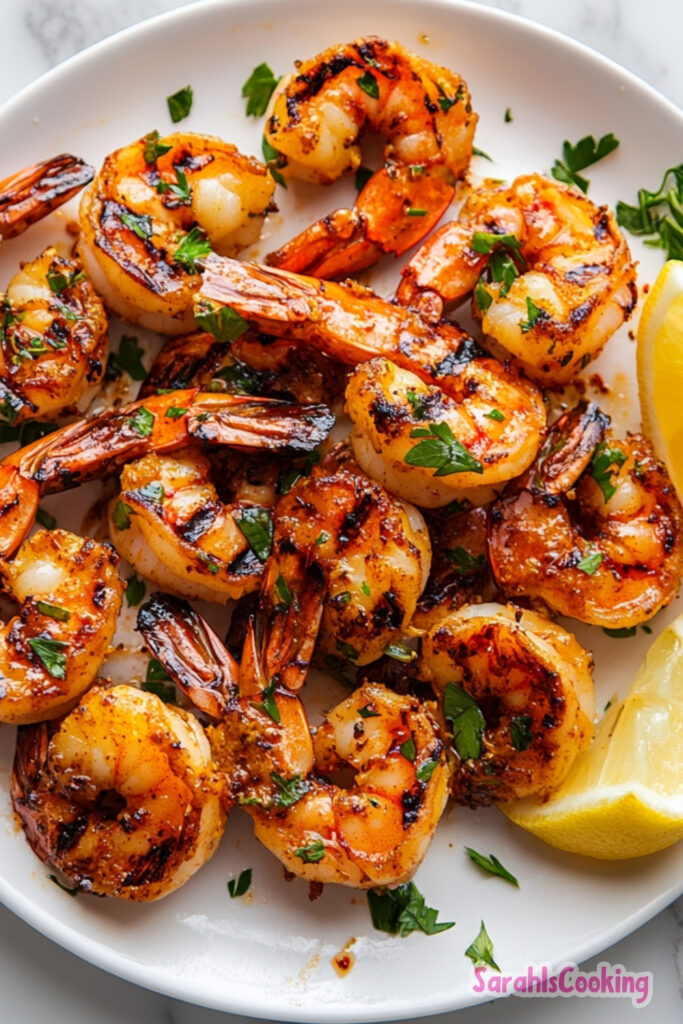
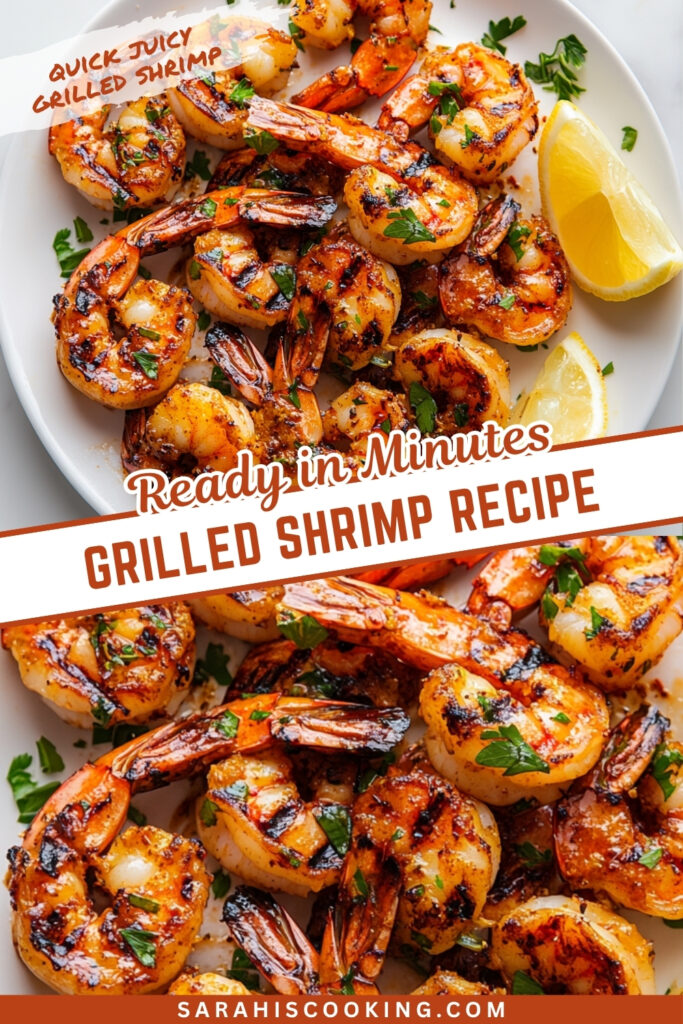
Juicy, smoky shrimp marinated in lemon, garlic, and herbs, then grilled to perfection in minutes. Easy, affordable, and foolproof.
This grilled shrimp recipe is built for consistency. It delivers tender, juicy shrimp with a lightly charred exterior and balanced seasoning every single time.
I rely on a short, structured marinade and controlled heat to prevent overcooking. Shrimp are delicate, but with the right timing and preparation, they become one of the most reliable proteins you can grill.
The process is efficient and practical. Most of the time is hands-off while the shrimp marinate, and the actual cooking takes just a few minutes, making it ideal for weeknights or quick outdoor meals.
What matters most here is precision without complication. Each step is intentional, and once you understand the cues, this recipe becomes almost automatic.
Ingredients Needed for the Recipe
Shrimp (extra large, 26-30 per lb) - The size ensures even cooking and prevents them from falling through grill grates while maintaining a juicy interior.
Olive oil - Acts as the base of the marinade, helping distribute fat-soluble flavors and preventing the shrimp from drying out.
Garlic - Adds depth and savory complexity, infusing the shrimp during the short marination window.
Fresh parsley - Brings a mild herbal freshness that balances the richness of the oil.
Fresh cilantro - Adds brightness and a slightly citrusy herbal note that complements the lemon.
Smoked paprika - Provides subtle smokiness and color, enhancing the grilled flavor even before the shrimp hit the heat.
Crushed red pepper - Introduces gentle heat that builds in the background without overpowering the dish.
Lemon juice - Adds acidity to tenderize the shrimp lightly and brighten the overall flavor profile.
Salt - Enhances all flavors and helps the shrimp retain moisture during cooking.
Black pepper - Adds mild heat and depth, rounding out the seasoning.
How to make Grilled Shrimp?
Step 1 - Thaw and Prepare the Shrimp
Start by thawing frozen shrimp according to package instructions. Once thawed, rinse them under cold water and pat them completely dry with paper towels.
Dry shrimp are essential for proper searing. Excess moisture creates steam, which prevents the grill from developing that lightly charred exterior.
Step 2 - Build the Marinade
In a bowl, whisk together olive oil, minced garlic, parsley, cilantro, smoked paprika, crushed red pepper, lemon juice, salt, and black pepper until fully combined.
The mixture should look cohesive and slightly thickened. This ensures the seasoning clings evenly to each shrimp rather than pooling at the bottom.
Step 3 - Marinate the Shrimp
Add the shrimp to the marinade and toss until fully coated. Cover and refrigerate for about 20 minutes.
This short marination window is intentional. The lemon juice begins to break down proteins quickly, so longer soaking can lead to a soft, mealy texture.
Step 4 - Preheat the Grill
Preheat a grill or grill pan to medium-high heat, around 375°F. The surface should be hot enough to sizzle immediately when the shrimp are added.
Proper preheating ensures quick cooking and prevents sticking. A hot surface locks in moisture while creating light char marks.
Step 5 - Grill the Shrimp
Place the shrimp directly on the grill or thread them onto skewers for easier handling. Cook for about 2 minutes per side.
Watch closely for visual cues. The shrimp will turn pink, become opaque, and curl into a loose “C” shape when perfectly cooked.
Step 6 - Remove and Rest Briefly
Transfer the shrimp to a plate once cooked. If working in batches, keep the first batch loosely covered while finishing the rest.
A brief rest allows residual heat to finish cooking the center without pushing the shrimp into overcooked territory.
Why This Recipe Works
The success of this recipe comes down to balance. The ratio of oil to acid is carefully controlled so the shrimp absorb flavor without breaking down too quickly.
Using large shrimp provides structural stability. Smaller shrimp cook too fast and are harder to control, while larger ones allow for a clear visual cue when doneness is reached.
The marinade combines fat, acid, aromatics, and spices in a way that distributes evenly. Each element plays a role, from moisture retention to flavor layering.
Short, high-heat cooking is the final piece. It ensures the exterior develops flavor while the interior stays tender and juicy.
How I Tested and Refined This Recipe
I started by testing different shrimp sizes and quickly found that medium shrimp cooked too quickly to manage consistently. They often tipped into overcooked before developing any surface color.
I adjusted the marinade several times, experimenting with more lemon juice and longer marination. Both changes resulted in softer textures that lacked the clean bite I was aiming for.
Cooking temperature was another variable. Lower heat led to uneven cooking and a lack of browning, while excessively high heat caused scorching before the shrimp cooked through.
The final version reflects those adjustments. A short marinade, moderate-high heat, and strict timing create a method that is repeatable and reliable.
Common Mistakes and How to Avoid Them
Over-marinating the shrimp - Leads to a mushy texture due to acid breakdown. Keep marination under 30 minutes.
Using shrimp that are too small - They cook too fast and are easy to overdo. Choose large or extra-large shrimp for control.
Skipping the drying step - Wet shrimp will steam instead of sear, preventing proper texture development.
Cooking on a cold grill - Results in sticking and uneven cooking. Always preheat thoroughly.
Overcooking - Shrimp that curl tightly into an “O” shape are overdone and rubbery. Remove them when they form a loose “C.”
Overcrowding the grill - Reduces heat and causes uneven cooking. Work in batches if needed.
Make-Ahead, Storage, and Freezing Guidance
Cooked shrimp can be stored in an airtight container in the refrigerator for up to 2 to 3 days. The texture will firm slightly as they cool but remains pleasant if reheated properly.
For reheating, use low heat on the stovetop or a brief microwave cycle. High heat will quickly overcook the shrimp, making them tough.
These shrimp also freeze well for up to 3 months. Thaw them overnight in the refrigerator before reheating to maintain the best texture.
Avoid reheating multiple times. Each cycle reduces moisture and increases the risk of rubbery results.
Tips
Soak wooden skewers in water while the shrimp marinate to prevent burning.
Use freshly cracked black pepper for a sharper, more defined flavor.
Leave the tails on for better grip and presentation when serving.
Cook in batches rather than crowding the grill for better heat control.
Serve immediately for the best texture and flavor.
Pair with simple sides like rice or grilled vegetables to keep the focus on the shrimp.
Discover the secret to juicy, flavorful grilled shrimp with this simple and budget-friendly recipe. Marinated in a zesty blend of olive oil, lemon juice, garlic, and herbs, these shrimp cook in minutes on the grill. Perfect for summer BBQs, quick weeknight dinners, or as a protein-packed addition to salads. Using frozen shrimp keeps costs low without sacrificing taste, making this a family favorite that’s ready in under 30 minutes.
Ingredients
12oz frozen shrimp (extra large, tail-on, thawed (26-30 per lb))
⅛cup olive oil
2cloves garlic, minced
½Tbsp fresh parsley, chopped
½Tbsp fresh cilantro, chopped
½tsp smoked paprika
⅛tsp crushed red pepper flakes
1Tbsp lemon juice
½tsp salt
½tsp black pepper (freshly cracked)
Instructions
1
Prepare the Shrimp – Thaw frozen shrimp according to package directions. Rinse thoroughly with cold water and pat completely dry with paper towels to ensure a good sear.
2
Make the Marinade – In a small bowl, whisk together the olive oil, minced garlic, parsley, cilantro, smoked paprika, crushed red pepper, lemon juice, salt, and black pepper until well combined.
3
Marinate – Place the dried shrimp in a bowl or zip-top bag. Pour the marinade over the shrimp and toss to coat evenly. Cover and refrigerate for 20 minutes. Do not marinate longer than 30 minutes to prevent the texture from becoming mushy.
4
Preheat Grill – Preheat your outdoor grill to 375°F (medium-high heat) or heat a grill pan on the stove over medium-high heat.
5
Grill – Place shrimp on the hot grill in a single layer. Cook for approximately 2 minutes per side. The shrimp are done when they turn pink, opaque, and curl into a loose 'C' shape. Avoid overcooking into a tight 'O' shape.
6
Serve – Remove shrimp from the grill immediately. Serve warm as an appetizer, over rice, or tossed into a fresh salad.
Nutrition Facts
Servings 4
Serving Size 3 oz
Amount Per Serving
Calories185kcal
% Daily Value *
Total Fat10g16%
Saturated Fat1.5g8%
Cholesterol172mg58%
Sodium480mg20%
Potassium220mg7%
Total Carbohydrate2g1%
Dietary Fiber0.5g2%
Protein21g42%
Vitamin A 120 IU
Vitamin C 4 mg
Calcium 60 mg
Iron 2.5 mg
Vitamin E 1.8 IU
Vitamin K 2 mcg
Thiamin 0.05 mg
Riboflavin 0.04 mg
Niacin 2.5 mg
Vitamin B6 0.1 mg
Folate 5 mcg
Vitamin B12 1.1 mcg
Biotin 2 mcg
Pantothenic Acid 0.4 mg
Phosphorus 200 mg
Iodine 35 mcg
Magnesium 30 mg
Zinc 1.4 mg
Selenium 35 mcg
Copper 0.2 mg
Manganese 0.1 mg
Chromium 1 mcg
Molybdenum 2 mcg
Chloride 350 mg
* Percent Daily Values are based on a 2,000 calorie diet. Your daily value may be higher or lower depending on your calorie needs.
Note
For best results, use large shrimp (26-30 per pound). If using smaller shrimp, reduce cooking time slightly. Soak wooden skewers in water for 20 minutes before threading shrimp if making skewers.
Pin this recipe to share with your friends and followers.
Sarah
Food and Lifestyle Blogger
Hi, I’m Sarah, a home cook and baker who believes that good food doesn’t need to be complicated to be meaningful. This blog is where I share approachable, dependable recipes made with care — the kind of dishes you can come back to again and again.