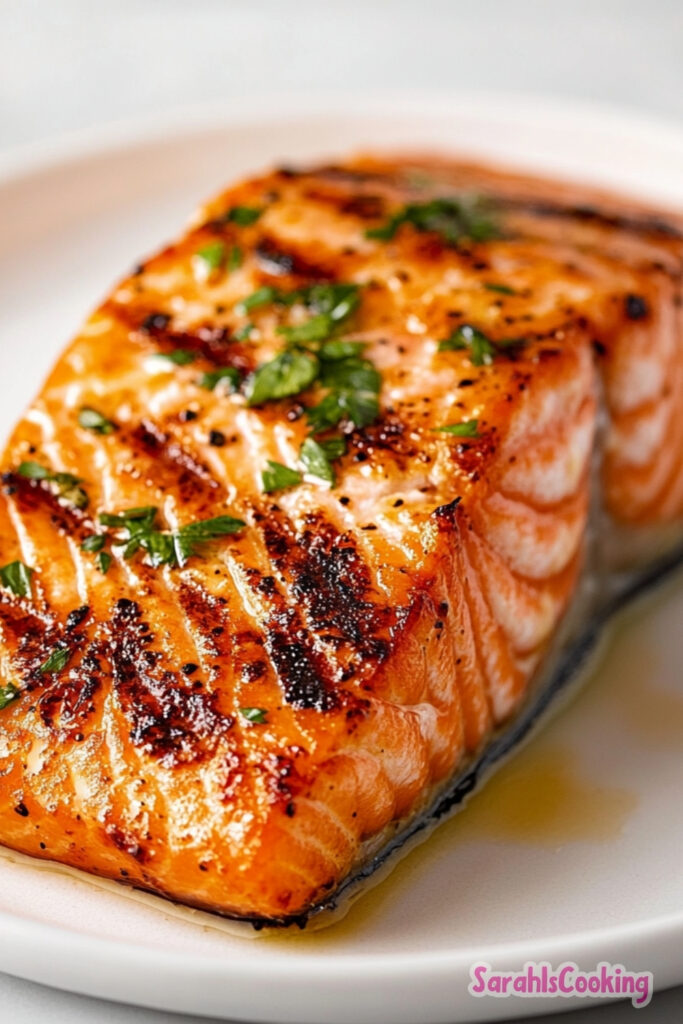
Grilled salmon that’s juicy, flaky, and perfectly charred every time. Learn how to grill salmon with simple seasoning and foolproof timing.
Grilled salmon can feel like a special occasion meal, but with the right method, it becomes something you can rely on any day of the week. This version is straightforward, balanced, and designed to deliver consistent results without guesswork.
I approach this recipe with the same mindset I use in baking - control what matters, simplify what doesn’t. When heat, timing, and seasoning are handled properly, salmon rewards you with a clean, rich flavor and a tender, flaky texture.
This method focuses on clarity. You’ll know when to flip, what to look for, and how to avoid the most common mistakes that lead to dry or overcooked fish.
Ingredients Needed for the Recipe
Skin-on Atlantic salmon - The skin acts as a protective barrier during grilling, helping retain moisture while preventing sticking and overcooking.
Lemon - Adds brightness and acidity that balances the natural richness of the salmon, especially when grilled for a slightly caramelized edge.
Vegetable oil - Provides a thin, even coating that promotes heat transfer and prevents sticking on the grill grates.
Sea salt - Enhances the natural flavor of the fish while helping draw out slight surface moisture for better searing.
Black pepper - Adds mild heat and depth without overpowering the clean taste of the salmon.
How to make Grilled Salmon?
Step 1 - Preheat the Grill
Heat your grill to high, around 450 to 500°F. This initial high heat is essential for creating a clean sear and preventing the salmon from sticking to the grates.
Give the grill enough time to fully heat through. A properly heated grill ensures even cooking and reduces the risk of tearing when flipping.
Step 2 - Prepare the Seasoning Oil
In a small bowl, combine vegetable oil, sea salt, and black pepper. Stir until evenly mixed so the seasoning distributes consistently across the fish.
This simple mixture creates a uniform coating that helps both flavor and structure. It also ensures the surface cooks evenly without dry patches.
Step 3 - Coat the Salmon and Lemon
Brush the salmon fillets on all sides with the seasoned oil. Do the same with the cut sides of the lemon halves to prevent burning.
Make sure the coating is light but complete. Too much oil can cause flare-ups, while too little can lead to sticking and uneven browning.
Step 4 - Place on the Grill
Place the salmon skin side down directly onto the grill grates. Set the lemon halves cut side down beside the fish.
Do not move the salmon once placed. Let it sit undisturbed for about 6 minutes so a crust can form naturally.
Step 5 - Flip and Finish Cooking
After 6 minutes, gently flip the salmon and turn the lemons. Grill for an additional 4 minutes or until the internal temperature reaches about 135°F.
The fish should feel slightly firm but still have some give. It will continue cooking after removal, so avoid pushing it too far on the grill.
Step 6 - Rest and Serve
Remove the salmon from the grill and let it rest for a few minutes. During this time, the internal temperature will rise to about 145°F.
Squeeze the grilled lemon over the top just before serving. This final step brightens the flavor and ties everything together.
Why This Recipe Works
This recipe succeeds because it respects the natural structure of salmon. The skin is left intact to act as insulation, allowing the flesh to cook gently without direct exposure to intense heat.
The oil-to-seasoning ratio is intentionally minimal. It enhances the fish without masking its flavor, while still supporting proper browning and preventing sticking.
High heat combined with controlled timing creates a clear two-stage cooking process. First, a firm base develops. Then the interior finishes cooking with retained heat, resulting in a moist, flaky texture.
Grilling the lemon alongside the fish is not just for presentation. The heat softens its acidity and adds a subtle sweetness that complements the richness of the salmon.
How I Tested and Refined This Recipe
I started by testing different heat levels, from medium to high. Lower heat led to sticking and uneven cooking, while very high heat caused flare-ups and over-charred surfaces.
I also experimented with flipping early versus letting the fish sit longer. Flipping too soon consistently tore the fillets, confirming that patience in the first stage is essential.
Seasoning variations were tested as well. Heavier spice blends masked the salmon’s natural flavor, so I returned to a simple salt and pepper base for balance and clarity.
The resting phase was another key adjustment. Early versions skipped this step, which resulted in slightly undercooked centers or uneven texture. Allowing carryover cooking fixed both issues.
Each change was intentional, guided by texture and consistency rather than preference. The final method reflects what worked reliably across multiple tests.
Common Mistakes and How to Avoid Them
Placing salmon on a cold grill - This leads to sticking and uneven cooking. Always preheat fully before starting.
Skipping the oil coating - Without oil, the fish can dry out and tear when flipped.
Flipping too early - Moving the salmon before a crust forms will cause it to break apart.
Overcooking past 145°F - This results in dry, chalky texture instead of moist flakes.
Using too much seasoning - Over-seasoning overwhelms the natural flavor and can burn on high heat.
Not resting the fish - Cutting immediately prevents carryover cooking and affects final texture.
Make-Ahead, Storage, and Freezing Guidance
Grilled salmon can be stored in an airtight container in the refrigerator for up to 3 to 4 days. The texture will firm up slightly as it chills but remains usable for most meals.
For longer storage, freeze the cooked salmon for up to 3 months. Wrap it tightly to prevent freezer burn and preserve moisture.
When reheating, use low heat to avoid drying out the fish. A 275°F oven or a covered skillet works well to gently bring it back to temperature.
If reheating from frozen, thaw overnight in the refrigerator first. This ensures even warming and prevents the exterior from overcooking.
Tips
Use a fish spatula for easier flipping and better control.
Keep the grill grates clean to minimize sticking.
Pat the salmon dry before seasoning for better searing.
Choose evenly sized fillets so they cook at the same rate.
Let the grill do the work - avoid constant checking or moving.
Add grilled vegetables alongside for a complete meal without extra effort.
Enjoy the fresh, bright flavors of summer with this simple Grilled Salmon recipe. Perfectly seasoned with sea salt, black pepper, and a hint of lemon, this dish is both healthy and budget-friendly. The skin-on fillets grill up crispy on the outside and tender on the inside, while grilled lemon halves add a zesty finish. It's an effortless weeknight meal that pairs beautifully with grilled vegetables or a fresh salad.
Ingredients
26-oz. skin-on Atlantic salmon fillets (Fresh or thawed)
1 lemon (Sliced in half)
1Tbsp vegetable oil (Or olive oil)
1tsp sea salt
½tsp black pepper (Freshly cracked)
Instructions
1
Preheat and SeasonPreheat your grill to high heat (450-500°F). In a small bowl, mix together the vegetable oil, sea salt, and black pepper.
2
Prepare the FishPat the salmon fillets dry with paper towels. Brush the salmon on all sides with the oil mixture, ensuring it is well coated. Brush the cut sides of the lemon halves with the remaining oil.
3
Grill Skin-Side DownPlace the salmon fillets skin-side down on the hot grill grates. Place the lemon halves cut-side down on the grill as well. Grill for 6 minutes without moving the fish to ensure crispy skin.
4
Flip and FinishCarefully flip the salmon and the lemons. Grill for an additional 4 minutes, or until the internal temperature of the salmon reaches about 135°F.
5
Rest and ServeRemove the salmon from the grill and let it rest for 5 minutes. The residual heat will bring the internal temperature to the recommended 145°F. Squeeze the grilled lemon juice over the top before serving.
Nutrition Facts
Servings 2
Serving Size 1 fillet
Amount Per Serving
Calories340kcal
% Daily Value *
Total Fat20g31%
Saturated Fat3.5g18%
Cholesterol75mg25%
Sodium1200mg50%
Potassium620mg18%
Total Carbohydrate2g1%
Dietary Fiber0.5g2%
Sugars0.5g
Protein34g68%
Vitamin A 150 IU
Vitamin C 15 mg
Calcium 20 mg
Iron 1.2 mg
Vitamin D 14 IU
Vitamin E 2.5 IU
Vitamin K 1 mcg
Thiamin 0.2 mg
Riboflavin 0.1 mg
Niacin 12 mg
Vitamin B6 0.9 mg
Folate 30 mcg
Vitamin B12 4.5 mcg
Biotin 5 mcg
Pantothenic Acid 1.5 mg
Phosphorus 350 mg
Iodine 40 mcg
Magnesium 40 mg
Zinc 0.6 mg
Selenium 45 mcg
Copper 0.1 mg
Manganese 0.1 mg
Chromium 2 mcg
Molybdenum 4 mcg
Chloride 1800 mg
* Percent Daily Values are based on a 2,000 calorie diet. Your daily value may be higher or lower depending on your calorie needs.
Note
For best results, ensure your grill grates are clean and oiled to prevent sticking. If you don't have a grill, this method works well on a cast-iron skillet or grill pan indoors.
Pin this recipe to share with your friends and followers.
Sarah
Food and Lifestyle Blogger
Hi, I’m Sarah, a home cook and baker who believes that good food doesn’t need to be complicated to be meaningful. This blog is where I share approachable, dependable recipes made with care — the kind of dishes you can come back to again and again.