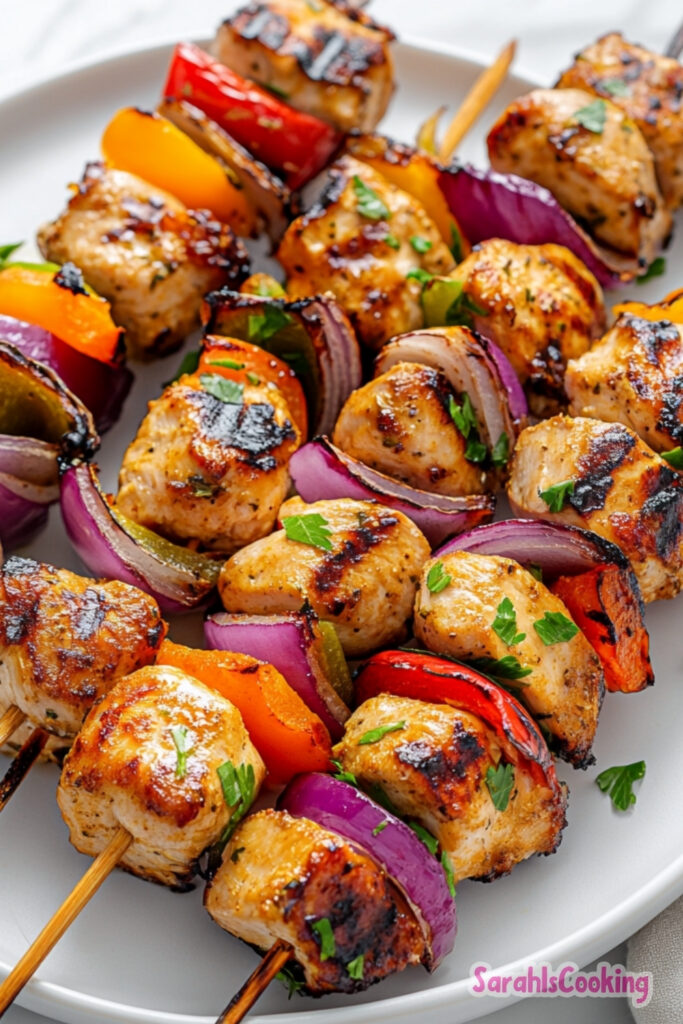
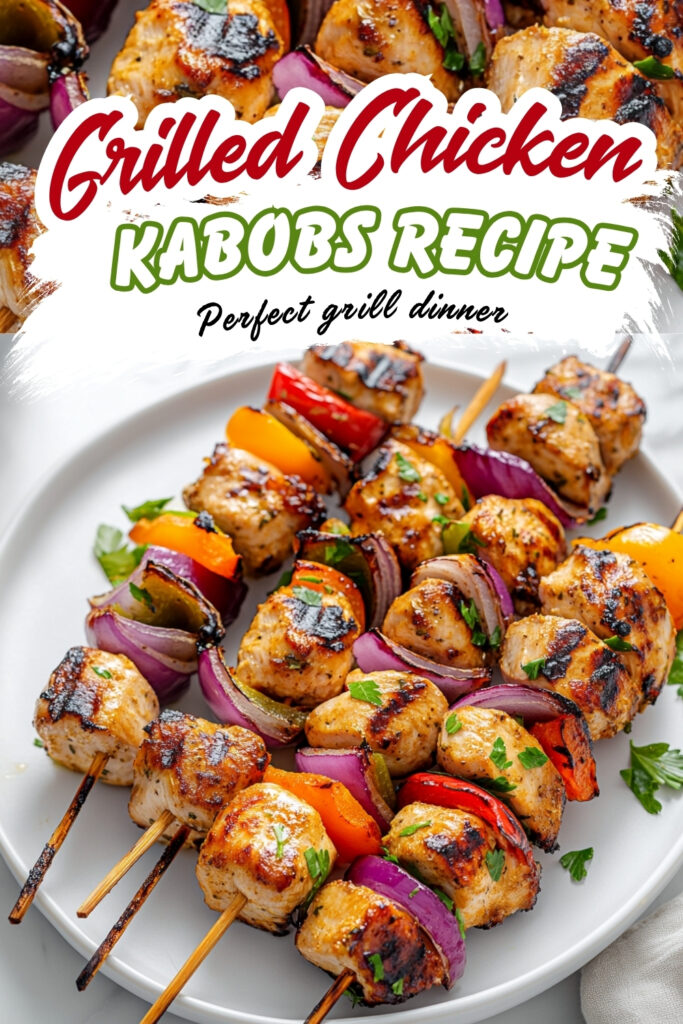
Juicy, flavorful grilled chicken kabobs with a Mediterranean marinade. This reliable recipe delivers tender, perfectly charred results every time.
Grilled chicken kabobs seem simple, but they go wrong more often than people admit. Dry meat, burnt vegetables, and bland seasoning are common complaints. I wanted a version that actually delivers juicy chicken with charred edges and vegetables that are tender, not mushy.
This recipe solves those problems through a specific marinade and a grilling method I tested repeatedly. The chicken stays moist, the spices taste bold but balanced, and everything cooks at the same pace. No more picking sad, dry cubes off a skewer.
What follows is the version I now make for family dinners and occasional summer gatherings. It works on a gas grill, charcoal, or even a cast-iron grill pan indoors.
Ingredients Needed for the Recipe
Boneless, skinless chicken breasts (1.5 pounds) - Cut into large, bite-sized pieces. Uniform size ensures even cooking. Breasts stay firmer on the grill than thighs, which I prefer for kabob presentation.
Olive oil (2 tablespoons) - The base of the marinade. It helps the spices adhere and keeps the chicken from sticking to the grates.
Fresh lemon juice (1 lemon) - Adds brightness and tenderizes the meat. Do not use bottled juice; the flavor difference is noticeable here.
Fresh garlic (4 cloves, minced) - Provides pungent depth. Garlic powder works in a pinch, but fresh garlic integrates better with the oil and lemon.
Paprika (1 teaspoon) - Brings mild, sweet pepper flavor and gives the chicken a rich, appetizing color.
Cumin (½ teaspoon) - Adds warm, earthy notes that define the Mediterranean profile. It pairs especially well with the lemon.
Cinnamon (¼ teaspoon) - A small amount adds unexpected warmth without tasting sweet. It rounds out the spice blend.
Salt and black pepper (½ teaspoon each) - Essential for seasoning the chicken throughout, not just on the surface.
Red onion (1 large) - Cut into thick slices or chunks. Onions hold up well on the grill and add sweetness.
Bell peppers (2, any color) - Cut into squares. They provide color, crunch, and a slight char that complements the chicken.
How to make Grilled Chicken Kabobs?
Step 1 - Build and Rest the Marinade
Whisk the olive oil, lemon juice, minced garlic, paprika, cumin, cinnamon, salt, and pepper in a medium bowl. The mixture should look uniform and smell intensely aromatic. Add the cubed chicken and toss until every piece is coated. Cover and refrigerate for at least 30 minutes, but no more than 8 hours. The lemon juice will start to break down the meat fibers if left too long, turning the texture mushy rather than tender.
Step 2 - Prepare the Grill and Skewers
If you use wooden or bamboo skewers, soak them in water for at least 20 minutes. This prevents burning. Preheat your grill to medium-high heat, around 375-400°F. Lightly grease the grates with vegetable oil using tongs and a folded paper towel. Do not skip this step, even on a non-stick grill surface. Chicken has a tendency to seize and stick when first placed on hot grates.
Step 3 - Assemble the Skewers
Thread the marinated chicken onto the skewers, alternating with pieces of red onion and bell pepper. Leave a tiny gap between each piece so heat can circulate. Packing them too tightly leads to steaming instead of grilling. Pour any leftover marinade from the bowl over the assembled skewers. This adds another layer of moisture and flavor right before cooking.
Step 4 - Grill With Frequent Turns
Place the skewers directly on the grill grates. Cook for 10-15 minutes total, turning every 2-3 minutes. Frequent turning prevents one side from burning while the inside remains raw. The chicken is done when it feels firm to the touch and the internal temperature reaches 160-165°F. The vegetables should be tender with light char marks. Remove immediately to a clean plate.
Why This Recipe Works
The marinade strikes a specific balance. Oil and lemon juice work together; the oil carries fat-soluble flavors from the paprika and cumin, while the acid from the lemon penetrates the chicken for deeper seasoning. Many marinades rely too heavily on acid, which creates a chalky exterior. This one uses just enough lemon to tenderize without compromising the meat’s structure.
The spice combination is another intentional choice. Paprika provides color and mild sweetness, cumin adds earthiness, and cinnamon acts as a background note that most people cannot identify but notice when missing. It does not taste like a dessert spice here. Instead, it bridges the gap between sweet paprika and earthy cumin.
Alternating chicken with vegetables on the skewer serves a practical purpose. The onion and pepper act as natural spacers, allowing heat to reach all sides of the chicken. This setup also means the vegetables do not overcook because they are protected slightly by the larger chicken pieces.
How I Tested and Refined This Recipe
I started with a basic lemon-garlic marinade and quickly realized the chicken needed more depth. The first version tasted flat, almost like plain grilled chicken with a hint of lemon. I added cumin, which helped, but the flavor still felt one-dimensional. That is when I tried a small amount of cinnamon. The first test batch with cinnamon was noticeably better, though I initially used half a teaspoon, which was too much. Dropping it to a quarter teaspoon was the turning point.
I also tested marinating times. Two hours produced excellent flavor, but 30 minutes worked nearly as well for weeknight cooking. Marinating overnight (12 hours) made the chicken slightly mushy in texture, especially near the edges. The lemon juice had started to break down the protein fibers too aggressively. I settled on 30 minutes as the practical minimum and 8 hours as the safe maximum.
Grill temperature was another variable. High heat (450°F+) charred the outside before the inside cooked through. Low heat (300°F) dried out the chicken by the time it reached a safe internal temperature. Medium-high, around 375-400°F, created the ideal balance of browning and moisture retention.
Common Mistakes and How to Avoid Them
Cutting chicken pieces too small - Small cubes dry out almost instantly on the grill. Aim for 1.5 to 2-inch chunks.
Skipping the rest time after grilling - Let the skewers rest for 3-4 minutes before serving. This allows juices to redistribute.
Using the same cutting board for raw and cooked chicken - Always use separate boards or wash thoroughly between uses. Cross-contamination is a real risk.
Adding vegetables that cook at different rates - Zucchini and tomatoes soften faster than peppers and onions. Stick with dense vegetables unless you par-cook others first.
Not preheating the grill long enough - A properly preheated grill (10-15 minutes) provides consistent heat and better sear marks.
Make-Ahead, Storage, and Freezing Guidance
You can assemble the skewers up to 8 hours in advance and keep them covered in the refrigerator. Do not add salt until just before grilling if you prep them this far ahead; salt draws out moisture over time. Leftover cooked kabobs store well in an airtight container for up to 4 days. The vegetables will soften slightly, but the flavor remains good.
For freezing, remove the chicken and vegetables from the skewers first. Place them in a freezer-safe bag or container. They will keep for up to 3 months. Thaw overnight in the refrigerator before reheating. The texture of the peppers will be softer after freezing, so consider using fresh vegetables if you plan to freeze the leftovers for later meals.
The best way to reheat is in a skillet over medium-high heat with a tiny splash of water or broth. Cover the pan for the first minute to create steam, then remove the lid and cook for another 1-2 minutes until heated through. Microwaving works but makes the chicken rubbery and the vegetables limp.
Tips
Pat the chicken dry with a paper towel before adding the marinade. This helps the mixture cling better.
Leave the skewer ends clean. Do not push food all the way to the tip so you have a handle to grip when turning.
Use two skewers per kabob for heavier vegetables like onion layers. This prevents spinning when you flip them.
If flare-ups occur, move the skewers to a cooler part of the grill until the flames subside.
Serve immediately after resting. Kabobs cool faster than whole chicken pieces because of the surface area.
These Grilled Chicken Kabobs are bursting with Mediterranean flavor! Tender chicken breast is marinated in a vibrant blend of olive oil, fresh lemon juice, garlic, and warm spices like paprika, cumin, and a hint of cinnamon. Skewered with colorful bell peppers and red onions, then grilled to perfection with a beautiful char. Perfect for summer gatherings, weeknight dinners, or meal prep. Easy to make, healthy, and absolutely delicious!
Ingredients
For the Marinade
2tablespoons olive oil
1 lemon, juiced
4cloves garlic, minced
1teaspoon paprika
½teaspoon ground cumin
¼teaspoon ground cinnamon
½teaspoon salt
½teaspoon black pepper
For the Kabobs
1½pounds boneless skinless chicken breast (cut into 1.5-inch cubes)
1large red onion (cut into thick chunks)
2 bell peppers, any color (cut into 1.5-inch pieces)
vegetable oil (for greasing grill)
fresh parsley, chopped (for garnish)
Instructions
1
Make the MarinadeIn a large bowl, whisk together olive oil, fresh lemon juice, minced garlic, paprika, cumin, cinnamon, salt, and black pepper until well combined.
2
Marinate the ChickenAdd cubed chicken breast to the marinade and toss until evenly coated. Cover and refrigerate for at least 30 minutes, or up to 8 hours for maximum flavor.
Don't marinate longer than 24 hours as the lemon juice can break down the chicken.
3
Prepare SkewersIf using wooden or bamboo skewers, soak them in water for at least 20 minutes to prevent burning. Thread marinated chicken onto skewers, alternating with chunks of red onion and bell peppers.
Leave a small space between pieces for even cooking.
4
Preheat GrillPreheat outdoor grill or grill pan to medium-high heat (375-400°F). Lightly grease grates with vegetable oil to prevent sticking.
5
Grill the KabobsPlace skewers on the preheated grill. Cook for 10-15 minutes, turning every 2-3 minutes, until chicken is golden brown and reaches an internal temperature of 165°F, and vegetables are tender with slight char marks.
Use a meat thermometer to ensure chicken is fully cooked.
6
Rest and ServeRemove kabobs from grill and let rest for 2-3 minutes. Garnish with fresh chopped parsley and serve warm with Lebanese rice, pita bread, tzatziki sauce, or your favorite Mediterranean sides.
Nutrition Facts
Servings 6
Serving Size 1 skewer (approx)
Amount Per Serving
Calories199kcal
% Daily Value *
Total Fat8g13%
Saturated Fat1g5%
Trans Fat0.01g
Cholesterol73mg25%
Sodium329mg14%
Potassium576mg17%
Total Carbohydrate7g3%
Dietary Fiber2g8%
Sugars3g
Protein25g50%
Vitamin A 1448 IU
Vitamin C 64 mg
Calcium 25 mg
Iron 1 mg
Vitamin E 1.2 IU
Vitamin K 22 mcg
Thiamin 0.1 mg
Riboflavin 0.2 mg
Niacin 12.5 mg
Vitamin B6 0.9 mg
Folate 18 mcg
Vitamin B12 0.3 mcg
Biotin 3 mcg
Pantothenic Acid 1.2 mg
Phosphorus 220 mg
Iodine 10 mcg
Magnesium 35 mg
Zinc 1.1 mg
Selenium 28 mcg
Copper 0.1 mg
Manganese 0.3 mg
Chromium 2 mcg
Molybdenum 3 mcg
Chloride 450 mg
* Percent Daily Values are based on a 2,000 calorie diet. Your daily value may be higher or lower depending on your calorie needs.
Note
Storage: Store leftovers in an airtight container in the refrigerator for up to 4 days. Reheat in a skillet over medium heat or in a 350°F oven for 10-15 minutes.
Make Ahead: Marinate chicken up to 24 hours in advance for deeper flavor. Assemble skewers just before grilling.
Variations: Add yogurt to the marinade for extra tenderness (like Shish Tawook), or add a tablespoon of tomato paste for richer color and umami flavor.
Oven Option: No grill? Bake at 400°F on a parchment-lined sheet pan for 20-25 minutes, flipping halfway through.
Nutrition Note: Nutrition facts are estimates for chicken and vegetables only; does not include optional sides or sauces.
Pin this recipe to share with your friends and followers.
Sarah
Food and Lifestyle Blogger
Hi, I’m Sarah, a home cook and baker who believes that good food doesn’t need to be complicated to be meaningful. This blog is where I share approachable, dependable recipes made with care — the kind of dishes you can come back to again and again.