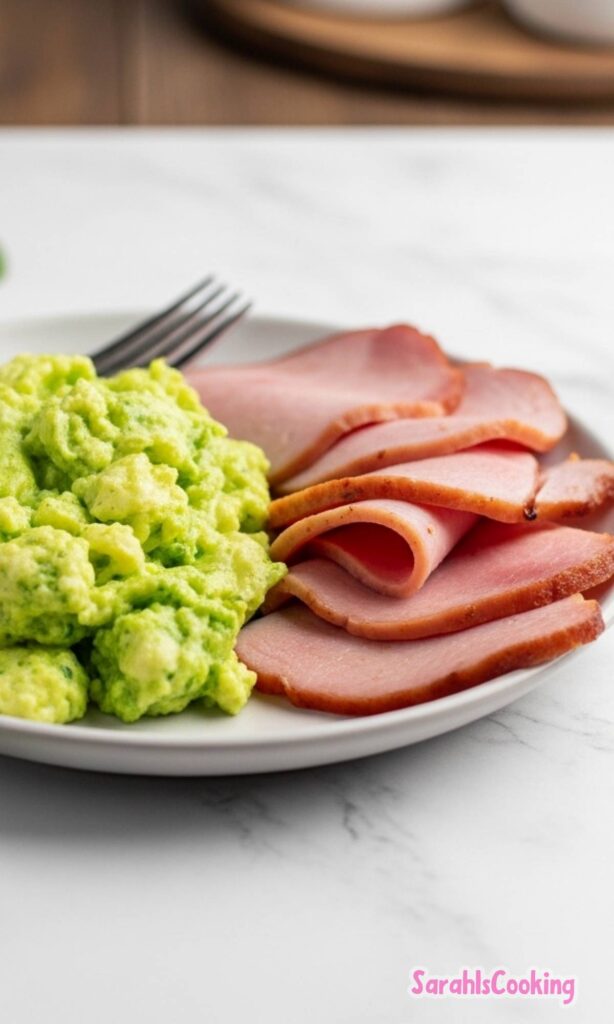
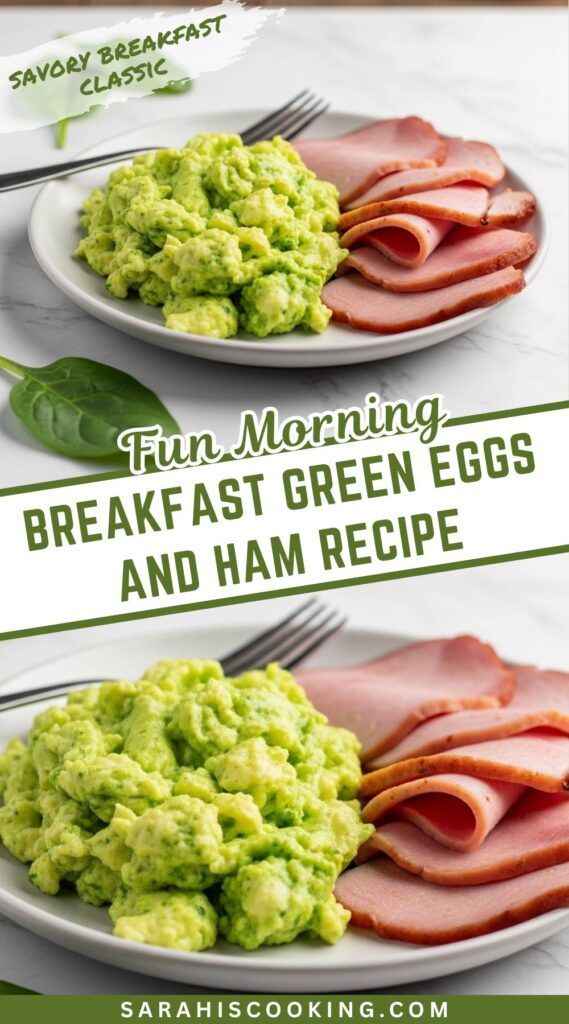
There are recipes that become traditions simply because they bring joy to the table. This green eggs and ham recipe is one of them. It transforms a classic breakfast into something playful and memorable, yet the technique behind it is grounded in practical cooking principles.
I developed this version after a request from my daughter during a homeschool week focused on one of her favorite books. She wanted the experience of those famously colored foods, but I needed the result to taste genuinely good. The challenge was creating something that looked whimsical but delivered on flavor.
After several tests and adjustments, I landed on a method that uses avocado for the eggs and a very light hand with coloring for the ham. The eggs become creamy and rich while the ham takes on just enough color to be fun without tasting like anything other than what it is.
Who This Recipe Is For
This recipe is for parents who want to bring a story to life in the kitchen with their children. It is also for anyone hosting a Dr. Seuss-themed breakfast or simply looking for a way to make a weekday morning feel a little more special.
The cooking skill level here is beginner-friendly. If you can boil eggs and mix a few ingredients together, you can make this recipe successfully. It requires no special equipment and the steps are straightforward enough that children can help with nearly every part of the process.
If you have a picky eater who hesitates at eggs but loves avocado, this recipe is specifically designed for that situation. The familiar texture and flavor of the avocado bridges the gap and makes the eggs approachable in a way that plain hard-boiled eggs never could.
Why This Recipe Works
The green color in the eggs comes from avocado rather than food coloring. This choice serves two purposes. First, it creates a naturally vibrant green that looks exactly like what you want for this theme. Second, it adds richness and healthy fats that make the filling creamy without needing mayonnaise.
The ratio of avocado to egg yolk matters here. Two avocados provide enough bulk and color for four eggs while allowing the yolks to still contribute their flavor. Too much avocado would make the filling loose and dilute the egg taste. Too little would leave you with a pale filling that misses the point.
For the ham, a quick bath in lightly tinted water is the most effective method I found. The ham absorbs just enough color on the surface to appear green without the dye penetrating deeply. This means you get the visual effect without any artificial taste or strange texture.
The assembly order also matters. Preparing the ham first and letting it soak while the eggs cook makes efficient use of your time. By the time the eggs are cooled and filled, the ham is ready and the whole dish comes together without rushing.
Ingredients Needed for the Recipe
Eggs: Four large eggs provide the base. They must be hard-boiled firmly enough that the whites hold their shape when halved and filled.
Avocado: Two ripe but not overripe avocados create the green color and creamy texture. They should yield slightly to pressure but not feel mushy.
Salt: A sprinkle enhances the natural flavors of both the eggs and avocado without overpowering them.
Pepper: A sprinkle adds a mild warmth that balances the richness of the avocado and yolks.
Paprika: A sprinkle on top provides color contrast and a subtle smoky note that complements the ham.
Ham: Eight slices of deli ham or leftover baked ham work equally well. The slices should be thin enough to absorb color quickly.
Food coloring: One drop of green food coloring is all you need. Gel coloring works best because it concentrates the color without adding excess liquid.
Water: Half a cup of water dilutes the food coloring and creates the soaking bath for the ham.
Ingredient Insights and Function
The eggs must be cooked to the point where the yolks are fully set but still tender. Undercooked yolks will not mash smoothly with the avocado and can create a grainy texture. Overcooked yolks develop that gray-green ring and turn crumbly and dry, which also affects the filling consistency.
Avocado ripeness is critical here. Underripe avocados will not mash smoothly and will leave chunks in your filling. Overripe avocados can become stringy or develop brown spots that discolor the final green. The ideal avocado gives slightly when pressed but still holds its shape.
The ham you choose matters more than you might think. Honey-glazed ham will add sweetness that may or may not work with the savory eggs. Smoked ham adds a deeper flavor that pairs beautifully with the paprika. Plain deli ham is the most neutral option and lets the visual effect take center stage.
If you prefer to avoid food coloring entirely, you can skip the ham step and serve the ham plain. The eggs will still provide the green element and the theme remains intact. You can also use natural green coloring from spinach or matcha for the ham water, though the color will be more muted.
Paprika is optional but recommended. It adds a visual pop of red against the green filling and the pink ham. Smoked paprika brings an extra layer of flavor, while sweet paprika offers a milder option that children tend to prefer.
How to make Green Eggs and Ham Recipe?
Step 1 - Color the Ham
Fill a shallow dish with half a cup of water. Add one drop of green food coloring and stir until the water is evenly tinted. Place the ham slices in the dish in a single layer and let them sit for ten minutes. The ham will absorb the color gradually, turning green on the surface while the interior remains its natural color.
Check the ham at the five-minute mark. If the color is already as deep as you want, you can remove it early. If you prefer a more intense green, let it soak the full ten minutes. Remove the ham from the dye bath and pat it dry with paper towels before setting it aside.
Step 2 - Hard Boil the Eggs
Place the eggs in a saucepan and cover them with cold water by about an inch. Bring the water to a rolling boil over high heat. Once boiling, remove the pan from the heat, cover it, and let it sit for exactly twelve minutes. This method consistently produces yolks that are fully set but still tender with no gray ring.
While the eggs rest, prepare an ice bath in a large bowl. After twelve minutes, transfer the eggs to the ice bath using a slotted spoon. Let them cool completely for at least ten minutes. This stops the cooking immediately and makes the eggs easier to peel later.
Step 3 - Peel and Halve the Eggs
Gently tap each egg on the counter to crack the shell all over. Start peeling from the wider end where the air pocket helps release the shell. Hold the egg under cool running water as you peel to help separate the shell from the white.
Once all the eggs are peeled, slice each one in half lengthwise. A sharp knife gives you clean cuts. Arrange the whites on a serving plate with the yolk side facing up and gently pop the yolks out into a mixing bowl.
Step 4 - Make the Avocado Filling
Cut both avocados in half, remove the pits, and scoop the flesh into the bowl with the egg yolks. Add a sprinkle of salt and pepper. Mash everything together with a fork until the mixture is smooth and uniformly green. Small lumps are fine as long as the filling holds together and pipes easily.
Taste the filling and adjust the seasoning if needed. The avocado should be the dominant flavor with the yolks adding richness in the background. The salt should enhance without making the filling taste salty.
Step 5 - Fill the Egg Whites
Spoon the filling into each egg white half, mounding it slightly where the yolk used to be. For a neater presentation, transfer the filling to a piping bag fitted with a large star tip and pipe it into the whites. Either method works, though piping gives you those classic deviled egg ridges.
Sprinkle a little paprika over the filled eggs for color and a hint of flavor. The bright red against the green filling creates a striking visual contrast that fits the theme perfectly.
Step 6 - Plate and Serve
Arrange the filled eggs on one side of a plate and the green ham slices on the other. Serve immediately while the eggs are cool and the filling is fresh. The ham can be served at room temperature or slightly chilled depending on preference.
How I Tested and Refined This Recipe
The first version of this recipe used food coloring directly in the egg yolk mixture. The color was undeniably green, almost alarmingly so, but the taste suffered. The artificial flavor of the dye lingered on the palate and masked the delicate taste of the eggs. My daughter took one bite and asked why the eggs tasted like medicine.
For the second test, I tried spinach puree. The color was a pale, unappealing green that looked nothing like the book. Worse, the spinach added moisture that made the filling runny and watered down the flavor. The texture was wrong and the visual impact was missing entirely.
Avocado was the third attempt and it worked immediately. The first test with avocado gave me the right color and a creamy texture, but the ratio was off. I had used one avocado for six eggs and the filling was too stiff and not green enough.
Adjusting to two avocados for four eggs created the perfect balance. The filling became luxuriously creamy, the color turned that vibrant green I wanted, and the avocado flavor complemented rather than overwhelmed the eggs.
The ham required its own testing process. Painting the ham with food coloring directly left uneven streaks that looked artificial. Soaking it in colored water for varying times showed me that ten minutes gave the most even coverage without making the ham soggy or waterlogged.
Common Mistakes and How to Avoid Them
Overcooking the eggs leads to dry, crumbly yolks that don't blend smoothly with the avocado. Set a timer for the twelve-minute rest and transfer immediately to ice water.
Using underripe avocados results in a lumpy filling that won't pipe smoothly. The avocado should yield to gentle pressure at the stem end.
Adding too much food coloring to the ham water makes the color look unnatural and can leave dye on fingers. One drop is genuinely enough for half a cup of water.
Failing to dry the ham after soaking dilutes the plate presentation and can make the eggs slide around. Pat each slice thoroughly with paper towels.
Mashing the filling too little leaves chunks of avocado that fall out of the egg whites. Mash until the mixture is cohesive and holds together easily.
Filling the eggs too far ahead causes the avocado to oxidize and turn brown. Fill within an hour of serving for the brightest green color.
Peeling eggs that are still warm tears the whites and leaves a ragged surface. Cool them completely in ice water before attempting to peel.
Make-Ahead, Storage, and Freezing Guidance
The eggs can be hard-boiled and peeled up to three days in advance. Store them whole in an airtight container in the refrigerator and fill them on the day you plan to serve. The ham can be colored a day ahead and kept covered in the fridge.
The avocado filling is best made fresh, but you can prepare it up to six hours ahead if you take precautions. Press plastic wrap directly onto the surface of the filling to prevent air exposure and refrigerate immediately. Stir well before piping or spooning into the eggs.
Once assembled, the filled eggs should be eaten within a few hours. The avocado will begin to oxidize and darken over time, especially if the eggs are left at room temperature. If you must store assembled eggs, cover them tightly and refrigerate for no more than four hours.
Freezing is not recommended for this recipe. The texture of both the hard-boiled whites and the avocado filling suffers significantly upon thawing. The whites become rubbery and watery while the filling turns brown and grainy.
Leftover ham that has been colored can be used in sandwiches or chopped into salads within three days. The green color may fade slightly over time but the ham itself remains perfectly good to eat.
Tips
Use a sharp knife to cut the eggs in half for clean edges that hold their shape.
Save the avocado pits and place them in the bowl with any leftover filling to slow browning.
If piping the filling, chill it for fifteen minutes first so it holds its shape better.
Set extra ham slices aside in case some tear during the soaking process.
Let children help with mashing the filling and spooning it into the eggs for a hands-on experience.
Serve with toast points cut into star shapes using cookie cutters for an extra thematic touch.
Warm the ham slightly in a dry skillet if you prefer it hot against the cold eggs.
Double-check that no avocado lumps remain if serving to very young children.
Use white plates to make the green colors stand out most vividly.
Rinse the food coloring dropper immediately after use to prevent staining.
This fun, kid-friendly Green Eggs and Ham recipe brings Dr. Seuss's classic book to life with creamy avocado deviled eggs and lightly tinted green ham. Perfect for themed parties, breakfast fun, or homeschool activities! The avocado replaces mayo for a nutritious twist that even picky eaters love.
ingredients
4 eggs (large, hard-boiled)
2 avocado (ripe)
1sprinkle salt (to taste)
1sprinkle pepper (to taste)
1sprinkle paprika (for garnish and flavor)
8slices ham (deli-style)
1drop green food coloring (optional, for ham)
1/2cup water (for tinting ham)
Instructions
1
Tint the HamAdd one drop of green food coloring to 1/2 cup of water in a shallow dish. Stir well and set ham slices in the dish for 10 minutes until they hold a green color.
Remove ham and pat dry before serving
2
Hard Boil EggsPlace eggs in a pot, cover with cold water, and bring to a boil. Once boiling, remove from heat, cover, and let sit for 10-12 minutes.
3
Cool and PeelTransfer boiled eggs to cold water to cool. Once cool enough to handle, peel the shells off carefully.
4
Prepare Egg FillingCut eggs in half lengthwise and scoop yolks into a mixing bowl.
5
Mix Avocado FillingAdd avocado, salt, pepper, and paprika to the bowl with egg yolks. Mash and mix until smooth and well blended.
Taste and adjust seasoning as needed
6
Fill Egg WhitesSpoon or pipe the avocado-yolk mixture back into the egg white halves.
Use a piping bag for a decorative finish, or a spoon for simplicity
7
Serve and EnjoyPlate the green deviled eggs alongside the tinted ham slices. Serve immediately and enjoy your Dr. Seuss-inspired meal!
Pin this recipe to share with your friends and followers.
Sarah
Food and Lifestyle Blogger
Hi, I’m Sarah, a home cook and baker who believes that good food doesn’t need to be complicated to be meaningful. This blog is where I share approachable, dependable recipes made with care — the kind of dishes you can come back to again and again.